Showing posts sorted by relevance for query albert edwards. Sort by date Show all posts

Wednesday, December 22, 2021

Société Générale's Albert Edwards' 2022 Outlook: Four Big Surprises... And Lots Of Pain

From ZeroHedge:
One month ago, just after all the Wall Street banks come out with glowing year-ahead outlooks and market forecasts, we observed a funny irony: the arrival of a new covid strain threw everyone in for a loop, one which would only get much worse a few weeks later when Biden's Build Back Better stimulus collapsed....
*****
.... Since then things been a little embarrassing for the likes of Goldman (and most of its peers) which promptly slashed its GDP forecast over the weekend to just 2.0% from 3.0% and from much higher earlier in the year.

However, one strategist who isn't concerned about how to revise his 2022 outlook, is SocGen's in-house bear, Albert Edwards for the simple reason that he sees nothing but pain in the coming year.

As a reminder, two weeks ago Albert penned a rather doomsday forecast about the future of the market-leading "generals", the FAAMGs, or as they are better known now, the GAMMA stocks, warning that despite the sharply declining EPS of the broader IT sector, the FAANGs continue to trade at a "nosebleed PE valuation at 30x which looks vulnerable vs the market’s 22x - the widest gap since the Nasdaq bubble." This is happening just as forward IT PEs are starting to rerate lower.
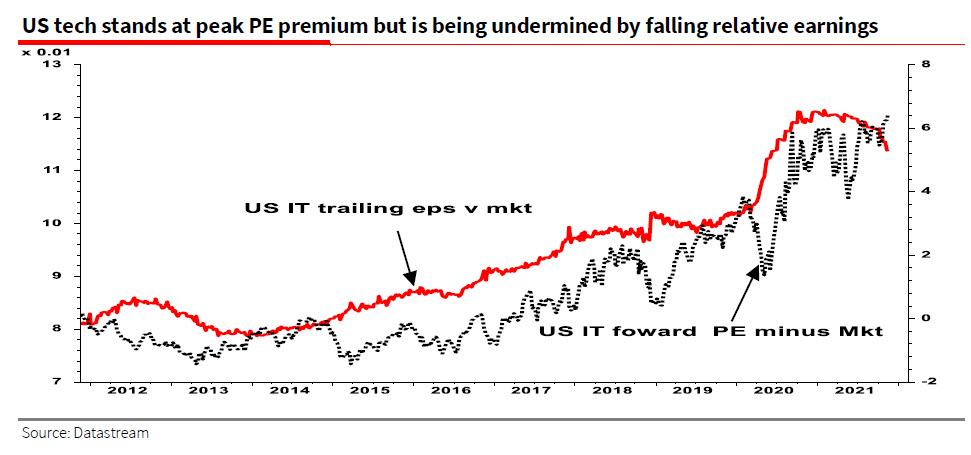
Fast forward to this week when Albert summarizes the current market state as follows: "as we end the year, markets are becoming increasingly nervous that US equities – and the US tech sector specifically – are having the rug pulled out from under them. Market internals are also giving out loud warnings. Just as in 2001, could the unraveling of the recent tech bubble trigger the Vortex of Debility that destroys all before it?"

Picking up on his recent warning, Edwards writes that the US tech sector that has so dominated this bull market in one form (the IT sector) or another (the FAANGs) "seems to be pretty invulnerable in the face of some of the major threats it is now facing. But we have seen a similar Vortex of Debility before, most recently just ahead of the Lehman bankruptcy and written up here by Paul Murphy at the FT."

How does that play into the SocGen strategist's year-ahead outlook?

Well, as he notes "it’s the time of year when strategists publish huge tomes to give their year-ahead views" but, he adds, "readers will be relieved to know that I can summarize my 2022 outlook in a few lines" and four surprises.

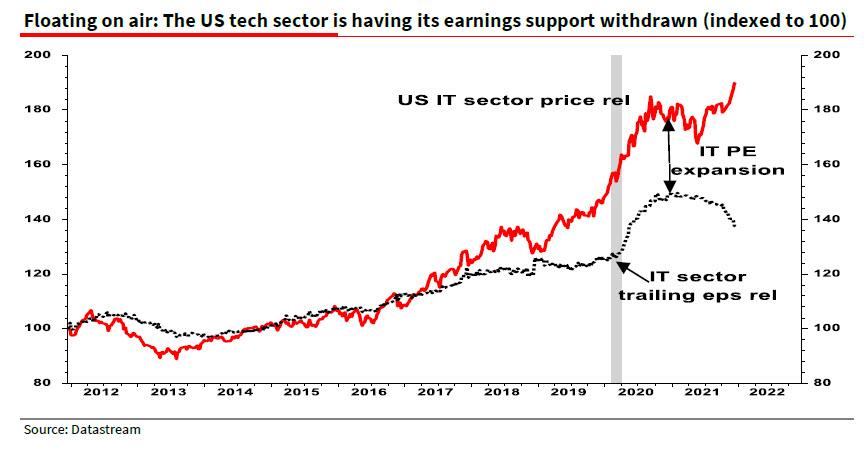
As the first "big surprise" of the coming year, Edwards expects that equity markets will startle most investors when they "fall sharply as US tech unravels in the first half."  Presenting a slightly different chart from the one he showed two weeks ago, Edwards then addresses the elephant in the room, namely the FAAMGs again, and writes that "unsupported by earnings growth (see chart below) and with poor market breadth (see inside), it may not be higher bond yields that burst this tech bubble."
Edwards then echoes what Morgan Stanley's Mike Wilson said last week, and lays out what he believes will be the "second surprise" for next year: if an all-out equity bear market unfolds, "investors will find that while the Powell Put still exists, the strike price may be a lot lower for equities than it was at end 2018." This is almost a carbon copy of what Wilson said last week when he predicted that "the Fed put still exists but the strike price is much lower now, in our view. If we had to guess, it's down 20% rather than down 10% unless credit markets or economic data really start to wobble."

Why? Because as Edwards explains, "policymakers globally now understand that QE creates as many problems (mainly distributional) as it solves, and that fiscal policy must do more of the stimulus work." He then asks a rhetorical question: "Would the Fed really hold back if the S&P was down 30% plus? And wouldn’t that be one huge surprise for investors?." Here we disagree with Edwards: it is our view is that no matter what, the Fed will always panic when stocks are down 15-20% - after all so much of the US wealth effect and household net worth is now tied into stocks, that Powell will not dare risk an all out collapse...
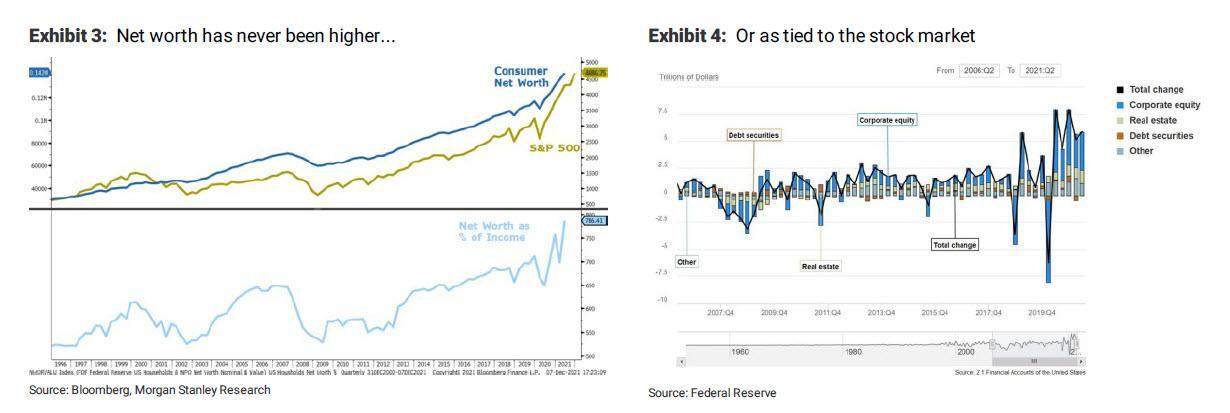
... but maybe this time is truly different.

His "third surprise" may be, well, the most surprising - Edwards expects that easing supply bottlenecks combine with soggy commodity prices to drive US headline CPI inflation back well below 2% (this is also the inventory glut thesis floated by Morgan Stanley and Deutsche Bank). Hence, the SocGen skeptic expects "current inflation fears to evaporate as H1 unfolds and bond yields to decline sharply."....

....MUCH MORE

Over the years we've had some fun at Albert's expense. As noted in a 2017 post:

Every time I am asked why we post on Mr. Edwards "when he's been wrong so often" I debate whether to explain or just give a glib answer.
The flippant rationale would be we get to go with headlines such as:

Société Générale's Albert Edwards Descends Into A Nightmare World of Dream Demons and Market Depravity
Société Générale's Albert Edwards: "Many Think I am Mad..."  
Société Générale's Albert Edwards Sees Blue Skies, Sunshine, the Lame Shall Walk Again
Of course it's possible I have misinterpreted the meaning of 

"the US economy is on crutches, and they are about to be kicked away"

Société Générale's Albert Edwards Has Some Troubling News He Reluctantly Shares
Société Générale's Albert Edwards Not His Usual Jolly Self (II)
Société Générale's Albert Edwards: "I Have Been Wrong – I’ve Been Too Bullish"
It May Be Time To Put Société Générale's Albert Edwards On Suicide Watch
Société Générale's Albert Edwards: Cry Havoc and Let Slip the...Ah Screw it 

Société Générale's Albert Edwards: "And I looked, and behold a pale horse: and his name that sat on him was Death, and Hell followed with him"
In other news...
Société Générale's Albert Edwards: We Are Doomed
Société Générale's Albert Edwards Not His Usual Jolly Self
Nor is he restin'. Beautiful plumage though....

And many, many more.
The straight-up answer is: I can't think of anyone else who nailed the deflationary bias in credit markets as well as he has for as long as he has, pretty much the last 15-20 years.
And as far as equities go, absent the extraordinary measures of the world's central banks the landscape would look very, very different.

The biggest criticism you can lay on the guy is he didn't realize what he was up against re: the powers that be.
Plus that whole Albert-in-the-bathtub period was just stupid.
You do have to be careful you don't personally get into a David Koresh/Jim Jones-Drink-the-Kool-Aid frame of mind when gazing upon the dark side, whether Albert or Ambrose Evans-Pritchard or Jim Chanos. I mean it's okay to play around with melancholy:

Music For Albert Edwards. On A Cold Day. In February
In F flat minor.* 
And it's raining.

Season's Greetings From Société Générale's Albert Edwards (Nov. 14, 2012)
 Expect the New Year to bring nothing but disappointment....


But be attuned to when to take Mr. Edwards with utmost seriousness.

On September 5, 2008 we posted "Meltdown"-Société Générale" which linked to Albert's research note of a couple days earlier:

***Alert****Economic and equity market meltdown imminent****Alert***

A good call.

On September 7, 2008 Fannie Mae and Freddie Mac were placed into conservatorship.
On September 14, 2008 Merrill Lynch agreed to be acquired by Bank of America to avoid a Reg. T shut-down when markets re-opened.
On September 15 Lehman filed their bankruptcy petition.
On September 16 AIG became a 79.9% subsidiary of the U.S. Treasury.

Within 10 more days the Nation's largest thrift, WaMu was seized and five days later Wachovia gobbled up.

Good times, good times.

So take what you can use and make dumb headlines with the rest

Thursday, October 11, 2018

Société Générale's Albert Edwards: "And I looked, and behold a pale horse: and his name that sat on him was Death, and Hell followed with him"

In other news...
 
Albert wasn't actually quoting Revelation 6:8, just analogizing.

From ZeroHedge: 
Albert Edwards: "Equity Investors Are Facing The Four Horsemen Of The Apocalypse"
Even SocGen's Albert Edwards was surprised at how quickly his latest predication was validated.
Recall that 3 weeks ago with the 10Y yield at 3.10%, with Edwards looking at the surge higher in 10Y Yields the SocGen strategist pointed out that the break in the 10y above 2.8% was not the key level that could mark the end of the secular bull market, but rather it was the 3.05% zone as shown in the chart below
https://www.zerohedge.com/sites/default/files/inline-images/10Y%20trendline%20socgen.jpg
Commenting on this breakout, he said that rates might surge further and addressed whether this would mean the end his "Ice Age" thesis. As he noted, if investors “get the wrong side of a new multi-year bear market in government bonds, all investment  portfolios will be shredded to ribbons as bonds are the cornerstone of most equity valuation models”.

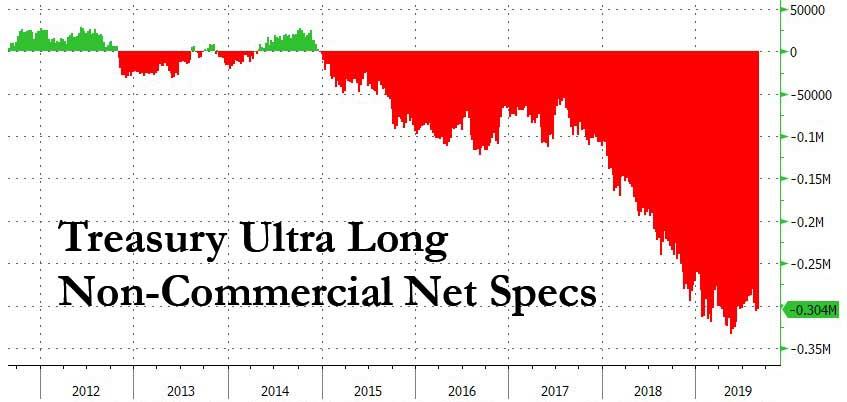
Fast forward to today when in his latest note he writes "let me be totally honest: I was most surprised that the US 10y yield managed to smash through its multi-decade downtrend last week, mainly due to the fact that the CFTC data showed that speculators had already built unprecedented large short positions. It seemed that every man, woman and child was already bearish and so who was left to sell? Well clearly someone was! One thing that helped tip bond prices over the edge and take yields up to 3¼% was the fundamental support from stronger than expected economic data (see chart below). "
https://www.zerohedge.com/sites/default/files/inline-images/ae%20positive%20data.jpg?itok=Q3K6UKlr
Another factor for the latest breakout in yields which pushed the 10Y interest rate to fresh 7 years highs was the previously discussed economic exuberance by Fed Chair Powell who managed to convince markets that they were still too sanguine on their expectations on interest rates, "and the futures strip ratcheted up another notch towards the Fed dots.".
https://www.zerohedge.com/sites/default/files/inline-images/dots%20minack.jpg?itok=_vUHTLji
 ..MUCH MORE

We haven't linked much to Mr. Edwards this year.
The Financial Times' Paul Murphy had an article in the paper in June but we got to it too late and it languished in the link-vault. Here's "Albert Edwards says his ‘Ice Age Thesis’ is coming ".

Our last piece was in April where I got to riff of of Game of Thrones again and recall some previous headlines:

Société Générale's Albert Edwards Says "My Reputation For Calling Stocks Is In Tatters"
Well duh. He's been stubbornly fighting the central banks for a decade, a trait he shared with fellow bear David Rosenberg until Rosie flipped a few years ago and caught the last 35% or so of the up move.
But it isn't for the equity calls that Albert gets paid, and they're not why pros still listen to him:
The House Fed has thwarted his House Stark at every turn.
Now he's getting ready to roll but it may be too late for him.
http://www.hollywoodreporter.com/sites/default/files/imagecache/list_landscape_960x541/2016/06/game_of_thrones_quotes_3_h_2016.jpeg
"I fought. I lost. Now I rest. But you, Lord Snow… you'll be fighting their battles forever."
Albert addressing another standing room only investment conference crowd

Last seen in "Société Générale's Albert Edwards: Winter Is Coming".

Albert's twenty-year bullishness on bonds and what declining yields tell us about the underlying economy is why SocGen keeps him around....

...Over the years we've had some fun at Albert's expense. As noted in a 2017 post:

Every time I am asked why we post on Mr. Edwards "when he's been wrong so often" I debate whether to explain or just give a glib answer.
The flippant rationale would be we get to go with headlines such as:

Société Générale's Albert Edwards Descends Into A Nightmare World of Dream Demons and Market Depravity
Société Générale's Albert Edwards: "Many Think I am Mad..."  
Société Générale's Albert Edwards Sees Blue Skies, Sunshine, the Lame Shall Walk Again
Of course it's possible I have misinterpreted the meaning of
"the US economy is on crutches, and they are about to be kicked away"

Société Générale's Albert Edwards Has Some Troubling News He Reluctantly Shares
Société Générale's Albert Edwards Not His Usual Jolly Self (II)
Société Générale's Albert Edwards: "I Have Been Wrong – I’ve Been Too Bullish"
It May Be Time To Put Société Générale's Albert Edwards On Suicide Watch
Société Générale's Albert Edwards: Cry Havoc and Let Slip the...Ah Screw it

And many, many more.
The straight-up answer is: I can't think of anyone else who nailed the deflationary bias in credit markets as well as he has for as long as he has, pretty much the last 15-20 years.
And as far as equities go, absent the extraordinary measures of the world's central banks the landscape would look very, very different.

The biggest criticism you can lay on the guy is he didn't realize what he was up against re: the powers that be.
Plus that whole Albert-in-the-bathtub period was just stupid.
You do have to be careful you don't personally get into a David Koresh/Jim Jones-Drink-the-Kool-Aid frame of mind when gazing upon the dark side, whether Albert or Ambrose Evans-Pritchard or Jim Chanos. I mean it's okay to play around with melancholy:

Music For Albert Edwards. On A Cold Day. In February
In F flat minor.* 
And it's raining.

Season's Greetings From Société Générale's Albert Edwards (Nov. 14, 2012)
 Expect the New Year to bring nothing but disappointment....


But be attuned to when to take Mr. Edwards with utmost seriousness. 
From:
UPDATED *****Alert***** Société Générale's Albert Edwards Bearish *****Alert***** (Sept. 6, 2011)
We passed a three year anniversary yesterday.
On September 5, 2008 we posted "Meltdown"-Société Générale" which linked to Albert's research note of a couple days earlier:

***Alert****Economic and equity market meltdown imminent****Alert***

A good call.

On September 7, 2008 Fannie Mae and Freddie Mac were placed into conservatorship.
On September 14, 2008 Merrill Lynch agreed to be acquired by Bank of America to avoid a Reg. T shut-down when markets re-opened.
On September 15 Lehman filed their bankruptcy petition.
On September 16 AIG became a 79.9% subsidiary of the U.S. Treasury.

Within 10 more days the Nation's largest thrift, WaMu was seized and five days later Wachovia gobbled up.

Good times, good times.

So take what you can use and make dumb headlines with the rest

Wednesday, April 25, 2018

Société Générale's Albert Edwards Says "My Reputation For Calling Stocks Is In Tatters"

Well duh. He's been stubbornly fighting the central banks for a decade, a trait he shared with fellow bear David Rosenberg until Rosie flipped a few years ago and caught the last 35% or so of the up move.
But it isn't for the equity calls that Albert gets paid, and they're not why pros still listen to him:
The House Fed has thwarted his House Stark at every turn.
Now he's getting ready to roll but it may be too late for him.
http://www.hollywoodreporter.com/sites/default/files/imagecache/list_landscape_960x541/2016/06/game_of_thrones_quotes_3_h_2016.jpeg
"I fought. I lost. Now I rest. But you, Lord Snow… you'll be fighting their battles forever."
Albert addressing another standing room only investment conference crowd

Last seen in "Société Générale's Albert Edwards: Winter Is Coming".

Albert's twenty-year bullishness on bonds and what declining yields tell us about the underlying economy is why SocGen keeps him around.

Here he is via ZeroHedge:
SocGen's permabear skeptic Albert Edwards is best known for one thing: predicting that the financial world will end in a deflationary singularity, one which will send yields in the US deep in the negative, and which he first dubbed two decades ago as the "Ice Age." He is also known for casually and periodically forecasting - as he did a few weeks ago in an interview with Barrons - that the S&P will suffer a historic crash, one which will send it back under the March 2009 low of 666.
In this context, a couple of recent events caught Edwards' attention.

First, speaking of the abovementioned Barron's interview, Edwards was taken aback by one commentator who took the SocGen strategist to task for his relentless bearishness. Indirectly responding to the reader, in his latest letter to clients Edwards writes that "it’s good to have a little humility in this business because it’s so darn humiliating when forecasts are proved wrong. And the bolder the forecast, the more humiliating it is!" He continues:
That is one reason why most commentators on the sell-side never stray too far from consensus. When I was an avid consumer of sell-side research some 30 years ago, there was one  thing about the macro sell-side that I truly marvelled at – namely the analysts’ ability to totally reverse a view and pretend that had been their view all along! In the days before the internet and email, I had to rifle through our storage cupboards to find the evidence of what were often 180 degree handbrake turns. In the internet age, there is no hiding any more. 
One of the most levelling experiences at the end of an article or interview about my thoughts is to scroll down and read some of the readers’ comments. In my case, they often marvel that I am still in any sort of employment at all! Some are witty and make me smile -– like the one below in response to a recent interview I did with Barron’s.
Edwards refers to the comment titled "‘Prescient as a Broken Clock?" authored by one Gordon Gould from Boulder, Colorado who writes:
“Barron’s notes that Société Générale’s Albert Edwards is a permabear (“S&P 500 Could Still Test 2009 Lows,” Interview, April 7). However, your readers would surely like to know how some of his previous calls have turned out. A quick Google search revealed that nearly five years ago, Edwards called for the Standard & Poor’s 500 index to hit 450 and gold to exceed $10,000. While even a broken clock is correct twice a day, perhaps in Edwards’ case, we’re talking about a broken calendar on Saturn, which takes about 29 years to orbit the sun.”
Albert summarizes his response to this comment eloquently, using just one word: "ouch." Hit to his pride aside, Albert asks rhetorically "Where did it all go so wrong?" and explains that in the Barron’s interview, "I explain why in my Ice Age thesis I still expect US equity prices to fall to new lows in the next recession." To be sure, this is familiar to ZH readers, as we highlight every incremental piece from Edwards, because no matter if one agrees or disagrees, he always provides the factual backing to justify his outlook, gloomy as it may be....MUCH MORE 
Over the years we've had some fun at Albert's expense. As noted in a 2017 post:

Every time I am asked why we post on Mr. Edwards "when he's been wrong so often" I debate whether to explain or just give a glib answer.
The flippant rationale would be we get to go with headlines such as:

Société Générale's Albert Edwards Descends Into A Nightmare World of Dream Demons and Market Depravity
Société Générale's Albert Edwards: "Many Think I am Mad..."  
Société Générale's Albert Edwards Sees Blue Skies, Sunshine, the Lame Shall Walk Again
Of course it's possible I have misinterpreted the meaning of 
"the US economy is on crutches, and they are about to be kicked away"
Société Générale's Albert Edwards Has Some Troubling News He Reluctantly Shares
Société Générale's Albert Edwards Not His Usual Jolly Self (II)
Société Générale's Albert Edwards: "I Have Been Wrong – I’ve Been Too Bullish"
It May Be Time To Put Société Générale's Albert Edwards On Suicide Watch
Société Générale's Albert Edwards: Cry Havoc and Let Slip the...Ah Screw it

And many, many more.
The straight-up answer is: I can't think of anyone else who nailed the deflationary bias in credit markets as well as he has for as long as he has, pretty much the last 15-20 years.
And as far as equities go, absent the extraordinary measures of the world's central banks the landscape would look very, very different.

The biggest criticism you can lay on the guy is he didn't realize what he was up against re: the powers that be.
Plus that whole Albert-in-the-bathtub period was just stupid.
You do have to be careful you don't personally get into a David Koresh/Jim Jones-Drink-the-Kool-Aid frame of mind when gazing upon the dark side, whether Albert or Ambrose Evans-Pritchard or Jim Chanos. I mean it's okay to play around with melancholy:

Music For Albert Edwards. On A Cold Day. In February
In F flat minor.* 
And it's raining.
Season's Greetings From Société Générale's Albert Edwards (Nov. 14, 2012)
 Expect the New Year to bring nothing but disappointment....


But be attuned to when to take Mr. Edwards with utmost seriousness. 
From:
UPDATED *****Alert***** Société Générale's Albert Edwards Bearish *****Alert***** (Sept. 6, 2011)
We passed a three year anniversary yesterday.
On September 5, 2008 we posted "Meltdown"-Société Générale" which linked to Albert's research note of a couple days earlier:

***Alert****Economic and equity market meltdown imminent****Alert***

A good call.

On September 7, 2008 Fannie Mae and Freddie Mac were placed into conservatorship.
On September 14, 2008 Merrill Lynch agreed to be acquired by Bank of America to avoid a Reg. T shut-down when markets re-opened.
On September 15 Lehman filed their bankruptcy petition.
On September 16 AIG became a 79.9% subsidiary of the U.S. Treasury.

Within 10 more days the Nation's largest thrift, WaMu was seized and five days later Wachovia gobbled up.

Good times, good times.

So take what you can use and make dumb headlines with the rest

Wednesday, December 1, 2010

Société Générale's Albert Edwards:“Commodity and emerging-market bulls ignore the weak Chinese leading indicator at their peril...” (DEC. 1, 2010)

A few views of Albert's latest, first up, Bloomberg:
China May Burst Commodity, Emerging-Market Stocks Bubble: Chart of the Day
Emerging-market stocks and commodities are in a bubble that will deflate as China’s economic expansion slows, according to Albert Edwards, a strategist at Societe Generale.

The CHART OF THE DAY shows what may lie ahead by tracking year-over-year percentage changes in a Chinese leading economic indicator, compiled by the Organization for Economic Cooperation and Development. The chart also includes MSCI’s Emerging Markets Index and the Continuous Commodity Index, a gauge that used to be the Commodity Research Bureau Index.

For 10 straight months, the OECD’s index has risen at a slower rate. The indicator stood at 9.8 percent in September, the latest month available, after peaking at 26.9 percent in November 2009.
“Commodity and emerging-market bulls ignore the weak Chinese leading indicator at their peril,” Edwards wrote in a report today....MORE
Here's FT Alphaville's take:

Indicator wars
Ignore those slumping Chinese leading indicators at your peril! Or — a dose of bearishness on looking at the OECD’s leading indicators, courtesy of SocGen’s Albert Edwards.
Look away for now from that headline China PMI figure showing a seventh month of manufacturing expansion. Edwards tells a different story (emphasis ours):
Once again, China’s leading indicator is pointing towards a very significant slowdown in economic growth ahead. The last time the Chinese OECD leading indicator was this weak, commodity prices had just reached their euphoric mid-2008 peak, having spent the first half of the year resolutely ignoring the clear signals that the economy was about to slow sharply. Commodity and EM bulls ignore the weak Chinese leading indicator at their peril.

See also data from the Chinese National Bureau of Statistics, he says...MORE
Finally, the WSJ Europe's The Source blog:

Commodities, Emerging Markets to the Rescue, Right?
Given the euro zone’s endless debt mess and the U.S. labor market’s enduring torpor, who could possibly blame investors for sticking with this year’s golden alternative plays instead: emerging markets and the commodities they hoover up?

Well, contain your shock but Societe Generale’s perennially bearish strategy duo of Albert Edwards and Dylan Grice could.

Oh, even this pair of curmudgeons admits the case has been compelling as weak growth in the West and Japan has forced yield-hungry investors to look elsewhere. And the latest manufacturing data out of China, November’s Purchasing Managers Index, showed a 21st straight month of strong growth.

All the same, our heroes caution strongly against sticking with EM and commodities now. They note that China’s leading indicator from the Organisation for Economic Cooperation and Development is pointing toward a very significant slowdown in economic growth, and that this tallies ‘absolutely’ with the numbers from China’s own National Bureau of Statistics....MORE
More Albert:
Nov. 17 
Société Générale's Albert Edwards Upbeat, Almost Chipper: See's Humanity Approaching Broad Sunlit Uplands (Nov. 17, 2010)
Nov. 6 
Société Générale's Albert Edwards Does Not Capitulate, Sees Emerging Markets Bubble Pop Triggering A 60% Decline In Equity Prices
Nov. 4 
UPDATED: Société Générale's Albert Edwards: Emerging Markets and Commodities (November 4, 2010)
Oct. 20 
Société Générale's Albert Edwards: Cry Havoc and Let Slip the...Ah Screw it (Oct. 20, 2010)
Oct. 5 
More from Société Générale's Albert Edwards (Oct. 5, 2010)
Oct. 4 
"Société Générale's Albert Edwards: "Batten Down the Hatches" (October 2010)
Sept. 26 
The Financial Times Gets to the Heart of What Société Générale's Albert Edwards is Saying (Sept. 24, 2010)
Sept. 25 
Société Générale's Albert Edwards: On Terminal Competitive Devaluation, The Nuclear Option, And How The Fed's Policies May Start An All Out War (September 22, 2010)
Sept. 10 
"Société Générale's Albert Edwards: 'Equity Investors Are In A Vulcan Death Grip And Are About To Fall Unconscious"' (September 2010)

And the 2008 series in which he foretold the future and made some of the funniest headlines of the financial crisis:
May 8, 2008
This Week’s Advice: Canned Food, Guns and a Ham Radio
June 26, 2008
Société Générale: “We see a y-shaped global recession. We are going down before looping backwards”
September 5, 2oo8
"Meltdown"-Société Générale
September, 2008
Société Générale: Prepare for the Great Unwind, part Deux
We have a lot from Mr. Edwards. Copy and paste the keywords
"Société Générale's Albert Edwards
in the blog search box.

Friday, September 6, 2019

Société Générale's Albert Edwards Seems More Chipper Than Usual: "In The Next Recession, The S&P Will Drop Below 666"

I mean that's a cheerier headline than 2018's Société Générale's Albert Edwards: "And I looked, and behold a pale horse: and his name that sat on him was Death, and Hell followed with him".
More on our Albert headlines after the jump.
From ZeroHedge: 

Albert Edwards On How It All Ends: "In The Next Recession, The S&P Will Drop Below 666"
Back in August, we wrote that after decades of waiting, for Albert Edwards vindication was finally here - if only outside the US for now - because as per BofA calculations, average non-USD sovereign yields on $19 trillion in global debt had, as of Monday, turned negative for the first time ever at -3bps.
So now that virtually every rates strategist is rushing to out-"Ice Age" the SocGen strategist (who called the current move in rates years if not decades ago) by forecasting even lower yields (forgetting conveniently that just a year ago consensus called for the 10Y to rise well above 3% by... well, some time now), we reported what man who correctly called the unprecedented move in global yields - which has sent $17 trillion in sovereign debt negative - thinks happens next (for those who missed it, the summary was "There is a lot more to come.")

Of course, it ain't easy being a permabear - even when your global "Japanification" thesis, 30 years in the making, has been validated - for the simple reason that there are haters always and everywhere, and for some odd reason Edwards decided that responding to them in his latest letter is a prudent use of his time. In this particular case, Edwards takes umbrage at the criticism of a fellow "financial advisor" who inexplicably, spends more time on CNBC and on twitter than, well, providing financial advice, but that's Albert's prerogative (our advice: ignore them).

So instead of diluting Edward's message with trivial tangents, we focus on several key points, the first of which is why if Edwards got the bond bull market so spectacularly right at a time when virtually everyone remains short bonds...
... has he been wrong on stocks, with his calls to short the equity market, which is also explains the genesis of his "permabear" moniker (alternatively, Edwards is the biggest bond permabull in existence). This is what Edwards said:
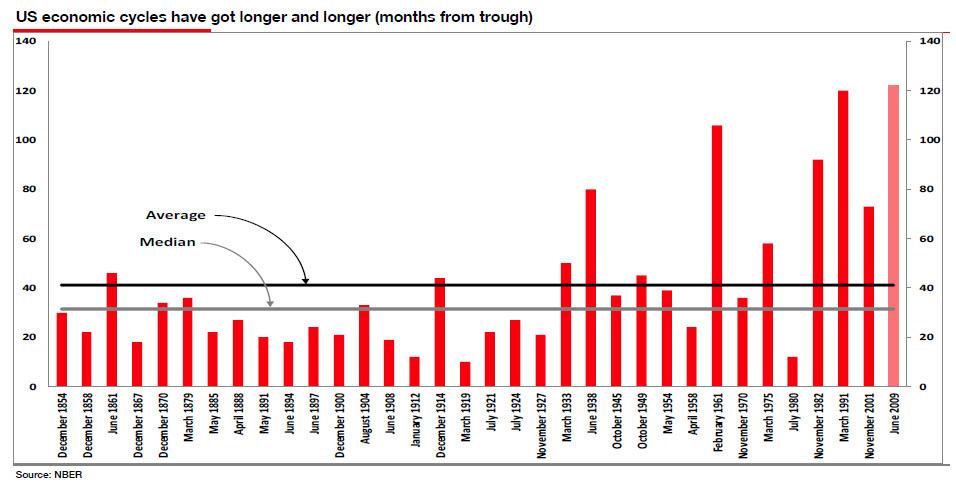
... my biggest Ice Age mistake was to assume that the US would be like Japan and that subsequent to the 2008 GFC, US policymakers would find it much harder to manipulate the economic and credit cycles. I thought we would return to ‘normal’ economic cycles with lengths nearer to 40 months.
And if I was right, perceptions of increased EPS volatility would cause the equity or cyclical risk premium to rise – ie the increased volatility of the economic cycle would cause PEs to decline for any given level of bond yield.
However a funny thing happened on the way to normalcy: central banks decided that they need to unleash more central planning that the USSR, and effectively kill the business cycle, so rather than seeing shorter cycles of around 40 months, the US is still enjoying the longest economic cycle in its history of 122 months and counting!
"How wrong can one be?" Edwards asks rhetorically, adding "Yes, I know it is also one of the weakest in history, but that’s not the point."
For I had pencilled in the next US recession as the time when we see the next intensification of the Ice Age (as occurred in Japan), where equity prices and PEs would fall to new lower lows and where new and unprecedented monetary measures would need to be taken in the face of outright deflation. That is why I have been so wrong for so long – and that also goes for my bearish view on bonds, articulated in 2011 (see reference to blog criticism, page 3). I had by now expected the helicopters to have already dropped hundreds of trillions of confetti dollars onto the US economy and CPI inflation to have already begun to twitch into life like Frankenstein’s monster.
Don't worry Albert: one look at the campaigns of potential socialist US presidents, and it becomes abundantly clear that helicopter money, i.e. MMT, is coming. And once said socialists promise enough free shit, it is only a matter of time before they are elected. After all, everyone likes free shit.
Which brings us to the logical next question: having discussed what next happens to bond yields two weeks ago, Edwards now tackles the question of "what might happen in the next recession?"
Will equity yields continue to grind lower (PEs higher) in line with US bond yields falling into negative territory, and as the printing presses are started up again and running at such a frenzied pace you will be able to hear them from Mars? Or will, as I suspect, a slide into recession again be accompanied by the bursting of credit and asset bubbles and the ensuing recession be as surprisingly deep as the 2008 GFC?
The answer coming from the equity permabear deflationista will hardly be a surprise: he maintains his view that the US equity market will fall to a new low in the next recession as investors witness yet another credit-induced, economic implosion. "And, at the same time as the economy implodes, expect President Trump to explode with rage. Indeed, even before his election I felt it very unlikely that the Fed would be able to maintain its independence if it is the midwife for yet another credit-induced deep recession."
Oh sure, the Fed will try to fight it, and it will, culminating with the endgame for every central bank - the release of helicopter money in hopes of terminal currency debasement sparking debt hyperinflation. But to the SocGen strategist, that won't be enough.
Won’t [helicopter money] fill the swimming pool and cushion the equity market’s descent? Won’t an activist Fed, with President Trump screaming with rage in the background, be able to prevent any potential collapse in the equity market? I believe not. Why will the next recession be any different from the last one, which saw equities collapse despite massive monetary stimulus?
As a reminder, yesterday we noted that policy impotence is one of the reasons behind BofA's contention that policy impotence is why the cycle finally ends in 2020. Edwards agrees:
I would expect renewed rounds of QE, and/or helicopter money, as MMT is embraced as a desperate solution to the next slump. But this liquidity is not guaranteed to flow into equities or indeed any risk asset while the economic downturn is in full force. I use the example of commodity prices after the GFC, which initially behaved just like equities, benefitting massively from QE. Then, as you can see in the chart below, industrial commodities de-coupled from rising equity markets, primarily because the fundamental backdrop deteriorated as the Chinese economy slowed. Ample liquidity cannot be guaranteed to flow into any particular risk asset if its fundamentals turn negative. Liquidity will initially flow into whatever momentum trade is still standing at the time, backed by fundamentals, and that will most likely be government bonds.
But if everyone buys bonds, won't stocks also be bid? After all, that's the basis of the Fed model, is it not? Well, here too Edwards has something to say....
....MORE

Hmmmm....I'm not sure what to think regarding that "trivial tangents" shot. So here's our thinking on Albert:
He's not as good at equities as he is on credit.
For 21 years if you asked Mr. Edwards which way on bonds his answer was "Higher".
And so it came to pass:

A trend appears to be emerging

However, as noted in another 2018 post...

Société Générale's Albert Edwards Says "My Reputation For Calling Stocks Is In Tatters"

Well duh. He's been stubbornly fighting the central banks for a decade, a trait he shared with fellow bear David Rosenberg until Rosie flipped a few years ago and caught the last 35% or so of the up move.
But it isn't for the equity calls that Albert gets paid, and they're not why pros still listen to him:
The House Fed has thwarted his House Stark at every turn.
Now he's getting ready to roll but it may be too late for him.
http://www.hollywoodreporter.com/sites/default/files/imagecache/list_landscape_960x541/2016/06/game_of_thrones_quotes_3_h_2016.jpeg
"I fought. I lost. Now I rest. But you, Lord Snow… you'll be fighting their battles forever."
Albert addressing another standing room only investment conference crowd

Last seen in "Société Générale's Albert Edwards: Winter Is Coming".

Albert's twenty-year bullishness on bonds and what declining yields tell us about the underlying economy is why SocGen keeps him around....

...Over the years we've had some fun at Albert's expense. As noted in a 2017 post:

Every time I am asked why we post on Mr. Edwards "when he's been wrong so often" I debate whether to explain or just give a glib answer.
The flippant rationale would be we get to go with headlines such as:

Société Générale's Albert Edwards Descends Into A Nightmare World of Dream Demons and Market Depravity
Société Générale's Albert Edwards: "Many Think I am Mad..."  
Société Générale's Albert Edwards Sees Blue Skies, Sunshine, the Lame Shall Walk Again
Of course it's possible I have misinterpreted the meaning of
"the US economy is on crutches, and they are about to be kicked away"

Société Générale's Albert Edwards Has Some Troubling News He Reluctantly Shares
Société Générale's Albert Edwards Not His Usual Jolly Self (II)
Société Générale's Albert Edwards: "I Have Been Wrong – I’ve Been Too Bullish"
It May Be Time To Put Société Générale's Albert Edwards On Suicide Watch
Société Générale's Albert Edwards: Cry Havoc and Let Slip the...Ah Screw it

And many, many more.
The straight-up answer is: I can't think of anyone else who nailed the deflationary bias in credit markets as well as he has for as long as he has, pretty much the last 15-20 years.
And as far as equities go, absent the extraordinary measures of the world's central banks the landscape would look very, very different.

The biggest criticism you can lay on the guy is he didn't realize what he was up against re: the powers that be.
Plus that whole Albert-in-the-bathtub period was just stupid.
You do have to be careful you don't personally get into a David Koresh/Jim Jones-Drink-the-Kool-Aid frame of mind when gazing upon the dark side, whether Albert or Ambrose Evans-Pritchard or Jim Chanos. I mean it's okay to play around with melancholy:

Music For Albert Edwards. On A Cold Day. In February
In F flat minor.* 
And it's raining.

Season's Greetings From Société Générale's Albert Edwards (Nov. 14, 2012)
 Expect the New Year to bring nothing but disappointment....


But be attuned to when to take Mr. Edwards with utmost seriousness. 
From:
UPDATED *****Alert***** Société Générale's Albert Edwards Bearish *****Alert***** (Sept. 6, 2011)
We passed a three year anniversary yesterday.
On September 5, 2008 we posted "Meltdown"-Société Générale" which linked to Albert's research note of a couple days earlier:

***Alert****Economic and equity market meltdown imminent****Alert***

A good call.

On September 7, 2008 Fannie Mae and Freddie Mac were placed into conservatorship.
On September 14, 2008 Merrill Lynch agreed to be acquired by Bank of America to avoid a Reg. T shut-down when markets re-opened.
On September 15 Lehman filed their bankruptcy petition.
On September 16 AIG became a 79.9% subsidiary of the U.S. Treasury.

Within 10 more days the Nation's largest thrift, WaMu was seized and five days later Wachovia gobbled up.

Good times, good times.

So take what you can use and make dumb headlines with the rest

Tuesday, January 15, 2013

Analyst Olympics: Watch Albert Edwards Perform the 1 1/2 Twisting Straddle (Jan. 15, 2013)

For shame. Of the dozens of Albert posts (join the cult by Jan. 31 and get the calendar for free!) that have graced our pages this is the least entertaining, the least self-aware and the least despondent in a long while.

And without at least one of those  attributes what's left? Rosenberg?

From FT Alphaville:
Albert and those ‘cheapest for a generation’ equities
Sadly, FT Alphaville’s New York wing couldn’t make it to this year’s Societe Generale-run bear sighting in London — the bank’s Global Strategy conference starring Albert Edwards and Dylan Grice (who’s off to the buyside).

But we did hear that Albert had called European stocks “unambiguously cheap”. It’s a “once in a generation” buying opportunity, and so on. Is Albert, no longer a equities bear!?
So we turned to his latest Global Strategy note on Tuesday. It’s a bit more subtle, actually:
Despite remaining maximum underweight equities myself (for another leg in the secular equity valuation bear market), I am starting to think the move by institutions away from equities has gone too far. Solvency, regulatory, and asset/liability modelling arguments are forcing institutions into a sub-optimal asset allocation – and one from which they have no intention of reversing. Institutions are investing heavily in bonds which they fully recognise might collapse as QE continues apace, but this will be matched by a similar reduction in liabilities (i.e. the solvency risk of being wrong on overweighting bonds is lower than overweighting equities). As equities over the next few years become the cheapest for a generation, they will be even more shunned. What an incredible opportunity this should then represent for defined contribution schemes and retail investors.
...MORE 

Seriously, look at some of these posts:

Season's Greetings From Société Générale's Albert Edwards (Nov. 14, 2012)
 Expect the New Year to bring nothing but disappointment....

Société Générale's Albert Edwards: "Stocks Face ‘Ice Age’ Drop as Indicators Peak..." Euro to $1.25; We're all Doomed
Société Générale's Albert Edwards: Cry Havoc and Let Slip the...Ah Screw it (Oct. 20, 2010)
"Société Générale's Albert Edwards: 'Equity Investors Are In A Vulcan Death Grip And Are About To Fall Unconscious"' (September 2010)
UPDATED--Société Générale's Albert Edwards: "This is as good as it gets" (Mar. 21, 2012)
This Week’s Advice: Canned Food, Guns and a Ham Radio
Société Générale's Albert Edwards and the Armenian K
Société Générale's Albert Edwards Upbeat, Almost Chipper: See's Humanity Approaching Broad Sunlit Uplands (Nov. 17, 2010)
Climateer Line of the Day: Société Générale's Albert Edwards Edition
 ...Estimates for a "soft landing" in China are another 
"pyramid of piffle..."
Société Générale's Albert Edwards: "S&P Fall to 400 Is ‘Inevitable’" (Sept. 29, 2011)
Société Générale's Albert Edwards: "Many Think I am Mad..." (sub 2% Treasuries, S&P at 400 etc.) May 25, 2011
Société Générale's Albert Edwards: "I Have Been Wrong – I’ve Been Too Bullish" (Jan. 17, 2011)

What happened Albert?

Thursday, June 16, 2011

Société Générale's Albert Edwards and the Armenian K

Back in June 2009, in "Société Générale's Albert Edwards, über Bull"" Mr. Edwards described how he saw the recovery developing:
An Armenian K:
See full size image

I thought of that symbology while flipping through some of our Albert headlines:

May 8, 2008
This Week’s Advice: Canned Food, Guns and a Ham Radio

June 26, 2008
Société Générale: “We see a y-shaped global recession. We are going down before looping backwards”

Sept. 5, 2008 
"Meltdown"-Société Générale

Société Générale's Albert Edwards: "Europe Is On The Edge Of A Deflationary Precipice..."

Hey, the end of the world will be good for pageviews....
Société Générale's Albert Edwards: The descent into global C-H-A-O-S (September 20, 2010)

Oct. 20 
Société Générale's Albert Edwards: Cry Havoc and Let Slip the...Ah Screw it (Oct. 20, 2010)

Sept. 10 
"Société Générale's Albert Edwards: 'Equity Investors Are In A Vulcan Death Grip And Are About To Fall Unconscious"' (September 2010)

Société Générale's Albert Edwards: "Stocks Face ‘Ice Age’ Drop as Indicators Peak..." Euro to $1.25; We're all Doomed

Nov. 17 
Société Générale's Albert Edwards Upbeat, Almost Chipper: See's Humanity Approaching Broad Sunlit Uplands (Nov. 17, 2010)

Société Générale's Albert Edwards: We are all Japanese Now (July, 2010)
We are fans.*
And so is FT Alphaville:


FT Alphaville Albert Edwards.

Nothing to do here but quote as much of his latest Global Strategy Weekly Posts as we can without the SocGen strategist complaining…
We are at the most dangerous stage in the Ice Age – the ‘post-bubble cycle’. For although it is clear that leading indicators have turned downwards, the choir of sell-side sirens is singing its song of reassurance. The lesson from Japan was that once the cyclical rally is over, any downturn in the leading indicators should find you stuffing beeswax in your ears to block out that lilting melody so as to avoid the jagged rocks of recession.
________________________________________________________________________________
My views on the outlook could not be clearer. They may be wrong, but at least they are clear. We still call for sub-2% 10y bond yields and equities below March 2009 lows.
_________________________________________________________________________________
I have for a very long time likened events now unfolding with what we saw in Japan a decade ago. Of course there are some major differences, but one can still draw clear parallels to see how extreme equity overvaluations unwind in a post-credit bubble world....MORE

Roger that, Albert; May be in error, never in doubt. Over.
Lowest lows since last low lows. Over.

Today I am suffering some sort of neuronal cross-wiring. I've got Peter Graves in "Airplane" supplying the cadence:
Roger Murdock: We have clearance Clarence.
Captain Oveur:
Roger, Roger. What's our vector Victor?
Captain Oveur:
That's Clarence Oveur. Over.
Roger Murdock:
Huh?
Roger Murdock:
Huh?
Captain Oveur:
Huh?
Combined with Abraham Lincoln's PowerPoint presentation of the Gettysburg Address doing the bullet point thing... 
Société Générale's Albert Edwards: "I Have Been Wrong – I’ve Been Too Bullish" (Jan. 17, 2011)


We have a lot from Mr. Edwards. Copy and paste the keywords
"Société Générale's Albert Edwards"
in the blog search box.

Friday, March 17, 2017

Société Générale's Albert Edwards: Winter Is Coming

Yes, Albert has been forecasting the arrival of the economic ice age since at least 1996 (our links go back to 2010 and probably earlier), but the House Fed has thwarted his House Stark at every turn.
Now he's getting ready to roll but it may be too late for him.

http://www.hollywoodreporter.com/sites/default/files/imagecache/list_landscape_960x541/2016/06/game_of_thrones_quotes_3_h_2016.jpeg
"I fought. I lost. Now I rest. But you, Lord Snow… you'll be fighting their battles forever."
Albert addressing another standing room only investment conference crowd

Okay, that's enough Game of Thrones references for now.
From Citywire's Wealth Manager, March 16:

Is pussycat Fed set to morph into a leopard?
Albert Edwards has been waiting for this moment for a while.

However, SocGen's strategist does not believe the Federal Reserve's hike in rates last night marks a significant change in tack from the central bank.

'So finally the Fed has got its ‘a’ into ‘g’ and raised rates' Edwards told investors in his latest note.
'Although this will be the first of many rate rises in a move to normalise rates, the Fed’s lack of verbal assertiveness means the market still cannot bring itself to believe the Fed’s own projections for interest rate hikes.'

Edwards draws on comments made by his colleague Kit Juckes to sum up his own feelings.
Juckes said: 'The Fed's reluctance to send an aggressive tightening signal, instead preferring to again shuffle upwards its dots just slightly, has disappointed markets.

'But to be fair, the problem isn't really with the famous dots. It's with the market, which just doesn't believe the Fed will tighten as fast as they say they plan to (see chart below).
'If the market took the Federal Open Market Committee (FOMC) at their word and discounted a 3% Fed Funds rate at the end of 2019 and beyond, then we'd probably have a 3% nominal 10-year Treasury yield by now.'

Edwards questioned whether the dovish Fed can ever really change its spots.

He refers to Juckes analysis again: 'After spending the 1980s defeating inflation, the Fed has allowed rates to spend progressively longer and longer below the nominal growth rate of the economy (see chart below).
'Trend nominal growth is only a first estimate of where the natural rate
of interest might be and it’s definitely been dragged lower than that in recent years –but depressed market volatility, and the strength of asset prices [are] a result of low rates.'

'And nominal GDP growth is at 3.5% while the FOMC’s range for the dots in 2019 was 3% wide, from 0.9% to 3.9% with a median at 2.9%.'

Ultimately it is the reluctance to damage stockmarkets which will prevent the Fed from escalating the pace of rate hikes, according to Edwards.

'One reason why the market doesn'’t believe the Fed dots is that investors cannot conceive of Fed tightening to the point that it causes the stockmarket any serious damage,' Edwards concluded....MORE
A quick search of the blog returns:
February 2010
Société Générale's Albert Edwards: "Stocks Face ‘Ice Age’ Drop as Indicators Peak..." Euro to $1.25; We're all Doomed
August 2010
Société Générale's Albert Edwards: "The Leading Indicator Is Already Back Into Recession Territory And Why The Japan "Ice Age" Is Coming" 
August 2011
From Ice Age to Hyperinflation With Société Générale's Albert Edwards (Aug. 19, 1011) TLT
February 2012
Société Générale's Albert Edwards: "The Ice Age only ends when the market loses hope: there is still too much hope" (Feb. 23, 2012) 
November 2014
Société Générale's Albert Edwards: "Are We Entering Final Stage of the Ice Age?"
August 2015
Music For Albert Edwards. On A Cold Day. In February

We have dozens more posts on Mr. Edwards (join the cult by March 31, get the calendar for free!) including the contemplative Albert:
Société Générale's Albert Edwards: "Many Think I am Mad..." (sub 2% Treasuries, S&P at 400 etc.)
Société Générale's Albert Edwards: "I Have Been Wrong – I’ve Been Too Bullish"

Friday, December 18, 2015

Société Générale's Albert Edwards: Janet, It's Too Late Baby Now, It's Too Late

For some reason I have Albert singing to Janet Yellen in my head.
This has been going on since we posted "Société Générale's Albert Edwards On Flirting and Rejection" back in August. Today it's a  Carole King medley.

From ZeroHedge via Before Its News:
In the aftermath of the Fed’s first rate hike, SocGen’s famous skeptic and “Ice Age” deflationista, Albert Edwards, who formerly called Alan Greenspan an “economic war criminal”, unloads on Yellen and says that not only is the Fed’s hike too late, but that the “Yellen Fed will soon be treated with the same contempt the Greenspan Fed was in the aftermath of the 2008 financial crisis.”

Cutting right to the chase, Edwards thinks the “Yellen Fed will go down in infamy as deliberately stoking up yet another massive financial bubble. But unlike the start of the last tightening cycle in 2004, this time the corporate bond market is already severely stressed and it may take just a tiny pin-prick to burst open the putrid excess.“

To prove his point, Edwards shows the following chart which demonstrates the rampant bank credit growth unleashed by ZIRP, most of which has gone to fund stock buybacks as we showed in the past…
… and says that “in the wake of the 2001 recession, an extended period of corporate de-leveraging to unwind the excess of the tech bubble led the Fed to maintain loose monetary policy for far too long. By the time it eventually began to tighten, in June 2004, household debt growth rampant and eventually blew up the economy. This time around it will be no different, credit growth has already reached peak historical rates. In short Janet ?- It?s too late!”

He then attempts to answer what is perhaps the most important question: where in the business cycle is the US economy, for which he uses several charts, chief among which is the following which “nicely sums up the failure of the Fed?s strategy: the household savings ratio has stubbornly remained above 5% despite the Fed pumping household net wealth (which includes housing wealth) back up to all time highs (see chart below). The Fed would have hoped for a far larger decline in the ratio to boost GDP (savings ratio below is inverted).
He then shows a chart we have used on numerous occasions, perhaps the only chart which matters, this time in an iteration created by SocGen’s Andrew Lapthorne, which “compares the quoted sector net debt (net of cash) explosion to profits. This is 100% attributable to the Fed’s excessively loose monetary policy.  Bernanke et al still blame excess global, and especially Chinese, savings for fueling the 2004-8 boom and bust cycle, claiming there was nothing they could have done to stop it. Let’s see who Yellen blames this time around!”
Edwards then focuses on a chart which we first showed one month ago, which very clearly shows that virtually every raised through debt has been used, over the past two decades to buyback socks.
But it’s not just the use of debt-funds. The problem is that as debt built up, it did not create incremental cash flow, and as Edwards observes, key metrics such as EV/EBITDA show stock market valuations back to all time highs “and well in excess of PE measures.” The take home: “it is very difficult to find any cheap stocks.”
Edwards then goes on a tangent to explain the recent cardiac arrest of the junk bond market: 
For those of us who have been warning for some time of the ever expanding bubble of US corporate debt, the recent problems in the corporate bond markets come as no surprise. There is a limit to how much degradation of corporate balance sheets bond investors are  prepared to tolerate. Hence the rapid widening out of junk bond spreads in the second half of last year was ultimately the result of the Fed’s free money policies. Widening spreads were not just as many claimed merely due to problems within the energy sector. Spreads were also widening noticeably even if the energy sector was excluded. 
Edwards, therefore, thinks the bond market is saying two things: “the party’s over and bond investors who always tend to be more sober types, realize this and have headed for the exits whereas equity investors are so intoxicated they haven’t realized that the music has stopped. 
Equity investors are still gyrating around the dance floor – just as in 1999 and 2007.
And the second thing the bond market is telling, is that “there is excess leverage in the US corporate sector, it doesn’t help that both corporate profits and revenues are now falling.” 
The most visible way to see this, is by looking at nominal business sales and inventories which have been contracting all year as we have shown previously, however with sales sliding far worse than GDP-building inventories. And while Edwards amusingly notes that while the weakness was initially attributed to “cold weather”, the “chilly data has not gone away, as a combination of rising unit labor costs and weak pricing power have led to a typical late cycle decline in profit margins.” And what is scariest for US GDP is that as we predicted over the summer, with sales continuing to decline, the fragile US recovery now runs the risk of an end-cycle inventory liquidation....MORE
Our last few Albert posts:

Société Générale's Albert Edwards: Emerging Market Currencies Will Fall As US, Euro Economies Collapse

Société Générale's Albert Edwards: We Are Doomed

Société Générale's Albert Edwards Not His Usual Jolly Self 
 
Music For Albert Edwards. On A Cold Day. In February

 
Société Générale's Albert Edwards Descends Into A Nightmare World of Dream Demons and Market Depravity

 
Société Générale's Albert Edwards Is Not Dead

Nor is he restin'. Beautiful plumage though.
Société Générale's Albert Edwards Is Worried
 
Société Générale's Albert Edwards Is Bearish (and possibly suffering from a mental disorder)

Albert appears to have begun speaking in clichés which is one of the hallmarks of the mental disorder jargonaphasia, more below. Here's Mr. Edwards at CNBC, see how many clichés you can find:

Thursday, July 20, 2017

Société Générale's Albert Edwards: Just One Aberration Prevents A "Petrifying Bear Market"

Every time I am asked why we post on Mr. Edwards "when he's been wrong so often" I debate whether to explain or just give a glib answer.
The flippant rationale would be we get to go with headlines such as:

Société Générale's Albert Edwards Descends Into A Nightmare World of Dream Demons and Market Depravity
Société Générale's Albert Edwards: "Many Think I am Mad..."  
Société Générale's Albert Edwards Sees Blue Skies, Sunshine, the Lame Shall Walk Again
Of course it's possible I have misinterpreted the meaning of:
"the US economy is on crutches, and they are about to be kicked away"
Société Générale's Albert Edwards Has Some Troubling News He Reluctantly Shares
Société Générale's Albert Edwards Not His Usual Jolly Self (II)
Société Générale's Albert Edwards: "I Have Been Wrong – I’ve Been Too Bullish"
It May Be Time To Put Société Générale's Albert Edwards On Suicide Watch
Société Générale's Albert Edwards: Cry Havoc and Let Slip the...Ah Screw it

And many, many more.
The straight-up answer is: I can't think of anyone else who nailed the deflationary bias in credit markets as well as he has for as long as he has, pretty much the last 15-20 years.
And as far as equities go, absent the extraordinary measures of the world's central banks the landscape would look very, very different.

The biggest criticism you can lay on the guy is he didn't realize what he was up against re: the powers that be.*
Plus that whole Albert-in-the-bathtub period was just stupid.

From ZeroHedge:
One month after he shared his preview of the endgame of this current centrally-planned economic regime (expect no happy ending there, as "citizens will soon turn their rage towards Central Bankers.") Albert Edwards is out with a new note asking whether "H2 2017 will undo the trend of lower inflation, bond yields and the dollar?" and - if the answer is no - he cautions that "investors might give some thought to the fact that we are now just one recession away from Japanese-style outright deflation!"

The creator of the "deflationary ice-age" concept starts off by noting that equities have risen to new all-time highs as weak US inflation data have reduced expectations of further Fed rate hikes. This has driven both bond yields and the dollar lower and in turn EM and commodity prices higher. But, Edwards warns, the trend might easily reverse as the second half of this year progresses.
"This might dampen the impact of recent compelling evidence that core CPI and wage inflation seem destined to remain curiously weak throughout the remainder of this cycle."
But as the SocGen strategist concedes, a far bigger question is how the recent equity highs sit with our Ice Age thesis – is it dead or just sleeping?"

Before he answers that question, Edwards first reminds us that with the latest inflationary print, US core CPI and wage inflation have surprised on the downside for four successive months and argues that "only two data points are sufficient for most of us to be able to draw a trend, but four data points surely provide clear evidence of the decisive re-emergence of a deflationary trend. At the very least this recent data is grounds for a dismissal of the argument that ‘end of cycle’ inflationary pressures might make a brief appearance, before the long-term deflationary secular trend reasserts itself in the next downturn."

Which brings us to the first key question posed by Edwards:
If inflationary pressures are indeed ebbing in the US economy, this begs the question that if the third-longest cycle in US history cannot produce a cyclical uplift in wages and prices, what on earth will happen in the next recession! Investors might give some thought to the fact that we are now just one recession away from Japanese-style outright deflation!
The US is not alone however in failing to spur inflation: as Gerard Minack shows in the chart below, although the number of OECD countries in absolute deflation at the core CPI level has receded, those undershooting a typical core CPI target of 2% are at an all-time high. This, Edwards says, "is quite amazing given where we are in the global economic cycle."

http://www.zerohedge.com/sites/default/files/images/user5/imageroot/2017/07/17/minack%20inflation.jpg
None of the above should come as a surprise: recall that the primary driver of global inflation in the past decade has been - without fail - China, the same China that as we showed recently has seen its credit impulse collapse, and is therefore once again no longer exporting inflation. 
http://www.zerohedge.com/sites/default/files/images/user5/imageroot/2017/06/04/credit%20impulse%20update%206.12_0.jpg
Assuming that Edwards is right, and that China will be stuck exporting deflation for the foreseeable future, and that the latest wave of inflation is about to be submerged, that means that Edward's patented deflationary "Ice Age" scenario is about to become the dominant topic again.

As a quick reminder,  Edwards' big Ice Age call was that the tight positive correlation between equity yields and bond yields that market participants had enjoyed since 1982, driven by ever-lower inflation, would break down....
...MORE

 March 17, 2017
*Société Générale's Albert Edwards: Winter Is Coming
Yes, Albert has been forecasting the arrival of the economic ice age since at least 1996 (our links go back to 2010 and probably earlier), but the House Fed has thwarted his House Stark at every turn.
Now he's getting ready to roll but it may be too late for him.

http://www.hollywoodreporter.com/sites/default/files/imagecache/list_landscape_960x541/2016/06/game_of_thrones_quotes_3_h_2016.jpeg
"I fought. I lost. Now I rest. But you, Lord Snow… you'll be fighting their battles forever."
Albert addressing another standing room only investment conference crowd

Okay, that's enough Game of Thrones references for now....