From The Hustle, July 1:
Production began in 1882. Initially sold as a medicine, the tonic was first adapted from a Spanish mistella recipe. A group of Benedictine monks living in the stately Buckfast Abbey on the moors of Devon, England, added a proprietary spice mix, and Buckfast tonic wine was born.
As a side hustle to help fund their charitable works, the monks opened a bottle shop and filled orders that came in by mail.
By 1927, they were selling 1.4k bottles a year.
That same year, the abbott and a group of business partners established a new company, J. Chandler and Co., to handle the wine’s distribution. Demand kept growing.
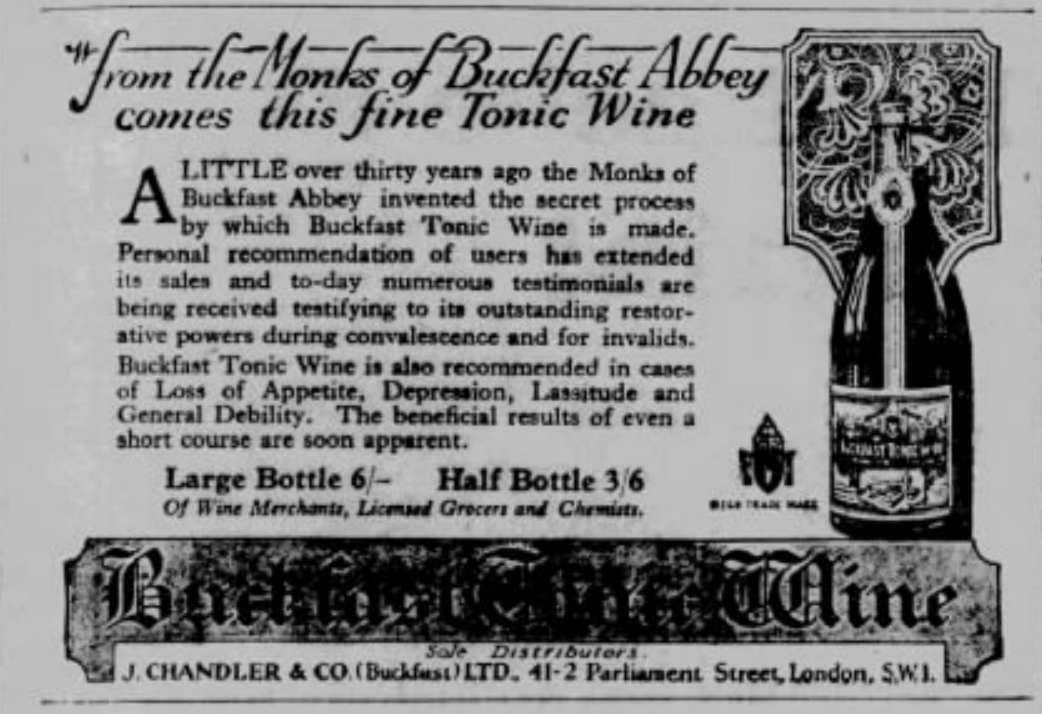
Advertisements extolled it as a “health restorative of unequalled excellence,” made “from a secret process known only to the monks.” The monks’ reputation, they said, was guarantee of its purity, and it could help with convalescence, depression, anemia, depleted vitality, loss of appetite, and more.
Advertisement from Dublin’s Evening Herald in 1928. (Photo by newspapers.com)Over the decades, Buckfast’s recipe sweetened and evolved. J. Chandler and Co. distributed the wine through chemists, which added to its medicinal image. In winter, and during reported flu outbreaks, sales went up. By the 1950s, they were advertising it as giving imbibers “a new lease of life” if they were recovering from an illness.
In 1968, new regulations meant companies without any health benefits had to tweak their advertising. “To make you feel better, be better,” one advertisement read....