Showing posts sorted by relevance for query right to repair. Sort by date Show all posts

Wednesday, July 7, 2021

President Biden Sides With Farmers Over "Right to Repair", Deere Responds (DE; AAPL; MSFT)

It's bizarre that this is still an issue. I thought that with Kirtsaeng v. John Wiley & Sons, Inc., 568 U.S. 519, and the First Sale Doctrine, that it had been decided you own what you bought.

And though Apple isn't immediately affected by the coming Executive Order, they have been using Deere as a stalking horse on the issue and should be called to account as well,

Two from AgWeb. First up, July 6

Biden Sides with Farmers Over 'Right to Repair' Tractor Software Battle

 U.S. President Joe Biden wants the Federal Trade Commission to limit the ability of farm equipment manufacturers to restrict tractor owners from using independent repair shops or complete some repairs on their own, a source briefed on the matter told Reuters Tuesday.

Biden's planned executive order on competition, expected to be released in the coming days, will encourage the FTC to address the issue, the source said. Some tractor manufacturers like Deere & Co use proprietary repair tools and software to prevent third parties from performing some repairs. Deere and the FTC did not immediately comment.

The FTC wrote a report for Congress in May that discussed "Right to Repair," which addresses the issue of limits that manufacturers put on who can repair items ranging from mobile phones to home appliances to cars. Those limits may also raise the price of those repairs....

....MUCH MORE

And:

AEM, John Deere Respond to Biden's Planned Executive Order Over Right to Repair Equipment

After more than a decade of legislative proposals, the Biden Administration is preparing plans to allow equipment owners to have the right to repair their own equipment.

First reported by Reuters Tuesday, President Joe Biden is expected to sign an executive order in the coming days to encourage the Federal Trade Commission (FTC) to limit the ability of farm equipment manufacturers to restrict tractor owners from using independent repair shops or completing some of the work themselves. 

White House Press Secretary Jen Psaki responding to the report on Tuesday, saying the effort would help farmers "fight back against abuses of power by giant agribusiness corporations and give farmers the right to repair their own equipment how they like."....

....MUCH MORE

We've been following the specific and wider questions (looking at you Apple) of this issue for a long time:

June 8, 2021
"Microsoft and Apple Wage War on Gadget Right-to-Repair Laws"

July 2019
Pearson, Biggest Textbook Publisher, Pushing Students To Ebooks You Can't Resell (PSON.L)
Combining a couple threads from days gone by. Do you, or don't you, own what you've paid for?
And one of the best market calls ever. ...

May 2019
"Apple Is Telling Lawmakers People Will Hurt Themselves if They Try to Fix iPhones" (AAPL)
April 2019
"U.S. Farmers Are Being Bled by the Tractor Monopoly" (DE)
This is a major story and not just for farmers and people who eat food....

"Why American Farmers Are Hacking Their Tractors With Ukrainian Firmware" (DE)
April 2015
John Deere Tells Patent Office That Purchasers Don't Actually Own the Machine They Paid For (DE)
 May 2015 
"John Deere Clarifies: It's Trying To Abuse Copyright Law To Stop You From Owning Your Own Tractor... Because It Cares About You" (DE)
November 2016 
For the Next Two Years Auto Manufacturers Can't Have You Arrested...
...for trying to repair or modify the software on your own car.
March 2018 
"The Right to Repair Battle Has Come to Silicon Valley"
You didn't thinks all those posts on John Deere and "Kirtsaeng v. John Wiley & Sons, Inc." were simply about tractors and textbooks did you? I mean, sure they were, but they were also about whether you own the stuff you buy and if the Supreme Court would uphold the First Sale Doctrine.
Oct. 2018
A Major Win For the Right to Repair Your Own Stuff (AAPL; DE)

We've chronicled how manufacturers, most egregiously John Deere of all people, have been inserting clauses into purchase agreements that basically state, errrmmm, that you didn't actually purchase anything more than a service.
The U.S. copyright office would beg to differ with the manufacturers on one weapon they've been using....
"The 'Right to Repair' Movement Is Gaining Ground and Could Hit Manufacturers Hard"
What started as a single observation has become a series, this manufacturer's claim that when you buy their product you've actually just entered into some sort of neo-feudal lease arrangement, some links below....

Thursday, October 17, 2024

"US FTC probing Deere over customers 'right to repair' equipment" (DE)

Talk about a long strange trip. Deere and Apple were front and center in denying that people who purchased their products had ownership rights including the right to repair. Apple saw the error of their ways, though it is still difficult to repair a problem with their equipment without running afoul of some fine print or other. Deere on the other hand said they would honor the principles of right-to-repair and ended up getting laughed at by their farmer customers.

From Reuters, October 17:

The U.S. Federal Trade Commission is probing farm equipment maker Deere (DE.N) over the company's repair policies, according to a filing made public on Thursday.

The investigation, authorized on Sept. 2, 2021, focuses on repair restrictions manufacturers place on hardware or software, often referred to by regulators as impeding customers' "right to repair" the goods they purchase.
 
The probe was made public through a filing by data analytics company Hargrove & Associates Inc, which sought to quash an FTC subpoena seeking market data submitted to it by members of the Association of Equipment Manufacturers.
 
Neither HAI nor AEM is a target of the FTC probe, according to the filing.
A spokesperson for the FTC declined to comment, and a representative for Deere did not immediately respond....
....MUCH MORE
 
Here's the latest, a filing from a third party with a lot of detail: "https://www.ftc.gov/system/files/ftc_gov/pdf/611970-HAI%27sPetitiontoQuashtheFTC%27sCID%28FTCFileNo.211-0191%29%28PUBLIC%29.pdf"
 
Shut them down, this has gone on far too long. Some of our early posts:
April 2015
John Deere Tells Patent Office That Purchasers Don't Actually Own the Machine They Paid For (DE)
 May 2015 
"John Deere Clarifies: It's Trying To Abuse Copyright Law To Stop You From Owning Your Own Tractor... Because It Cares About You" (DE)
November 2016 
For the Next Two Years Auto Manufacturers Can't Have You Arrested...
...for trying to repair or modify the software on your own car.

And in a tangential development:
Big Data Down On the Farm: "DuPont Joins Deere on Software in Challenge to Monsanto" (DE; DD; MON)
 
Here's the introduction to a March 2017 post:
"Why American Farmers Are Hacking Their Tractors With Ukrainian Firmware" (DE)
John Deere says:
"When a customer buys John Deere equipment, he or she owns the equipment," ...

Their actions say they are full of manure.
As one critic puts it:

"They require buyers to accept an End User License Agreement that disallows all of the activities they say are allowed in their statement," she said. "Deere is a monopolist and has systematically taken over the role of equipment owner, despite having been paid fairly and fully for equipment. Their claims to control equipment post-purchase are inconsistent with all aspects of ownership including accounting, taxation, and transfer of products into the secondary market."

It's all about the intellectual property and unfortunately the Supreme Court has been wishy-washy on a couple decisions but there is hope. As we noted in the November '16 post below:

One of the heroes of this stuff was Thai native and U.S. student Supap Kirtsaeng who won his case, Kirtsaeng v. John Wiley & Sons, Inc., wherein he argued he should be able to re-sell textbooks he had lawfully purchased. The Supreme Court upheld the First Sale Doctrine that "you bought it, you own it".....
June 2021
"Microsoft and Apple Wage War on Gadget Right-to-Repair Laws"
July 2021
President Biden Sides With Farmers Over "Right to Repair", Deere Responds (DE; AAPL; MSFT)

It's bizarre that this is still an issue. I thought that with Kirtsaeng v. John Wiley & Sons, Inc., 568 U.S. 519, and the First Sale Doctrine, that it had been decided you own what you bought.

And though Apple isn't immediately affected by the coming Executive Order, they have been using Deere as a stalking horse on the issue and should be called to account as well,

January 2023
Right To Repair: One Down, Dozens More To Go (DE; AAPL)

It's about time.

From Reuters, January 8:

The American Farm Bureau Federation and machinery manufacturer Deere & Co signed a memorandum of understanding on Sunday that ensures farmers have the right to repair their own farm equipment or go to an independent technician.

As the agriculture sector accelerates its adoption of technology, the reliance on high-tech machinery such as GPS-guided combines and tractors has become more common-place.

But equipment makers such as Deere have generally required customers to use their parts and service divisions for repairs and until recently, only allowed authorized dealers the means and tools to access the complex computerized systems of their tractors and other machinery....
*****
.... The MOU aims to find a solution to the "right to repair" debate in the private sector, rather than through legislation or regulation, according to the document. It benefits farmers and independent repair facilities in the United States and Puerto Rico, for the "lawful operation and upkeep of Agricultural Equipment," the MOU states.....

And many, many more.

February 2024
Responding To The Fall In Farm Income, John Deere Introduces Farm Implements as a Service (DE; FIaaS)
I think the big green machine means well but it seems that every tweak to their business plan is a retrograde motion back towards sharecropping.

Monday, January 9, 2023

Right To Repair: One Down, Dozens More To Go (DE; AAPL)

It's about time.*

From Reuters, January 8:

The American Farm Bureau Federation and machinery manufacturer Deere & Co signed a memorandum of understanding on Sunday that ensures farmers have the right to repair their own farm equipment or go to an independent technician.

As the agriculture sector accelerates its adoption of technology, the reliance on high-tech machinery such as GPS-guided combines and tractors has become more common-place.

But equipment makers such as Deere have generally required customers to use their parts and service divisions for repairs and until recently, only allowed authorized dealers the means and tools to access the complex computerized systems of their tractors and other machinery....
*****
.... The MOU aims to find a solution to the "right to repair" debate in the private sector, rather than through legislation or regulation, according to the document. It benefits farmers and independent repair facilities in the United States and Puerto Rico, for the "lawful operation and upkeep of Agricultural Equipment," the MOU states.....
....MUCH MORE
 
Here's The American Farm Bureau's press release:
AFBF Signs Right to Repair Memorandum of Understanding with John Deere
And the Memorandum of Understanding (6 page PDF)
*We've been following the specific and wider questions (looking at you Apple) of this issue for a long time:  
Some history:
April 2015
 "John Deere Tells Patent Office That Purchasers Don't Actually Own the Machine They Paid For (DE)".
May 2015 

November 2016 
For the Next Two Years Auto Manufacturers Can't Have You Arrested...
...for trying to repair or modify the software on your own car.

March 2017 
March 2018 
"The Right to Repair Battle Has Come to Silicon Valley"
You didn't thinks all those posts on John Deere and "Kirtsaeng v. John Wiley & Sons, Inc." were simply about tractors and textbooks did you? I mean, sure they were, but they were also about whether you own the stuff you buy and if the Supreme Court would uphold the First Sale Doctrine.

Oct. 2018
A Major Win For the Right to Repair Your Own Stuff (AAPL; DE)

We've chronicled how manufacturers, most egregiously John Deere of all people, have been inserting clauses into purchase agreements that basically state, errrmmm, that you didn't actually purchase anything more than a service.
The U.S. copyright office would beg to differ with the manufacturers on one weapon they've been using....
February 2019
 "The 'Right to Repair' Movement Is Gaining Ground and Could Hit Manufacturers Hard"
What started as a single observation has become a series, this manufacturer's claim that when you buy their product you've actually just entered into some sort of neo-feudal lease arrangement, some links below....

April 2019
"U.S. Farmers Are Being Bled by the Tractor Monopoly" (DE)
This is a major story and not just for farmers and people who eat food....

May 2019
"Apple Is Telling Lawmakers People Will Hurt Themselves if They Try to Fix iPhones" (AAPL)

July 2019
Pearson, Biggest Textbook Publisher, Pushing Students To Ebooks You Can't Resell (PSON.L)
Combining a couple threads from days gone by. Do you, or don't you, own what you've paid for?
And one of the best market calls ever. ...

June 8, 2021
"Microsoft and Apple Wage War on Gadget Right-to-Repair Laws"

July 2021
President Biden Sides With Farmers Over "Right to Repair", Deere Responds (DE; AAPL; MSFT)
It's bizarre that this is still an issue. I thought that with Kirtsaeng v. John Wiley & Sons, Inc., 568 U.S. 519, and the First Sale Doctrine, that it had been decided you own what you bought.And though Apple isn't immediately affected by the coming Executive Order, they have been using Deere as a stalking horse on the issue and should be called to account as well.

Sunday, June 6, 2021

"Microsoft and Apple Wage War on Gadget Right-to-Repair Laws"

A bit late getting to this but the underlying story, the power of monopolies, is so important that better late than never applies.

From Bloomberg, May 20:

Justin Millman has always fixed things. He tinkered with gadgets growing up before opening a repair shop in Westbury, New York, a few blocks south of the Long Island Expressway. Students from a nearby school started trickling in with their busted devices and business was brisk enough that Millman worked only on those. Each month he now fixes some 2,000 iPads and Chromebooks, computers that, since the pandemic, have become education essentials.

Sometimes, though, Millman can’t fix them. It’s not that he’s technically incapable. It’s that the parts and schematics aren’t available, usually because device manufacturers, including the world’s richest companies — like Microsoft Corp and Alphabet Inc’s Google — don’t share them. Several students recently came to Millman with defective WiFi cards on their Chromebooks, laptops designed only to work when connected to the internet. That card widget “is not a particularly hard-to-find or expensive part,” Millman explained — but the laptop maker requires a specific version to be installed and Millman isn’t on the shortlist of approved repair providers. He counts 25 schools he works with facing an identical flaw. “And that’s just me,” he said. 

For years, technology companies have imposed strict limits on who can fix chipped iPhones, broken game consoles and a wealth of other non-working (or defective) gadgets. Components are kept in short supply or simply not shared with independent shops to mend things like USB ports and batteries. After seeing these restrictions firsthand, Millman joined a cadre of small business owners, hobbyists and activists pushing right-to-repair bills across the country. These measures are designed to undo rules businesses set to restrict repairs to authorized providers for a vast range of products from a Kindle to a wheelchair.

Twenty-seven states considered such bills in 2021. More than half have already been voted down or dismissed, according to consumer groups tracking the proposals. To advocates of these bills, the current repair system is a major reason why we cycle through personal devices so quickly, furthering the environmental impact of these gadgets.

America’s smartphone habit alone eats up some 23.7 million tons of raw material, according to a report from US PIRG. The consumer group estimated that people holding onto their smartphones for an extra year would be the emissions equivalent of taking 636,000 cars off the road.

One reason these legislative efforts have failed is the opposition, which happens to sell boatloads of new devices every year. Microsoft’s top lawyer advocated against a repair bill in its home state. Lobbyists for Google and Amazon.com Inc swooped into Colorado this year to help quash a proposal. Trade groups representing Apple Inc successfully buried a version in Nevada. Telecoms, home appliance firms and medical companies also opposed the measures, but few have the lobbying muscle and cash of these technology giants. While tech companies face high-profile scrutiny in Washington, they quietly wield power in statehouses to shape public policy and stamp out unwelcome laws. Tech companies argue that right-to-repair laws would let pirates rip off intellectual property and expose consumers to security risks. In several statehouses, lobbyists told lawmakers that unauthorized repair shops could damage batteries on devices, posing a threat of spontaneous combustion. 

Consumer groups don’t buy these claims. They say tech firms are holding fast to a status quo that forces consumers to pay more for repairs or simply buy new devices. “These companies have monopoly power,” said Brianna Titone, a Colorado legislator who sponsored a repair bill. “They’re not looking for a compromise. They’re looking for, ‘Leave us alone. Stop this. Go away.’”

TechNet, a trade group representing several large tech firms including Google and Apple, sent letters to lawmakers in multiple states as part of an industry coalition. “Allowing unvetted third parties with access to sensitive diagnostic information, software, tools, and parts would jeopardize the safety and security of consumers’ devices and put consumers at risk for fraud,” David Edmonson, a TechNet vice president, said in a statement. “States have continually rejected legislation like this, with 25 states alone last year deciding not to take action.”

Pressure is not going away, however. Advocates are pressing forward in New York and other states using testimony from local business owners like Millman. In early May, the Federal Trade Commission released a report to Congress arguing that the current system for consumer electronics harms competition and economic development in low-income areas. “The pandemic has exacerbated the effects of repair restrictions on consumers,” the agency wrote, noting the particular shortages of school laptops. “[T]here is scant evidence to support manufacturers’ justification for repair restrictions,” the agency concluded. Edmonson from TechNet said the group is “actively considering” the agency’s findings.

It started with cars. In 2012, voters in Massachusetts passed a law requiring automakers to share information on vehicle systems with dealers and unaffiliated repair shops. Since then, consumer advocates have called for similar measures to apply to electronic gadgets, ventilators and farm equipment — but none have been successful....

....MUCH MORE

Previously:
July 2019
Pearson, Biggest Textbook Publisher, Pushing Students To Ebooks You Can't Resell (PSON.L)
Combining a couple threads from days gone by. Do you, or don't you, own what you've paid for?
And one of the best market calls ever. ...

May 2019
"Apple Is Telling Lawmakers People Will Hurt Themselves if They Try to Fix iPhones" (AAPL)
April 2019
"U.S. Farmers Are Being Bled by the Tractor Monopoly" (DE)
This is a major story and not just for farmers and people who eat food....

"Why American Farmers Are Hacking Their Tractors With Ukrainian Firmware" (DE)
April 2015
John Deere Tells Patent Office That Purchasers Don't Actually Own the Machine They Paid For (DE)
 May 2015 
"John Deere Clarifies: It's Trying To Abuse Copyright Law To Stop You From Owning Your Own Tractor... Because It Cares About You" (DE)
November 2016 
For the Next Two Years Auto Manufacturers Can't Have You Arrested...
...for trying to repair or modify the software on your own car.
March 2018 
"The Right to Repair Battle Has Come to Silicon Valley"
You didn't thinks all those posts on John Deere and "Kirtsaeng v. John Wiley & Sons, Inc." were simply about tractors and textbooks did you? I mean, sure they were, but they were also about whether you own the stuff you buy and if the Supreme Court would uphold the First Sale Doctrine.
Oct. 2018
A Major Win For the Right to Repair Your Own Stuff (AAPL; DE)

We've chronicled how manufacturers, most egregiously John Deere of all people, have been inserting clauses into purchase agreements that basically state, errrmmm, that you didn't actually purchase anything more than a service.
The U.S. copyright office would beg to differ with the manufacturers on one weapon they've been using....
"The 'Right to Repair' Movement Is Gaining Ground and Could Hit Manufacturers Hard"
What started as a single observation has become a series, this manufacturer's claim that when you buy their product you've actually just entered into some sort of neo-feudal lease arrangement, some links below....

Sunday, April 28, 2019

"U.S. Farmers Are Being Bled by the Tractor Monopoly" (DE)

From Bloomberg:
The unpredictable weather in southern Minnesota means that spring planting season is brief and often frantic, sometimes requiring 24-hour shifts if the weather requires it. Farmers who want to get their crops in the ground can't afford to waste an hour.

So when John Nauerth III, a farmer in remote Jackson, had trouble with his tractor last spring, he was worried. In years past, he told me over the phone, he might've diagnosed and fixed the problem with a screwdriver, or called a local mechanic.

But as tractors become as complex as Teslas, agricultural equipment manufacturers and their authorized dealerships are using technology as an excuse to force farmers to use the authorized service center - and only the authorized service center - for repairs. That's costing farmers - and independent repair shops - dearly.

Nauerth, under pressure to plant, waited a costly "two or three hours" for an authorized dealer to show up at his farm to plug in a computer and diagnose the problem. Worse, the dealer didn't have the repair part - and independent repair shops, excluded from the repair monopoly, didn't either.
"Right now, you're at the mercy of the dealers," Nauerth said.   "Good thing is we figured out a way to get it running with a two-by-six piece of plywood."

Other American farmers are just as frustrated as he is at being funneled into the authorized repair services that can't meet demand, especially when they are already struggling against economic headwinds. Across rural America, they are seeking relief, sometimes by joining so called "tractorhacking" collectives that override manufacturer-installed software locks, and - increasingly - by backing so-called Fair Repair (or Right to Repair) bills that would require manufacturers of everything from tractors to smartphones to open up their repair monopolies to competition by providing equal access to service manuals, diagnostic tools and parts.

Twenty U.S. states are currently considering versions of Fair Repair, and Minnesota - which is likely to debate the legislation in its House of Representatives in coming weeks - is a frontrunner to pass it first.
U.S. consumers may be unaware of the farmers’ plight, but many people have had similar experiences with their automobiles. It wasn't so long ago that American driveways were filled with DIY mechanics performing oil changes, brake jobs and other basic maintenance. What the hobbyist mechanic couldn't do at home, a plethora of independent repair shops could do, instead.
As cars became more like computers, manufacturers and their dealerships began to restrict independent repair shops from obtaining diagnostic equipment, maintenance guides and other essential service materials. If you've ever had to pay a car dealership to reset a light or sensor because an independent garage didn't have the equipment or diagnostics, you've experienced what it's like to be a farmer with a malfunctioning tractor.

It's not cheap. In Nebraska, an independent mechanic can replace a John Deere Co tractor transmission. But if the farmer wants to drive it out of the mechanic's garage, a Deere technician must be hired for $230, plus $130 per hour, to show up to plug a computer into the tractor to authorize the part, according to Motherboard....MORE
This is a major story and not just for farmers and people who eat food.
Previously:
"Why American Farmers Are Hacking Their Tractors With Ukrainian Firmware" (DE)
April 2015
John Deere Tells Patent Office That Purchasers Don't Actually Own the Machine They Paid For (DE)
 May 2015 
"John Deere Clarifies: It's Trying To Abuse Copyright Law To Stop You From Owning Your Own Tractor... Because It Cares About You" (DE)
November 2016 
For the Next Two Years Auto Manufacturers Can't Have You Arrested...
...for trying to repair or modify the software on your own car.
March 2018 
"The Right to Repair Battle Has Come to Silicon Valley"
You didn't thinks all those posts on John Deere and "Kirtsaeng v. John Wiley & Sons, Inc." were simply about tractors and textbooks did you? I mean, sure they were, but they were also about whether you own the stuff you buy and if the Supreme Court would uphold the First Sale Doctrine.
Oct. 2018
A Major Win For the Right to Repair Your Own Stuff (AAPL; DE)
We've chronicled how manufacturers, most egregiously John Deere of all people, have been inserting clauses into purchase agreements that basically state, errrmmm, that you didn't actually purchase anything more than a service.
The U.S. copyright office would beg to differ with the manufacturers on one weapon they've been using....
"The 'Right to Repair' Movement Is Gaining Ground and Could Hit Manufacturers Hard"
What started as a single observation has become a series, this manufacturer's claim that when you buy their product you've actually just entered into some sort of neo-feudal lease arrangement, some links below....

Saturday, March 10, 2018

"The Right to Repair Battle Has Come to Silicon Valley"

You didn't thinks all those posts on John Deere and "Kirtsaeng v. John Wiley & Sons, Inc." were simply about tractors and textbooks did you? I mean, sure they were, but they were also about whether you own the stuff you buy and if the Supreme Court would uphold the First Sale Doctrine.

Here's the latest from Motherboard:
A California lawmaker is making the state the 18th in the country to consider legislation that would make it easier to fix your things.

The right to repair battle has come to Silicon Valley’s home state: Wednesday, a state assemblymember announced that California would become the 18th state in the country to consider legislation that would make it easier to repair your electronics.

“The Right to Repair Act will provide consumers with the freedom to have their electronic products and appliances fixed by a repair shop or service provider of their choice, a practice that was taken for granted a generation ago but is now becoming increasingly rare in a world of planned obsolescence,” Susan Talamantes Eggman, a Democrat from Stockton who introduced the bill said in a statement.

The announcement had been rumored for about a week but became official Wednesday. The bill would require electronics manufacturers to make repair guides and repair parts available to the public and independent repair professionals and would also would make diagnostic software and tools that are available to authorized and first-party repair technicians available to independent companies.

Right to repair legislation has considerable momentum this year; 18 states have introduced it, and several states have held hearings about the topic. In each of these states, big tech companies such as Apple, Microsoft, John Deere, and AT&T and trade associations they’re associated with have heavily lobbied against it, claiming that allowing people to fix their things would cause safety and security concerns. Thus far, companies have been unwilling to go on the record to explain the specifics about how these bills would be dangerous or would put device and consumer security in jeopardy....MORE
Previously:
April 2015
John Deere Tells Patent Office That Purchasers Don't Actually Own the Machine They Paid For (DE)
 
May 2015
"John Deere Clarifies: It's Trying To Abuse Copyright Law To Stop You From Owning Your Own Tractor... Because It Cares About You" (DE)

November 2016
For the Next Two Years Auto Manufacturers Can't Have You Arrested...
...for trying to repair or modify the software on your own car.

March 2017
"Why American Farmers Are Hacking Their Tractors With Ukrainian Firmware" (DE)

Nov. 2017 
Logitech Once Again Shows That In The Modern Era, You Don't Really Own What You Buy

Monday, May 23, 2022

You Will Own Nothing: iPhone Edition plus Right To Repair, Apple Style (AAPL)

First up a reminder, this post on life in 2030 was removed from the website of the World Economic Forum, currently on Day II of the 2022 Davos get-together: 

Welcome to 2030. I own nothing, have no privacy, and life has never been better

And from CNET, March 24:

Apple Plans Subscription Model for iPhone, Other Hardware Products, Report Says
Owning Apple products could be a thing of the past

Apple might implement a subscription model for future hardware products including iPhonesBloomberg reported Thursday. 

If a subscription model were applied, customers wouldn't own Apple products, but would pay a monthly fee to use Apple products, like a person paying rent. While still in development, the subscription service could reportedly launch by next year and be bundled into AppleCare and Apple One plans.

According to Bloomberg, the plan would allow customers to subscribe to hardware with their Apple ID or App Store account. This wouldn't be a payment installment program, and the monthly fee wouldn't be a portion of the price of the product split up into 12- or 24-month increments. The fee would depend on which device someone chooses.

Program subscribers could also have the option to swap out their devices for the latest model upon release. Apple historically releases new models of its products once a year.

Apple didn't immediately respond to a request for comment....

....MUCH MORE

And from The Verge, because the government said right to repair is a right, May 21:

Apple shipped me a 79-pound iPhone repair kit to fix a 1.1-ounce battery
I’m starting to think Apple doesn’t want us to repair them

Apple must be joking.

That’s how I felt again and again as I jumped through hoop after ridiculous hoop to replace the battery in my iPhone Mini. Part of that was the repair process — mostly, it was how difficult Apple makes it to even get there.

Last month, Apple launched its Self-Service Repair program, letting US customers fix broken screens, batteries, and cameras on the latest iPhones using Apple’s own parts and tools for the first time ever. I couldn’t wait. I’d never successfully repaired a phone — and my wife has never let me live down the one time I broke her Samsung Galaxy while using a hair dryer to replace the screen. This time, armed with an official repair manual and genuine parts, I’d make it right.

That Apple would even let me buy those parts, much less read its manuals and rent its tools, is a major change of pace for the company. For years, Apple has been lobbying to suppress right-to-repair policies around the country, with the company accused of doing everything it can to keep customers from repairing their own phones. It’s easy to see this as a huge moment for DIY advocates. But having tried the repair process, I actually can’t recommend it at all — and I have a sneaking suspicion that Apple likes it that way....

....MUCH MORE, so much more 

We've been tracking existence-as-a-service:
From those wonderful folks who bring us Davos, Existence as a Service!
Yes you can now purchase your existence for periods as short as one hour using WEFcoin and  the EaaS platform...

And right to repair for a very long time. As noted in one of dozens of RtR posts:

You didn't thinks all those posts on John Deere and "Kirtsaeng v. John Wiley & Sons, Inc." were simply about tractors and textbooks did you? I mean, sure they were, but they were also about whether you own the stuff you buy and if the Supreme Court would uphold the First Sale Doctrine.

Wednesday, May 1, 2019

"Apple Is Telling Lawmakers People Will Hurt Themselves if They Try to Fix iPhones" (AAPL)

Following up on Sunday's "U.S. Farmers Are Being Bled by the Tractor Monopoly" (DE).

And also March 2018's "The Right to Repair Battle Has Come to Silicon Valley"
You didn't thinks all those posts on John Deere and "Kirtsaeng v. John Wiley & Sons, Inc." were simply about tractors and textbooks did you? I mean, sure they were, but they were also about whether you own the stuff you buy and if the Supreme Court would uphold the First Sale Doctrine.

From Motherboard:
An Apple lobbyist brought an iPhone to meetings with California lawmakers and said consumers could hurt themselves by puncturing a lithium-ion battery.
In recent weeks, an Apple representative and a lobbyist for CompTIA, a trade organization that represents big tech companies, have been privately meeting with legislators in California to encourage them to kill legislation that would make it easier for consumers to repair their electronics, Motherboard has learned.
According to two sources in the California State Assembly, the lobbyists have met with members of the Privacy and Consumer Protection Committee, which is set to hold a hearing on the bill Tuesday afternoon. The lobbyists brought an iPhone to the meetings and showed lawmakers and their legislative aides the internal components of the phone. The lobbyists said that if improperly disassembled, consumers who are trying to fix their own iPhone could hurt themselves by puncturing the lithium-ion battery, the sources, who Motherboard is not naming because they were not authorized to speak to the media, said.

The argument is similar to one made publicly by Apple executive Lisa Jackson in 2017 at TechCrunch Disrupt, when she said the iPhone is “too complex” for normal people to repair them.
In the past, Apple has lobbied against so-called right to repair legislation—which would require Apple and other electronics companies to sell repair parts and tools, and make diagnostic and repair information available to the general public. In 2017, New York State records showed that the company hired a lobbyist to push against the issue there, and an Apple lobbyist in Nebraska told a lawmaker there that passing a right to repair bill would turn the state into a “Mecca for bad actors,” criminals, and hackers. Following media coverage of Apple lobbying in those two states, the company has been much quieter. Rather than lobbying on its own behalf, the company has relied on CompTIA, an organization funded by tech companies like Apple, Microsoft, and Samsung, to testify against the legislation at hearings and meet with lawmakers.

The in-person meetings in California came a few weeks after CompTIA and 18 other trade organizations associated with big tech companies—including CTIA and the Entertainment Software Association—sent letters in opposition of the legislation to members of the Assembly’s Privacy and Consumer Protection Committee. One copy of the letter, addressed to committee chairperson Ed Chau and obtained by Motherboard, urges the chairperson “against moving forward with this legislation.” CTIA represents wireless carriers including Verizon, AT&T, and T-Mobile, while the Entertainment Software Association represents Nintendo, Sony, Microsoft, and other video game manufacturers....MUCH MORE
The 'ol "our customers are idiots" pitch. 

Friday, October 26, 2018

A Major Win For the Right to Repair Your Own Stuff (AAPL; DE)

We've chronicled how manufacturers, most egregiously John Deere of all people, have been inserting clauses into purchase agreements that basically state, errrmmm, that you didn't actually purchase anything more than a service.
The U.S. copyright office would beg to differ with the manufacturers on one weapon they've been using.

From The Register, October 26:

Yes, Americans, you can break anti-piracy DRM if you want to repair some of your kit – US govt
Landmark victory for right-to-fix movement
The US Copyright Office has ruled that, in certain circumstances, folks can legally break a manufacturer's anti-piracy mechanisms – aka digital rights management (DRM) – if they want to repair their own gear.

The ruling, issued Thursday, states that from this Sunday onwards "the prohibition against circumvention of technological measures that effectively control access to copyrighted works shall not apply to persons who engage in noninfringing uses of certain classes of such works."

The new rules apply to smartphones, tablets, smartwatches, routers and other wireless hotspots, chatty gizmos like Amazon Alexa and Google Home, plus cars, trucks and tractors. Yes, even tractors have DRM these days.

Thus, within the next few days, they can all be repaired by anyone with the skills, and it's legal to break any DRM stopping you from doing so. Sadly the Copyright Office didn't include games consoles, aircraft, nor boats, and the copy protection systems on HDMI must remain untouched.

The ruling will be hated by manufacturers who have made it their mission to design hardware that people can't repair on their own. After all, it's so much more profitable to force people to either only use a company's own repair service – which can then charge what it likes – or buy "official" replacement parts that again cost a pretty penny, or fork out for entirely new kit.

Manufacturers were able to clap these protection mechanisms on their products under the cover of section 1201, enacted by the much-loved 1998 Digital Millennium Copyright Act, which made it illegal for people to break DRM defenses on technology they own. However, the Copyright Office, overseen by the Library of Congress, can make exceptions to section 1201 every three years....MUCH MORE
Previously:

March 2018 
"The Right to Repair Battle Has Come to Silicon Valley"
You didn't thinks all those posts on John Deere and "Kirtsaeng v. John Wiley & Sons, Inc." were simply about tractors and textbooks did you? I mean, sure they were, but they were also about whether you own the stuff you buy and if the Supreme Court would uphold the First Sale Doctrine.

April 2015
John Deere Tells Patent Office That Purchasers Don't Actually Own the Machine They Paid For (DE)

May 2015
"John Deere Clarifies: It's Trying To Abuse Copyright Law To Stop You From Owning Your Own Tractor... Because It Cares About You" (DE)

November 2016
For the Next Two Years Auto Manufacturers Can't Have You Arrested...
...for trying to repair or modify the software on your own car.

March 2017
"Why American Farmers Are Hacking Their Tractors With Ukrainian Firmware" (DE)

Nov. 2017 
Logitech Once Again Shows That In The Modern Era, You Don't Really Own What You Buy

Monday, February 4, 2019

"The 'Right to Repair' Movement Is Gaining Ground and Could Hit Manufacturers Hard"

What started as a single observation has become a series, this manufacturer's claim that when you buy their product you've actually just entered into some sort of neo-feudal lease arrangement, some links below.

From Fortune January 5:
European Union member states are this week voting on dishwasher efficiency and repair. If that sounds as dull as, well, dishwater, then you need to consider the last time your own dishwasher broke. With the right rules in place, it would be a cheap and easy fix. However, you’re not allowed to fiddle with the machine because it would invalidate the warranty. So, instead, you go and buy a new model and throw the old one on the dump.

While that’s good for manufacturers, it is increasingly becoming a problem for consumers. In the EU and at least 18 U.S. states, regulators are starting to listen and considering proposals that address the impact of planned obsolescence by making household goods sturdier and easier to mend, reports the BBC.

This week’s dishwasher vote was just one of a series revising the 2009 Ecodesign Directive, which governs everything from how much energy a vacuum cleaner sold in the EU can use to how many household appliances and electronics are recycled. Put together, the EU is looking at the manufacturing rules surrounding everything from lighting to televisions and large home appliances, such as washing machines and fridges.

At the same time, activists have introduced draft laws in the U.S. that seek to give consumers more control over how they repair and maintain their property. The U.S. Library of Congress ruled in 2015 that farmers could modify software if necessary to repair devices such as tractors, prompting a backlash from tractor manufacturer John Deere and legislative battles in several farming states....MORE
Previously:
Oct. 2018
A Major Win For the Right to Repair Your Own Stuff (AAPL; DE)
We've chronicled how manufacturers, most egregiously John Deere of all people, have been inserting clauses into purchase agreements that basically state, errrmmm, that you didn't actually purchase anything more than a service.
The U.S. copyright office would beg to differ with the manufacturers on one weapon they've been using....
March 2018 
"The Right to Repair Battle Has Come to Silicon Valley"
You didn't thinks all those posts on John Deere and "Kirtsaeng v. John Wiley & Sons, Inc." were simply about tractors and textbooks did you? I mean, sure they were, but they were also about whether you own the stuff you buy and if the Supreme Court would uphold the First Sale Doctrine.
April 2015
John Deere Tells Patent Office That Purchasers Don't Actually Own the Machine They Paid For (DE)

May 2015

"John Deere Clarifies: It's Trying To Abuse Copyright Law To Stop You From Owning Your Own Tractor... Because It Cares About You" (DE)

November 2016
For the Next Two Years Auto Manufacturers Can't Have You Arrested...
...for trying to repair or modify the software on your own car.

March 2017
"Why American Farmers Are Hacking Their Tractors With Ukrainian Firmware" (DE)

Nov. 2017 
Logitech Once Again Shows That In The Modern Era, You Don't Really Own What You Buy

Tuesday, March 21, 2017

"Why American Farmers Are Hacking Their Tractors With Ukrainian Firmware" (DE)

John Deere says:
"When a customer buys John Deere equipment, he or she owns the equipment," ...
Their actions say they are full of manure.
As one critic puts it:
"They require buyers to accept an End User License Agreement that disallows all of the activities they say are allowed in their statement," she said. "Deere is a monopolist and has systematically taken over the role of equipment owner, despite having been paid fairly and fully for equipment. Their claims to control equipment post-purchase are inconsistent with all aspects of ownership including accounting, taxation, and transfer of products into the secondary market."
It's all about the intellectual property and unfortunately the Supreme Court has been wishy-washy on a couple decisions but there is hope. As we noted in the November '16 post below:
One of the heroes of this stuff was Thai native and U.S. student Supap Kirtsaeng who won his case, Kirtsaeng v. John Wiley & Sons, Inc., wherein he argued he should be able to re-sell textbooks he had lawfully purchased. The Supreme Court upheld the First Sale Doctrine that "you bought it, you own it".
From Motherboard, March 21:

A dive into the thriving black market of John Deere tractor hacking.
To avoid the draconian locks that John Deere puts on the tractors they buy, farmers throughout America's heartland have started hacking their equipment with firmware that's cracked in Eastern Europe and traded on invite-only, paid online forums.

Tractor hacking is growing increasingly popular because John Deere and other manufacturers have made it impossible to perform "unauthorized" repair on farm equipment, which farmers see as an attack on their sovereignty and quite possibly an existential threat to their livelihood if their tractor breaks at an inopportune time.

"When crunch time comes and we break down, chances are we don't have time to wait for a dealership employee to show up and fix it," Danny Kluthe, a hog farmer in Nebraska, told his state legislature earlier this month. "Most all the new equipment [requires] a download [to fix]."
The nightmare scenario, and a fear I heard expressed over and over again in talking with farmers, is that John Deere could remotely shut down a tractor and there wouldn't be anything a farmer could do about it.

A license agreement John Deere required farmers to sign in October forbids nearly all repair and modification to farming equipment, and prevents farmers from suing for "crop loss, lost profits, loss of goodwill, loss of use of equipment … arising from the performance or non-performance of any aspect of the software." The agreement applies to anyone who turns the key or otherwise uses a John Deere tractor with embedded software. It means that only John Deere dealerships and "authorized" repair shops can work on newer tractors.

"If a farmer bought the tractor, he should be able to do whatever he wants with it," Kevin Kenney, a farmer and right-to-repair advocate in Nebraska, told me. "You want to replace a transmission and you take it to an independent mechanic—he can put in the new transmission but the tractor can't drive out of the shop. Deere charges $230, plus $130 an hour for a technician to drive out and plug a connector into their USB port to authorize the part."

"What you've got is technicians running around here with cracked Ukrainian John Deere software that they bought off the black market," he added.

Kenney and Kluthe have been pushing for right-to-repair legislation in Nebraska that would invalidate John Deere's license agreement (seven other states are considering similar bills). In the meantime, farmers have started hacking their machines because even simple repairs are made impossible by the embedded software within the tractor. John Deere is one of the staunchest opponents of this legislation....MUCH MORE
Previously:
April 2015
John Deere Tells Patent Office That Purchasers Don't Actually Own the Machine They Paid For (DE)
 May 2015 
"John Deere Clarifies: It's Trying To Abuse Copyright Law To Stop You From Owning Your Own Tractor... Because It Cares About You" (DE)
November 2016 
For the Next Two Years Auto Manufacturers Can't Have You Arrested...
...for trying to repair or modify the software on your own car.

And in a tangential development:
Big Data Down On the Farm: "DuPont Joins Deere on Software in Challenge to Monsanto" (DE; DD; MON)

Tuesday, April 12, 2011

UN document would give 'Mother Earth' same rights as humans

With rights come responsibilities.
It would give the International Criminal Court something to do if someone were to bring Big Mama E. up on genocide charges for killing 25,000 Japanese last month.
From the Vancouver Sun:
UNITED NATIONS — Bolivia will this month table a draft United Nations treaty giving "Mother Earth" the same rights as humans — having just passed a domestic law that does the same for bugs, trees and all other natural things in the South American country.

The bid aims to have the UN recognize the Earth as a living entity that humans have sought to "dominate and exploit" — to the point that the "well-being and existence of many beings" is now threatened.
The wording may yet evolve, but the general structure is meant to mirror Bolivia's Law of the Rights of Mother Earth, which Bolivian President Evo Morales enacted in January.


That document speaks of the country's natural resources as "blessings," and grants the Earth a series of specific rights that include rights to life, water and clean air; the right to repair livelihoods affected by human activities; and the right to be free from pollution.

It also establishes a Ministry of Mother Earth, and provides the planet with an ombudsman whose job is to hear nature's complaints as voiced by activist and other groups, including the state.

"If you want to have balance, and you think that the only (entities) who have rights are humans or companies, then how can you reach balance?" Pablo Salon, Bolivia's ambassador to the UN, told Postmedia News. "But if you recognize that nature too has rights, and (if you provide) legal forms to protect and preserve those rights, then you can achieve balance."

The application of the law appears destined to pose new challenges for companies operating in the country, which is rich in natural resources, including natural gas and lithium, but remains one of the poorest in Latin America.

But while Salon said his country just seeks to achieve "harmony" with nature, he signalled that mining and other companies may come under greater scrutiny.

"We're not saying, for example, you cannot eat meat because you know you are going to go against the rights of a cow," he said. "But when human activity develops at a certain scale that you (cause to) disappear a species, then you are really altering the vital cycles of nature or of Mother Earth. Of course, you need a mine to extract iron or zinc, but there are limits."

Bolivia is a country with a large indigenous population, whose traditional belief systems took on greater resonance following the election of Morales, Latin America's first indigenous president....MORE
Here are Evo and dos amigos performing on open mike night (Fidel is so tone-deaf):

 evo-fidel-chavez

Tuesday, February 5, 2013

DLA Piper: Clone Wars 3D Printing and Intellectual Property ( and Nathan Myhrvold's Cunning Plan to Prevent 3-D Printer Piracy)

We'll have a couple more posts on the state of play, in the meantime here's a primer.

 
 Brain gear in rigid blue
From DLA Piper:
The move from production and distribution models reliant upon physical media to digital production has already seen massive upheavals in music, video and computer software. The increasing availability of cheap 3D printers is set to bring the digital revolution to traditional industrial manufacturing

...COPYING - FROM BREACH OF COPYRIGHT TO PATENT AND DESIGN RIGHT INFRINGEMENT

We're used to stories about music, videos and software files being copied and shared over the Internet, and the efforts of the various industry bodies to control such copying. So far, the legal battles around such copying have concentrated almost entirely on copyright, as music, movies, TV shows and even computer software are all protected in law as various kinds of works in which copyright subsists.

However, by using a 3D scanner and 3D printer, it is possible to take a digital copy of a real object and then produce multiple copies or share the resulting digital model file via the Internet in the same way that other files are currently shared. Copyright Such 3D copying could clearly be a breach of copyright. Where the object being scanned, shared or printed is a sculpture, woodcut, architect's model or similar, it is likely to be an 'artistic work' within the meaning of section 4 of the Copyright, Designs and Patents Act 1988 (CDPA). Any copying of that object (or a substantial part) without the copyright holder's permission would therefore, on the face of it, be an infringing act. It is relatively easy to imagine breaches of copyright occurring using a 3D printer.

Whilst the number of people copying the works of noted artistic sculptors may not be problematic, the vastly more commercial 'sculptures' of objects or characters from popular culture (action figures, toys, dolls, etc.) are likely to be ready targets for duplication using 3D printers. The only potential relief for copiers is provided by the reduced term of copyright protection of 25 years pursuant to section 52 of the CDPA where a work has been exploited industrially.

Unregistered Design Rights
Unregistered design rights exist in the shape or configuration of an object (s. 213 (2), CDPA). Clearly, any copying of an object using a 3D scanner and 3D printer will necessarily result in the shape of the object being duplicated. To the extent that any design rights subsist in the object (not necessarily a simple question given case law in this area), then any such copying without permission from the holder of the design right will be an infringement.

This is bound to have an impact upon the market for highly designed items. A number of brands successfully sell their goods at a premium based solely on the quality their design rather than their utility, and already have to protect against unauthorised imitations. At present, in general it is only economic to produce such unauthorised imitations in large quantities using industrial manufacturing techniques.

Interestingly, the CDPA limits the scope of unregistered design to an 'exclusive right to reproduce the design for commercial purposes' in section 226(1). Therefore, domestic reproduction of a design that does attract unregistered design protection for personal use would not constitute infringement.

Therefore, if widespread domestic adoption of 3D printers means that it becomes possible for an individual to easily copy a designer cruet set, photo frame, belt buckle or phone case in the home for personal use, then the market for such goods will be radically impacted.

It should be noted that the 'must fit' and 'must match' exceptions (s. 213 (3) (b), of the CDPA) provide somefurther protection for those who may use 3D scanners or3D printers to produce spare parts, even where commercial use is to be made of the printed item, provided that the resulting spare parts are not branded as having been manufactured by the original manufacturer - i.e. they must be branded as being spares to fit whatever the original product may be. Accordingly it is easy to imagine that in future it will be possible to download and print out a replacement part for a machine on that basis - and the ability to do so will be manifestly more useful to a commercial repair business than for a domestic user....MUCH MORE
From an October 2012 post that is looking more and more important:
 "Being a Patent Troll Now Patented"...
...In the meantime here's MIT's Technology Review:
A patent that covers digital encryption of "objects" could bring copy protection to 3-D printing. 
Sometime in the none-too-distant future, replacing your favorite coffee mug or creating a new iPhone case might be as simple as downloading a design you like from the Internet and firing up your 3-D printer.

Zip, zap, zip, and voilà.

Most 3-D printing has been done in industry or by hobbyists who share their designs freely online. Now Intellectual Ventures, the company run by Nathan Myhrvold, the former Microsoft CTO and alleged patent troll, has been issued a patent on a system that could prevent people from printing objects using designs they haven’t paid for.

The patent, issued Tuesday by the U.S. Patent & Trademark Office, is titled “Manufacturing control system” and describes methods for managing “object production rights.”...MORE


Control schema: A drawing from a patent won by Intellectual Ventures describes how to control digital rights for 3-D printing.

Monday, July 22, 2019

Pearson, Biggest Textbook Publisher, Pushing Students To Ebooks You Can't Resell (PSON.L)

Combining a couple threads from days gone by. Do you, or don't you, own what you've paid for?
And one of the best market calls ever.
From Newsweek:
"Over half our annual revenues come from digital sales so we've decided, a little bit like in other industries like newspapers or music or in broadcast, that it is time to flick the switch in how we primarily make and create our products," Pearson plc CEO John Fallon told the BBC.

The move is a doubling down of sorts for Pearson, which made a major investment in higher education courseware (HECW) in the United States, but still suffered a five percent drop in revenue in 2018. Pearson funded the transition to digital textbooks, online coursework and subscription models in part with high-profile sales of subsidiary companies like the Financial Times and the Economist.

Pearson's new strategy for speeding adoption of digital textbooks is to stop updating print textbooks, leaving them to grow more obsolete against ebook alternatives. The typical textbook is revised every three years, with Pearson releasing new editions of approximately one-third of its 1,500 titles every year. Now, rather than 500 new print editions a year, as in 2019, Pearson will only update 100 textbook releases annually. Contrast that with ebook textbook releases, which will be updated on a rolling basis, like video games....MUCH MORE
John Deere has been the evil face of the "right to repair" question i.e. did you actually buy what the manufacturer says "No you were just leasing the software" which question was partly answered in a U.S. Supreme Court ruling against a textbook publisher that we've highlighted over the years. Here's a 2018 iteration:
"The Right to Repair Battle Has Come to Silicon Valley"
You didn't thinks all those posts on John Deere and "Kirtsaeng v. John Wiley & Sons, Inc." were simply about tractors and textbooks did you? I mean, sure they were, but they were also about whether you own the stuff you buy and if the Supreme Court would uphold the First Sale Doctrine.
And on Pearson:

Possibly The Funniest (Profitable) Stock Recommendation of All Time (PSON)
Paul Murphy now heads up the Financial Times' FT Investigations but can still be seen at FT Alphaville from time to time.

Originally posted Dec. 30, 2015 as:
Possibly the Funniest (profitable) Thing We Saw In 2015: FT Alphaville's Founder/Editor Channels Mr. Subliminal 
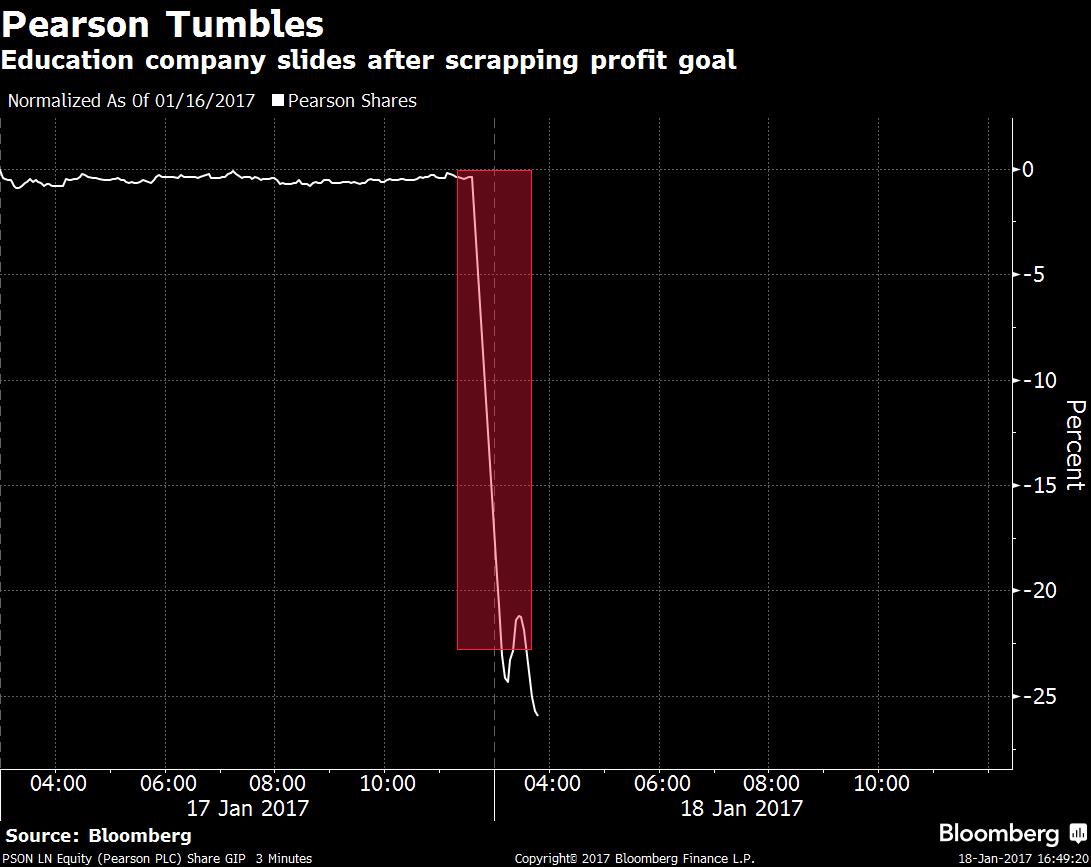
Then updated on January 18, 2017 with this:

https://pbs.twimg.com/media/C2cNyikXUAE2zSW.jpg
-from Bloomberg's Tracy Alloway (formerly FT Alphavillein)
Original post:
For our younger readers, here is Mr. Subliminal on Donald Trump cheating on his wife Ivana in 1990:

                                                              Comedian

And here's FT Alphaville's editor, Paul Murphy,


Hard-bitten journalist
on former FT Alphaville owner Pearson and its stock, Dec. 1, the day the Financial Times was handed over to Nikkei, while appearing to be having a normal conversation with Alphavillein Bryce Elder:

...PM
(So here’s our advice on the stock at 832p….)
PM
Run )
BE
...Today, though, the message is dovish. So we’re all choosing to forget about 2016.
PM
Scarper )
PM
Get out )
PM
Bin it )
--------
PM
( You don’t think another profit warning is coming? Oh course another profit warning is coming! )
--------
PM
( And I can tell you it’s a screaming sell. )
--------
PM
( I can tell you what happens next…)
PM
( Having focused the business down and down and down so that it’s pure corporatised education…)
-------
PM
( And with corporatised education, er, falling slightly out of fashion…)
-------
PM
( The next effort will be to slash costs — slashing with a blunt knife. A panic. )
-------
PM
( My guess is 15 per cent of the workforce will go. )
-------
PM
( Across the board. )
PM
(except not in the boardroom, of course )
PM
(It’s a lucky escape for us, cos the 15 per cent cut would have hit us as well. 100 journo jobs would have gone. )
BE
Is that enough on banks? Actually, Goldman too. Just because.
--------
--------
PM
(If you look back to the late 90s, the FT had all the bits to construct Bloomgerg. )
PM
( Had a world class consumer offering in the form of the paper )
PM
(But it also had a newswire, and an online markets business — Market Watch.)
BE
Should we move on to other matters?
11:22AM
PM
(It had data, in the form of IDC)
PM
(Had Extel. Had what became factiva.)
PM
(Had a huge EM news business.)
BE
Okay …………. I think I have to do a quick bit of de-RAW here.
--------
BE
Coincidentally, we were chasing the same story from a slightly different angle.
BE
The rumour that reached us was that National Grid was working on a bid of around $45 a share for ITC …
PM
(People here complained of a lack of investment from Pearson. Investment??? They were sucking the life-blood out of the thing. )
BE
… However, that would all appear to be very, very premature..
---------
BE
… However, that would all appear to be very, very premature..
BE
What we can say with some confidence is that National Grid’s in the ITC auction process, which kicked off a week ago …
BE
But NG only appointed a new CEO at the start of the month, and is in transition between the old guy and the new guy for the rest of the year.
BE
And NG’s balance sheet doesn’t make ~$7bn-ish deals look very easy.
BE
So. If National Grid’s involved …
BE
… It’s much more likely to be in there to look at the numbers of a rival, rather than to launch an offer.
PM
(Sure, there was one short period, during the dot comedy, that the FT was allowed to expand. It was a disaster, timing wise. But Pearson made up all the associated losses with one disposal — Market Watch. That covered everything.)
BE
Also, note, there’s no shortage of potential bidders. It’s a crowded process.
PM
(Anyway, ive said enough. We’re under new ownership now. )
PM
Sell Pearson )
BE
Also likely to be in there are Berkshire Energy, Iberdrola’s Avangrid, Hydro One, NextEra Energy, American Electric Power ….

...MUCH MORE

The stock is currently trading at 739p, down 11.17% so far this month, after trading under 700 a couple weeks ago.... 

Updated stock price, January 18, 2017:
583.50 GBX down 224.50 (27.78%) on the day.
And FT Alphaville's latest commentary on Pearson.