Showing posts sorted by relevance for query Uber Waymo. Sort by date Show all posts

Thursday, September 21, 2017

Alphabet's Waymo Will Let Uber Off the Hook For $2.6 Billion or Cash on Hand

Uber is so used to beating up on city councils and regulators represented by civil service attorneys that they seem a bit wrong-footed when confronted with large dollar lawyering.
Waymo's trial attorney, Quinn Emanuel’s Charles Verhoeven is one of the best intellectual property litigators in the country and watching his interplay with the other side and a very tech-savvy judge is pretty amazing.

His bio page at the firm's website notes in passing "Mr. Verhoeven's record as lead counsel before the Federal Circuit is 23-2."

Alrighty then, on to the story. From Reuters, Sept. 20:

Waymo seeking $2.6 bln from Uber for one trade secret - lawyer
Alphabet Inc’s Waymo unit is seeking about $2.6 billion from Uber for the alleged theft of one of several trade secrets in a lawsuit over self-driving cars, a lawyer for Uber said on Wednesday.

Uber Technologies Inc attorney Bill Carmody disclosed the figure in a hearing in federal court in San Francisco, where both companies are discussing whether a trial in the case will begin next month.
Waymo has asserted claims that Uber stole several of its trade secrets. The total amount of Waymo’s damages request was not publicly disclosed at the hearing on Wednesday. 

Waymo claimed in a lawsuit earlier this year that former engineer Anthony Levandowski downloaded more than 14,000 confidential files before leaving to set up a self-driving truck company, which Uber acquired soon after. 

Uber has denied using any of Waymo’s trade secrets. 

Waymo’s allegations have already led Uber to fire Levandowski, who had directed Uber’s efforts in the nascent yet pivotal field of self-driving cars. A loss by Uber at trial would add to the company’s lengthy list of legal headaches...MORE
Did I forget to mention the $2.6 billion was for just one of the claims?
My bad. There are nine claims that the judge may allow to go forward.
As of the last report released by Uber, they were down to $6.6 billion cash-on-hand which may not be enough.
While Mr. Son at SoftBank circles patiently.

Previously:
Feb. 22 
Dude's got a problem....  
March 29 
March 31
"In Waymo v. Uber, honing the craft of litigation gamesmanship" (GOOG)
I was going to put something together on Anthony Levandowski's use of the 5th amendment in a civil matter and some of the implications of doing so but didn't get to it. In the meantime here is a look at some high-buck lawyering and tactics of litigators.
April 1
April 4 
The headline/sub-head combo pretty much defines sleazy corruption.... 
April 26 
May 12 
In the Waymo case Uber's bid to make their arguments in private was turned down by the judge overseeing the action but even worse for Levandowski, hizzoner is using his Federal Judgeship powers.*
May 19 
The testimony thus far sure makes a prima facie case that Uber and Levandowski were in cahoots, that there was an actual conspiracy. If that proves to be the case this move is simply thieves falling out....
June 7 
The latter may prove to be the more important ruling so first up Judge Alsup at TechCrunch:
June 15
If I were a late round Uber investor this would be a bit concerning.
We've posted on Kalanick and his "existential" quote, which is one thing, but this is a statement to a Federal Court....
June 25 
June 28 
Aug 15 
Aug. 17 

And a whole bunch of earlier posts on the lead-up to all this in roughly chronological (not reverse chron) order:

Google is spinning off its self-driving car program into a new company called Waymo (GOOG)
"New Patents Hint That Amazon and Google Each Have Plans to Compete with Uber" (AMZN; GOOG) 
Uber Is A Cesspit: Google's Waymo Sues Kalanick's Creation--UPDATED
Waymo Comments On Why They'r Suing Uber
"The Uber Bombshell About to Drop"
"Alphabet’s Waymo asks judge to block Uber from using self-driving car secrets" (GOOG)
Remember that time Uber's Kalanick said having autonomous was crucial to the company's very survival? (a deep dive)
 
And related:

Night of the Long Knives: "Google Vs. Uber in the Rush To Drive You Around, Driverless" (GOOG)
Uber Bids for Nokia Maps Service to Lessen Google Reliance
"Why Uber Has To Start Using Self-Driving Cars"
Uber Throws Tesla Under the Autonomous Bus
Uber to Buy Self-Driving-Truck Company Otto
"Google’s Car People Diaspora" (GOOG)    

Thursday, February 23, 2017

Uber Is A Cesspit: Google's Waymo Sues Kalanick's Creation--UPDATED

Update below.
Original post:

Dude's got a problem.

From the New York Times:

Google Self-Driving Car Unit Accuses Uber of Using Stolen Technology
Waymo, the self-driving car business spun out of Google’s parent company, claimed in a federal lawsuit on Thursday that Uber was using intellectual property stolen by one of Google’s former project leaders.

In a federal court filing in San Francisco, Waymo said Anthony Levandowski, who runs Uber’s autonomous car division, downloaded 14,000 files from Google a month before leaving to start his own self-driving car company, Otto. Uber acquired Otto in August for $680 million, about seven months after Mr. Levandowski left Google.

“Otto and Uber have taken Waymo’s intellectual property so that they could avoid incurring the risk, time, and expense of independently developing their own technology,” the company said in the filing. “Ultimately, this calculated theft reportedly netted Otto employees over half a billion dollars and allowed Uber to revive a stalled program, all at Waymo’s expense.”
Uber did not respond to requests for comment.

In its filing, Waymo said it was inadvertently copied on an email from one of its suppliers with drawings of Uber’s circuit board design for its lidar technology, short for light detection and ranging, ” that are laser-based sensors used in self-driving cars. Waymo said Uber’s design bore “a striking resemblance” to its proprietary and highly secret design and infringed on Waymo’s patents.

Waymo also said that a number of Google employees, who subsequently left to join Mr. Levandowski at Google, downloaded additional trade secrets before departing. These included supplier lists, manufacturing details and technical information, Waymo said.

The suit accuses Uber of stealing trade secrets, infringing on patents and competing unfairly in an effort to catch up on autonomous vehicle technology.

Otto was the brainchild of a handful of former Google employees who pioneered autonomous vehicle research at the search giant. Mr. Levandowski, who had been at Google nine years, led that effort.
He is a prominent figure in the world of self-driving vehicles, having worked on the technology for more than a decade and achieving some degree of renown as a graduate student at the University of California, Berkeley, in 2004, when he designed a self-driving motorcycle that was entered in the Pentagon’s first contest for autonomous vehicles. Later, when Google began working on self-driving cars, it acquired Mr. Levandowski’s start-up, 510 Systems....MORE
And from Bloomberg: 

Alphabet's Waymo Alleges Uber Stole Self-Driving Secrets
  • Lawsuits multiplying amid talent war over nascent technology
  • Complaint cites ‘striking resemblance’ in competing designs
It took Alphabet Inc.’s Waymo seven years to design and build a laser-scanning system to guide its self-driving cars. Uber Technologies Inc. allegedly did it in nine months.

Waymo claims in a lawsuit filed Thursday that was possible because a former employee stole the designs and technology and started a new company.

The complaint intensifies Alphabet’s rivalry with Uber, one of the Internet giant’s largest investments, and reflects an escalating talent war in the burgeoning autonomous-driving arena as tech and auto companies alike compete for skilled engineers. Legal fights are multiplying after General Motors Co. and Uber valued upstarts -- each with just a few dozen employees -- as worth hundreds of millions of dollars in separate acquisitions last year.

Waymo accuses several employees of Otto, a self-driving startup Uber acquired in August for $680 million, of lifting technical information from Google’s autonomous car project. The “calculated theft” of Alphabet’s technology earned Otto’s employees more than $500 million, according to the complaint in San Francisco federal court.

“We take the allegations made against Otto and Uber employees seriously and we will review this matter carefully,”’ Uber spokeswoman Chelsea Kohler said in an e-mail.

The claims in Thursday’s case include unfair competition, patent infringement and trade secret misappropriation.

“Fair competition spurs new technical innovation, but what has happened here is not fair competition,” Waymo said in the complaint. “Instead, Otto and Uber have taken Waymo’s intellectual property so that they could avoid incurring the risk, time, and expense of independently developing their own technology.”

Waymo was inadvertently copied on an e-mail from one of its vendors, which had an attachment showing an Uber lidar circuit board that had a “striking resemblance” to Waymo’s design, according to the complaint.

14,000 Files
Anthony Levandowski, a former manager at Waymo, in December 2015 downloaded more than 14,000 proprietary and confidential files, including the lidar circuit board designs, according to the complaint. He also allegedly created a domain name for his new company and confided in some of his Waymo colleagues of plans to “replicate” its technology for a competitor.

“Misappropriating this technology is akin to stealing a secret recipe from a beverage company,” Waymo wrote in a blog post explaining the suit.

Levandowski left Waymo in January 2016 and went on in May to form Otto LLC, which planned to develop hardware and software for autonomous vehicles.

"These are very serious allegations, if true," said Tyler Ochoa, a professor at Santa Clara University School of Law. "The trade secret case by itself is a blockbuster."...MORE
Update:
Waymo Comments On Why They'r Suing Uber
Includes belated hat tips:
I forgot a couple hat tips in the Waymo/Uber post immediately below, here they are;
On the New York Times story, Alphaville's Kadhim Shubber who retweeted the Times' Mike Issac, co-writer on the Times piece. On the Bloomberg story. ZeroHedge....

Tuesday, November 28, 2017

"A bombshell letter reveals how Uber could have concealed 14,000 stolen documents in a high-profile trade secrets case"

Uber being Uber might work with a podunk city council; not recommended as a tactic with a Federal Judge.

From Quartz:
The Uber-Waymo trial scheduled to begin Dec. 4 has been postponed, after a bombshell allegation that Uber operated a covert unit tasked with stealing code and trade secrets from its competitors.
US district judge William Alsup ordered three Uber employees to appear today, in what was supposed to be the final pretrial conference, after the US Justice Department informed the court that Uber withheld key evidence—most notably a letter from an attorney representing Richard Jacobs, Uber’s former manager of global intelligence, alleging that its Market Analytics unit existed acquire “trade secrets, code-based & competitive intelligence.”

“I can no longer trust the words of the lawyers for Uber in this case,” the visibly angry judge said in court. “If even half of what is in that letter is true, it would be an injustice for Waymo to go to trial.” Alsup had referred the lawsuit for a criminal probe in May.

In a court filing on Nov. 27, Waymo alleged that Uber “intentionally withheld the Jacobs Letter and related materials to prevent Waymo from discovering material evidence in this case.” Waymo also asked to take a new deposition of Uber founder and former CEO Travis Kalanick, and of Angela Padilla, Uber’s deputy general counsel and recipient of the Jacobs letter.

According to tweets from James McPherson, a lawyer and autonomous driving analyst attending the pretrial hearing, Jacobs was terminated by Uber in the spring of 2017. His attorney then sent a letter to Uber making the allegations about the Market Analytics unit. Jacobs eventually settled out of court with Uber for $4.5 million, and is now cooperating with the company. That put him in the awkward position of disputing his own letter.

A Waymo attorney asked Jacobs under oath: “Your lawyer sent letter that you approved alleging that Market Analytics exists solely to acquire code and trade secrets from competitors, yes?” according to McPherson. Jacobs reportedly responded: “I disagree with this now. I have no firsthand knowledge. No knowledge at all.”

Jacobs also described Uber’s deliberate efforts to “prevent sensitive info from legal discovery.” “There was legal training around the use of attorney client privilege markings on written materials, and the implementation of encrypted and ephemeral communications, intended to both protect and destroy communications that might be considered sensitive,” he said, according to the Financial Times. Employees were told to use phone or video calls for sensitive conversations, and use the messaging app Wickr, which has encrypted, self-destructing messages....MORE
Previously:
Waymo v. Uber: "Meet the judge who codes — and decides tech’s biggest cases"

  
...MoFo lawyer Arturo Gonzalez told Alsup that complying with court orders to turn over information to Waymo, protecting Uber’s confidentiality, and not stepping on Levandowski’s rights is akin to navigating a “minefield.” Gonzalez noted that Levandowski -- but not Uber -- appealed Alsup’s ruling requiring Uber to turn over a report containing key evidence in the case....MORE 
MoFo lawyer?

This is the third time the mofo's have dissed Judge Alsup:

May 12
Uber Suffers Legal Setbacks In Europe, U.S.
In the Waymo case Uber's bid to make their arguments in private was turned down by the judge overseeing the action but even worse for Levandowski, hizzoner is using his Federal Judgeship powers.*
April 1
Uber: Judge Says He May Grant Waymo's Request For An Injunction Against Uber's Self Driving Efforts
I was going to put something together on Anthony Levandowski's use of the 5th amendment in a civil matter and some of the implications of doing so but didn't get to it. In the meantime here is a look at some high-buck lawyering and tactics of litigators...
I was thinking more along the lines of inferring guilt--in a criminal proceeding an inference from the assertion of the 5th amendment right is strictly verboten and judges so instruct the jury, whereas in most state courts (California being a notable exception) and U.S. federal court,  a civil pleading of the 5th may be assumed to be an admission of guilt.

But yeah, another implication is: if you piss off a tech savvy* federal judge you've got a problem....
And many more. Use the search blog box, keyword Waymo, if interested. 

Friday, March 31, 2017

"In Waymo v. Uber, honing the craft of litigation gamesmanship" (GOOG)

I was going to put something together on Anthony Levandowski's use of the 5th amendment in a civil matter and some of the implications of doing so but didn't get to it. In the meantime here is a look at some high-buck lawyering and tactics of litigators.

Alison Frankel writing at Reuters, Wednesday March 29:
You know a case is momentous when a seemingly routine proposed briefing schedule turns into a hot dispute. Waymo’s patent and trade secrets suit accusing Uber of hijacking its technology for driverless cars is only five weeks old, but lawyers for both sides are already deep in litigation chess games.

On Monday, Uber’s lawyers at Morrison & Foerster and Boies Schiller & Flexner filed a motion to compel arbitration of Waymo’s trade secrets and California unfair competition claims. The motion claimed Waymo’s lawyers at Quinn Emanuel Urquhart & Sullivan are trying to get away with a bit of litigation trickery.

According to Uber, the crux of Waymo’s case, filed in federal court in San Francisco, is that engineer Anthony Levandowski, who led Waymo’s self-driving tech team for years, downloaded more than 14,000 sensitive files before he left the company to start up his own self-driving venture, which was later acquired by Uber.

Levandowski, Uber said, signed two different employment contracts during his nine-year stint at Google and Waymo, both of which are subsidiaries of Alphabet. The agreements contained provisions requiring the engineer to arbitrate disputes with the company.

Uber’s lawyers argued that because Waymo is accusing Uber of benefiting from Levandowski’s supposed violation of his employment contract, Levandowski’s arbitration clause applies.
Uber’s brief cited cases to back its argument, which is based on the legal principle of equitable estoppel.

In the closest parallel to the Waymo case, a federal judge in San Jose ordered the tech company Torbit to arbitrate its case against a fired software developer who allegedly misused Torbit trade secrets when he started his own company, Datanyze.

Datanyze wasn’t subject to the employment agreement between Torbit and the developer, but the judge ruled the claims against the company were intertwined with allegations against the former employee.

But Waymo, unlike Torbit in the Datanyze case, did not name its former employee as a defendant. It sued only Uber, not Levandowski, the former Waymo engineer who supposedly misappropriated Waymo data and brought it to his new employers at Uber.

"DELIBERATE ATTEMPT" TO BYPASS PRECEDENT
Uber’s motion called that elision a deliberate attempt to get around precedent requiring Waymo to go to arbitration. “Despite the myriad allegations about Levandowski’s serious misconduct while a Waymo employee, Waymo omits him as a named defendant,” Uber’s motion said. “Waymo’s purpose for proceeding in this curious manner seems clear: through artful pleading, it hopes to avoid arbitrating the misappropriation … claims at all costs.”

Waymo, meanwhile, contends there is something fishy about the timing of Uber’s motion to compel arbitration. Uber first suggested at a hearing on March 16 that it would try to force Waymo into arbitration instead of litigating in federal court.

On March 22, according to Waymo, Uber lawyer Arturo Gonzalez of MoFo said in an email to a Waymo lawyer that the motion would be filed the following day. Instead, Uber waited until three days later to file its motion.

The timing is significant because the judge overseeing the litigation, U.S. District Judge William Alsup of San Francisco, has scheduled a May 4 hearing on Waymo’s motion for a preliminary injunction to block Uber from using supposedly misappropriated information.

The judge told both sides at the March 16 hearing that he didn’t want to go to the trouble of a preliminary injunction hearing if the case is going to end up in arbitration....
...MORE

Tuesday, March 14, 2017

"The Uber Bombshell About to Drop"

This is conjecture based on the filings but as Marc Andreessen used to say: "Big if true".
From Daniel with Music via Digg:

If you’ve been following tech news over the last few weeks, you have probably seen several stories about Uber, all negative (bar this one about flying cars). I suspect that what is coming next will prove to be a far bigger story than all of the other incidents so far.
N.B. all of this article is sourced from filings and allegations that Alphabet has made, as well as reading between the lines. Uber will probably contest these claims in court.
In the last few weeks Alphabet filed a lawsuit against Uber. Alphabet and Waymo (Alphabet’s self-driving car company) allege that Anthony Levandowski, an ex-Waymo manager, stole confidential and proprietary information from Waymo, then used it in his own self-driving truck startup, Otto. Uber acquired Otto in August 2016, so the suit was filed against Uber, not Otto.
This alone is a fairly explosive claim, but the subtext of Alphabet’s filing is an even bigger bombshell. Reading between the lines, (in my opinion) Alphabet is implying that Mr Levandowski arranged with Uber to:
  1. Steal LiDAR and other self-driving component designs from Waymo
  2. Start Otto as a plausible corporate vehicle for developing the self-driving technology
  3. Acquire Otto for $680 million
Below, I’ll present the timeline of events, my interpretation, and some speculation on a possible (bad) outcome for Uber. The timeline references section numbers from Waymo’s amended filing, so you can read the full context yourself. You can also read the original filing.

Timeline of events
The main timeline of important events is as follows:
  • Summer 2015 - Anthony Levandowski told Pierre-Yves Droz, a colleague at Waymo, that he had talked with an Uber executive about forming a self-driving car startup and that Uber would be interested in buying that startup. (Droz 28)
  • November 17, 2015 - Levandowski registers a domain for 280 Systems, the company that would later become Otto. 280systems.com can be linked to a public email sent February 4, 2016 from someone with a 280systems.com email address looking to do testing of a semi truck with “specialized equipment”. (Filing 41)
  • December 3, 2015 - Mr Levandowski searched the Alphabet intranet for instructions on how to access Waymo’s design server on his work laptop. Based on Gary Brown’s deposition (a Google forensic security engineer) this was an SVN server. (Brown 15)
  • December 11, 2015 - Anthony Levandowski installed TortoiseSVN and downloaded 9.7 GB of data from the SVN repository. (Brown 17)
  • December 14, 2015 - A USB card reader was attached to the laptop for eight hours. Google doesn’t appear to have logged what the laptop did over that time, but the implication is that data was copied from the laptop to a memory card. (Brown 18)
  • December 18, 2015 - Levandowski reformatted his work laptop from Windows to Goobuntu (Google’s custom version of Ubuntu). This laptop wasn’t used again after December 21. To be fair, it was only used three times between March and November 2015. Presumably, he was still doing work during this time, just on another computer? (Brown 19, 20)
  • January 4, 2016 - Levandowski downloaded five confidential technical Waymo documents from Google Drive to a personal device. (Brown 22)
  • January 5, 2016 - Levandowski took a walk with Droz. In Pierre-Yves’ deposition, he claims that Levandowski “told him that he planned to ‘replicate’ Waymo’s technology at a new company he was forming.” (Droz 27)
  • January 11, 2016 - Levandowski downloads another file from Google Drive relating to Waymo’s self-driving car development schedule and timeline. (Brown 23)
  • January 14, 2016 - Levandowski was seen meeting at Uber’s headquarters and the news travelled back to Droz. Droz asked Levandowski about this, and he admitted he had met with Uber and was looking for investors for his new company. (Droz 29, Filing 48)
  • January 15, 2016 - Levandowski officially forms 280 Systems (in stealth mode). Note that this was one day after his meeting with Uber. (Filing 49)
  • January 27, 2016 - Levandowski resigns from Waymo without notice. (Filing 49)
  • February 1, 2016 - Levandowski forms Otto Trucking (this is also in stealth mode). (Filing 49)
  • Spring (March-May) 2016 - “Kalanick began courting Levandowski this spring, broaching the possibility of an acquisition … The two men would leave their offices separately—to avoid being seen by employees, the press, or competitors.” - Bloomberg. Update: I forgot about this article, but was reminded by hammock on Hacker News.
  • May 17, 2016 - Otto launches out of stealth mode. As far as I can tell, they never took on any venture funding, instead self-funding (emphasis mine):
    Many of Otto’s founders have done well for themselves over the years, and it shows: the company is entirely self-funded right now without any external investment. (In the wake of the reported $1 billion Cruise Automation sale to General Motors, I ask Ron if the plan is to get acquired, but he’s insistent that they’re focused on bringing a product to market.) Even George Hotz’s scrappy upstart Comma.ai has recently taken on venture funding from Andreessen Horowitz. - The Verge
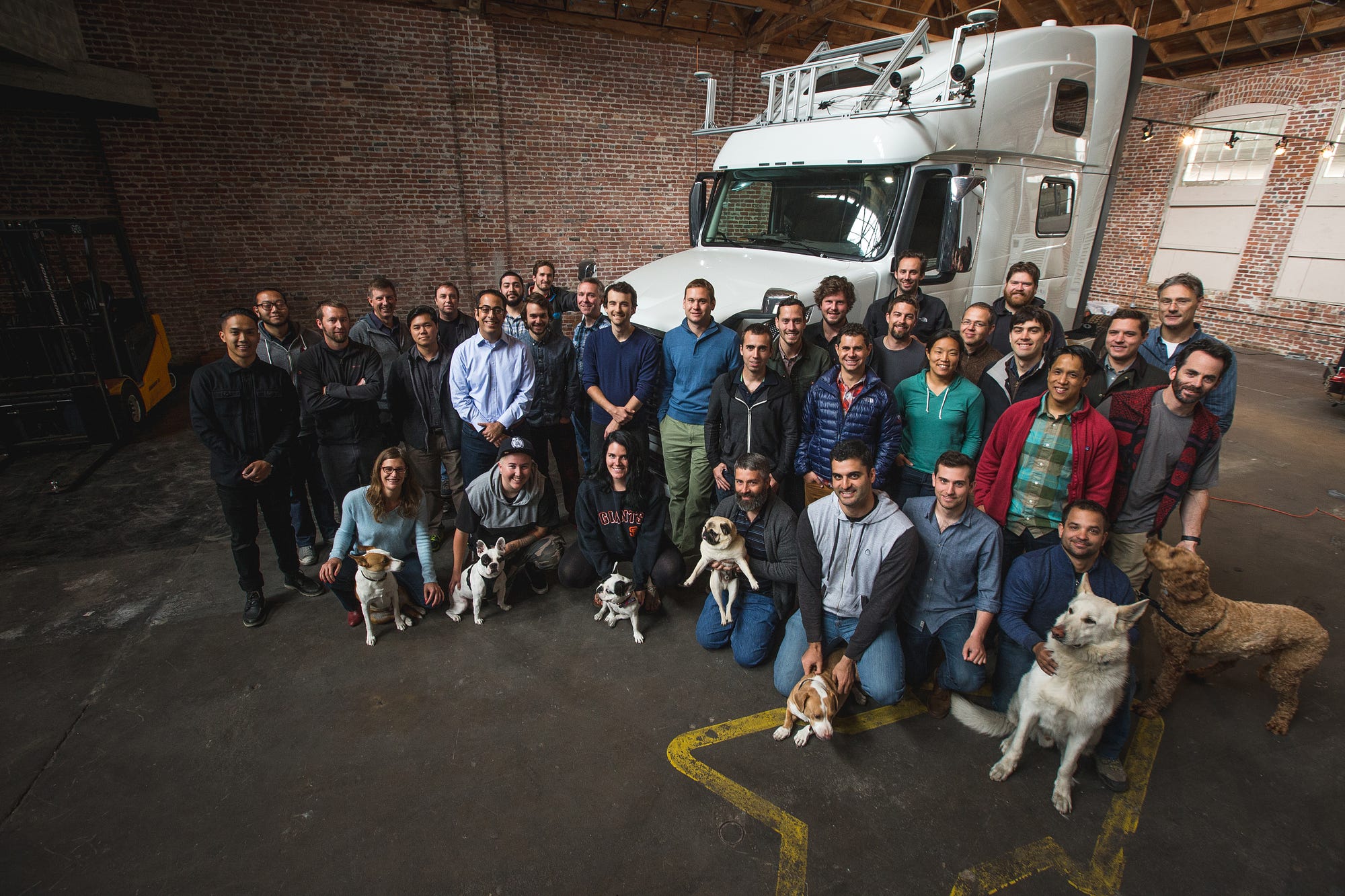
    In the photo for their announcement I count 35 people. By the time Otto was acquired, they had 91 employees. This seems like a lot of salary commitment to take on via self-funding by Otto’s four co-founders (all ex-Google). On the other hand, depending on the incentive pay they received at Google, they may have had plenty to cover several years of salaries between them.
  • August 2016 - Levandowski received his final multi-million dollar payment from Google (presumably a deferred bonus?). (Filing 55)
  • August 19, 2016 - Shortly after the final payment was awarded, Uber announced a deal to acquire Otto for $680 million. (Filing 55)
  • Summer 2016 - Levandowski’s sudden resignation, Otto’s quick launch, and Uber’s subsequent acquisition of Otto caused Waymo to suspect that their IP had been misused. Waymo investigated this and discovered Levandowski’s actions prior to leaving. (Filing 57)
  • December 13, 2016 - A Waymo employee was accidentally copied on an email from one of its LiDAR-component vendors titled OTTO FILES. The email contained a drawing of what appeared to be an Otto circuit board that resembled Waymo’s LiDAR board and shared several unique characteristics with it. (Filing 59)
  • December 2016 to February 2017 - Waymo tried to obtain further information on whether Uber was using their LiDAR designs. This is also known as “Getting your ducks in a row”. (Filing 60)
  • February 9, 2017 - A Nevada public records request turned up a filing Otto/Uber made that they were using an “in-house custom built 64-laser” LiDAR system. This was enough to confirm to Waymo that they Uber was using a LiDAR system with the same characteristics as Waymo’s. (Filing 61)
  • February 23, 2017 - Alphabet makes their first filing against Uber.
  • March 10, 2017 - Alphabet amends their filing, and asks for an injunction against Uber’s self-driving car program.
Implications From Waymo’s filings, it seems that they have Levandowski dead to rights on stealing their LiDAR designs. That alone should be enough to bring Uber’s self-driving car program to a halt and cause some big problems for Levandowski. California’s Trade Secrets law is weaker than other states, but if successful, Waymo will be able to seek an injunction, damages, and attorney’s fees. Because all law is securities law, the SEC may also be able to bring a case against Uber (similarly to their case against Theranos)....
...MUCH MORE

Some of the backstory: 
March 2017 
"Alphabet’s Waymo asks judge to block Uber from using self-driving car secrets" (GOOG)
Feb 2017 
Waymo Comments On Why They're Suing Uber
Feb 2017 
Uber Is A Cesspit: Google's Waymo Sues Kalanick's Creation--UPDATED
Jan 2017 
"New Patents Hint That Amazon and Google Each Have Plans to Compete with Uber" (AMZN; GOOG)
Dec 2016 
"Google’s Car People Diaspora" (GOOG)
Dec 2016 
Google is spinning off its self-driving car program into a new company called Waymo (GOOG)
Dec 2016 
Uber Throws Tesla Under the Autonomous Bus
Dec 2016
Uber Tells California It Won't Be Applying For An Autonomous Driving Permit, California Tells Uber The State's Attorney General Will Be In Touch
How Otto Defied Nevada and Scored a $680 Million Payout from Uber
The engineer who helped craft Nevada’s self-driving car regulations also ended up blowing past them. 

August 2016 
Uber to Buy Self-Driving-Truck Company Otto
May 2016
"Otto Self-Driving Truck Company Wants to Replace Teamsters" 

Saturday, July 25, 2026

"Waymo Plans End of Uber Robotaxi Tie-Up, Stepping Up Rivalry"

Waymo is another of the ulti-multi-decacorns. In February they announced the completion of a $16 billion Series D financing round at a $126 billion post-money valuation.

From Bloomberg, July 24:

Alphabet Inc.’s Waymo is exploring options to exit its robotaxi partnership with Uber Technologies Inc., the latest relationship twist between two companies that have functioned as both rivals and partners.

Uber currently offers rides in autonomous Waymo vehicles on its platform exclusively in two US cities — Austin and Atlanta — after ending a more limited partnership in Phoenix last month. An Uber spokesperson said that Waymo has given notice that it plans to launch service through its own app in those cities in January 2028 “alongside their existing deployment with Uber.” This “would end Waymo’s exclusivity in Austin and Atlanta and allow us to launch with other AV providers in those cities, which we will be prepared to do,” the spokesperson added.

The current fleet of Waymo vehicles will remain on Uber’s platform through at least May 2028, the duration of the current contract, Uber said. The Financial Times Waymo explores split with Uber as robotaxi tensions deepen earlier that Waymo was exploring options for exiting the partnership.

“We believe in a vibrant and collaborative AV ecosystem that champions innovation and provides riders with a choice in how they experience this technology,” said a Waymo spokesperson. “This is essential to the industry’s future and to our vision of making the Waymo app and the safety of our technology available to riders everywhere.”

Shares of Uber slid 4.3%, closing Friday at $65.94 in New York, the lowest level in more than a year. Alphabet’s stock was up less than 1%.

The rift is a major setback for Uber, which has been developing partnerships with Waymo and fleet managers, and investing in other robotaxi companies in the hopes that it can one day be the go-to aggregator for driverless and human-operated rides. Waymo, the leading robotaxi provider in the US, also competes with Uber in key rideshare markets such as San Francisco and Los Angeles with its consumer app.

The absence of new developments from Uber and Waymo’s multiyear partnership has helped fuel anxiety about their relationship for months. Since launching the Atlanta service last June, Waymo hasn’t announced new cities where its vehicles will be available on the Uber app. Instead, the Alphabet unit has forged ahead with the standalone Waymo app and has launched in six more cities outside San Francisco and Los Angeles.

With almost every new Waymo announcement without Uber, Uber’s stock has taken a hit on fears that Waymo’s growth will eventually erode the ride-hail company’s business, which reported an annual profit for the first time only in 2023. Even as Uber has announced partnerships with other driverless car companies on planned service in the US, Middle East and Europe, Wall Street has remained unconvinced. The stock has fallen almost 20% so far this year....

....MUCH MORE 

Friday, June 27, 2025

"Uber in Talks With Its Founder, Travis Kalanick, to Fund Self-Driving Car Deal" UBER; PONY)

"When there's no other dude in the car, the cost of taking an Uber anywhere becomes 
cheaper than owning a vehicle. So the magic there is, you basically bring the cost below 
the cost of ownership for everybody, and then car ownership goes away."


—Uber CEO Travis Kalanick, May 28, 2014

Warning to passers-by: I may be dipping into the archive as this deal progresses.* 

From the New York Times, June 26, 2025:

The ride-hailing company is in talks to help Mr. Kalanick, who was forced out in 2017, buy an autonomous vehicles start-up as the robot taxi service Waymo gains momentum. 

Uber is increasingly grappling with competition from self-driving taxi services like Waymo. Now the ride-hailing giant is taking more action to deal with that threat.

Uber is in talks with Travis Kalanick, the company’s co-founder who was forced out in a boardroom coup eight years ago this month, to help fund his acquisition of the U.S. subsidiary of a Chinese autonomous vehicle company, two people with knowledge of the matter said. The company, Pony.ai, was founded in Silicon Valley in 2016 but has its main presence in China, and has permits to operate robot taxis and trucks in the United States and China.

The talks are preliminary, said the people, who were not authorized to speak about the confidential conversations. Mr. Kalanick will run Pony if the deal is completed, they said. It is unclear what role, if any, Uber would take in Pony as an investor.

Financial details of the potential transaction could not be determined. Pony went public last year in the United States, raising $260 million in a share sale. Its market capitalization stands around $4.5 billion.

If the deal goes through, Mr. Kalanick, 48, will remain in his day job running CloudKitchens, a virtual restaurant start-up that he founded after leaving Uber in 2017. He would also work more closely with Dara Khosrowshahi, who took over as Uber’s chief executive after Mr. Kalanick’s ouster.

The discussions are the starkest sign yet that Uber is under pressure from Waymo, the driverless car unit spun out of Google, and other autonomous car services. This month, Tesla also unveiled a limited robot taxi service in Austin, Texas. Over time, these autonomous vehicle services may replace or eat into rides from human drivers. In cities like San Francisco, where robot taxi services are available, the vehicles have become ubiquitous and are popular.

An Uber spokesman declined to comment on deal talks and said, “Uber has a platform strategy, and we intend to work with multiple players in the U.S. and around the world who can safely bring autonomous technology to the world.”

Devon Spurgeon, a spokeswoman for Mr. Kalanick, did not immediately have a comment. Pony did not immediately respond to a request for comment.

When Mr. Kalanick was Uber’s chief executive, the company tried developing autonomous vehicle technology. It then bought Otto, a self-driving trucking start-up run by Anthony Levandowski, a former Google engineer. Google later sued Mr. Levandowski for theft of trade secrets and sued Uber to bar it from using its self-driving technology.

Under Mr. Khosrowshahi, Uber has taken a different tack to self-driving cars. The company has struck roughly 18 partnerships with autonomous vehicle companies like Wayve, May Mobility and WeRide to bring pilot programs for driverless car services into Europe, the Middle East and Asia.

The goal, Mr. Khosrowshahi has said in podcast interviews, has been to put “as many cars on Uber’s network as possible.” He has maintained that while autonomous vehicles are growing steadily, ride-hailing networks will have both human and robot drivers for years.

Today, Uber both competes and collaborates with Waymo. In Phoenix, riders can order a Waymo car through Uber’s app. In Austin, Waymo’s robot taxis don the Uber logo. But Waymo has also expanded into more cities, potentially biting into Uber’s business. And in San Francisco, Waymo customers are required to use the Waymo app to order rides.

Uber is also watching Elon Musk, who has promised a wider rollout of Tesla’s self-driving taxis and has declined to team up with Uber.

Mr. Kalanick has grown interested in robotics over the past year, according to two people who have spoken with him. He has brought robots into some of his CloudKitchens to prepare food for customers and has experimented with automated kitchens building food bowls for delivery. He has also become enamored with robots that traverse streets to deliver food to people....

....MUCH MORE
*
For example on the background between Uber and Waymo:
Or alternatively, a broader search (it used to be much broader until Google began shrinking the internet by reducing the number of results they show on any given subject):

https://duckduckgo.com/?t=ffab&q=site%3Aclimateerinvest.blogspot.com+uber&ia=web 

Forced to use duck duck go because the GOOG won't do a site search. 

Of course we can go back to the GOOG - assisted site search:

https://climateerinvest.blogspot.com/search?q=Uber

Wednesday, June 7, 2017

Double Hit To Uber: Judge Alsup Denies Uber’s Request for Stay, Gives Waymo Fatherly Advice; Magistrate Judge Corley Approves Waymo Request to Peek at Dirty Laundry

The latter may prove to be the more important ruling so first up Judge Alsup at TechCrunch:

Judge denies Uber’s request for stay in Waymo suit
The judge in the lawsuit between Uber and Waymo, the self-driving car subsidiary of Google’s parent company Alphabet, denied Uber’s request for a stay pending its appeal for arbitration. That means the case is still on track to go to trial in early October, as previously planned.

In court today, District Judge William Alsup of the Northern District of California re-affirmed the court date, put a limit on new discovery requests and urged both parties in the case to figure out their differences on that front.

Finally, Alsup defended his earlier order for Uber to do everything in its power to get Anthony Levandowski, the engineer at the center of the case, to comply with discovery requests and to return any confidential material he may have taken from Waymo before leaving the company.
Waymo alleges Levandowski stole trade secrets related to its autonomous driving technology, which were later used in the creation of his own self-driving truck startup Otto. Because Uber acquired Otto for nearly $700 million last summer, the implication is that those trade secrets found their way into Uber’s own autonomous driving unit.

Uber had previously argued — unsuccessfully — that the lawsuit should head to arbitration due to a clause in Levandowski’s employment contract. It later appealed that decision and was seeking a stay in the case while the appeals process was underway. Alsup’s ruling this morning effectively denied a pause in the proceedings while waiting for an appeals court to hear the case, and also re-affirmed an October 2 court date for the trial to get underway.

With less than four months between now and the scheduled proceedings, Alsup also urged both parties to limit the scope of the suit, put a limit on discovery requests and move forward in complying with existing requests.

Speaking to the counsel for Waymo, Alsup also suggested the company severely curtail — or drop entirely — the patent claims it’s making as part of the case.

“I think you’re going to lose on all these patent claims unless you pull a rabbit out of a hat,” Alsup said. “You’re the one who wants the trial date… You’re the one who should streamline this.”...MORE
And from Bloomberg: 

Waymo Gets Uber Report Allegedly Crafted in Criminal Huddle
Uber Technologies Inc. lost a battle to prevent Waymo from seeing an internal report the Alphabet Inc. unit is betting will show that its former engineer colluded with the ride-hailing giant to steal driverless technology.

The ruling by U.S. Magistrate Judge Jacqueline Scott Corley in San Francisco may prove pivotal in a trade-secrets case headed to trial that could influence who wins the race to market self-driving cars. David A. Perlson, an attorney for Waymo, confirmed the ruling in a court hearing Wednesday.

Since Waymo sued in February, Uber and engineer Anthony Levandowski resisted turning over a due diligence report evaluating the risks associated with Uber’s acquisition of Otto LLC, the company Levandowski formed days after he quit Waymo. They argued it can’t be disclosed because it involves confidential communications between attorneys and clients.

Waymo claims that in 2015, Levandowski and Uber hatched a plan for him to steal more than 14,000 proprietary files, including the designs for lidar technology that helps driverless cars see their surroundings. Levandowski left Waymo in January 2016. Uber bought Otto in August for $680 million.

Uber has denied Waymo’s trade-secret theft allegations and says its automation technology has been developed without significant input from Levandowski. The company fired Levandowski last month after a judge said the engineer should be threatened with termination for refusing to turn over evidence. Levandowski, who isn’t a defendant in the lawsuit, has declined to testify in the case, asserting his constitutional right against self-incrimination.

The due diligence report “likely contains information that is responsive to many of the questions Mr. Levandowski refused to answer," Waymo argued in a court filing. "Indeed, the withheld report may be the only source of much of this information."

Corley reviewed the report privately and told lawyers at a May 25 hearing that it’s important to the case. Waymo argued that because the report was produced by a cyber-security firm and not by lawyers, attorney confidentiality doesn’t apply. The company also contended the document doesn’t qualify for privacy protection because it may reveal fraudulent or criminal wrongdoing.

“You can’t claim a privilege over huddling together about what to do with stolen documents,” Waymo’s attorney, Charles Verhoeven, argued at the hearing. “There is very clear evidence that stolen documents were known about and were retained and continued to be held. And that in and of itself is a crime.”...MORE

Friday, December 6, 2024

There May Be Something To This Robotaxi Stuff: Uber And Lyft Got Spanked On Waymo Opening Florida Market (GOOG; UBER; LYFT; TSLA)

One odd point, Waymo and Uber have a nascent partnership developing.

From Barron's, November 5, Updated Dec. 5, 2024 3:51 pm ET / Original Dec. 5, 2024 11:57 am ET :

Uber Stock Is Falling Because Waymo Is Expanding to Florida
The driverless ride-hailing platform says it will bring its vehicles to Miami early next year. It aims to offer services for customers in 2026. 

Shares of Lyft and Uber Technologies dived after the driverless ride-hailing platform Waymo said it is expanding to Miami.

Uber stock slid 9.6% to $65.23 in Thursday trading, while Lyft shares fell 10.1% to $15.50. The S&P 500 and Dow Jones Industrial Average dropped 0.2% and 0.6%, respectively.

“In early 2025, we’ll begin reacquainting Waymo’s all-electric Jaguar I-PACEs to Miami’s streets,” Waymo said in a statement. “Through our new fleet partnership with Moove, a global leader in innovative mobility solutions, we’ll work to open our doors to riders in 2026, offering our ride-hailing service via the Waymo One app.”

Waymo was created in Google’s X research lab in 2009 and spun off into a separate company in 2016. Alphabet still controls the company, which offers self-driving rides in Los Angeles, San Francisco, and metropolitan Phoenix. Alphabet CEO Sundar Pichai said on his company’s third-quarter earnings conference call in October that Waymo was completing more than 150,000 paid driverless-taxi rides each week.

Investors are worried that self-driving cabs will eat into Uber and Lyft’s market. How self-driving technology will shake out is far from certain.

Uber works with Waymo. It plans to deploy Waymo self-driving vehicles in the Uber network in 2025. The first cities Uber users will have the chance to drive in Waymo vehicles will be Atlanta and Austin, Texas....

....MORE

Since December 2021 Austin is Tesla's hometown. The Waymo/Uber move may be a bit too "in your face" for Tesla to ignore.

If interested see also:
August 1, 2024
"China’s Robotaxi Dreams Spark Economic Anxiety Over AI’s Threat"
August 25, 2024
Uber Chooses Self-Driving Car Partners
October 24, 2024
"Uber CEO Dara Khosrowshahi calls Elon Musk's vision for Tesla robotaxis 'pretty compelling'" (UBER; TSLA)
October 25, 2024
"Alphabet's self-driving unit Waymo closes $5.6 billion funding round as robotaxi race heats up in the U.S." (GOOG; TSLA)
November 23, 2024
"Baidu’s supercheap robotaxis should scare the hell out of the US"

Sunday, June 25, 2017

Alphabet says Travis Kalanick knew one of Uber’s acquisitions had taken Alphabet files

Our thinking was that Uber was not just aware but was complicit. From May 19's Thrown Under The Autonomous Bus: "Uber Threatens to Fire Engineer at Center of Waymo Lawsuit":
The testimony thus far sure makes a prima facie case that Uber and Levandowski were in cahoots, that there was an actual conspiracy. If that proves to be the case this move is simply thieves falling out....
And March's Remember that time Uber's Kalanick said having autonomous was crucial to the company's very survival? (a deep dive):
Combine Kalanick's statements and the corporate culture he created with the fact the central figure in the Waymo lawsuit was in contact with Uber before he left the Alphabet company's autonomous efforts  and even a dull-witted paralegal could make a case for conspiracy,
And that would threaten Uber's existence....
Here's the latest, from Recode:
Uber has also been ordered to produce a key document in the case.

Alphabet is asking a judge to find Uber in contempt for failing to notify the court that former CEO Travis Kalanick was aware one of his top executives had proprietary Alphabet information in his possession and that he ordered its destruction. 

The executive, Anthony Levandowski, allegedly told Kalanick and two other employees in March 2016 that he had five discs containing Alphabet documents, several months before the ride-hail company acquired his startup, Otto.

Levandowski, who had previously led Alphabet’s self-driving car project, has been accused of stealing technology and taking it to Uber. 

Judge William Alsup recently ordered Uber to produce documents and correspondence related to the case, including information showing whether any evidence had been destroyed. On Wednesday, Alphabet cited a June 5 Uber court filing that shows Kalanick asked Levandowski to destroy the documents in question. Uber had to present the information by March of this year but didn’t report its findings until June.

Uber’s June 8 filing reads:
On or about March 11, 2016, Mr. Levandowski reported to Mr. Kalanick, Nina Qi and Cameron Poetzscher at Uber as well as Lior Ron that he had identified five discs in his possession containing Google information. Mr. Kalanick conveyed to Mr. Levandowski in response that Mr. Levandowski should not bring any Google information into Uber and that Uber did not want any Google information. Shortly thereafter, Mr. Levandowski communicated to Uber that he had destroyed the discs.
This was around the same time that Levandowski began consulting for Uber’s self-driving arm, as we reported.

The ride-hail company maintains that none of these documents made it to Uber and that Kalanick did not encourage Levandowski to bring the files to the company, a condition that was also included in his employee agreement. On May 30, Uber fired Levandowski, who pleaded the Fifth Amendment earlier in the case, for not complying with the court’s orders. 

Uber was also directed by the court to produce a report from Stroz Friedberg, a forensic firm that Uber had hired to conduct a due diligence report on Otto before the acquisition.....MORE
That Stroz Friedberg report was the one referenced as 'dirty laundry' a couple weeks ago:

Double Hit To Uber: Judge Alsup Denies Uber’s Request for Stay, Gives Waymo Fatherly Advice; Magistrate Judge Corley Approves Waymo Request to Peek at Dirty Laundry:
...The due diligence report “likely contains information that is responsive to many of the questions Mr. Levandowski refused to answer," Waymo argued in a court filing. "Indeed, the withheld report may be the only source of much of this information."

Corley reviewed the report privately and told lawyers at a May 25 hearing that it’s important to the case. Waymo argued that because the report was produced by a cyber-security firm and not by lawyers, attorney confidentiality doesn’t apply. The company also contended the document doesn’t qualify for privacy protection because it may reveal fraudulent or criminal wrongdoing.

“You can’t claim a privilege over huddling together about what to do with stolen documents,” Waymo’s attorney, Charles Verhoeven, argued at the hearing. “There is very clear evidence that stolen documents were known about and were retained and continued to be held. And that in and of itself is a crime.”

Thursday, March 16, 2017

Remember that time Uber's Kalanick said having autonomous was crucial to the company's very survival? (a deep dive)

Sure you do:
"We're at the very beginning stages of becoming a robotics company," Uber CEO Travis Kalanick said at the Vanity Fair Summit in San Francisco in October. "As we move toward the future, autonomy is a pretty critical thing for us. It's existential."
-via c|net, Dec. 2016
I think he chose his words carefully, an existential threat literally threatens the existence of a firm and he has known since at least 2014 that without major breakthroughs in autonomous vehicles Uber could never be worth what they had convinced investors to pay:
"When there's no other dude in the car, the cost of taking an Uber anywhere becomes cheaper than owning a vehicle. So the magic there is, you basically bring the cost below the cost of ownership for everybody, and then car ownership goes away."
-Uber CEO Travis Kalanick, May 28, 2014

Combine Kalanick's statements and the corporate culture he created with the fact the central figure in the Waymo lawsuit was in contact with Uber before he left the Alphabet company's autonomous efforts  and even a dull-witted paralegal could make a case for conspiracy,
And that would threaten Uber's existence.

From Bloomberg, March 16:

Fury Road: Did Uber Steal the Driverless Future From Google?
Inside the vicious patent fight over self-driving technology
Travis Kalanick, the chief executive officer of Uber Technologies Inc., says he needs leadership help. He recently dispatched former U.S. Attorney General Eric Holder to investigate sexual harassment claims against the company. His security team is reviewing a practice known as “Greyballing.” And he’s no longer going to any more meetings with President Trump.

These damage-control initiatives—in response, respectively, to a leaked video in which Kalanick was rude to an Uber driver, a blog post by a former engineer, an admission that the company had been deliberately misleading police, and a customer boycott—were the result of a month’s worth of public-relations disasters. Taken alone, any of these would have been enough to slow down the famously fast-moving ride-hailing company. Taken together, they’ve caused some to question Uber’s viability and Kalanick’s staying power.

But none of these scandals has the potential financial impact of the one Uber has said the least about: a lawsuit from Alphabet Inc.—the parent of Google and Google’s self-driving car division, now called Waymo—over driverless cars. Waymo says Uber is in possession of, and is basing the future of its business on, technology that was stolen by a former employee.

Self-driving technology has become a fixation for Kalanick. Developing a driverless car, he’s often said, is “existential” to Uber. If a competitor managed to get there first, it could easily replicate Uber’s core service (shuttling passengers) without its single largest cost (paying drivers). Over the course of a few weeks in 2015, Kalanick poached 40 researchers from the Carnegie Mellon University robotics lab, one of the country’s top autonomous vehicle research centers. Then, last summer, Uber became the first company to operate a fleet of autonomous taxis, in downtown Pittsburgh. On the day it announced that service, Uber also said it had acquired Otto, a self-driving truck startup founded in January 2016 by a former Google employee, Anthony Levandowski. The 37-year-old engineer was an original member of Google’s car team and a protégé of its creator, Sebastian Thrun.

At Google, Levandowski had been both a brilliant engineer and a divisive manager, with a reputation for flouting corporate norms and skirting rules to get cars on the road as quickly as possible. He was so controversial, according to several former and current employees, that when he was being considered to lead the car team, a group of engineers revolted, causing Alphabet CEO Larry Page to rethink the choice and install a different leader, Chris Urmson.

According to the legal complaint filed on behalf of Google’s driverless car division—as almost everyone at Waymo still refers to it—the company began investigating Levandowski last summer after learning that Uber had paid about $700 million for his months-old company. Google’s suit, filed in a San Francisco federal court, says its investigators uncovered a trove of digital evidence that hint at an unprecedented theft. According to the suit, Levandowski used his company laptop to download 14,000 design files from Google’s car project. He plugged a memory card reader into the laptop and, shortly afterward, wiped all the data from the laptop. The suit also alleges that two other Otto employees took files on their way out the door.

Google seemed content to sit on that information until Dec. 13, when a Google employee received an email from a supplier that was working on components for the lidar sensor in the company’s first production car. Lidar—a portmanteau of “light” and “radar”—is the key component that allows an autonomous vehicle to, essentially, see its surroundings. (It’s also used to build maps.) Off-the-shelf sensors cost up to $80,000 and contain several individual lenses. Under Levandowski, who’d led the lidar team, Google developed a much cheaper version that used a single lens.

Strangely, though, the email’s subject line—“Otto Files”— made reference to Levandowski’s company. According to Google’s suit, the contents of the email, which seemed to have been intended for Uber rather than Google, included a machine drawing of a lidar circuit board that had Otto’s name on it but looked almost identical to Google’s. Two months later, Waymo sued Uber for trade secret theft and patent infringement, seeking damages and an injunction that could seriously impede Uber’s self-driving car program.

At issue is a business that both companies believe will be worth hundreds of billions or even trillions of dollars a year. And though both companies like to portray driverless cars as some near-term inevitability, this dispute shows just how messy the race to get there could prove to be.

During new-hire orientation, engineers at Google are frequently told that the company will never sue a former employee for patent infringement. The implication is twofold: first, that Google doesn’t stoop to fighting over patents, though it may employ them to protect itself from people who aren’t in the business of changing the world. (“These patent wars are death,” Executive Chairman Eric Schmidt said at an event in 2012, calling patent litigation “bad for innovation.”) And, as an extension of that, if Google sues you over a patent issue, you must have really pissed them off.

After the lawsuit was filed, Uber released a statement characterizing it as “a baseless attempt to slow down a competitor.” At an all-hands meeting at the company’s Pittsburgh research center,

Levandowski defended Uber’s lidar technology as “clean”—that is, not the product of stolen design documents—and told the company’s engineers that he’d downloaded the files to work from home. Some former colleagues seem to think that even if Levandowski did what Google alleges, he doesn’t deserve to be punished. “Whatever Google may say about him stealing lidar trade secrets, he was the lidar team at Google,” says someone who worked at the company’s driverless car program. “This is like the Swiss patent office suing Einstein for inventing the theory of relativity while he worked there.”

The comparison to Einstein is obviously hyperbolic, but it also captures the foundational role Levandowski played in the development of self-driving cars. Levandowski, 6-foot-6 and relentlessly intense, is as much an entrepreneur as he is an engineer. At 16 he started a web design firm that a former colleague says made him a millionaire by the end of high school. (Levandowski didn’t respond to repeated requests for comment.) As a University of California at Berkeley undergraduate, he won a national competition sponsored by Lego—he built a toy robot that could sort Monopoly money....MUCH MORE

Recently:
"The Uber Bombshell About to Drop"
Alphabet’s Waymo asks judge to block Uber from using self-driving car secrets" (GOOG)
Waymo Comments On Why They're Suing Uber
Uber Is A Cesspit: Google's Waymo Sues Kalanick's Creation--UPDATED
"New Patents Hint That Amazon and Google Each Have Plans to Compete with Uber" (AMZN; GOOG)
Google is spinning off its self-driving car program into a new company called Waymo (GOOG)

And related:
Night of the Long Knives: "Google Vs. Uber in the Rush To Drive You Around, Driverless" (GOOG)
Uber Bids for Nokia Maps Service to Lessen Google Reliance
"Why Uber Has To Start Using Self-Driving Cars"
Uber Throws Tesla Under the Autonomous Bus
Uber to Buy Self-Driving-Truck Company Otto
"Google’s Car People Diaspora" (GOOG) 

Friday, May 12, 2017

Uber Suffers Legal Setbacks In Europe, U.S.

In the Waymo case Uber's bid to make their arguments in private was turned down by the judge overseeing the action but even worse for Levandowski, hizzoner is using his Federal Judgeship powers.*

From the New York Times:

Judge Denies Uber’s Motion for Private Arbitration
A federal judge denied a motion to move a legal showdown between Uber and Waymo into private arbitration, according to a court document filed Thursday evening, a decision that sets the stage for a public, bare-knuckle trial between the two companies.

It was a setback for Uber, which has been accused of stealing valuable technology from Waymo, the self-driving-automobile unit spun out of Google. Uber had pushed for arbitration, usually a less expensive and faster process — and one that neither takes place in front of a jury nor becomes part of the public record.

At the heart of the suit is Anthony Levandowski, a star engineer and a veteran of self-driving technology who Waymo has claimed stole technology from Google before leaving to form Otto, his own autonomous-vehicle start-up. Waymo has argued that Uber conspired with Mr. Levandowski to use those stolen files in Uber’s self-driving-car designs after Uber purchased Mr. Levandowski’s start-up for $680 million. Uber has denied the accusation.

But the already-trying civil process for Mr. Levandowski — who is not being sued — has now raised the specter of a criminal case. In a separate order, the judge overseeing the dispute suggested that a federal prosecutor review the matter.

In making its case for arbitration, Uber pointed to a previous arbitration clause from Mr. Levandowski’s employment contract with Google....MORE

And from Reuters:

Setback for Uber as European court advised to treat it as transport firm
Uber faces the biggest challenge yet to its European roll-out after the region's top court was advised to rule that the U.S. ride-hailing firm is actually a transport service not an app.
Although the opinion of the Court of Justice of the European Union's (ECJ) Advocate General Maciej Szpunar is non-binding, its judges usually follow such advice and are likely to reach a final ruling in the landmark case in the coming months.

If the ECJ does rule that Uber is a transport service, this is likely to have an impact on the Silicon Valley firm's operations in Estonia, Poland, Czech Republic, and Finland where it still runs UberPOP, using amateur drivers to pick up riders.

The ECJ's final ruling cannot be appealed by Uber, the world’s most valuable venture-backed company, which is also struggling with a wave of executive departures and criticism of its work culture.

The case was brought by Barcelona taxi drivers who argued that UberPOP engaged in unfair competition by using unlicensed drivers and the ECJ's ruling will bind the referring court in Barcelona, which will then hand down the decision.

A spokeswoman for Uber said it would await the ECJ's final ruling, but added it "would not change the way we are regulated in most EU countries as that is already the situation today".
And a ruling against it would "undermine the much needed reform of outdated laws which prevent millions of Europeans from accessing a reliable ride at the tap of a button," she added.

NO RELIEF IN SIGHT
Europe has proved to be one of Uber’s toughest markets, where it already faces restrictions in several large countries and major cities, forcing it to withdraw or curtail services that depend on non-licensed taxi drivers.
As a result, it is unlikely to be required to scale back its services by any ruling, although the opinion appears to block one of the company’s best hopes for EU-wide regulatory relief.

Uber, which allows passengers to summon a ride through an app on their smartphones, expanded into Europe five years ago but has been challenged in the courts because it is not bound by the same strict licensing and safety rules as some competitors.

Szpunar upheld the view that the same rules should be applied to Uber, saying that its drivers "do not pursue an autonomous activity that is independent of the platform. On the contrary, that activity exists solely because of the platform, without which it would have no sense."

And Uber could not be seen as a mere intermediary between drivers and passengers because it controlled economically important aspects of the urban transport service, Szpunar said....MORE
*Here are a couple of our comments from last month:

Waymo vs. Uber: 8 Things I Learned From Anthony Levandowski Taking the 5th
As noted in April 1's "Uber: Judge Says He May Grant Waymo's Request For An Injunction Against Uber's Self Driving Efforts":
From the introduction to yesterday's "In Waymo v. Uber, honing the craft of litigation gamesmanship" (GOOG):
I was going to put something together on Anthony Levandowski's use of the 5th amendment in a civil matter and some of the implications of doing so but didn't get to it. In the meantime here is a look at some high-buck lawyering and tactics of litigators...
I was thinking more along the lines of inferring guilt--in a criminal proceeding an inference from the assertion of the 5th amendment right is strictly verboten and judges so instruct the jury, whereas in most state courts (California being a notable exception) and U.S. federal court,  a civil pleading of the 5th may be assumed to be an admission of guilt.

But yeah, another implication is: if you piss off a tech savvy* federal judge you've got a problem....
A civil pleading of the 5th may be assumed to be an admission of guilt.
And there you go, things just got real for Mr. L.