Showing posts sorted by relevance for query solar. Sort by date Show all posts

Wednesday, February 3, 2010

A VERY Important Article for Solar Investors (I'm Talking to You First Solar, Trina Solar, Suntech and Sunpower) FSLR; SPWRA, SPWRB; STP; TSL; YGE

This is a few days old but worth the read if you have money in the sector. I sat on it because the group seemed to be bottoming.
I've been hearing similar rumblings (particularly on R&D) but The Street.com pulls it all together. A major piece by Eric Rosenbaum.
From TSCM:

Brave New Solar, or Grave New Solar?

There has been a debate within solar circles over the past year concerning the fate of the solar industry's bellwether stock, First Solar(FSLR Quote), and that debate boils down to this: Is First Solar still a growth stock?

In May of 2008, First Solar was trading at over $311. On Wednesday, First Solar closed at $114.

While the specific solar industry dynamics that have driven First Solar down do not define the solar industry -- it has been the rise of low-cost Chinese solar players that have been instrumental in changing First Solar's fortunes -- the question about First Solar's growth prospects may be one solar investors are forced to extrapolate onto the entire solar space, given recent political events in Germany and Italy.

By most accounts, Germany is still planning to move ahead with a bigger and faster feed-in tariff reduction than the solar industry expected, and Italy is planning to implement an 8 gigawatt (GW) cap on its solar industry by 2020 that would position it -- one of the the biggest growth markets for solar -- with a less-than-expected growth scenario.

Thus, are we in fact headed into a brave new world of solar, or do the political currents in Europe that are seeking to wipe out the lucrative feed-in tariffs -- which have served as a form of solar welfare -- spell doom for photovoltaic solar before it has a chance to evolve into a more mature industry?

Burt Chao, an analyst with energy firm Simmons & Company, doesn't view the public solar companies, first and foremost, as growth stocks with a high risk-high profit opportunity -- though many investors and capital markets players have acted as if that is the solar end-game. Chao, rather, thinks it is high time for solar to actually begin acting like a long-term energy play. The solar industry needs to reinvent itself to finally be a part of the renewable energy future.

"The fact that all of these companies are still alive and kicking is because of government subsidies," Chao said bluntly, adding, "There has been undisciplined, irrational growth for too long, and a pace of growth less frenzied is better for solar."

The solar industry has known that the reductions in feed-in tariffs would be coming, and solar executives have said all the right things in the past about the need to move past tariffs as a way of growing the solar industry. Still, the solar industry hasn't exactly walked the walked of evolving itself while the getting has been good on lucrative feed-in tariffs, which generate high rates of return for solar projects.

Case in point: analysts note that while solar stocks are considered technology growth stocks, there is virtually no research and development in the big public solar companies. There hasn't needed to be any.

Chao's hope is that the next outcome -- after what he thinks will be a painful period in solar, especially if China and the U.S. don't pick up the slack from the declining tariff regimes in Europe -- will be a more civilized and rational period of healthy growth for solar.

The potential implications of "Brave New Solar" are many: For one, a potential reclassification of the stocks away from their high-growth profile to a classification that better reflects long-term energy production and power purchase agreements. Steady, utility-like returns, which are pretty far from the current solar profile to which investors have become accustomed. Some analysts have even hypothesized about an era in which solar stocks are defensive plays, which, given the solar sector profile today, is not easy to imagine.

Secondly, there will be a period of protracted mergers and acquisitions as second-tier solar companies are absorbed or go bankrupt. Mehdi Hosseini, an analyst at FBR Capital Markets, said he doesn't expect the big public solar companies to go bankrupt -- particularly with the Chinese government unlikely to allow its solar cadre to fail -- but there will be many private solar players unable to make it, and that may mean the once-lucrative IPO market for solar -- which hasn't come back since the market downturn -- may never return to its former glory days.

On the other hand, there is the potential that new solar technologies emerge -- the industry equivalent of a disruptive technology that improves efficiency at a cost-effective level -- and pushes the current slate of big public solar companies to a position of weakness.

To that point, another big issue for solar is the potential need to ramp up the non-existent research and development among the public photovoltaic players, to improve efficiency and, as a result, increase returns in an era of declining feed-in tariffs and solar project returns.

These are all big "ifs" for solar, though, and there are skeptics who see the lack of current research and development as the doomsday indicator: the sector, they argue, has been acting like Nero, playing the feed-in tariff fiddle while the once-vast tariff empire burned.

Gordon Johnson, an analyst at Hapoalim Securities well-known for his bearish outlook on most photovoltaic players, believes that the recent political turn against solar is setting up the industry to be the next ethanol. "People assume you have to have photovoltaic solar, but that's not the case," Johnson said.

Johnson's point is not that investment in renewable energy will slow, but that the solar industry that has grown up on lucrative feed-in tariffs may not be entrenched enough within the global economy to ensure its survival.

"The cheapest renewable energy technology that emerges will be the most preferred, and right now, solar photovoltaic energy is the most expensive," Johnson said. Solar has received the most attention because it is one of the easiest forms of alternative energy to get up and running quickly, with low costs to build solar plants and low barriers to entry....MUCH MORE

Friday, July 30, 2010

First Solar Shows Utility Type Growth, Does it Deserve a Utility Type Multiple? A VERY Important Article for Solar Investors (FSLR; SPWRA; STP; TSL)

In early trade the stock is down $5.63 at $129.87.
Top line growth of 11.8% year-over-year and 4% sequentially from Q1 does not a growth stock make.
Here's a repost of a very solid bit of analysis done in late January:

A VERY Important Article for Solar Investors (I'm Talking to You First Solar, Trina Solar, Suntech and Sunpower) FSLR; SPWRA, SPWRB; STP; TSL; YGE
This is a few days old but worth the read if you have money in the sector. I sat on it because the group seemed to be bottoming.
I've been hearing similar rumblings (particularly on R&D) but The Street.com pulls it all together. A major piece by Eric Rosenbaum.
From TSCM:

Brave New Solar, or Grave New Solar?

There has been a debate within solar circles over the past year concerning the fate of the solar industry's bellwether stock, First Solar(FSLR Quote), and that debate boils down to this: Is First Solar still a growth stock? In May of 2008, First Solar was trading at over $311. On Wednesday, First Solar closed at $114.
While the specific solar industry dynamics that have driven First Solar down do not define the solar industry -- it has been the rise of low-cost Chinese solar players that have been instrumental in changing First Solar's fortunes -- the question about First Solar's growth prospects may be one solar investors are forced to extrapolate onto the entire solar space, given recent political events in Germany and Italy.
By most accounts, Germany is still planning to move ahead with a bigger and faster feed-in tariff reduction than the solar industry expected, and Italy is planning to implement an 8 gigawatt (GW) cap on its solar industry by 2020 that would position it -- one of the the biggest growth markets for solar -- with a less-than-expected growth scenario.
Thus, are we in fact headed into a brave new world of solar, or do the political currents in Europe that are seeking to wipe out the lucrative feed-in tariffs -- which have served as a form of solar welfare -- spell doom for photovoltaic solar before it has a chance to evolve into a more mature industry?
Burt Chao, an analyst with energy firm Simmons & Company, doesn't view the public solar companies, first and foremost, as growth stocks with a high risk-high profit opportunity -- though many investors and capital markets players have acted as if that is the solar end-game. Chao, rather, thinks it is high time for solar to actually begin acting like a long-term energy play. The solar industry needs to reinvent itself to finally be a part of the renewable energy future.
"The fact that all of these companies are still alive and kicking is because of government subsidies," Chao said bluntly, adding, "There has been undisciplined, irrational growth for too long, and a pace of growth less frenzied is better for solar."
The solar industry has known that the reductions in feed-in tariffs would be coming, and solar executives have said all the right things in the past about the need to move past tariffs as a way of growing the solar industry. Still, the solar industry hasn't exactly walked the walked of evolving itself while the getting has been good on lucrative feed-in tariffs, which generate high rates of return for solar projects. 
Case in point: analysts note that while solar stocks are considered technology growth stocks, there is virtually no research and development in the big public solar companies. There hasn't needed to be any.
Chao's hope is that the next outcome -- after what he thinks will be a painful period in solar, especially if China and the U.S. don't pick up the slack from the declining tariff regimes in Europe -- will be a more civilized and rational period of healthy growth for solar.
The potential implications of "Brave New Solar" are many: For one, a potential reclassification of the stocks away from their high-growth profile to a classification that better reflects long-term energy production and power purchase agreements. Steady, utility-like returns, which are pretty far from the current solar profile to which investors have become accustomed. Some analysts have even hypothesized about an era in which solar stocks are defensive plays, which, given the solar sector profile today, is not easy to imagine.
Secondly, there will be a period of protracted mergers and acquisitions as second-tier solar companies are absorbed or go bankrupt. Mehdi Hosseini, an analyst at FBR Capital Markets, said he doesn't expect the big public solar companies to go bankrupt -- particularly with the Chinese government unlikely to allow its solar cadre to fail -- but there will be many private solar players unable to make it, and that may mean the once-lucrative IPO market for solar -- which hasn't come back since the market downturn -- may never return to its former glory days.
On the other hand, there is the potential that new solar technologies emerge -- the industry equivalent of a disruptive technology that improves efficiency at a cost-effective level -- and pushes the current slate of big public solar companies to a position of weakness.
To that point, another big issue for solar is the potential need to ramp up the non-existent research and development among the public photovoltaic players, to improve efficiency and, as a result, increase returns in an era of declining feed-in tariffs and solar project returns.
These are all big "ifs" for solar, though, and there are skeptics who see the lack of current research and development as the doomsday indicator: the sector, they argue, has been acting like Nero, playing the feed-in tariff fiddle while the once-vast tariff empire burned.
Gordon Johnson, an analyst at Hapoalim Securities well-known for his bearish outlook on most photovoltaic players, believes that the recent political turn against solar is setting up the industry to be the next ethanol. "People assume you have to have photovoltaic solar, but that's not the case," Johnson said.  
Johnson's point is not that investment in renewable energy will slow, but that the solar industry that has grown up on lucrative feed-in tariffs may not be entrenched enough within the global economy to ensure its survival.
"The cheapest renewable energy technology that emerges will be the most preferred, and right now, solar photovoltaic energy is the most expensive," Johnson said. Solar has received the most attention because it is one of the easiest forms of alternative energy to get up and running quickly, with low costs to build solar plants and low barriers to entry....MUCH MORE

Thursday, October 28, 2010

Thinking of Fading First Solar's Earnings: "4 U.S. Solar Stocks: Earnings Preview" (FSLR)

UPDATE: "First Solar Reports, Beats on EPS, Stock Down 5.5% (FSLR)"
Original post:
The company reports after the close today. As far back as 2008 the stock was exhibiting a pattern of running up into earnings and then struggling. We posted this on July 28 of that year:
First Solar to Beat and Raise, Market Yawns (FSLR)
The stock has had a very nice run since we posted "Hapoalim Cuts First Solar Target to $65 on Cadmium Telluride Risk; It Won't Matter and Probably Sets an Intermediate Low (FSLR)" on June 8, 2010.
The stock did indeed set the intermediate term low that day, at $100.19, here's the chart, from BigCharts:


Nothing in the price action to indicate a problem, a small caution flag in the shrinking volume.
Today the stock got to within $1.07 of its 52-week high and started looking shaky.
Currently at $151.30, up a buck.
On the corporate level, the company is producing flat out and will beat* analyst's estimates.

Here's some more insight from TheStreet.com:
A solar analyst recently quipped that an investor would have to be a Darwin Award winner to expect bad results from solar companies in the third quarter. Just look at the results from the MAC Global Solar Index (above), which highlights the strong comeback of solar from June's doldrums.

When it comes to the U.S. solar companies, though, a blanket expectation for good results and beat and raise numbers isn't necessarily the way to think about trading solar stocks as a rule ahead of earnings. In fact, the four solar companies presented below provide a good way to break down the diverse expectations and issues for earnings season.

Good results are certainly expected to be the case with First Solar(FSLR), the solar industry bellwether, which kicks off earnings season with its after-market report on Thursday. It's safe to say its report sets the tone for the entire industry....

...FSLR Data Debate Point: There have been 11 upward revisions to EPS in the past 30 days on FSLR, by far the most of the four stocks profiled here. MEMC Electronic Materials is second, with 4 upward revisions to EPS.

Key Earnings Themes:
Eliminating Surprises: Last quarter, First Solar surprised investors with the revelation of what it called a "manufacturing excursion" that affected 4% of its capacity. In plain English, it was a manufacturing problem with First Solar's much-touted advanced thin film manufacturing process, leading to warranty claims. Many analysts thought the warranty issue -- in particular since First Solar took almost a year to reveal it -- was the reason for the post-earnings selloff. No one seems to be expecting a repeat of the warranty issues given First Solar's manufacturing prowess, but it's certainly an earnings surprise item to watch, and for First Solar investors to hope is a thing of the past.

Management Tone: First Solar had a reputation under Michael Ahearn of being overly conservative in its outlook. After last quarter's earnings, some analysts were still making the case that First Solar was too sober in its outlook given its earnings performance. A few weeks ago, First Solar released the type of bullish news about 2011 that made it seem to some solar watchers that First Solar had taken a page from the Chinese solar company playbook. First Solar put out a press release stating that it had already received orders for shipments of 380 megawatts above expectations in 2011. First Solar didn't name the clients doing the ordering, or provide any pricing. It is also the first time in the history of First Solar as a public company that it has issued a press release citing anonymous future orders.

Was the 2011 order release a sign that First Solar might be taking a more aggressively optimistic stance headed into 2011?

Project Focus:The split between First Solar's module sales into the open market and the modules it reserves for its project pipeline has been a major issue since it began making pipeline acquisitions. However, it seems that headed into this earnings call, there is more focus than ever on the project outlook for 2011, as the German "pull-in" of 2010 is expected to end, or at least markedly slow down. Expectations for a slowdown aren't limited to the German market. In the Czech market, a tax on solar power plant revenue should be an issue that First Solar is forced to address. The European situation makes for more pressure from the Street on First Solar to provide confidence about the pipeline headed into 2011.
In the past, though, First Solar has been anything but forthcoming about project details. The last three quarters in row the Street has received the same answer: First Solar says it won't focus on any individual project in its discussion, taking a portfolio approach that is de-risked project to project.
In any event, analysts may be looking for management's response to the Northrop Grumman appeal to the conditional use permit awarded to the AV Solar Ranch project, in the news of late, and an update on the financing and sale of the Agua Caliente project.
Here's the full tale of the earnings tape on First Solar:
Consensus EPS Estimate: $1.94 per share
Range of EPS Estimates: $1.44 to $2.26
Earnings Consensus Direction in Previous 90 Days: up by 19 cents
EPS Revisions up in Last 30 Days: 11
Previous Quarter EPS: $1.84 (outperformed Street consensus of 24 cents)
Consensus Revenue: $778 million
50-Day Moving Average: $142.97
Short Interest as Percentage of Float (Nasdaq): 21.6%
Gain or Loss on Day of Last Earnings: 9% decline
Lowest Share Price Since Last Earnings: $121.72 (August 20)
Highest Share Price Since Last Earnings: $151.39 (Sept. 29).
...MORE
*Here's our pick for First Solar Theme Song:


Thursday, November 18, 2010

UPDATED: "First Solar News, Rumors: CIGS, Mercury, Tellurium" (FSLR; ASOE; TSL; STP; JASO )

Update: "Credit Suisse's Solar Commentary (FSLR; SOL: STP; TSL)"
Original post:
In yesterday's "First Solar Seems Headed for 200-day Moving Average on Credit Suisse Downgrade, Germany, Cramer (FSLR)" I commented:
The 200-day is currently $126.89. In early pre-market action the stock is down another $1.71 at $128.98....
...I take Cramer's comments to mean the stock is near an immediate-term low. Probable bounce within 24 hours...
It looks like we'll get the bounce. After trading as low as $122.51 on Wednesday the stock closed at $122.83, down another $7.86 in what has turned out to be a tough week for the longs.
This morning the stock is changing hands at $124.95 up $2.12 in early pre-market action.

The comment on Cramer was simply a reflection of the fact that by the time something hits his radar the move is usually well under way, he's a busy guy. All bets are off for any kind of technical analysis right now, for those who care, long or short, you'll just have to listen to what the stock is telling you.

Another reason for our bounce call was "Rejoice Longs: First Solar Still the Most Shorted Stock in the S&P 500 (FSLR)". When a stock is getting spanked the short interest can be a clue as to the buying that can be expected when the herd changes direction.
At yesterday's low we were down 20% from the late September highs, it seemed like a reasonable spot for a prognosticator to stick his neck out.

I had promised to follow up on the Credit Suisse call, here's some of the commentary.
Forbes had a quick hit:
Cold Water For Corning, First Solar
This morning, Credit Suisse downgraded shares of First Solar from outperform to neutral as oversupply across the industry remains a concern. With the downgrade, Credit Suisse lowered its price target from $155 per share down to $127.50....
Next is Eric Rosenbaum at TheStreet.com, one of the better journalists covering the sector:

 Solar Losers: Credit Suisse Call Sends Sector Slipping
Credit Suisse has downgraded the entire solar sector from an overweight to a market weight, and solar shares are feeling the pinch on Wednesday morning.

The headline of the CS note said it all: "Strong supply growth appears set to overwhelm demand trends."
The biggest losers in early trading were GT Solar(SOLR) and JA Solar(JASO).Credit Suisse specifically downgraded GT Solar to a hold, in addition to the sector call.

Suntech Power(STP) was also at the top of the losers roll in solar on Wednesday morning, but that was also specific to its earnings miss.

Solar shares have been selling off over the past two weeks after a very healthy months-long rally. Earnings beats from solar companies and bullish guidance about 2011 have not resulted in another leg to the sector rally. Now, with the Eurozone debt fears once again in the headlines and the euro dropping by 7 cents in the past week to a level it hadn't seen since late September, pressure on solar shares is coming from several angles.  
Demand keeping up with capacity expansions of 50% has been the big question ahead of 2011. Credit Suisse, notably, was the first to call the optimistic demand scenario for 2010, when pessimism was reigning in solar. Its 12 GW call for solar demand in 2010, which turned out to be conservative, sparked a rally in shares.

"From a cyclical standpoint, we are unable to reconcile the supply growth with our still optimistic demand expectations, and hence we think there has to be a period of stock weakness," Credit Suisse analyst Satya Kumar wrote on Wednesday morning....MORE
Barron's Eric Savitz wrote at Tech Trader Daily:

Solar: Credit Suisse Turns Cautious; Sees Supply Glut Ahead
The solar stocks are coming under selling pressure this morning after Credit Suisse analyst Satya Kumar turned cautious on the sector, cutting his ratings on multiple stocks, on concerns about an expected dramatic increase in supply, which he thinks will lead to renewed pressure on pricing.

Kumar writes in a research note that he fears that more subdued demand growth in the solar market can’t keep up with incremental supply coming online starting in mid-2011. He says new capacity is coming online at a rate of 2 GW/month in the fourth quarter. In 2011, he sees “flattish demand,” while capacity is expected to increase 50% next year at the top 20 producers - and entrants are also on the way. “As a result, factory utilization should start falling,” he writes, “and pricing could decline faster than expected.”...MORE
Finally the Greentech piece I stole the headline from:

First Solar must keep the momentum in efficiency improvements and cost reduction
First the news...
Apollo Solar Energy (OTC: ASOE), a vertically integrated miner, refiner and producer of high purity tellurium (Te), announced a five-year purchase contract between Apollo Solar Energy and a major worldwide solar panel manufacturer.  According to an 8-K filing, that panel manufacturer is First Solar.
According to the contract, Apollo will provide 5N ultra-high purity tellurium, the core material of cadmium telluride (CdTe) thin-film solar photovoltaic panels, with a projected value of $110 million over five years.  We've looked at issues surrounding First Solar's tellurium supply here.
First Solar's panels are being used at the 16-megawatt Blue Wing installation in Texas. Mr. Kanellos reported on the firm's capacity expansion to 2.7 gigawatts here.  We covered their deal with SolarCity and Walmart here and their third quarter earnings here.
And now on to the rumors:
First Solar needs to keep the momentum in its relentless march to higher efficiencies and lower costs. That could mean new materials and new processes.  Here are some ways we've heard that they are working on it:
  • In one of Silicon Valley's poorest kept solar secrets, First Solar has established a CIGS skunk works.  We've learned that the head count of that operation is in the range of 80 people and that the firm is starting to solidify its CIGS process.  Markus Beck left his role as Chief Scientist at CIGS aspirant, Solyndra, to join First Solar in January of last year, as reported by Michael Kanellos.  If the firm could arrive at a high-efficiency CIGS process that would drop into its existing copy-smart lines -- the First Solar CdTe efficiency levels might get a jump start from their current 11.3 percent. The rate of improvement in efficiency levels seems to be slowing down significantly....MORE
We have a couple hundred posts on First Solar, use the search blog box, keyword FSLR.
More on the stock and the sector later today.

Friday, January 14, 2022

First Solar Is Getting Sued Again And The Class Action Securities Attorneys Are Swinging Into Action (FSLR)

Well speak of the devil.*

I think this is the fourth third time we've seen this since we began following the company fifteen years ago. And the lawyers are getting their ads out faster and faster each time. Having that lead plaintiff can make your year.

From hedgefunder (Elliot Management) Paul Singer's Washington Free Beacon, so all pronouncements come with a "grain of salt" caveat. He may have some sort of silicon/cadmium telluride pair trade going on.

Biden-Backed Solar Company Lied About Effectiveness of Solar Modules, Lawsuit Says
Biden gave First Solar $500 million loan last month
Investors are suing a Biden-backed solar energy company that received a $500 million federal loan last month, claiming the company lied to shareholders about the effectiveness and financial viability of its solar modules.

A Michigan municipal pension fund alleges that executives at First Solar, which is owned by Biden megadonor and Walmart heir Lukas Walton, made "false and misleading statements" to investors and failed to disclose that its solar module was "grossly underperforming and was unable to hit its wattage targets." Those claims and omissions, the fund alleges, artificially inflated the company's stock price in 2019 and led to investor losses.

The class-action suit comes after the U.S. International Development Finance Corporation (DFC) granted First Solar a $500 million federal loan in December to build a module manufacturing facility in India as part of President Joe Biden's "Build Back Better World" initiative. The funding drew concerns from ethics watchdogs that questioned whether the company's political connections—including Walton's substantial donations in 2020 to Biden and the Democratic National Committee—played any role in the decision. The DFC has denied any political considerations.

First Solar and the DFC did not respond to requests for comment.

In the lawsuit filed last week, the Pontiac City General Employees Retirement System claimed that First Solar's CEO and other senior executives failed to disclose that the company's solar module technology was "not commercially ready at the time of its release, had a component that was failing in the field and causing fires, was not able to hit its projected and touted wattage targets, and had an inconsistent output—all of which put First Solar at a competitive disadvantage."

Lawyers for the plaintiffs said investors became aware of these inconsistencies after a series of reports by the financial analysis firm Barclays, which downgraded First Solar's stock rating in January 2020....

*Our last mention of FSLR was January 5: "Chartology: First Solar (FSLR)"

Some of the ads masquerading as news on DuckDuckGo:

FILING DEADLINE--Kuznicki Law PLLC Announces Class Action on Behalf of Shareholders of First Solar, Inc. - FSLR

Le Lézard|10 hours ago
The securities litigation law firm of Kuznicki Law PLLC issues this alert to shareholders First Solar, Inc. , if they purchased the Company's shares between February 22, 2019 and February 20, 2020, inclusive (the "Class Period").

Glancy Prongay & Murray LLP, a Leading Securities Fraud Law Firm, Announces the Filing of a Securities Class Action on Behalf of First Solar, Inc. (FSLR) Investors

Business Wire|18 hours ago
Glancy Prongay & Murray LLP ("GPM"), a leading national shareholder rights law firm, announces that a class action lawsuit has been filed on behal

(FSLR) DEADLINE: Did You Suffer a Substantial Loss? Contact Johnson Fistel About Leading First Solar Class Action Lawsuit

Associated Press|6 days ago
Shareholder rights law firm Johnson Fistel, LLP announces that a class action lawsuit has commenced on behalf of investors of First Solar, Inc. ("First Solar" or the "Company") (NASDAQ: FSLR). The class action is on behalf of shareholders who purchased First Solar stock between February 22,

FIRST SOLAR ALERT: Bragar Eagel & Squire, P.C. Announces that a Class Action Lawsuit Has Been Filed Against First Solar, Inc. and Encourages Investors to Contact the Firm

Business Wire|3 days ago
Bragar Eagel & Squire, P.C., a nationally recognized stockholder rights law firm, announces that a class action lawsuit has been filed against Fir

FIRST SOLAR SHAREHOLDER ALERT BY FORMER LOUISIANA...

Benzinga.com|3 days ago
Kahn Swick & Foti, LLC ("KSF") and KSF partner, former Attorney General of Louisiana, Charles C. Foti, Jr., remind

Shareholder Alert: Bernstein Litowitz Berger & Grossmann LLP Announces the Filing of a Securities Class Action Lawsuit Against First Solar, Inc.

Today, prominent investor rights law firm Bernstein Litowitz Berger & Grossmann LLP ("BLB&G") filed a class action lawsuit for violations ... of Arizona against First Solar, Inc. ("First ...

FIRST SOLAR ALERT: Bragar Eagel & Squire, P.C. Announces that a…

Lawyer Monthly|3 days ago
Bragar Eagel & Squire, P.C., a nationally recognized stockholder rights law firm, announces that a class action lawsuit has been filed against First Solar, Inc. ("First Solar" or the "Company") (NASDA

First Solar Investor Alert: Thornton Law Firm Alerts Fslr Investors ...

PR-Inside|3 days ago
BOSTON, MA / ACCESSWIRE / January 11, 2022 / The Thornton Law Firm alerts investors that a class action lawsuit has been filed on behalf of investors of First Solar, Inc. (NASDAQ:FSLR). The case is currently in the lead plaintiff stage.

Wednesday, September 16, 2020

NASA/NOAA Declare Beginning Of Solar Cycle 25

As with declaring recessions it's a lookback kind of thing, you can't declare it until it's passed.

From the National Weather Service:

Hello Solar Cycle 25
Analysis determines we are in Solar Cycle 25
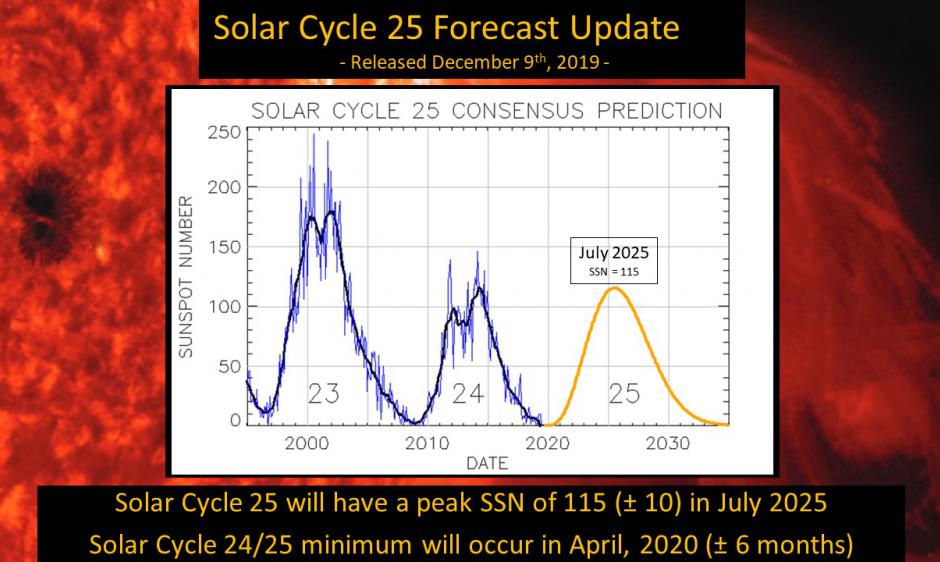
September 15, 2020 - The solar minimum between Solar Cycle 24 and 25 - the period when the sun is least active - happened in December 2019, when the 13-month smoothed sunspot number fell to 1.8, according to the Solar Cycle 25 Prediction Panel, co-chaired by NOAA and NASA. We are now in Solar Cycle 25 with peak sunspot activity expected in 2025, the panel said.

Solar Cycle 24 was average in length, at 11 years, and had the 4th-smallest intensity since regular record keeping began with Solar Cycle 1 in 1755. It was also the weakest cycle in 100 years. Solar maximum occurred in April 2014 with sunspots peaking at 114 for the solar cycle, well below average, which is 179.

Solar Cycle 24’s progression was unusual. The Sun’s Northern Hemisphere led the sunspot cycle, peaking over two years ahead of the Southern Hemisphere sunspot peak. This resulted in solar maximum having fewer sunspots than if the two hemispheres were in phase.

Solar Cycle 25
For the past eight months, activity on the sun has steadily increased, indicating we transitioned to Solar Cycle 25. Solar Cycle 25 is forecast to be a fairly weak cycle, the same strength as cycle 24. Solar maximum is expected in July 2025, with a peak of 115 sunspots.

“How quickly solar activity rises is an indicator on how strong the solar cycle will be,” said Doug Biesecker, Ph.D., panel co-chair and a solar physicist at NOAA’s Space Weather Prediction Center. “Although we’ve seen a steady increase in sunspot activity this year, it is slow.”

The panel has high confidence that Solar Cycle 25 will break the trend of weakening solar activity seen over the past four cycles. “We predict the decline in solar cycle amplitude, seen from cycles 21 through 24, has come to an end,” said Lisa Upton, Ph.D., panel co-chair and solar physicist with Space Systems Research Corp. “There is no indication we are approaching a Maunder-type minimum in solar activity.”

“While we are not predicting a particularly active Solar Cycle 25, violent eruptions from the Sun can occur at any time,” Biesecker added.

Solar cycle prediction gives a rough idea of the frequency of space weather storms of all types, from radio blackouts to geomagnetic storms and solar radiation storms. It is used by many industries to gauge the potential impact of space weather in the coming years....
....MORE

And from NASA, the last graphical forecast, dated December 2019:

https://www.swpc.noaa.gov/sites/default/files/styles/pad_sides_large/public/top_news/30Jan19updateV2.jpg?itok=BiUZWCTS

Wednesday, September 8, 2010

"Top Ten Solar Venture Capital Investors"

I'm reminded of a quote:
"Fundamentally VCs are risk adverse – they want no risk in the deal, if we could handle risk we'd be entrepreneurs."
– Victor Westerlind, General Partner at Cleantech VC firm Rockport Capital
Again, via Greentech and a winner of our prestigious Climateer Line of the Day.

Keeping up with the VC's, courtesy of Greentech:
Solar VC investors sorted by style points and vision, not IRR.
The braintrust at Greentech Media suggested I write an article on the top ten solar venture capital firms. Even despite what Sanjay said in this article.
As I started writing, I realized that the normal metrics for grading VCs -- IRR, quality of exits, etc. -- don't apply to today's solar investors, at least not in any meaningful way.  The fact is that very little, if any, of the billions of VC dollars put into solar in the last few years have yielded the type of results that VCs look for. 

You'd have to go back to SunPower, Suntech, First Solar, Evergreen Solar and GT Solar to cite solar firms that have yielded successful IPO exits. Those companies, save for Evergreen, were not funded by your standard Sand Hill Road-type venture firms. The Communist Party was Suntech's largest investor while members of the Walton Family sustained First Solar. T.J. Rodgers rescued SunPower with a $750,000 investment (written on a personal check) in 2001 after the company got rejected up and down the valley.

There has been some M&A.  Applied Materials has made some strategic acquisitions, as have Suntech, SunPower and First Solar.  But few of those acquisitions were VC-funded, and few yielded the 10X returns that VCs bank on.  

So, absent real financial metrics, I am free to list ten VC firms that invest in solar and select them for testicular fortitude, style points and sheer hype and vision.

Here we go:

Khosla Ventures and Kleiner Perkins top the list. Why? One, as investors in Ausra, they can certainly point to that firm's acquisition by Areva as an exit, if not on the order of Cerent.  Ray Lane, a partner at Kleiner told me that they were going to let Ausra "get caught" in what amounted to a modest bidding contest for the concentrating solar power firm.  Two, both firms are committed to solar and are putting their money where their mouths are by investing across the solar value chain -- and in KP's case, across early and late stages.  Both Vinod Khosla and KP's John Doerr are thought leaders and vocal boosters for intelligent greentech policy.

Kleiner Perkins' solar portfolio:
  • Alta Devices: Solar cells that aim to be 30 percent efficient at a module cost below 50 cents per watt; based on compound-semiconductors
  • Amonix: Utility-scale concentrated photovoltaics
  • Enphase: Microinverters
  • Kotak Urja: India-based solar PV and solar thermal
  • MiaSolé: Thin-film CIGS
  • Solexel: 3D, high efficiency mono-crystalline silicon cell 
  • Sundrop Fuels:  Solar driven gasification
  • Solasta -- a-Si in a nano-coax structure (shut down)

Khosla Ventures' solar portfolio:
  • PVT: Integrated system provides electric and heating for homes
  • Cogenra (formerly SkyWatch Energy): solar technology that produces electricity and hot water.
  • Stion: Thin-film CIGS
And this being KP and Khosla -- you can imagine that there are a few stealth firms not yet exposed to the sun.  More on KP's John Doerr in an article later today.

VantagePoint Venture Partners
VantagePoint thinks big and they think long-term -- in solar and in their other greentech investments like Better Place. When the firm invested in BrightSource Energy, now a force in solar thermal power plants, they made sure they had the resources and the commitment from the start. They knew they'd need billions of dollars and prominent industry partners and EPCs like Bechtel.  According to VantagePoint CEO Alan Salzman, their view is that the company has to scale and that "there's no cheap way to get to one gigawatt."
VantagePoint's solar portfolio:
The firm continues to look for more solar investments.

...MORE

Monday, February 21, 2011

Italy's Solar Orgy (FSLR; SPWRA; STP; TSL; YGE)

The SEO consultants say that words like 'orgy' in the headline are good for pageviews.
Personally I think it just leads to confused [and disappointed -ed] visitors.
Here's a Barron's Feature:

Italy's subsidized solar-energy program has produced a huge boom for big panel makers like First Solar. Unfortunately, it isn't likely to last too much longer.
Italy has found another passion. This time, it's solar energy. At a hearing last month in that nation's senate, regulators reported a subsidy offer for solar-generated electricity had elicited 2½ times more installations than predicted. A flood of applications at the December deadline overwhelmed the energy agency's Website. The sunny southeastern region of Puglia has so many new solar farms that its Ecology Party president is begging for a moratorium. If Italy continues its photovoltaic rush, it will add more solar capacity this year than world leader Germany, and the "feed-in tariffs" paid to Italy's new solar generators will raise the country's electric bills by almost $8 billion.

"Never doubt the greed factor with feed-in tariffs," says Shyam Mehta, a solar-market analyst with New York firm GTM Research. The tariffs guarantee developers an above-market rate for their solar-generated electricity over 20 years.
The makers of all those solar panels had a great December quarter. On Thursday SunPower announced its fourth-quarter earnings had tripled, duly rewarding the hopes that have lifted its shares (ticker: SPWRA) more than 30% this year. Similar year-to-date share gains have been enjoyed by China's Suntech Power Holdings (STP), Yingli Green Energy (YGE) and Trina Solar (TSL), not to mention industry leader First Solar (FSLR). They all have a stake in Italy's market. Higher oil prices and a strengthening euro also helped, but the most frenetic buyers of First Solar may be the bears who had sold short almost 30% of the company's free-trading shares. At 168, the solar pioneer has a market value near $15 billion, which is about 19 times the company's earnings guidance for this year.

The solar Saturnalia is good for business now, but the unexpected burden on Italy's rate-payers and electrical grid has prompted calls to limit the incentives. That's what happened in Spain, the Czech Republic and France. Germany is mulling an early reduction of its subsidies. Europe probably accounted for 80% of world demand last year.

Meanwhile, the world's solar manufacturers are aggressively boosting production of just about everything, be it raw polysilicon or the new-fangled panels that use a thin film of copper, indium, gallium and selenium—otherwise known as CIGS. A company called Solar Frontier, part of the big Japanese refiner Showa Shell Sekiyu, is cranking out CIGS products in what will soon be the world's largest solar-panel factory. Solar Frontier's panels will be marketed and financed by General Electric (GE), elevating the thrifty but efficient CIGS technology into a real challenge for crystalline-silicon technology like SunPower's or the thin-film cadmium telluride recipe of First Solar.

The broadening consensus among Wall Street analysts is that global photovoltaic supply might exceed demand by 25% by the end of 2011. As word spread of Italy's solar-cell orgy, and as solar shares soared, a number of analysts downgraded the sector. If a hole opens up next year where Europe's subsidies used to be, they warn that a high-priced stock like First Solar could drop 20% to 25% from its recent height.
[First_Solar_C] None
"This is a very unsustainable situation," says Joel Silverman, a solar analyst at London's Arete Research Services. When Spain's installations jumped sixfold in 2008, that country capped its subsidies.
First Solar wouldn't talk to Barron's in the quiet period before it reports December results, on Feb. 24, but the Phoenix-based company's quarter probably went as splendidly as those of its peers. In their latest conference call in mid-December, company executives confidently predicted that revenue would grow by more than 45% in 2011, to about $3.8 billion, producing earnings of about $800 million, or roughly $9.10 a share.

EVEN IF GERMANY'S solar demand shrank 40% in 2011, First Solar would have sufficient revenue from existing European contracts and a two-gigawatt pipeline of projects for North American utilities, said CEO Rob Gillette in the December call. The company boldly plans to invest $1 billion to increase annual production capacity by 50% this year, to 2.1 gigawatts, and by another 30% by the end of 2012.
The newly discovered evidence of Italy's solar spree will surely prompt questions on First Solar's Thursday conference call. Forecasters had expected Italy to install perhaps 1.8 gigawatts of solar power in 2010. Instead, the country's renewable-energy agency, Gestore Servizi Energetici, got 42,000 online applications, 26,000 e-mails and 6,500 registered letters—representing 3.77 gigawatts. With applications still pouring in, the GSE says the nation has already reached the level targeted for 2020.

Power to revise the country's Conto Energia directive lies with Minister of Economic Development Paolo Romani. His ministry may propose some measures to moderate solar spending when it introduces a scheme to meet European emissions standards, around the end of February.

In Germany the Bundestag committee on the environment will debate a plan on Feb. 23 that would increase the level of subsidy cuts in July, if installations continue to run high between March and May. As Europe phases out its feed-in tariff subsidies next year, Silverman expects the solar market to suffer a hard landing.
By how much will supply exceed demand? Arete's Silverman has a more generous outlook for global demand than most analysts. But he expects production output to exceed global demand by about 3.5 gigawatts this year, and more than 15 gigawatts in 2012, as solar vendors' exuberant sales to Italy end. "This is all very reminiscent of Spain," he warns. "People are forgetting the lessons of the past."...
Demand By: 2010 2011 2012
Germany 8.0*7.94.5
Italy 5.87.33.0
North America 1.12.54.5
Japan 1.01.41.9
China 0.71.62.9
Other 4.65.16.1
Supply Total 19.729.439.1
Oversupply -1.53.616.2
*Gigawatts Source: Arete Research

Also at Barron's Features:
Time for a Change in Techland
New Leaders, Fresh Advice
Pricing Power in the Grocery Aisle

Friday, March 19, 2010

Interview with JP Morgan's Christopher Blansett: "Why Wind is a Better Buy than Solar" (BWEN; FAN; FSLR; TAN; GE)

I'd have more faith in Mr. Blansett if it weren't for "Wind: Things that Make You Say Hmmm- JP Morgan's "Buy" on Broadwind Energy (BWEN)". He came out with an overweight rating on BWEN, three days before the company reported. Here's what the stock did (UPDATED to 4-29):


On March 9 we noted his downgrade of the solar sector in "First Solar: Don't Try to Catch A Falling Knife; Downgrading Solar Stocks on Oversupply Risk - JP Morgan (FSLR: ENER)".
Here's the rest of the story, from TheStreet.com:
This is the first part of a two-part* interview with JPMorgan Chase alternative energy analyst Christopher Blansett. This week Blansett produced a report advising institutional investors to shy away from solar stocks and embrace wind energy stocks in the next two years. We sat down with Blansett to shed some light on JPMorgan's total eclipse of the sun.

The latest pessimistic outlook for solar investors was provided on Tuesday by JPMorgan Chase analyst Christopher Blansett. But Blansett went took his pessimistic outlook much further than most.

The JPMorgan analyst began his negative turn on solar by downgrading three of the U.S. solar stocks that he covers -- First Solar(FSLR), Evergreen Solar(ESLR) and Energy Conversion Devices(ENER). More notably, however, Blansett recommended to JPMorgan clients -- from hedge funds to pension funds -- that they forsake solar and focus their renewable-energy investing on the growth of the U.S. wind industry, at least for the next two years.

Blansett is far from alone in this position. Several solar analysts have noted in recent weeks that institutional investors seem to have tired of solar and have been looking for alternatives in the renewable sector to maintain their exposure. Blansett says that most institutional investors have decided that solar is a lot of work for little reward. Over time, as there are more wind-focused pure-play companies, institutional investors will look more toward wind and move away from early solar-centric investing.

JPMorgan initiated coverage of the U.S. wind sector on Tuesday, with an overweight rating for Broadwind Energy(BWEN). The analyst's bullish call on wind sent shares of Broadwind up by more than 6% on the day.

Solar companies have, of course, been using this earnings season as a pulpit to play up the first-half demand from Germany, and argue for the second half pull-in from other major markets including the U.S., China and Italy. What's more, some of the capacity expansion plans -- reaching as high as 1 GW to 1.25 GW per solar company -- have sparked fears of a seriously oversupplied sector. The JP Morgan analyst shares these fears, estimating that the solar oversupply in the second half of 2010 could run as high as 3 gigawatts to 4 gigawatts on an annualized basis.

TheStreet spoke with Blansett on Tuesday about his sour solar sentiment and his newfound preference for wind.

TheStreet: What's your basic thematic argument in favor of wind, relative to your solar outlook?

Blansett: It is clear that Europe, which has been driving demand for solar, is basically saying subsidies will be coming down in all the countries -- at different times and at various levels of reductions, but the theme is clear from Europe.

To be completely honest, we never overly warmed up to the solar stocks, but we've never been so overtly negative either. Our research approach is to view sectors on a relative basis, and the fact is that there have been less pure-play alternative energy companies available to investors outside the solar sector.

Wind is a very large sector, yet it hardly gets news flow due to the lack of pure-play wind companies, and with General Electric(GE) being the biggest player.

Yet when you talk to utilities, they look at wind as being the primary driver of their renewable energy generation. Solar is great in California, but what does a utility in Illinois do?

Our negative view of the solar outlook in Europe [being] based on subsidies cannot be separated from how we look at the wind industry, where we see a stable subsidy environment in the next two years. That's a long time for investors, and the three-year time horizon make the underlying fundamentals for wind more attractive than for solar.

TheStreet: So it's overweight wind and underweight solar?

Blansett: Wind industry fundamentals will rebound from a bottom in the first quarter [Editor's Note: Since January, shares of Broadwind Energy lost $3 in value. Since July 2009, when Broadwind shares were at a 52-week high of $12.49, shares are down approximately $6.50.]...MORE

Here's Why Wind Is A Better Buy Than Solar (Part 2)

Friday, September 25, 2009

GE: "Solar business is our 'next wind'" (GE; FSLR)

We have a lot of links on GE solar. The piece I most enjoyed writing was "GE gets grant to install GE solar panels on GE headquarters":
Energy Fund Pays General Electric To Buy GE
General Electric gets state grant to buy GE-made solar panels

The PR flack was quoted as saying:

“It’s a good demonstration project for the technology,” O’Toole said.

Asked why a large, profitable corporation like GE would need financial help from the state, O’Toole said one reason “is to show you have to invest in new technologies. Companies cannot do it alone.”

HartfordBusiness.com

In other GE news, spokesmen did comment on whether PR spin could be harnessed as an inexhaustible and eternal source of power.

GE's 2006 revenues were $168,307,000,000

Among cities its size Hartford's child poverty rate is the second highest in the country. In greater Hartford, 100,000 people receive food from food pantries, soup kitchens and shelters, and 40,000 of them are children.

The grant to GE is funded by an electric bill surcharge, levied on every household in the state....
That, gentle reader, is how business is done!
Here's the headline story from cnet:
General Electric plans to give its solar business a charge within two years by introducing panels with the same solar cell material used by industry cost leader First Solar.

In 2011, the energy giant expects to produce solar panels made with cadmium telluride, a thin-film solar cell material, Michael Idelchik, vice president of advanced technologies at GE Global Research, said here Wednesday at the EmTech conference. The company now sells solar panels that use silicon solar cells, but its long-term bet is on thin-film--and specifically cadmium telluride--because it offers the cheapest cost per watt, he said.

Last year, GE's energy division took a majority stake in Golden, Colo.-based PrimeStar Solar, for its cadmium telluride cell technology. GE is now developing a product around that aimed at utility and commercial customers.

Solar at GE is a relatively small part of its sprawling energy portfolio, which covers everything from nuclear power plants to natural gas turbines. But GE expects that solar has the potential to grow rapidly, as its multibillion-dollar wind business has done over the past five years.

"Solar is definitely the next wind for us. It's not there yet, but it's moving very rapidly," Idelchik said. Solar is more expensive than wind right now, but he said that GE expects renewable energy mandates to help drive growth and bring costs down....MORE

Here are some of our posts on GE solar, oldest to newest:

Solar power edges towards boom time

Transcript: Jeffrey Immelt of GE

GE Global Research Demonstrates Scalable Low Cost, Nano-based Solar Cell

GE shows world’s first printed OLEDs

GE's Immelt reduced to whining after homicidal rant from Jack Welch (GE)

GE sees solar becoming $1 bln business

GE Bets on Solar with Majority Primestar Stake

First Solar, PrimeStar Solar and Cadmium Risks (FSLR; GE)

GE's PrimeStar Reveals Secret Strategy to Kill First Solar (FSLR)

GE's PrimeStar Reveals Secret Strategy to Kill First Solar (FSLR)

Q&A: Mark Little, Head of GE Global Research- "GE is pushing the smart grid and thin-film solar, but don't expect new kinds of nuclear reactors. "

Wednesday, September 8, 2010

"Best in Class: Power-One Poised to Invert Solar Stocks" (PWER)

The stock is up 46 cents (4.26%) at $11.21.
I like the phrase "Best in Class".
Companies that earn the moniker usually return a bit less than the riskier stuff (I can't find them this second but there have been a few academic papers that make the point) but allow you to sleep the sleep of the innocent.
From TheStreet:

The most common photo-op for the solar sector is of course the solar panel itself, but some recent big flashes in the solar sector have come from camera-shy solar players, like inverter company Power-One(PWER).

Whether it's a massive solar array set against the landscape of the southwestern U.S. desert, or German residential rooftops decked out in solar modules, these images used to present a future in which solar energy is a much greater part of the world's energy mix aren't likely to change. Investors don't typically imagine the industrial furnaces, or any solar wafer making apparatus, and definitely not the solar inverter when they are conjuring up a green future.
The same preference for images of solar panels that has dominated the public perception of the solar sector carries through to the popularity of solar module makers with investors. Whether it is low-cost U.S. leader First Solar(FSLR), or one of First Solar's Chinese rivals, led by Trina Solar(TSL), it's the solar module makers that get most of the attention.

So it may not be among the proverbially "sexy"investment stories to perform the behind-the-scenes work of converting the DC current generated by solar modules into the AC current needed for the grid. Make no mistake, though, being underappreciated doesn't mean solar inverter companies don't deserve a look from alternative energy investors. Inverters are one of the most critical solar components for project developers of larger systems.

Consider that the solar inverter players, and specifically Power-One, are growing at a faster clip than many of the solar module companies. Power-One grew its inverter business from less than 1% of the global inverter market in 2007 to more than 5% in 2009 -- which made it the fourth-biggest inverter player globally, notably pulling ahead of German giant Siemens. By August 2010, Power-One claimed 11% of the global inverter market.


In less than two years, the Camarillo, Calif.-based company went from ninth place overall to the No. 2 position among global inverter companies. The rise of Power-One doesn't put it within arm's reach of German inverter giant SMA Solar Technology, which continues to dominate market share of the global inverter pie, but Power-One doesn't need to overtake SMA, or even come close, to deserve a look from investors.
A recent report from Stifel Nicolaus makes the claim that the solar inverter space is actually more compelling than the solar module market for investors. Stifel Nicolaus cites the pace of the market-share gains made by players like Power-One, and less intense cost pressure in the inverter space than that which exists for the solar module makers, as reasons why investors should not ignore these companies....MUCH MORE
TheStreet's Eric Rosenbaum is one of the best journalists in the alt-energy space.
Here's the six month chart from BigCharts, note how the earnings gap-ups in both May and August were both filled before the stock resumed the uptrend. Something to remember for the next earnings report.


Thursday, March 11, 2010

Solar: "Pssst, D'ya want an Equity Play on New Energy Congress' #1 Ranked Technology?"

Sorry, that was the best race track tout impersonation that I could muster, now you know why I'm not an actor. [or a playwright -ed]
Long-time readers know that we are fans of New Energy Congress and their Top 100 list of clean energy technologies. I'll have the Top 20 list at the end of this post.
Number one on the list is Stirling Energy Systems, privately held with some serious backers.
There are two ways to gain exposure to Stirling.
Here's an April 2008 post:

$100 Million into Stirling Energy Systems (Concentrating Solar)
Firm buys $100 million interest in Stirling Energy Systems

An alternative-energy company in Ireland has agreed to pay $100 million for a controlling interest in Stirling Energy Systems Inc., a developing solar-energy company in Phoenix.

The deal could add 100 people to Stirling Energy's current staff of about 40 in Phoenix, said Ian Simington, group-development director for Dublin-based NTR plc....MORE
...From the Independent (IRE):

...NTR yesterday confirmed it is to take a 51pc stake in Stirling Energy, which is planning to spend $2bn over the next four years to develop two massive solar energy fields in California that will be among the world's biggest when completed.

..."If these two projects work, as we believe they will, the scale of opportunity could be enormous," said Mr Walsh, who added that land options have already been secured for the solar sites and that the "big challenge" will be to commercialise the technology. He said project financing discussions are at an early stage, but foresees no obstacles given NTR's track record in relation to Airtricity. Typical large-scale power projects are about 80pc debt financed.

At the end of March, NTR had €750m of cash on its balance sheet. It recently finalised the sale of its 51pc-owned Airtricity business for €1.8bn, net of debt. NTR, which also owns the Greenstar recycling business, received about €900m for its stake in Airtricity....MORE

Important note: NTR is a closely held Irish Company whose stock is traded OTC in a grey market.

Davy Stockbrokers were the sole market maker until a few years ago when they were joined by Goodbody Stockbrokers and NCB.
That's one. The other is Tower Automotive, currently owned by private equity firm Cerberus Capital Management. Here's the Phoenix Business Journal in January:

Arizona solar industry lands parts supplier

The Arizona solar industry got another boost with the planned opening of a Tower Automotive facility in the Valley to help supply one of the local solar providers with parts.

The project will bring about 200 jobs to the Valley. The Livonia, Mich.-based manufacturer is still looking at potential sites.

Tower would be doing work for Stirling Energy Systems. That Scottsdale-based company uses a concentrated solar dish technology called SunCatcher, which leans heavily on the auto industry for its technology — including within the engine that produces the electricity....MORE

A week ago the Wall Street Journal and Bloomberg, among others, reported that Tower had filed for an Initial Public Offering. Here's the Journal's Private Equity Beat blog:

High Hopes For Cars, IPOs And Sunshine

Looking for signs of an automotive revival, we were one story shy of an Official Trend, but sitting at the news machine and hitting refresh for three days has paid off. Tower Automotive LLC has filed for an initial public offering of up to $100 million, under the Tower International Inc. name. Even casual fans of private equity car investments are familiar with Tower’s owner, Cerberus Capital Management LP.

The Livonia, Mich., auto parts company filed for Chapter 11 in February 2005. While in bankruptcy, the company closed plants, sold non-core operations and reached settlements with labor unions. Cerberus bought Tower for $1 billion in July 2007.

Tower, which produces body and chassis structures and assemblies, said revenue was $1.63 billion last year, down from $2.17 billion in 2008. Net loss for the year widened to $67.9 million from $52.3 million, and adjusted Ebitda fell to $125 million from $212.9 million....

...What if the auto renaissance in the post-Saturn era doesn’t catch on right away? Tower isn’t placing 100% of its bets on vehicles. It will produce mirror-facet panels and support structures to solar dish company Stirling Energy Systems under a five-year pact. Production is set to begin in late 2010 with related revenue coming in starting the next year. Tower plans to invest about $30 million to $35 million in 2010 to support the agreement (net of government and other incentives). Tower thinks “there may be similar opportunities in the future to apply and extend our core skills in other industries, such as defense, wind or appliances.”

Here's the S-1 filing, Goldman and Citi are the bookrunners.

I don't have much interest in IPO's, you can't get enough of the good ones and too much of the bad ones, plus the politics of dealing with the underwriter and, well you get the idea.

Because this is an indirect play it is not as interesting as Stirling itself but worth keeping an eye on.

Here are New Energy Congress' Top 20, with a link to the rest of the Top 100 at the end. NEC rates only 15 of the Top 100 as commercially ready, Stirling also tops that list.

Top 20

Since April, 2006, the New Energy Congress has been systematically voting on the following energy technologies, reviewing a new technology every few days, and weighing it against the criteria they established. Last update - Nov. 17, 2008.

  1. Validated | Available for Commercial Purchase | Directory:Solar >
    Stirling Energy Systems utility solar - 20-year purchase agreement between Southern California Edison and Stirling Energy Systems, Inc. will result in 20,000+ dish array covering 4,500 acres capable of generating 500 MW, at a cost competitive to grid power. (http://stirlingenergy.com)
  2. Engines >
    Cyclone Technologies Schoell Cycle Engine - The Cyclone Engine is designed around the principles of an external combustion engine, to efficiently use any liquid or gaseous fuel and create more power and significantly less emissions than current gasoline or diesel powered internal combustion engines. (http://cyclonepower.com)
  3. Validated | Directory:Hydrogen from Water / Solar Hydrogen / Waste to Energy >
    Solar Hydrogen Energy Corporation (SHEC) - Has developed a process that will convert landfill and other waste methane into clean hydrogen, using the power of the Sun for the reformation, at a price comparable to traditional hydrogen production methods. (http://www.shec-labs.com/) (NEC Specialist: Tai Robinson)
  4. Geothermal >
    Raser is Rapidly Deploying Cost-Effective Geothermal Power - Instead of using electricity to turn a heat pump to cool a liquid, Raser runs a warmed liquid through a heat pump to generate electricity. With their rapid, low-cost deployment capability, they could maximize the U.S. geothermal capacity within ten years. (http://rasertech.com)
  5. Directory:Nuclear >
    Colliding Plasma Toroid Fusion - Electron Power Systems Ltd. is developing a process that remains stable without magnetic confinement, by using background gas pressure for confinement instead, could provide clean, non-polluting energy technology at one-tenth the cost of present energy generation. (http://electronpowersystems.com)
  6. Directory:Batteries >
    Nanotube Super Capacitor Battery - MIT researchers are developing a battery based on capacitors that utilize nanotubes for high surface area, enabling near instantaneous charging and no degradation. Estimating ~5 years to commercialization.
  7. Nanotech / Thin Film Solar >
    Nanosolar a leader in the drive to make solar affordable - Nanosolar has developed proprietary technology that makes it possible to simply roll-print solar cells with performance and durability similar to silicon-wafer cells, while cutting the costs, making solar affordable. The long-term limitation will be the growing scarcity of Indium. (http://nanosolar.com)
  8. Directory:Nuclear >
    Focus Fusion - Purports to be a far more feasible and profoundly less expensive approach to hot fusion, in contrast to ITER. Lawrenceville Plasma Physics' is developing the Plasma Focus Device for hydrogen-boron nuclear fusion. 4-7 years to commercial. 1 cent / kWh anticipated energy generation cost. (http://www.focusfusion.org) (NEC Specialists: Thomas Valone)
  9. Validated | Directory:Solar >
    Enviromission Solar Tower - Enviromission Solar Towers are like an inverted funnel, with a wide skirt to collect air to then turn a turbine in the tower. (http://www.enviromission.com.au/) (http://www.solarmissiontechnologies.com)
  10. Engines >
    Quasiturbine Engine - This four-chamber Wankel-like engine is capable of burning fuel using photo-detonation, an optimal combustion type. The design can also be used as an air motor, steam engine, gas compressor, hot air engine, or pump. (http://quasiturbine.com)
  11. Directory:Solar >
    International Automated Systems - Utility scale solar presently in process of being commercially installed for first time; alleged to produce electricity at 3-5 cents per kilowatt-hour. Highly-efficient bladeless turbine has wide range of waste-heat-harnessing applications. Methanol production technique will draw CO2 out of the environment, reversing global warming. (http://IAUS.com)
  12. Thermal Electric / Solar >
    Johnson Electro Mechanical Systems - Thermal energy system invented by the person who came up with the Super Soaker can achieve a conversion efficiency rate that tops 60 percent with a new solid-state heat engine. It uses temperature differences to create pressure gradients that are used to force ions through a membrane, instead of moving an axle or wheel. Inventor has also come up with an ambient energy conversion system as well as an electric heat pump.
  13. Waste-to-Energy / Plasma >
    StarTech Environmental Corp Plasma Tech - Startech is a publicly traded waste-to-energy plasma arc technology company. They presently have three 5 ton/day installations in operation, with a number of other plants in various stages of implementation. A 200 ton/day plant being scheduled for Panama will be the largest such plant in the world.
  14. Solar > Silicon >
    RSI's Solar Silicon Solution Wins MIT Energy Plan Contest - RSI Silicon debuts a far more inexpensive method of producing solar grade Silicon, winning "People's Choice" award and first place in the Energy Business Plan contest held by MIT. (NEC Specialist: Jim Dunn)
  15. Concentrated Solar / Stirling Engines >
    Infinia Corp's Stirling Solar Technology - Infinia's solar technology entails a parabolic dish that focuses the sun's energy onto their stirling engine that uses helium in a hermetically sealed system, requiring no lubrication inside the machine, nor maintenance.
  16. Directory:Solar >
    Johanna Solar Technology thin film solar eclipses others - South African solar panels consist of a thin layer approximately five microns thick (a human hair is 20 microns thick) of a unique metal alloy that converts light into energy at a fraction of the cost. The photo-responsive alloy can operate on virtually all flexible surfaces. Expected in market in 2007. (http://www.johanna-solar.com/)
  17. Solar > Concentrated >
    Cool Earth Solar - Company has developed an inflatable solar concentrator technology that slashes materials costs, making solar farms competitive with commercial electricity generation systems within three years. (http://www.coolearthsolar.com) (NEC Specialist: Jon Bonanno, investor, board member)
  18. Solar / Thermal Electric / Nanotech >
    Advanced Diamond Solutions' amorphous nanostructures - Semiconductor industry company serendipitously developed thermionic solar cells using amorphous diamond nanostructures that offer potential efficiencies of 50% at half the cost of silicon solar cells. Also has good promise as a thermal electric generator. (http://www.advanceddiamond.com)
  19. Directory:Storage > Directory:Batteries >
    EEStor Ceramic "Battery" - Texas company is working on an "energy storage" ultra-capacitor device made from ceramics. It's not technically a battery because it doesn't use chemicals. It can allegedly charge within 5 minutes (from a substation) with enough energy to move a car 500 miles on about $9 worth of electricity -- about 45 cents a gallon.
  20. Available for Purchase | Concentrated Solar Power| >
    SolarCube™ by Green and Gold Energy - Award-winning solar technology uses Fresnel lenses to focus sun's energy onto photovoltaic cells. 5.8 cents per kWh. (http://www.greenandgoldenergy.com.au) (NEC Specialist: Richard P. George)

Here are the rest of the Top 100.