Showing posts sorted by relevance for query enron. Sort by date Show all posts

Friday, December 2, 2011

"Remembering ‘Green’ Enron (Part I: The Kyoto Moment)" ENE

The writer, Robert L. Bradley, Jr., was a corporate shill at Enron with the position of Director of Public Policy Analysis.
In some respects, as speechwriter and condidant, he was Ken Lay's right hand man.
His politics lean right,  adjunct scholar of the Cato Institute and the Competitive Enterprise Institute and he is the nemesis of Joe Romm at the left leaning Center for American Progress.*
From Master Resource:

[Ed. note: This week marks the 10th anniversary of Enron's bankruptcy filing (December 2, 2001). Enron's view of energy sustainability drives the Obama Administration's "green 'dream' team" today, so such a look back at Enron's crony capitalism is merited.]
Beginning in the late 1980s, global warming became a bread-and-butter issue for Ken Lay, Enron’s leader and up-and-coming industry visionary. Enron in the 1990s became a full-fledged “green” company, practicing “energy sustainability” with its investments in solar power, wind power, energy-efficiency services, and environmental services.
No U.S.-based company sounded the tocsin over climate change more than Enron. What John Browne did as head of the international energy major BP, Ken Lay did in the United States, working with interest groups and political leaders to push the energy industry and public toward carbon dioxide (CO2) regulation.
Lay had his reasons—seven in terms of company profit centers, all of which stood to gain from government restrictions on carbon emissions. They involved:
· Natural gas production (relative to oil and coal),
· Natural gas transmission (relative to oil and coal),
· Natural gas-fired electric generation (relative to oil and coal),
· Energy outsourcing (a/k/a energy efficiency) services,
· Renewable energy generation (wind and solar),
· CO2 emissions trading (joining company trading in sulfur dioxide and nitrogen oxide), and
· Environmental outsourcing (a/k/a environmental services).
Of these, Enron’s natural gas activities were core, profitable activities (and “win, win” economically and environmentally, in their important applications). But the last four areas were problematic from the start and never profitable, even with special government favor. In retrospect, almost no amount of government subsidy would have been enough for these nascent businesses.

Kyoto Protocol To “Monetize” Enron ‘s Agenda
But there was always hope.
In late 1997, an elated Enron climate lobbyist reported that a climate-change accord was reached in Kyoto, Japan, among 38 Annex 1 countries (the developed world) to reduce their collective greenhouse gas emissions by 5.2 percent by 2008–12 compared to base 1990 levels. The United States, itself committed to a 7 percent decrease, at least in principle, would need new waves of government intervention to reduce its emissions, which meant more subsidies and new mandates for politically correct renewable energies (wind and solar, not hydropower) and energy conservation programs.
Thus Enron’s John Palmisano infamously wrote from Kyoto:
If implemented [the Kyoto Protocol] will do more to promote Enron’s business than will almost any other regulatory initiative outside of restructuring of the [electricity] and natural gas industries in Europe and the United States…. The endorsement of emissions trading was another victory for us…. This agreement will be good for Enron stock!!
It was time to turn deeds into dollars, he added:
Enron now has excellent credentials with many ‘green’ interests including Greenpeace, WWF [World Wildlife Fund], NRDC [Natural Resources Defense Council], GermanWatch, The US Climate Action Network, the European Climate Action Network, Ozone Action, WRI [World Resources Institute], and Worldwatch [Institute],” reported Palmisano. “This position should be increasingly cultivated and capitalized on (monetized).
Enron was popular at Kyoto. Palmisano spoke on panels and received an award from the Climate Institute on behalf of Ken Lay and Enron. And the praise continued. Worldwatch Institute’s State of the World 1998 identified Lay’s company as a key player in a coming “energy revolution.” The authors explained: “Enron, originally a large Texas-based natural gas company, has made a strong move in the renewables field with its acquisition of Zond, the largest wind power company in the United States, and its investment in Solarex, the second largest U. S. manufacturer of photovoltaic cells.”...MORE
And: "Remembering ‘Green’ Enron (Part II: Corporate Social Responsibility)

*Mr. Romm badly wanted to be a paid consultant to Enron. Among his obsequious communications with the company:
Romm’s Emails to Enron
“I hope there is something in [my book] Cool Companies Mr. Lay can refer to. I’m sorry Enron isn’t in it, but if you have any good case studies, I would love to use them as I talk to the media and Fortune 500 companies. Feel free to use my personal email.”
- Email communication from Romm to Enron, June 6, 1999.

“Your ESCO [Enron Energy Services] folk believe what I say is possible, and, more to the point, is a reasonable ‘goal’–I have that from [EES co-chairman] Tom White himself, though ‘Kyoto’ probably has more meaning as a benchmark goal so that is more my focus now. I have had many discussions with EES’s senior staff. The trick is to combine efficiency, cogeneration, and greenER power purchasing to cut CO2 emissions whiles cutting the energy bill.”
- Email communication from Romm to Enron, July 23, 1999.

Mr. Bradley thoughtfully keeps these alive on the internet along with:

More Deceit from Climate Progress, Center for American Progress (Is Joe Romm shooting himself in the foot?)
Enron and Waxman–Markey: Response to Joe Romm (July 2, 2009)
Joseph Romm and Enron: More for the Record (May 8, 2009)
Joseph Romm and Enron: for the Record (May 5, 2009)

 And many more.
Blog wars, yeah baby. 

"Why Enron is still with us"

Loren Steffy is one of the best Energy Reporters at Enron's hometown Newspaper, the Houston Chronicle, although not without his detractors, links below. Via the Chronicle's FuelFix blog:
Business, like Houston, rarely uses a rearview mirror, so the anniversary of Enron’s bankruptcy filing, 10 years ago today, passes with a whiff of irony.

In our haste to look forward, to strike the crooked E from the city’s collective psyche as surely as it was plucked from the sidewalk on Smith Street, we inadvertently reinforce one of the more subtle yet important warnings wrapped in Enron’s failure.

Peeling back the fraud, the hubris and the wretched excess, stripping away the corruption of the lawyers, accountants and internal safeguards, Enron’s failure underscored the dangers of the short-term view that still pervades American business. Enron, fundamentally, was a company that lived for the moment.
“They never were seriously interested in a culture of integrity,” said Stephen Arbogast, a University of Houston finance professor who wrote a book on Enron’s culture of corruption and has used it as a case study in his classes for years. “They were interested in a culture of short-term gain.”

The pressure to meet quarterly earnings forecasts, of course, had been building long before Enron failed. The dot-com boom that preceded its collapse heightened the urgency for short-term gain.

Rules had changed?
Enron was no dot-com, but like the tech startups that littered the market at the time, it argued the rules had changed.

It struggled to find growth in new markets, to replicate its earlier success with natural gas trading. It hid its failures, and as it grew more desperate, it pushed employees to close big deals fast. Their long-term value didn’t matter as much as the momentary hype that would prop up Enron’s veneer of growth.
As those deals proved unprofitable, Enron’s financial engineers came up with ever more elaborate schemes to meet those all-important quarterly profit goals. Eventually, its income statement reflected little more than cartoon accounting.

“The issue was: ‘How do we keep the image up?’ And the answer was manufacturing earnings,” Arbogast said.
...MORE
From The Enron Blog:
Loren Steffy Still Slamming Enron
Loren Steffy is at it again.
The Doofus Defense is under attack. As longtime readers know, I coined that term leading up to the trial of Enron executives Ken Lay and Jeff Skilling, who, facing criminal charges, suddenly claimed to be woefully ignorant of their company’s actions.
Hey, that’s awesome Loren! You coined a term – that’s so cool. Do you have any other tricks? How about a modicum of journalistic integrity?..
About The Enron Blog
The Enron Blog was created out of frustration with the casual consensus that Enron was corrupt, a viewpoint enhanced by portrayals of greed and avarice in the media and the Department of Justice. My experience with Enron simply did not comport with that characterization.


Enron executives are innocent. Their company was toppled by a run on the bank, exactly like we’ve seen with Bear Stearns, IndyMac, Lehman Brothers, and other companies. There was no fraud or conspiracy at Enron....
From the Houston's Clear Thinkers blog:
Loren Steffy's Enron myopia
Houston Chronicle business columnist Loren Steffy is a particularly vitriolic critic of former Enron executives Jeff Skilling and the late Ken Lay. Steffy convinced himself early on that Skilling and Lay had lied to investors about Enron, so he made a good part of his living for the past several years appealing to resentment and scapegoating rather than fair-minded analysis in covering Enron's demise.


Even the fact that the criminal cases against both Skilling (see also here) and Lay turned out to be rather weak made no difference to Steffy. He rarely, if ever, gave Skilling or Lay any credit for the enormous wealth that was created from their legacy of beneficial risk-taking. Stoking anger toward wealthy business executives is much easier than nuanced analysis of often complex markets and business transactions. Probably sells more newspapers, too....MORE
 

Thursday, October 29, 2015

"Enron Revisited: Highlights from Bear Stearns Research"

We have quite a few posts on Enron but one of my faves is from the Enron emails. From our January 2009 post "Fun With Enron Emails":
Date: 01/09/2002 10:26 AM
From: SSCHROED@us.ca-indosuez.com 
To: dgiron@enron.com, Randy G. Kruger Jr.@ANDERSEN WO,
mikeshaw@andrews-kurth.com, todd.w.taylor@bakernet.com 
Subject: Lunch
OK you slackers (excluding Shaw), I'll give you another chance to respond.
Lunch this week or next, let me know what's good. If meeting after work is
better for you, let me know. Certainly all of you can stop shredding
documents for 5 minutes to respond.

Schroeder
*******************Internet Email Confidentiality Footer*******************
Both Andrews-Kurth and Baker & McKenzie were Enron attorneys, Andersen was the accountant.
Good yucks, huh?

From the CFA Institute's Enterprising Investor blog:
A fantastic piece of financial market history resurfaced this week. 
Somebody found a 26 January 2001 research note on Enron from Bear Stearns and posted it on Wall Street Oasis (WSO). 
The Bear Stearns team initiates coverage on the stock (then trading at 79 3/4) with an “Attractive rating” noting the “unlimited potential in broadband services” as just one of many opportunities. 
So there’s no way you can’t keep reading, right? I couldn’t help myself either.First, you have to just take a second and think about what this company was to the world at the time. Today, it’s hard to remember Enron as anything but a classic example of hubris and fraud. But the market didn’t always know that. 
“Already an established leader in the natural gas industry, Enron is moving rapidly — through revolutionary communications systems and interfaces — to become the world’s preeminent energy and commodities marketer, high-density Internet distributor, and distributed energy leader. We believe that Enron should be compared to leading global companies like GE, Citigroup, Nokia, Microsoft, and Intel, and that its valuation reflects this eminence.” [All emphasis mine.] 
And take care to note the trajectory that the market saw. Frauds can seem like the hottest ticket around. Remember: People called up Bernie Madoff asking to invest with him and he turned a lot of them down. In the market’s perception, Enron was on fire: 
“$98 PRICE TARGET. Our Attractive rating and 12-month price target reflect Enron’s highly successful existing businesses, customer relationships and contractual agreements; its advanced online systems and business models; and its valuation relative to potential financial results (based on both a conservative DCF and comparables analysis).” 
Just a quick tangent here. When I was a kid, my dad taught me the meaning of the term “conservative basis” as it’s commonly used on Wall Street....MUCH MORE
One other post that stands out is November 2007's "Wall Street Learned the Lessons of Enron (Unfortunately)":

By now, Climateer Investing's loyal and long-suffering readers know of my morbid fascination with stock frauds in general, and Enron in particular. One of the earliest* looks at this perversion of capitalism and markets was:

Is Enron Overpriced?


It's in a bunch of complex businesses.
Its financial statements are nearly impenetrable.
So why is Enron trading at such a huge multiple?

By Bethany McLean
March 5, 2001
NEW YORK (FORTUNE) -- In Hollywood parlance, the "It Girl" is someone who commands the spotlight at any given moment -- you know, like Jennifer Lopez or Kate Hudson. Wall Street is a far less glitzy place, but there's still such a thing as an "It Stock." Right now, that title belongs to Enron, the Houston energy giant. While tech stocks were bombing at the box office last year, fans couldn't get enough of Enron, whose shares returned 89%. By almost every measure, the company turned in a virtuoso performance: Earnings increased 25%, and revenues more than doubled, to over $100 billion. Not surprisingly, the critics are gushing. "Enron has built unique and, in our view, extraordinary franchises in several business units in very large markets," says Goldman Sachs analyst David Fleischer....MORE
Now Bethany is back with

Uh-oh. It's Enron all over again

November 14 2007

(Fortune Magazine) -- Start with the headlines about off-balance-sheet entities known as structured investment vehicles, or SIVs (or sieves, as some wags are calling them). As Gertrude Stein never said, an off-balance-sheet vehicle is an off-balance-sheet vehicle is an off-balance-sheet vehicle.

Just as Enron's off-balance-sheet vehicles were propping up its stock price by camouflaging the company's real financial results, so SIVs were inflating the credit market by providing demand for the complex securities created out of mortgages and loans used to finance buyouts....

That was four months before JPM grabbed BSC and ten months before Lehman collapsed.

Friday, December 2, 2011

"Here at ENN (Enron News Network) We Believe...(the journalists who covered the story)

I didn't intend go "W-ENE, all Enron, all the time" on our readers so this will be the last post on the topic. [today -ed]

An homage to one of the best pieces of financial journalism of the last decade, Bethany Maclean's Enron blockbuster titled with childlike simplicity "Is Enron Overpriced?".

Originally posted November 14, 2007
Wall Street Learned the Lessons of Enron (Unfortunately)
By now, Climateer Investing's loyal and long-suffering readers know of my morbid fascination with stock frauds in general, and Enron in particular. One of the earliest* looks at this perversion of capitalism and markets was:

Is Enron Overpriced?

 It's in a bunch of complex businesses.
Its financial statements are nearly impenetrable.
So why is Enron trading at such a huge multiple?
By Bethany McLean
March 5, 2001
NEW YORK (FORTUNE) -- In Hollywood parlance, the "It Girl" is someone who commands the spotlight at any given moment -- you know, like Jennifer Lopez or Kate Hudson. Wall Street is a far less glitzy place, but there's still such a thing as an "It Stock." Right now, that title belongs to Enron, the Houston energy giant. While tech stocks were bombing at the box office last year, fans couldn't get enough of Enron, whose shares returned 89%. By almost every measure, the company turned in a virtuoso performance: Earnings increased 25%, and revenues more than doubled, to over $100 billion. Not surprisingly, the critics are gushing. "Enron has built unique and, in our view, extraordinary franchises in several business units in very large markets," says Goldman Sachs analyst David Fleischer....MORE
Now Bethany is back with
Uh-oh. It's Enron all over again
(Fortune Magazine) -- Start with the headlines about off-balance-sheet entities known as structured investment vehicles, or SIVs (or sieves, as some wags are calling them). As Gertrude Stein never said, an off-balance-sheet vehicle is an off-balance-sheet vehicle is an off-balance-sheet vehicle.
Just as Enron's off-balance-sheet vehicles were propping up its stock price by camouflaging the company's real financial results, so SIVs were inflating the credit market by providing demand for the complex securities created out of mortgages and loans used to finance buyouts....
Here's a nice characterization
But no one wants to remember two simple rules -- some things are too good to be true, and be wary of Wall Streeters bearing gifts -- when everyone seems to be making so much money. And the collateral damage always hits the true innocents, such as gas pipeline workers and homeowners....MORE
*For the record, Fortune gave Enron its "America's Most Innovative Company" Award for six straight years, 1996-2001 and and as of August 14, 2001 was tipping ENE as one of the "Ten Growth Stocks to Last the Decade". Enron filed its bankruptcy petition December 2, 2001.

economicprincipals.com has some of the history of the journalists who worked the story:

...Three books dealing with the story of Enron Corp. have now appeared; a fourth may be in the works. That is a sufficient number to permit an impressionistic boxing of the compass of news, for the books in print were written by journalists who covered the story for The New York Times, The Wall Street Journal and Fortune magazine. 

And while abstracting out the three key institutional players obscures the vital role played by the other organizations that committed extensive resources to the chase -- The Washington Post and The Financial Times in particular; the Chicago Tribune (in connection with the ill-fated Chicago-based accounting firm of Arthur Andersen) and The Houston Chronicle (eventually) -- it renders visible some of key mechanisms by which news is covered and uncovered in the present day.

Enron is an especially interesting case for many reasons, not least because the press was so deeply complicit in its rise to prominence as "America's seventh-biggest company." Early in its fifteen-year history, Enron recognized that glowing press clips, as much as analysts' recommendations and business school cases, were the royal road to success. 

No news organization was more embarrassed in the process than Business Week magazine, which triumphantly splashed Enron's Jeff Skilling on its cover just as the company began its dizzying descent. (It was no more than a superficial cut, since BW does an excellent job from week to week.). But almost everyone who was anyone got taken in at some point. Winners of the $50,000 "Enron Prize for Distinguished Public Service" included Nelson Mandela, Colin Powell, Mikhail Gorbachev -- and Alan Greenspan. (Surely they were happy to cash the check!)

The story as it frequently is told is that it was a Fortune magazine writer who raised the first alarm. And it is true that Bethany McLean, a former Goldman Sachs analyst-turned journalist wrote a savvy (if somewhat cautious) article in March 2001 titled "Is Enron Overpriced?"
There were other journalists who over the years cocked at skeptical eyebrow at the company -- none more so than Jonathan Weil, a reporter for the Texas regional edition of The Wall Street Journal whose prescient story about energy-trading companies' bizarre "mark-to-market" bookkeeping practices never made it into the newspaper's national edition. (Today Weil covers the accounting industry for the paper.)...MORE

"Arthur Andersen Ex-CEO: Enron, Europe Are Similar" (ENE)

We have a ridiculous number of posts on the Crooked E, might as well pile on.
First up CNBC:
A number of similarities exist between the collapse of Enron in 2001 and the current sovereign debt crisis in the euro zone, Joe Berardino, CEO at Alvarez and Marshall and the former CEO of Enron's accounting firm, Arthur Andersen, told CNBC.

"If you look at the Enron story at its most simplistic, you had a really successful company that was a bricks and mortar company, that became a trading company, that was very successful as a trading company… levered up," he said, using the term popular in business parlance for borrowing. "And then we found that leverage is really good, until it's bad," Berardino said.

Enron filed for bankruptcy 10 years ago on Friday. The scandal surrounding the energy trading firm also effectively brought down Arthur Andersen as a going concern. 

Asked whether lessons had been learned since Enron filed for bankruptcy, Berardino said, "we're still learning" and pointed to the sovereign debt crisis currently engulfing the euro zone.

"(Enron) ran out of time in terms of its liquidity and a lot of the same elements — leverage, the need for liquidity, crisis when you lose confidence — are repeated in all those examples. And I would argue we're now living through it with the sovereign crisis in Europe," he said. "There are a lot of the same elements."...MORE
If you have an interest the easiest way to plow through our Enron archives is this Google search term:
site:climateerinvest.blogspot.com enron
Some of the posts that turn up on the first page (Google returns 3120 hits):
Enron:The Musical (ENE)
Pt. I:: GE and the Enron Playbook (ENE; GE)
"Is McKinsey & Co. the Root of All Evil ?"
Former Enron trader calls for setting commodities limits
Trading: "Was Enron Right?"
 Fun With Enron Emails
California's cap-and-trade won't work
 Magical Markets, Enron and GE and a New Word
The long arms of Enron reach beyond the grave
From Those Wonderful Folks Who Brought You the Enron Loophole: Obama's CFTC nominee supports carbon market oversight

And on and on.


Wednesday, November 14, 2007

Wall Street Learned the Lessons of Enron (Unfortunately)

By now, Climateer Investing's loyal and long-suffering readers know of my morbid fascination with stock frauds in general, and Enron in particular. One of the earliest* looks at this perversion of capitalism and markets was:

Is Enron Overpriced?
It's in a bunch of complex businesses.
Its financial statements are nearly impenetrable.
So why is Enron trading at such a huge multiple?

By Bethany McLean

March 5, 2001

NEW YORK (FORTUNE) -- In Hollywood parlance, the "It Girl" is someone who commands the spotlight at any given moment -- you know, like Jennifer Lopez or Kate Hudson. Wall Street is a far less glitzy place, but there's still such a thing as an "It Stock." Right now, that title belongs to Enron, the Houston energy giant. While tech stocks were bombing at the box office last year, fans couldn't get enough of Enron, whose shares returned 89%. By almost every measure, the company turned in a virtuoso performance: Earnings increased 25%, and revenues more than doubled, to over $100 billion. Not surprisingly, the critics are gushing. "Enron has built unique and, in our view, extraordinary franchises in several business units in very large markets," says Goldman Sachs analyst David Fleischer....MORE
Now Bethany is back with
Uh-oh. It's Enron all over again

(Fortune Magazine) -- Start with the headlines about off-balance-sheet entities known as structured investment vehicles, or SIVs (or sieves, as some wags are calling them). As Gertrude Stein never said, an off-balance-sheet vehicle is an off-balance-sheet vehicle is an off-balance-sheet vehicle.

Just as Enron's off-balance-sheet vehicles were propping up its stock price by camouflaging the company's real financial results, so SIVs were inflating the credit market by providing demand for the complex securities created out of mortgages and loans used to finance buyouts....

Here's a nice characterization

But no one wants to remember two simple rules -- some things are too good to be true, and be wary of Wall Streeters bearing gifts -- when everyone seems to be making so much money. And the collateral damage always hits the true innocents, such as gas pipeline workers and homeowners.

*For the record, Fortune gave Enron its "America's Most Innovative Company" Award for six straight years, 1996-2001 and and as of August 14, 2001 was tipping ENE as one of the "Ten Growth Stocks to Last the Decade". Enron filed its bankruptcy petition December 2, 2001.

economicprincipals.com has some of the history of the journalists who worked the story:

...Three books dealing with the story of Enron Corp. have now appeared; a fourth may be in the works. That is a sufficient number to permit an impressionistic boxing of the compass of news, for the books in print were written by journalists who covered the story for The New York Times, The Wall Street Journal and Fortune magazine.

And while abstracting out the three key institutional players obscures the vital role played by the other organizations that committed extensive resources to the chase -- The Washington Post and The Financial Times in particular; the Chicago Tribune (in connection with the ill-fated Chicago-based accounting firm of Arthur Andersen) and The Houston Chronicle (eventually) -- it renders visible some of key mechanisms by which news is covered and uncovered in the present day.

Enron is an especially interesting case for many reasons, not least because the press was so deeply complicit in its rise to prominence as "America's seventh-biggest company." Early in its fifteen-year history, Enron recognized that glowing press clips, as much as analysts' recommendations and business school cases, were the royal road to success.

No news organization was more embarrassed in the process than Business Week magazine, which triumphantly splashed Enron's Jeff Skilling on its cover just as the company began its dizzying descent. (It was no more than a superficial cut, since BW does an excellent job from week to week.). But almost everyone who was anyone got taken in at some point. Winners of the $50,000 "Enron Prize for Distinguished Public Service" included Nelson Mandela, Colin Powell, Mikhail Gorbachev -- and Alan Greenspan. (Surely they were happy to cash the check!)

The story as it frequently is told is that it was a Fortune magazine writer who raised the first alarm. And it is true that Bethany McLean, a former Goldman Sachs analyst-turned journalist wrote a savvy (if somewhat cautious) article in March 2001 titled "Is Enron Overpriced?"

There were other journalists who over the years cocked at skeptical eyebrow at the company -- none more so than Jonathan Weil, a reporter for the Texas regional edition of The Wall Street Journal whose prescient story about energy-trading companies' bizarre "mark-to-market" bookkeeping practices never made it into the newspaper's national edition. (Today Weil covers the accounting industry for the paper.)...MORE

Thursday, July 5, 2012

Fun With Enron Emails II (ENE, JPM)

Hot on the heels of JPM's shenanigans (FT: JPMorgan in US Power Probe) FT Alphaville's The Closer post directed us to a data visualization of one day's emails (Dec. 26, 2000; 11 months before the bankruptcy) between various Enron executives.

Those boys were a chatty bunch.

Back in 2009 we posted "Fun With Enron Emails" (I):
... Anyhoo, I was at Trampoline's Enron email database and remembered some of the finds that other people had unearthed:
RE: Lunch
From:
randy.g.kruger.jr@us.andersen.com
To:
Sent:
09/01/2002 at 16:49

Email metadata


The message

This week is not good. I have too large a pile of documents to shred.
Next week is better. I suggest Wednesday, Thursday or Friday.
To: dgiron@enron.com, Randy G. Kruger Jr.@ANDERSEN WO,
mikeshaw@andrews-kurth.com, todd.w.taylor@bakernet.com
cc:
Date: 01/09/2002 10:26 AM
From: SSCHROED@us.ca-indosuez.com
Subject: Lunch
OK you slackers (excluding Shaw), I'll give you another chance to respond.
Lunch this week or next, let me know what's good. If meeting after work is
better for you, let me know. Certainly all of you can stop shredding
documents for 5 minutes to respond.
Schroeder
*******************Internet Email Confidentiality Footer*******************
The database is just wonderful that way. Unfortunately it does not contain the most interesting (among the cognoscenti) Enron email, which John Palmisano infamously wrote from Kyoto:

If implemented [the Kyoto Protocol] will do more to promote Enron’s business than will almost any other regulatory initiative outside of restructuring of the [electricity] and natural gas industries in Europe and the United States…. The endorsement of emissions trading was another victory for us…. This agreement will be good for Enron stock!!
It was time to turn deeds into dollars, he added:
Enron now has excellent credentials with many ‘green’ interests including Greenpeace, WWF [World Wildlife Fund], NRDC [Natural Resources Defense Council], GermanWatch, The US Climate Action Network, the European Climate Action Network, Ozone Action, WRI [World Resources Institute], and Worldwatch [Institute],” reported Palmisano. “This position should be increasingly cultivated and capitalized on (monetized).
Good times, good times at the Crooked E.

If you're interested 2008's "California's cap-and-trade won't work" has some links:
Here at Climateer Investing the comparison between California electricity deregulation and carbon trading seemed self-evident, based, if for no other reason, on the fact that the pals and alumni of Enron are the ones pushing the trade. Now the media is picking up on where the trade part of cap-and-trade is going. The LA Times gets it....
Blackout: Enron and the California Power Crisis (Transcript)...

...And scariest of all, here's a meeting on cap-and-trade where the man from Enron is the smartest guy in the room:


That leads me to one of my favorite links in the vault, the transcript of a March 3, 2000 (21 months to the really big bankruptcy filing) roundtable discussion "Domestic Emissions Trading of Greenhouse Gas Credits". Batting lead-off, the Senator from GE's home state, Joltin' Joe Lieberman. More interestingly though (sorry, Joe it's true), batting cleanup, the Enron representative really does come across as "The Smartest Guy in the Room" (that ENE link is kinda funny, in a morbid sort of way)
  • II. Opening Remarks

  • Senator Joseph Lieberman (D-CT)

  • III. Presentations by Panelists

  • Dan Lashof, Natural Resources Defense Council

  • Joe Goffman, Environmental Defense

  • John Palmisano, Enron Corporation

  • Jon Naimon, Light Green Advisors

  • Ray Kopp, Resources for the Future

  • Sue Gander, Center for Clean Air Policy
  • Good times.

    Friday, November 19, 2021

    Climate + the Crooked E: "In Praise of . . . Enron?" (it's been 20 years)

    Understanding Enron was key to understanding the climate biz from 1995 or so until the Paris Accords were negotiated at COP21 in 2015. As an example post among hundreds here's one from the 10th anniversary of the Enron bankruptcy:

    ....But before Bali there was Kyoto, which Enron pushed with all their—then considerable—might.
    When the Protocol was agreed in 1997, Enron's top lobbyist, John Palmisano, senior director for environmental policy and compliance emailed from Kyoto:

    If implemented [the Kyoto Protocol] will do more to promote Enron’s business than will almost any other regulatory initiative outside of restructuring of the [electricity] and natural gas industries in Europe and the United States…. The endorsement of emissions trading was another victory for us…. This agreement will be good for Enron stock!!
    It was time to turn deeds into dollars, he added:
    Enron now has excellent credentials with many ‘green’ interests including Greenpeace, WWF [World Wildlife Fund], NRDC [Natural Resources Defense Council], GermanWatch, The US Climate Action Network, the European Climate Action Network, Ozone Action, WRI [World Resources Institute], and Worldwatch [Institute],” reported Palmisano. “This position should be increasingly cultivated and capitalized on (monetized).
    And we were off and running.....

    https://upload.wikimedia.org/wikipedia/commons/thumb/3/3f/Logo_de_Enron.svg/659px-Logo_de_Enron.svg.png

    From Texas Monthly, December 2021 issue:

    Twenty years have passed since the notoriously corrupt energy-trading company collapsed. Maybe it’s time to acknowledge that it wasn’t all bad for Texas. 

    Lynda Clemmons fondly remembers her second job out of college. Nine months into an unfulfilling stint at a Houston investment bank, the Southern Methodist University alum stopped by a Saturday job fair hosted by a natural gas and power trading firm. She got an offer that Monday, and the position was better than she thought possible for a recent graduate who’d spent her collegiate days studying French and reading Chaucer.

    The work was rewarding, even inspiring. Her team played an instrumental role in developing a financial market that helped slash air pollution in the United States, dramatically reducing the threat from acid rain. When the company cooked up a way for seasonal businesses to insure themselves against unexpected swings in the weather, Clemmons was put in charge of implementing the idea. Today, that creation—known as the weather derivative—is a crucial tool in a world rocked by climate change, with about $10 billion worth of derivative contracts traded annually by companies ranging from ski resorts to commercial real estate firms. “I loved my job,” she told me recently. “Enron was challenging and fascinating and, for a young person just out of school, all-encompassing.”

    That is not, of course, how most Texans remember Houston-based Enron. Launched in 1985, the company was bankrupt by 2001. CEO Jeffrey Skilling and other senior executives were imprisoned for conspiracy and fraud related to deceptive practices that grossly overstated the firm’s profits. You could fill a shelf with books written about its crooked accounting, the hubris of its management, the greed and venality of its traders.

    Twenty years later, however, Clemmons isn’t alone in waxing nostalgic about Enron. Interviews with nearly a dozen former employees paint a similarly rosy picture. Working there was “an amazing experience,” one said. “An awesome place to be a young person,” said another. Still, their memories contain contradictions. Enron was an invigorating, dynamic workplace (managed by unapologetic criminals). The company fearlessly pioneered several new markets and industries (while looting others).

    No doubt Enron’s misdeeds were super-villainously bad. It was the company’s traders, you may recall, who shut down California power plants to spike electricity prices, contributing to widespread outages—and were caught on tape laughing about it. When journalists and whistleblowers toppled the castle of deception, countless Texans saw their retirement savings wrecked in the process. It’s a testament to the gravity of Enron’s crimes that, in a nation where many corporate wrong-doers, if they are punished at all, are slapped with fines, chief financial officer Andy Fastow and Skilling received prison sentences of six and fourteen years, respectively. (These days, Fastow lectures audiences about corporate ethics; Skilling has reportedly started an energy tech company.)

    Enron imploded with such cosmic intensity that its legacy became irredeemably dark. Yet Enron-born technologies and markets remain intrinsic parts of the energy, finance, and tech industries. A diaspora of its alumni have gone on to build innovative, successful companies in renewable energy, finance, even sporting goods. Enron also invested in developing technologies that, while they didn’t pay off at the time, demonstrated that the company possessed an insightful vision of the future.

    Perhaps now that much of the hurt and humiliation and anger have receded, and the incarcerated executives have served their time, we should grant credit where it’s deserved. Dare we suggest that it might be time to praise Enron, or at least give the company something it never gave itself: a fair accounting?....

    ....MUCH MORE

    HT: FT Alphaville's Further Reading post, November 17

    They were all crooks, playing fast and loose with the truth and with the markets but perhaps the biggest crook to emerge from the saga was prosecutor Andrew Weissmann, although his prosecutorial misconduct only later came to light. One of the cases involving accountant Arthur Anderson, that came out of his decision to shut down the big CPA and consulting firm, went to the Supreme Court which reversed on a 9 - 0 vote. Unfortunately the initial decision had caused AA to lose its auditor's license because a felon can't be an auditor for public companies. The Supremes ruled on the trial judge's instructions in the case, not on anything Weissmann did (that was yet to be discovered) but it was his bringing the case in the first place that cost 85,000 people their jobs. 

    Weismann went on to fame and fortune and then came back to government work becoming known as Mueller's "pit bull" during the 2017 - 2019 Special Counsel investigation of President Trump. Another of the Enron Task Force prosecutors was Lisa Monaco who is currently Deputy Attorney General of the United State and who is said to be the person who actually runs the Department of Justice, with Attorney General Merrick Garland being pretty much a figurehead and maybe, fall guy.

    Wednesday, March 2, 2011

    "Is McKinsey & Co. the Root of All Evil ?"

    You are, of course, familiar with the phrase "Too clever by half"?
    From The Big Picture:
    “Enron has built a reputation as one of the world’s most innovative companies by attacking and atomising traditional industry structures.”
    -McKinsey report, published a few months before Enron’s collapse.>
    Rajat Gupta was more than a mere board member of Goldman Sachs, Procter & Gamble, and others. He ran McKinsey & Co. from 1994 to 2003, and was a senior McKinsey partner until 2007.
    When the Securities and Exchange Commission brought insider trading charges against Gupta, it did more than merely accuse him of being a crook. It shined a long overdue light on a company that has successfully dodged responsibility for some of the worst financial ideas in history.

    McKinsey, the global consulting firm, has created dubious strategies for all manners of companies ranging from Enron to General Electric. Indeed, where ever there has been a financial disaster in the world, if you look around, somewhere in the background, McKinsey & Co. is nearby.


    That’s a pretty significant accusation. But it is bore out by the track record of the firm. Some of the more questionable strategies of McKinsey:
    • Advocating side pockets and off balance sheet accounting to Enron, it became known as “the firm that built Enron” (Guardian, BusinessWeek)
    • Argued that NY was losing Derivative business to London, and should more aggressively pursue derivative underwriting  (Investment Dealers’ Digest)
    • General Electric lost over $1 billion after following McKinsey’s advice in 2007 — just before the financial crisis hit. (The Ledger)
    • Advising AT&T (Bell Labs invented cellphones) that there wasn’t much future to mobile phones (WaPo)
    • Allstate reduced legitimate Auto claims payouts in a McK&Co strategem (Bloomberg, CNN NLB)
    • Swissair went into bankruptcy after implementing a McKinsey strategy (BusinessWeek)
    • British railway company Railtrack was advised to “reduce spending on infrastructure” — leading to a number of fatal accidents, and a subsequent collapse of Railtrack. (Property Week, the Independent)
    ...MORE

    Despite the fact that Mr. Ritholtz was obviously tired when he typed this he is on to something.
    He doesn't mention that Enron's former president, Jeff Skilling, was one of the "youngest-ever" McKinsey partners.
    Cara Ellison at The Enron blog doesn't pull her punches though. In October 2009 she posted "No, Really, McKinsey Is Evil":

    I had a funny email conversation with a friend who, like approximately 88% of the Enron staff, worked at McKinsey before Enron. I thought you’d find this amusing:
    Cara:
    After the Enron book, my next amazing trick will be….
    MCKINSEY EXPOSED! Learn how this global consulting firm makes its billions of dollars. What was its relationship with Enron and Halliburton? Why do so many executives begin there? ARE THEY TRYING TO TAKE OVER THE WORLD? (Or is it just an accident???) Find out in Cara Ellison’s amazing bestseller revealing all the juicy secrets of MCKINSEY & CO!
    Friend:
    Maybe McKinsey is like the Illuminati or the Skull & Bones Club!
    Cara:
    I think it is! It’s craaaaaaaaaaaaaaazzzzzzzzzzzzy creepy! Like ENRON! Enron was really the Taliban and they were paying Dick Cheney. Hey, did you know that Ken Lay actually MET WITH THE PRESIDENT???????
    Evil, I tells ya.
    And I hear McKinsey only hires, like, smart people so it’s like this club of the wealthy smart elite and they’re trying to take over the world.
    I shall expose them!...MORE
    In  July of last year she got into some of the nitty-gritty with "McKinsey at Enron".

    As far back as 2002 BusinessWeek was taking a look "Inside McKinsey":
    Enron isn't its only client to melt down. Suddenly, times are trying for the world's most prestigious consultant...

    Monday, February 4, 2019

    Whoa!: "Terabytes of Enron data have quietly gone missing"

    From MuckRock:

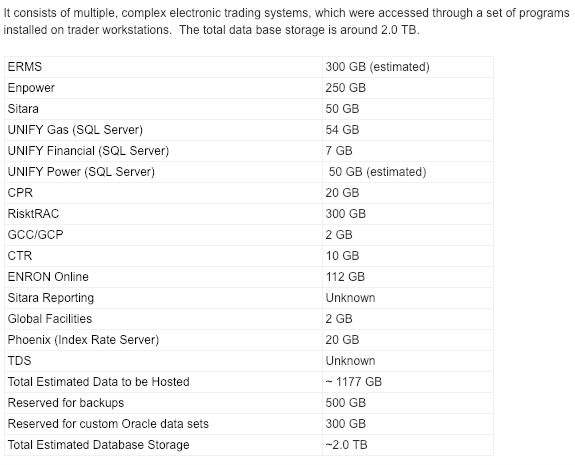
    Two terabytes on the 2000-2001 Western Energy Crisis were unpublished by FERC, and not even its custodians know why
    Government investigations into California’s electricity shortage, ultimately determined to be caused by intentional market manipulations and capped retail electricity prices by the now infamous Enron Corporation, resulted in terabytes of information being collected by the Federal Energy Regulatory Commission. This included several extremely large databases, some of which had nearly 200 million rows of data, including Enron’s bidding and price processes, their trading and risk management systems, emails, audio recordings, and nearly 100,000 additional documents. That information has quietly disappeared, and not even its custodians seem to know why.
    null
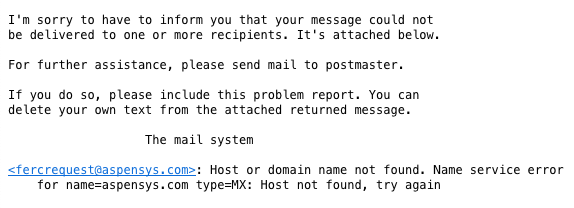
    According to FERC’s website, some of the information is maintained by Lockheed Martin, which will provide members of the public with copies of the data “for a fee” if they contact Lockheed Martin via a non-existent e-mail address, fercrequest@aspensys.com.
    null
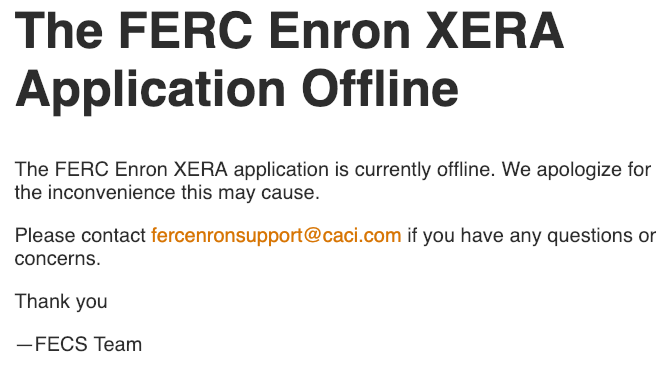
    The collection of emails, scanned documents, and transcripts, on the other hand, is hosted by another defense contractor - CACI. Unfortunately, that portion of their site is down. According to the Internet Archive’s Wayback Machine, it’s been down since at least August 2013.
    null
    An inquiry was sent to the support email address listed on their error page. A month later, CACI responded that the data was “under review by the FERC and is currently not accessible.” Asked why the information was being re-reviewed despite having been previously released, CACI informed MuckRock that they didn’t know and that the information might not be available again...MORE
    HT: MetaFilter 

    We are fans of the databases and have a dozen posts referencing/linking them e.g..

    Fun With Enron Emails II (ENE, JPM)
    Hot on the heels of JPM's shenanigans (FT: JPMorgan in US Power Probe) FT Alphaville's The Closer post directed us to a data visualization of one day's emails (Dec. 26, 2000; 11 months before the bankruptcy) between various Enron executives.

    Those boys were a chatty bunch.

    Back in 2009 we posted "Fun With Enron Emails" (I):
    ... Anyhoo, I was at Trampoline's Enron email database and remembered some of the finds that other people had unearthed:
    RE: Lunch
    From:
    randy.g.kruger.jr@us.andersen.com
    To:
    Sent:
    09/01/2002 at 16:49

    Email metadata


    The message

    This week is not good. I have too large a pile of documents to shred.
    Next week is better. I suggest Wednesday, Thursday or Friday.
    To: dgiron@enron.com, Randy G. Kruger Jr.@ANDERSEN WO,
    mikeshaw@andrews-kurth.com, todd.w.taylor@bakernet.com
    cc:
    Date: 01/09/2002 10:26 AM
    From: SSCHROED@us.ca-indosuez.com
    Subject: Lunch
    OK you slackers (excluding Shaw), I'll give you another chance to respond.
    Lunch this week or next, let me know what's good. If meeting after work is
    better for you, let me know. Certainly all of you can stop shredding
    documents for 5 minutes to respond.
    Schroeder
    *******************Internet Email Confidentiality Footer*******************
    The database is just wonderful that way. Unfortunately it does not contain the most interesting (among the cognoscenti) Enron email, which John Palmisano infamously wrote from Kyoto:
    If implemented [the Kyoto Protocol] will do more to promote Enron’s business than will almost any other regulatory initiative outside of restructuring of the [electricity] and natural gas industries in Europe and the United States…. The endorsement of emissions trading was another victory for us…. This agreement will be good for Enron stock!!
    It was time to turn deeds into dollars, he added:
    Enron now has excellent credentials with many ‘green’ interests including Greenpeace, WWF [World Wildlife Fund], NRDC [Natural Resources Defense Council], GermanWatch, The US Climate Action Network, the European Climate Action Network, Ozone Action, WRI [World Resources Institute], and Worldwatch [Institute],” reported Palmisano. “This position should be increasingly cultivated and capitalized on (monetized).
    Good times, good times at the Crooked E.

    If you're interested 2008's "California's cap-and-trade won't work" has some links:
    Here at Climateer Investing the comparison between California electricity deregulation and carbon trading seemed self-evident, based, if for no other reason, on the fact that the pals and alumni of Enron are the ones pushing the trade. Now the media is picking up on where the trade part of cap-and-trade is going. The LA Times gets it....
    Blackout: Enron and the California Power Crisis (Transcript)...

    Wednesday, September 26, 2012

    Jim Chanos on Shorting (Prepared Statement to the SEC)

    From Santangel's Review:
    This is a prepared statement Jim Chanos gave to the SEC back in 2003. It is interesting because it shines a little light on his methodology for successfully shorting as he goes through an in-depth case study on his short of Enron. Before I dig into his Enron short, I want to mention this quote he uses in his testimony as it is quite interesting.
    “If you own shares in a company that declares war on short sellers, there is only one thing to do: sell your stake. That’s the message in a new study by Owen A. Lamont, associate professor of finance at the University of Chicago’s graduate school of business. The study, which covers 1977 to 2002, shows not only that the stocks of companies who try to thwart short sellers are generally overpriced, but also that short sellers are often dead right.”
    We touched on this in How Eric Sprott got Solar Burn. Warning sign number six was “The company lashed out against its critics”.   The Wall Street Journal coined the term “Being Einhorned” today, but if I remember correctly, some of Einhorn’s best shorts have been the ones where the company most vigorously lashed back out at him. Lehman, Allied and Green Mountain come to mind.
    Some takeaways from Chanos’s short of Enron:
    Sometimes the best ideas are hiding in plain sight
    “In October of 2000, a friend asked me if I had seen an interesting article in The Texas Wall Street Journal, which is a regional edition, about accounting practices at large energy trading firms. The article, written by Jonathan Weil, pointed out that many of these firms, including Enron, employed the so-called “gain-on-sale” accounting method for their long-term energy trades. Basically, “gain-on-sale” accounting allows a company to estimate the future profitability of a trade made today and book a profit today based on the present value of those estimated future profits.”
    Even though Enron was incredibly complex, Chanos started with just the annual report
    “The first Enron document my firm analyzed was its 1999 Form 10-K filing, which it had filed with the SEC. “
    The major red flags were visible right away if you understood the accounting and had a sense for what the returns should look like
    “What immediately struck us was that despite using the “gain-on- sale” model, Enron’s return on capital, a widely used measure of profitability, was a paltry 7 percent before taxes. That is, for every dollar in outside capital that Enron employed, it earned about seven cents. This is important for two reasons; first, we viewed Enron as a trading company that was akin to an “energy hedge fund.” For this type of firm, a 7 percent return on capital seemed abysmally low, particularly given its market dominance and accounting methods. Second, it was our view that Enron’s cost of capital was likely in excess of 7 percent and probably closer to 9 percent, which meant from an economic point of view, that Enron wasn’t really earning any money at all, despite reporting “profits” to its shareholders. This mismatch of Enron’s cost of capital and its return on investment became the cornerstone for our bearish view on Enron and we began shorting Enron common stock in November of 2000 for our clients.”...MORE
    HT: Market Folly

    Monday, March 10, 2008

    California's cap-and-trade won't work

    Here at Climateer Investing the comparison between California electricity deregulation and carbon trading seemed self-evident, based, if for no other reason, on the fact that the pals and alumni of Enron are the ones pushing the trade. Now the media is picking up on where the trade part of cap-and-trade is going. The LA Times gets it.


    From the Los Angeles Times:
    California deregulated its electricity industry in 1998, and shortly afterward the lights went out. Apparently, regulators hadn't realized how easy it would be for unscrupulous traders such as Enron to manipulate the state's power market once it was open to competition; the results were rolling blackouts and skyrocketing electricity charges. Californians are for all this -- in many areas, power bills are inflated with extra fees to cover bonds and other expenses incurred during the disastrous experiment....MORE

    We have dozens of posts pointing out the incestuous relationships between Enron and the Carbon Cartel, Here's a good one:
    Claussen: US cap-and-trade system 'by mid 2009' and Enron makes a Cameo Appearance

    The Pew Center is a founding Member of USCAP. Eileen Claussen has lobbied relentlessly for cap-and-trade for over a decade, starting even before she invited Enron to join Pew's Business Executive Leadership Council.*
    Here's the infamous Enron memo from John Palmisano, Dec. 12, 1997, on his activities in Kyoto.

    ...If implemented, this agreement will do more to promote Enron's business than will almost any other regulatory initiative...

    In addition, a carbon emissions trading system will be developed. While the trading system will be implemented by 2008, I am sure that reductions will begin to trade within 1-2 years.


    Palmisano thought those two points were so important, he put them in the second paragraph of the three page memo.

    From "The Trouble With Cap-and-Trade" :
    And this from a former Goldman Sachs trader:
    The whole reason for the existence of traders is to make as much money as possible, consistent with what's legal...I lived through this: if you didn't manipulate the market and manipulation was accessible to you, that's when you were yelled at.
    New York Times, May 8, 2002
    I'd rather my mom's pocket wasn't picked by some Lehman or Cantor CO2e trader trying to up his bonus.
    Last September:
    Blackout: Enron and the California Power Crisis (Transcript)

    And scariest of all, here's a meeting on cap-and-trade where the man from Enron is the smartest guy in the room:

    That leads me to one of my favorite links in the vault, the transcript of a March 3, 2000 (21 months to the really big bankruptcy filing) roundtable discussion "Domestic Emissions Trading of Greenhouse Gas Credits". Batting lead-off, the Senator from GE's home state, Joltin' Joe Lieberman. More interestingly though (sorry, Joe it's true), batting cleanup, the Enron representative really does come across as "The Smartest Guy in the Room" (that ENE link is kinda funny, in a morbid sort of way)

  • II. Opening Remarks
    Senator Joseph Lieberman (D-CT)


  • III. Presentations by Panelists
    Dan Lashof, Natural Resources Defense Council
    Joe Goffman, Environmental Defense
    John Palmisano, Enron Corporation
    Jon Naimon, Light Green Advisors
    Ray Kopp, Resources for the Future
    Sue Gander, Center for Clean Air Policy


  • HT: Environmental Capital

    Tuesday, February 8, 2011

    Enron Lives! Were Texas Utilities Gaming the System to Gouge Customers?

    These are the guys you want doing the "trade" part of cap-and-trade?
    So much of this climate and/or energy stuff was originally cooked up by the crooked E that we ended up with hundreds of posts on a defunct company.
    From the serious:

    Some Drive-by Climate Biz History (Enron and Cap-and-trade)


    and Enron on the Kyoto Protocol:
    December 12, 1997
    Implications of the Climate Change Agreement in Kyoto and What Transpired
    it begins:
    ...Implications
    If implemented, this agreement will do more to promote Enron's business than almost any other regulatory initiative outside of restructuring the energy and natural gas industries...
    And ends:
    This agreement will be good for Enron's stock!
    To "Fun With Enron Emails" and "Enron:The Musical (ENE)"

    From "Wall Street Learned the Lessons of Enron (Unfortunately)" to "Brian Hunter, Natural Gas and Enron" and the subject at hand "Blackout: Enron and the California Power Crisis (Transcript)".
    Here's the Wall Street Journal, yesterday:

    Texas to Probe Rolling Blackouts 
    Texas officials have ordered an investigation into rolling blackouts that struck the state's electric grid last week, including whether market manipulation played a role along with harsh weather in disrupting natural-gas and electricity supplies to millions of people.
    The Public Utility Commission of Texas asked the state's independent energy-market monitor, Daniel Jones, to conduct a probe to see if power generators, pipeline companies or others broke market rules. Among the questions are whether some firms faked power-plant problems to push prices higher, or were slow to restart plants that were off line.
    Mr. Jones, vice president of Potomac Economics in Austin, said he could not comment until his team has completed its investigation, which could take weeks or months.
    To be sure, Texas set an all-time winter power demand record one day during the storm, placing historic pressure on power providers.
    Electricity-grid officials said Mr. Jones' team will look at price patterns and power-plant outages remembering that, in California's energy crisis of 2000-2001, unscrupulous power generators feigned equipment problems to drive up the price of electricity. A significant number of plants in Texas failed last week, and wholesale electricity prices briefly spiked.
    The state Senate committee that oversees the state utility commission will conduct hearings on the blackouts, said its chairman, Sen. Troy Fraser, a Republican whose district includes central Texas.
    The organization that runs the Texas grid, the Electric Reliability Council of Texas or Ercot, is considering whether it should require better weatherization at power plants. Trip Doggett, chief executive of the group, said it "will be working with generation owners to understand why and what can be done" to prevent the sort of breakdowns that destabilized the state's electrical network. Among other problems, the breakdowns were caused by equipment freezing and cracking.
    [OUTAGE]
    Generation companies said they are ready to answer any questions and are confident they followed the rules. Representatives of Luminant and NRG Energy Inc., which own many power plants in Texas, said extreme cold forced outages they couldn't prevent and they got plants back up quickly.
    David Knox, spokesman for NRG, said "our guys worked throughout the night" on Feb 2-3 to get the Limestone power plant back in service after a freeze-related problem broke equipment enabling the plant to send power to a substation....MORE
    The article goes on to describe the interplay between the natural gas providers and the electricity producers.
    A few of my favorite Enron/NatGas posts:
    The man who lost $6 billion (Brian Hunter, Amaranth)
    And many more.

    Friday, January 23, 2009

    Fun With Enron Emails

    So much of the climate/energy playbook was written by Enron that I find myself thinking about it more than is healthy. For example the basic structure of the Kyoto Protocol is an homage to the crooked E. Enron wanted carbon trading. They really, really wanted carbon trading. So the U.S. negotiators put a lot of time and energy into the carbon trading part of the agreement. When the EU balked, our negotiators said they'd agree to Europe's demand that the base year be 1990, anything to get that carbon trading memorialized in the agreement.

    The Japanese got screwed. Their energy efficiency drive in the eighties was not recognized by a '90 baseline, whereas Europe would get full credit for the shuttering of incredibly inefficient East German factories following the 3Oct90 reunification and the British "Dash for Gas" as the North Sea wells started coming in (see: Enron Teeside).
    It's going to cost the Japanese around $500 Billion to buy their way out of their commitment.
    I've seen some speculation that the reason the Japanese allowed themselves to get rolled was that they got the name of their ancient capitol on the treaty.

    Anyhoo, I was at Trampoline's Enron email database and remembered some of the finds that other people had unearthed:
    RE: Lunch

    From:
    randy.g.kruger.jr@us.andersen.com
    To:
    Sent:
    09/01/2002 at 16:49

    Email metadata


    The message

    This week is not good. I have too large a pile of documents to shred.
    Next week is better. I suggest Wednesday, Thursday or Friday.

    To: dgiron@enron.com, Randy G. Kruger Jr.@ANDERSEN WO,
    mikeshaw@andrews-kurth.com, todd.w.taylor@bakernet.com
    cc:
    Date: 01/09/2002 10:26 AM
    From: SSCHROED@us.ca-indosuez.com
    Subject: Lunch

    OK you slackers (excluding Shaw), I'll give you another chance to respond.
    Lunch this week or next, let me know what's good. If meeting after work is
    better for you, let me know. Certainly all of you can stop shredding
    documents for 5 minutes to respond.

    Schroeder

    *******************Internet Email Confidentiality Footer*******************

    And:
    FW: Taliban TV

    -----Original Message-----
    From: John Garibaldi @ENRON
    Sent: Monday, October 15, 2001 8:29 PM
    To: 'gage@bkollp.com'; 'dangaribaldi@yahoo.com'; 'mikeg2929@aol.com'; Sanders, Richard B.
    Subject: Taliban TV

    Taliban TV
    >
    >
    > MONDAYS:
    > 8:00 - "Husseinfeld"
    > 8:30 - "Mad About Everything"
    > 9:00 - "Suddenly Sanctions"
    > 9:30 - "The Brian Benben Bin Laden Show"
    > 10:00 - "Allah McBeal"
    >
    > TUESDAYS:
    > 8:00 - "Wheel of Terror and Fortune"
    > 8:30 - "The Price is Right If Usama Says Its Right"
    > 9:00 - "Children Are Forbidden From
    > Saying The Darndest Things"
    > 9:30 - "Afganistans Wackiest Public
    > Execution Bloopers"
    > 10:00 - "Buffy The Yankee Imperialist Dog Slayer"
    > >>>MORE

    Ah, simpler times. If you have an interest in Enron, use the Search blog box, keyword Enron.
    Here's a fav post with a couple great links.