Showing posts sorted by relevance for query nitrogen. Sort by date Show all posts

Friday, October 9, 2020

"Turning air into bread"

Since I have been, and will be, going on about ammonia as a carrier for hydrogen 

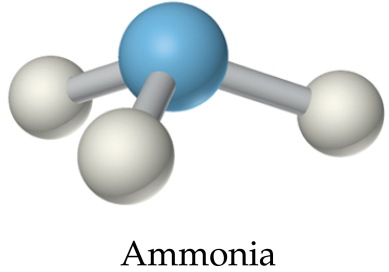
NH3 - ammonia - three hydrogens attached to a nitrogen:

https://thiscondensedlife.files.wordpress.com/2016/05/ammonia.jpg?w=389&h=272

about fertilizer and guano, about Yara and Norsk Hydro and Birkeland and explosives, I thought it time to add another post to ouyr nitrogen mini-library.
From the cheerfully optimistic The Roots of Progress:

I recently finished The Alchemy of Air, by Thomas Hager. It’s the story of the Haber-Bosch process, the lives of the men who created it, and its consequences for world agriculture and for Germany during the World Wars.
What is the Haber-Bosch process? It’s what keeps billions of people in the modern world from starving to death. In Hager’s phrase: it turns air into bread.


Some background. Plants, like all living organisms, need to take in nutrients for metabolism. For animals, the macronutrients needed are large, complex molecules: proteins, carbohydrates, fats. But for plants they are elements: nitrogen, phosphorus and potassium (NPK). Nitrogen is needed in the largest quantities.

Nitrogen is all around us: it constitutes about four-fifths of the atmosphere. But plants can’t use atmospheric nitrogen. Nitrogen gas, N2, consists of two atoms held together by a triple covalent bond. The strength of this bond renders nitrogen mostly inert: it doesn’t react with much. To use it in chemical processes, plants need other nitrogen-containing molecules. These substances are known as “fixed” nitrogen; the process of turning nitrogen gas into usable form is called fixation.

In nature, nitrogen fixation is performed by bacteria. Some of these bacteria live in the soil; some live in a symbiotic relationship on the roots of certain plants, such as peas and other legumes.
Nitrogen availability is one of the top factors in plant growth and therefore in agriculture. The more fixed nitrogen is in the soil, the more crops can grow. Unfortunately, when you farm a plot of land, natural processes don’t replace the nitrogen as fast as it is depleted.
Pre-industrial farmers had no chemistry or advanced biology to guide them, but they knew that soil would lose its fertility over the years, and they had learned a few tricks. One was fertilization with natural substances, particularly animal waste, which contains nitrogen. Another was crop rotation: planting peas, for instance, would replace some of the nitrogen in the soil, thanks to those nitrogen-fixing bacteria on their roots.

But these techniques could only go so far. As the world population increased in the 19th century, more and more farmland was needed. Famine was staved off, for a time, by the opening of the prairies of the New World, but those resources were finite. The world needed fertilizer.
An island off the coast of Peru where it almost never rains had accumulated untold centuries of—don’t laugh—seagull droppings, some of the world’s best known natural fertilizer. An industry was made out of mining guano on these islands, where it was piled several stories high, and shipping it all over the world. When that ran out after a couple decades, attention turned inland to the Atacama Desert, where, with no rainfall and no life, unusual minerals grew in crystals on the rocks. The crystals included salitre, or Chilean saltpeter, a nitrogen salt that could be made into fertilizer.
It could be made into something else important, too: gunpowder. It turns out that nitrogen is a crucial component not only of fertilizer, but also of explosives. Needing it both to feed and to arm their people, every country considered saltpeter a strategic commodity. Peru, Chile and Bolivia went to war over the saltpeter resources of the Atacama in the late 1800s (Bolivia, at the time, had a small strip of land in the desert, running to the ocean; it lost that strip in the war and has remained landlocked ever since).

By the end of the 19th century, as population continued to soar, it was clear that the Chilean saltpeter would run out within decades, just as the guano had. Sir William Crookes, head of the British Academy of Sciences, warned that the world was heading for mass famine, a true Malthusian catastrophe, unless we discovered a way to synthesize fertilizer. And he called on the chemists of the world to do it.

Nearby, in Germany, other scientists were thinking the same thing. Germany was highly dependent on salt shipped halfway around the world from Chile. But Germany did not have the world’s best navy. If—God forbid—Germany were ever to be at war with England (!), they would quickly blockade Germany and deprive it of nitrogen. Germany would have no food and no bombs—not a good look, in wartime.


The prospect of synthesizing fixed nitrogen was tantalizing. After all, the nitrogen itself is abundant in the atmosphere. A product such as ammonia, NH3, could be made from that and hydrogen, which of course is present in water. All you need is a way to put them together in the right combination.
The problem, again, is that triple covalent bond. Owing to the strength of that bond, it takes very high temperatures to rip N2 apart. More troublesome is that ammonia is by comparison a weak molecule. So at temperatures high enough to separate the nitrogen atoms, the ammonia basically burns up.


Fritz Haber was the chemist who solved the fundamental problem. He found that increasing the pressure of the gases allowed him to decrease the temperature. At very high pressures, he could start to get an appreciable amount of ammonia. By introducing the right catalyst, he could increase the production to levels that were within reach of a viable industrial process.

Carl Bosch was the industrialist at the German chemical company BASF who led the team that figured out how to turn this into a profitable process, at scale. The challenges were enormous. To start with, the pressures required by the process were immense, around 200 atmospheres. The required temperatures, too, were very high. No one had ever done industrial chemistry in that regime before, and Bosch’s team had to invent almost everything from scratch, pioneering an entirely new subfield of high-pressure industrial chemistry. Their furnaces kept exploding—not only from the pressure itself, but because hydrogen was eating away at the steel walls of the container, as it forced into them. No material was strong enough and inexpensive enough to serve as the container wall. Finally Bosch came up with an ingenious system in which the furnaces had an inner lining of material to protect the steel, which would be replaced on a regular basis.

A further challenge was the catalyst: Haber had used osmium, an extremely rare metal. BASF bought up the entire world’s supply, but it wasn’t enough to produce the quantities they needed. They experimented with thousands of other materials, finally settling on a catalyst with an iron base combined with other elements....

....MUCH MORE

Roots of Progress homepage
Roots of Progress post list (current through October 9)

Previously on our friend, nitrogen:
"How Making One Chemical Created the Modern World"
"Can We Grow One of the World's Largest Food Crops Without Fertilizer?"
The Adventures of a Nitrogen Atom
This Could Be A Big Deal: Norway's Yara and the Australian Nitrogen Economy
Shipping: "UK Department of Transport recommends launch of ammonia / hydrogen powered vessels within 5-15 years"
Ammonia, it's what everyone is talking about.
And if your crowd isn't, you'll be the best-informed next-gen energy storage/transport-medium connoisseur at the Thursday afternoon salon!

The $100M Synthetic Biology Bet From Bayer and Ginko Bioworks (YAR:Oslo; CF)
"Saudi Arabia Sends Blue Ammonia to Japan in World-First Shipment"
Nitrogen Upgraded, Potash Target Lowered; Ununquadium Decayed (AGU, CF; TRA; POT)
That Time A Dozen Norwegians Stopped the Nazis From Developing the Atom Bomb and Possibly Saved Europe

Wednesday, November 11, 2020

"The Corn of the Future Is Hundreds of Years Old and Makes Its Own Mucus"

https://images-wixmp-ed30a86b8c4ca887773594c2.wixmp.com/f/e287284c-6395-4190-be4d-d37aaf468752/d2f1huk-07b881b1-de19-43fe-a005-131157a07b68.jpg/v1/fill/w_900,h_1326,q_75,strp/homer_simpson_by_theiiofswords_d2f1huk-fullview.jpg?token=eyJ0eXAiOiJKV1QiLCJhbGciOiJIUzI1NiJ9.eyJzdWIiOiJ1cm46YXBwOiIsImlzcyI6InVybjphcHA6Iiwib2JqIjpbW3siaGVpZ2h0IjoiPD0xMzI2IiwicGF0aCI6IlwvZlwvZTI4NzI4NGMtNjM5NS00MTkwLWJlNGQtZDM3YWFmNDY4NzUyXC9kMmYxaHVrLTA3Yjg4MWIxLWRlMTktNDNmZS1hMDA1LTEzMTE1N2EwN2I2OC5qcGciLCJ3aWR0aCI6Ijw9OTAwIn1dXSwiYXVkIjpbInVybjpzZXJ2aWNlOmltYWdlLm9wZXJhdGlvbnMiXX0.nWJiUMoE1NWThlF-On1N9yaHmRtwGtf49SOTuaYX8yk

Mmmm mucus

Okay, kidding aside, there is some interesting biology going on here.

From Smithsonian Magazine:

This rare variety of corn has evolved a way to make its own nitrogen, which could revolutionize farming.

In the 1980s, Howard-Yana Shapiro, now chief agricultural officer at Mars, Incorporated, was looking for new kinds of corn. He was in the Mixes District of Oaxaca in southern Mexico, the area where the precursors to maize (aka corn) first evolved, when he located some of the strangest corn ever seen. Not only was it 16 to 20 feet tall, dwarfing the 12-foot stuff in American fields, it took six to eight months to mature, far longer than the 3 months needed for conventional corn. Yet it grew to those impressive heights in what can charitably be called poor soil, without the use of fertilizer.. But the strangest part of the corn was its aerial roots--green and rose-colored, finger-like protrusions sticking out of the corn’s stalk, dripping with a clear, syrupy gel.

Shapiro suspected that those mucousy fingers might be the Holy Grail of agriculture. He believed that the roots allowed this unique variety of corn, dubbed Sierra Mixe and locally bred over hundreds or even thousands of years, to produce its own nitrogen, an essential nutrient for crops that is usually applied as fertilizer in epic amounts.

The idea seemed promising, but without DNA tools to look into the specifics of how the corn was making nitrogen, the discovery was shelved. Nearly two decades later, in 2005, Alan B. Bennett of the University of California, Davis—along with Shapiro and other researchers—began using cutting-edge technology to look into the nitrogen-fixing properties of the phlegmy corn, finding that indeed, bacteria living in the mucus were pulling nitrogen from the air, transmuting it into a form the corn could absorb.

Now, in 2018, after over a decade of field research and genetic analysis, the team has published their work in the journal PLOS Biology. If the nitrogen-fixing trait could be bred into conventional corn, allowing it to produce even a portion of its own nitrogen, it could reduce the cost of farming, reduce greenhouse gas emissions and halt one of the major pollutants in lakes, rivers and the ocean. In other words, it could lead to a second nitrogen revolution.

The synthetic production of nitrogen may be the greatest achievement of the 20th century. The discovery of the Haber-Bosch process and its refinements, in which nitrogen is stripped out of the air under high heat and pressure in the presence of a catalyst, has led to three separate Nobel prizes. And they are well deserved. It’s estimated that crop yields more than doubled between 1908 and 2008, with synthetic nitrogen fertilizer responsible for up to half that growth. Some researchers have tied the massive growth in human population in the last seventy years to the increased use of nitrogen fertilizer. Without it, we’d have to farm almost four times as much land or have billions of fewer people in the world.

But producing all that nitrogen has consequences. It’s estimated that making fertilizer via the Haber-Bosch process uses between 1 and 2 percent of the world’s energy, emitting lots of greenhouse gases. And synthetic nitrogen routinely washes off fields into waterways, leading to massive algae blooms that suck up all the oxygen, killing fish and other organisms. So much nitrogen goes into rivers and streams that large dead zones have developed at the mouths of the world’s rivers, including one in the Gulf of Mexico that last year was the size of New Jersey. Mark Sutton of the UK Centre for Ecology and Hydrology calls nitrogen “the Godfather of pollution”—its effects are everywhere, but you never really see the culprit.

But we can’t just quit nitrogen without seeing major reductions in agriculture. While better management and farming practices can help keep it out of waterways, those strategies aren’t enough to fix nitrogen’s ecological problems. That’s why researchers have for decades wondered if there was a way to help cereal crops like corn and wheat produce their own nitrogen....

....MUCH MORE

 HT: GetPocket

Related:

"How Making One Chemical Created the Modern World"
"Can We Grow One of the World's Largest Food Crops Without Fertilizer?"
The Adventures of a Nitrogen Atom
This Could Be A Big Deal: Norway's Yara and the Australian Nitrogen Economy
Shipping: "UK Department of Transport recommends launch of ammonia / hydrogen powered vessels within 5-15 years"
Ammonia, it's what everyone is talking about.
And if your crowd isn't, you'll be the best-informed next-gen energy storage/transport-medium connoisseur at the Thursday afternoon salon!

The $100M Synthetic Biology Bet From Bayer and Ginko Bioworks (YAR:Oslo; CF)
"Saudi Arabia Sends Blue Ammonia to Japan in World-First Shipment"
Nitrogen Upgraded, Potash Target Lowered; Ununquadium Decayed (AGU, CF; TRA; POT)
That Time A Dozen Norwegians Stopped the Nazis From Developing the Atom Bomb and Possibly Saved Europe
"Turning air into bread"

And Fritz Haber? 

http://img.gawkerassets.com/img/18n8yjvcfmj7hjpg/original.jpg

Germany’s Post-World War I Scheme to Extract Gold from Water

Thursday, August 9, 2018

"Can We Grow One of the World's Largest Food Crops Without Fertilizer?"

From the University of California-Davis, August 7:

How discovery of nitrogen-fixing corn variety could take us a step closer
IN THE UNITED STATES, more than 90 million acres of corn are planted every year. Corn uses more land than any other crop. It also uses a lot of fertilizer. By one estimate, 5.6 million tons of nitrogen are applied each year, along with nearly a million tons of nitrogen from manure.
Nitrogen is an essential nutrient for plants. While nitrogen makes up 78 percent of the atmosphere, only legume crops were known to have the ability to use it, through their association with bacteria.
“Legume crops like soybeans have nodules on their roots that harbor bacteria that can turn nitrogen in the air into a form the plant can use,” said Alan Bennett, distinguished professor of plant sciences at the University of California, Davis. “For cereal crops like corn, farmers must rely primarily on nitrogen fertilizers.”
Bennett is part of a multidisciplinary team of researchers from UC Davis, the University of Wisconsin–Madison, and Mars, Incorporated that has made a remarkable discovery: an indigenous variety of Mexican corn that can also fix nitrogen from the atmosphere, instead of requiring synthetic fertilizers.
The team’s findings were published Aug. 7 in the journal PLOS Biology.
If this trait can be bred into conventional varieties of corn, it could reduce the need for added fertilizer and increase yields in regions with poor soil. Corn that fixes nitrogen could also help farmers in developing countries that may not have access to fertilizer.
“This research has been 40 years in the making and is a significant breakthrough in our attempts to find a more sustainable way of growing corn, one of the world’s key crops,” said co-author Howard-Yana Shapiro, chief agricultural officer at Mars, Incorporated.
 
The discovery
Corn is a wild plant, domesticated in Mexico about 10,000 years ago. A number of these domesticated varieties evolved in isolated villages in the Sierra Mixe region near Oaxaca.
Indigenous farmers there would make selections every year and develop corn that worked in their environment.

“At the time, they didn’t have access to fertilizer, so it had to grow in a very low-fertility soil,” said Bennett.

Researchers spent years searching for these indigenous varieties, called landraces. It was thought the corn might associate with nitrogen-fixing bacteria. In the 1980s, Howard-Yana Shapiro observed such corn being grown in nitrogen-deficient soil. It was not until the 2000s that new technologies developed to allow researchers to intensely study this nitrogen-fixing process.

“It has been difficult to identify such a landrace and demonstrate that this nitrogen-fixing association actually contributes to nitrogen nutrition of the plant,” said Bennett. “Our interdisciplinary research team has been working on this for nearly a decade.”...MUCH MORE

Sunday, July 28, 2019

"How Making One Chemical Created the Modern World"

The TL:DR is making a pun, both Alfred Nobel and Kristian Birkeland got deep into the boom-boom quality of nitrogen.
Now it may end up being the energy carrier that displaces natural gas.

From Discover:

TL;DR: Nitrogen is one of life’s most precious resources. Discovering how to industrially produce it (as ammonia) let our population break free of natural limits, and explode.
An amazing fifty percent of the nitrogen atoms now found in human tissues originated inside an industrial machine invented relatively recently. These molecules form our DNA, our amino acids, and countless other things essential to life. But how did this bizarre situation come about?

The Haber process
In the 21st Century, our technology has helped to create us. But this same industrial machine could be said to have created the modern world too, as its development let our population skyrocket from 1.6 to 7.6 billion people in under 100 years, by producing enough fertiliser to grow the food needed to sustain all that extra life.

The machine is called the ‘Haber process’ and at first glance it seems like a bit of a contradiction.

Nitrogen is everywhere, but we can’t use most of it
Nitrogen is a colourless, tasteless, odourless gas. Human beings cannot  see it or smell it, and our species might have evolved that way because it makes up an overwhelming 78% of the air around us.
We inhale it in every breath alongside oxygen (which makes up 21% of our air). But unlike oxygen, we exhale nitrogen straight back out again.

The contradiction is that every cell in our bodies (and every cell of every living creature) desperately needs nitrogen. Plants in particular have an insatiable need and struggle to get it, even though we are all surrounded by it. Just like someone dying of thirst while stranded in the middle of the ocean, life on Earth is surrounded by nitrogen it can’t use.
Life on Earth is a bit like Tom Hanks in Castaway (2000)
Nitrogen’s triple bond Nitrogen is the seventh most abundant element in the Milky Way, and like many elements it is formed as a residue from an exploding star.
The problem is that most nitrogen atoms are tightly bonded with other nitrogen atoms using three of its seven electrons, creating what is known in chemistry as a powerful triple bond (N≡N).

As I was writing this page, I had to do a bit of a refresher on High School chemistry. I had a cranky old teacher who preferred talking about his sailing adventures from 40 years ago rather than making chemistry interesting. It was not my best subject!

Concepts like a triple bond in a colourless, odourless gas are pretty abstract. It’s part of what makes some sciences like chemistry difficult for us. When we can’t directly touch, hear, see, or smell something, it’s difficult to build the mental frameworks needed to understand it.

A well-kept secret
I found out that it took until 1772 for human beings to discover the existence of nitrogen in the first place.
Let’s unpack that.

Our species has existed for 350,000 years, and it took us almost our entire existence thus far to discover a gas that we inhale with every breath. At the end of the day we’re a species that evolved to hunt, gossip, invent things, tell stories, and have sex. But when we finally did work out the concept of nitrogen (and it’s triple bond) we conquered the Earth.

Severing the triple bond....
....MUCH MORE

Saturday, July 30, 2022

Nitrogen Emissions: "Eating Too Much Protein Makes Pee a Problem Pollutant in the U.S."

From Scientific American, July 27:

Protein-packed diets add excess nitrogen to the environment through urine, rivaling pollution from agricultural fertilizers

In the U.S., people eat more protein than they need to. And though it might not be bad for human health, this excess does pose a problem for the country’s waterways. The nation’s wastewater is laden with the leftovers from protein digestion: nitrogen compounds that can feed toxic algal blooms and pollute the air and drinking water. This source of nitrogen pollution even rivals that from fertilizers washed off of fields growing food crops, new research suggests.

When we overconsume protein—whether it comes from lentils, supplements or steak—our body breaks the excess down into urea, a nitrogen-containing compound that exits the body via urine and ultimately ends up in sewage. Maya Almaraz, a biogeochemist at the University of California, Davis, and her colleagues wanted to see how much of this nitrogen is being flushed into the U.S. sewage system because of a protein-heavy diet. The researchers combined population data and previous work on how much excess protein the average American eats and found that the majority of nitrogen pollution present in wastewater—some 67 to 100 percent—is a by-product of what people consume. “We think a lot about sewage nitrogen. We know that’s an issue,” Almaraz says. “But I didn’t know how much of that is actually affected by the choices we’re making way upstream—when we go the grocery store, when we cook a meal and what we end up putting in our bodies.”

Once it enters the environment, the nitrogen in urea can trigger a spectrum of ecological impacts known as the “nitrogen cascade.” Under certain chemical conditions, and in the presence of particular microbes, urea can break down to form gases of oxidized nitrogen. These gases reach the atmosphere, where nitrous oxide (N2O) can contribute to warming via the greenhouse effect and nitrogen oxides (NOx) can cause acid rain. Other times, algae and cyanobacteria, photosynthetic bacteria also called blue-green algae, feed on urea directly. The nitrogen helps them grow much faster than they would normally, clogging vital water supplies with blooms that can produce toxins that are harmful to humans, other animals and plants. And when the algae eventually die, the problem is not over. Microorganisms that feast on dead algae use up oxygen in the water, leading to “dead zones,” where many aquatic species simply cannot survive, in rivers, lakes and oceans. Blooms from Puget Sound to Tampa, Fla., have caused large fish die-offs....

....MUCH MORE

Tuesday, July 18, 2023

Our Friend, The Nitrogen Atom: "Exclusive: NetZeroNitrogen lands $1.6m to make nitrogen fixation products without the green premium"

Big if true, or rather, if it scales up.

From AgFunderNews, July 10:

  • NetZeroNitrogen (NZN), a UK-based startup developing a nitrogen alternative for plants, has closed a $1.6 million pre-seed round of funding.
  • German VC Revent and Zero Carbon Capital led the oversubscribed round; an “Asian, climate-focused, strategic investor and a group of angels” also participated, including ex-Moderna CSO Tony de Fougerolles.
  • NZN also received a recent non-dilutive Transforming Technologies grant by Innovate UK.
  • The pre-seed funding will take NZN through its first stage of field trials in 2024.

Ag’s big nitrogen challenge

NZN is among the growing number of startups developing alternatives to synthetic nitrogen fertilizer, which produces an estimated 1 billion tons of CO2 equivalent annually, according to the company.

Production and use of nitrogen-based fertilizers account for about 5% of global greenhouse gas emissions. Over-use and improper application of nitrogen is also linked to polluted waterways, poor soil, loss of biodiversity and dead zones.

Growing consensus is that agriculture sector must reduce its dependence on synthetic nitrogen fertilizer – though this needs to be balanced with maintaining food security and accounting for the estimated 20% population increase expected by 2050.

There are many different approaches to the nitrogen problem, from Grace Breeding‘s biofertilizer to Pivot Bio‘s nitrogen-fixing product and Sound Agriculture‘s “nitrogen enhancement” method.

‘Putting the fuel next to the engine’
“This is very much a precision application of the bacteria to the place where it’s needed,” NZN CEO Justin Hughes says of the company’s product....

....MUCH MORE

Somehow related from 2020:
"The Corn of the Future Is Hundreds of Years Old and Makes Its Own Mucus"

https://images-wixmp-ed30a86b8c4ca887773594c2.wixmp.com/f/e287284c-6395-4190-be4d-d37aaf468752/d2f1huk-07b881b1-de19-43fe-a005-131157a07b68.jpg/v1/fill/w_900,h_1326,q_75,strp/homer_simpson_by_theiiofswords_d2f1huk-fullview.jpg?token=eyJ0eXAiOiJKV1QiLCJhbGciOiJIUzI1NiJ9.eyJzdWIiOiJ1cm46YXBwOiIsImlzcyI6InVybjphcHA6Iiwib2JqIjpbW3siaGVpZ2h0IjoiPD0xMzI2IiwicGF0aCI6IlwvZlwvZTI4NzI4NGMtNjM5NS00MTkwLWJlNGQtZDM3YWFmNDY4NzUyXC9kMmYxaHVrLTA3Yjg4MWIxLWRlMTktNDNmZS1hMDA1LTEzMTE1N2EwN2I2OC5qcGciLCJ3aWR0aCI6Ijw9OTAwIn1dXSwiYXVkIjpbInVybjpzZXJ2aWNlOmltYWdlLm9wZXJhdGlvbnMiXX0.nWJiUMoE1NWThlF-On1N9yaHmRtwGtf49SOTuaYX8yk

Mmmm mucus

Okay, kidding aside, there is some interesting biology going on here.

From Smithsonian Magazine:

This rare variety of corn has evolved a way to make its own nitrogen, which could revolutionize farming....

Saturday, January 26, 2019

The Adventures of a Nitrogen Atom

From the Oxford University Press blog:
You have more than six hundred muscles in your body. Pick one of those muscles at random—say one of the eight in your tongue. Its cells will contain protein fibers. These consist of long chains of amino acids, which in turn contain nitrogen atoms. Now pick, at random, one of those nitrogen atoms. For storytelling purposes, let us refer to it as Atom. It turns out that Atom has quite a history, as do all your atoms.

You became part of Atom’s story when Atom became part of yours. This probably happened long after you were born; indeed, it is unlikely that any of the atoms in your newborn self are still with you. Those atoms have departed, only to be replaced by others. And besides the replacement atoms, many other atoms have joined you; otherwise, you wouldn’t have grown as much as you have since emerging from your mother’s womb.

Atom would have entered you as a component of the food you ate—more precisely, as part of the proteins you consumed. It might, for example, have dwelled in a piece of steak. After you swallowed that piece, its protein molecules were torn into their constituent amino acids by your digestive system. Those amino acids then entered your bloodstream and the one with Atom was subsequently taken in by a tongue cell.

The steak would, of course, have come from a cow. Before becoming part of that cow, Atom might have been part of a clover plant that the cow ate, and before that, part of an ammonia molecule that the plant took in through its roots. Previous to that, Atom would have been part of a nitrogen molecule, drifting through the air. These molecules consist of a pair of nitrogen atoms, and they are the primary component of the earth’s atmosphere.

For Atom to move from a nitrogen molecule to an ammonia molecule required some radical chemistry. It might have taken place in the reactor vessel of a fertilizer factory: in the Haber process, nitrogen molecules are mixed with natural gas and steam under very high temperatures and pressures to produce ammonia. Alternatively, the nitrogen molecule to which Atom belonged might have been struck by lightning and thereby become part of an ammonia molecule. And finally, Atom could have become part of an ammonia molecule inside one of the rhizobia bacteria that lived on the roots of the clover plant that the cow ate.

Before drifting through the atmosphere, Atom would have had many other adventures. It is conceivable, for example, that besides dwelling in you and maybe a cow, Atom might have spent time in, say, Napoleon and, long before that, in a dinosaur.

Push further back and we arrive at the moment of Atom’s “atomic birth.” Atom didn’t come into existence in the Big Bang, 13.7 billion years ago. That event yielded only hydrogen and helium atoms, along with a few lithium and beryllium atoms. The formation of other elements required the presence of stars, and the first of those would have appeared about 200 million years after the Big Bang. In those stars, hydrogen and helium fused to make heavier atoms, including nitrogen. Subsequent stars would have been even more efficient in their nitrogen production....MORE

Wednesday, April 17, 2024

"Evolution in Action? Nitrogen-Fixing Organelles May Be Nature’s Next Big Leap"

From SciTechDaily, April 16:

Nitrogen is a nutrient essential for all life on Earth. Despite the abundance of nitrogen gas (N2) in the atmosphere, it remains largely inaccessible to many life forms until it undergoes nitrogen fixation. This vital process transforms dinitrogen into ammonium, an important source of inorganic nitrogen

While there are bacteria that are able to reduce dinitrogen to ammonium, researchers at the University of Rhode Island, Institut de Ciències del Mar in Barcelona, University of California at Santa Cruz, and the Massachusetts Institute of Technology have discovered nitrogen-fixing symbiotic organisms exhibiting behaviors similar to organelles. In fact, researchers posit these symbiotic organisms – UCYN-A, a species of cyanobacteria – may be evolving organelle-like characteristics. Their study was recently published in the journal Cell.

Symbiotic Relationship and Its Implications
UCYN-A live in a symbiotic relationship with a closely related group of marine algae, B. bigelowii, in areas of the open ocean that are often low in nutrients. Most nitrogen-fixing bacteria have mechanisms to regulate dinitrogen use when fixed sources of nitrogen are available, alleviating the high energetic cost of this process. However, UCYN-A have lost the genes allowing this and are able to fix nitrogen gas into ammonium even in nutrient-rich environments. The host, in-turn, provides it with carbon fixed photosynthetically by its chloroplasts....

....MUCH MORE

If one is so inclined, we have on offer a few hundred posts on nitrogen.

Friday, August 12, 2022

"A New Green Revolution Is in the Offing" (think nitrogen)

This sort of news is a real test of whether the folks who say we are in a climate or food or energy or nitrogen emergency really believe what they are saying.

Or not.

Following on June 10's "Want To Be A Trillionaire? Find A Cost-Effective Process To Fertilize Using Alternative Nitrogen Fixation"

From Reason Magazine, August 10:

Thanks to some amazing recent crop biotech breakthroughs 

A recent spate of crop biotech breakthroughs presage a New Green Revolution that will boost crop production, shrink agriculture's environmental footprint, help us weather future climate change, and provide better nutrition for the world's growing population.

The first Green Revolution was generated through the crop breeding successes pioneered by agronomist Norman Borlaug back in the 1960s. The high-yielding dwarf wheat varieties bred by Borlaug and his team more than doubled grain yields. The Green Revolution averted the global famines confidently predicted for the 1970s by population doomsters like Stanford entomologist Paul Ehrlich. Other crop breeders using Borlaug's insights boosted yields for other staple grains. Since 1961, global cereal production has increased 400 percent while the world population grew by 260 percent. Borlaug was awarded the Nobel Peace Prize in 1970 for his accomplishments. Of course, the disruptions of the COVID-19 pandemic and Russia's invasion of Ukraine are currently roiling grain and fertilizer supplies.

Borlaug needed 20 years of painstaking crossbreeding to develop his high-yield and disease-resistant wheat varieties. Today, crop breeders are taking advantage of the tools of modern biotechnology that can dramatically increase the rate at which yields increase and drought- and disease-resistance can be imbued in crops.

The Green Revolution's crops required increased fertilizer applications to achieve their higher yields. However, fertilizers have some ecologically deleterious side effects. For example, the surface runoff of nitrogen and other fertilizers not absorbed by crops spurs the growth of harmful alga in rivers, lakes, and coastal areas. In addition, excess nitrogen fertilizer gets broken down by soil bacteria such that there are rising atmospheric concentrations of the greenhouse gas nitrous oxide, which, pound for pound, has 300 times the global warming potential of carbon dioxide.

The good news is that in the last month, two teams of modern plant breeders have made breakthroughs that will dramatically cut the amount of nitrogen fertilizers crops need for grain production. In July, Chinese researchers reported the development of "supercharged" rice and wheat crops, which they achieved by doubling the expression of a regulatory gene that increases nitrogen uptake by four- to fivefold and enhances photosynthesis. In field trials, the yields of the modified rice were 40 to 70 percent higher than those of the conventional varieties. One upshot is that farmers can grow more food on less land using fewer costly inputs.

Some crops like soybeans and alfalfa get most of the nitrogen fertilizer they need through their symbiotic relationship with nitrogen-fixing soil bacteria. Soybeans supply the bacteria living on their roots with sugars, and the bacteria in turn take nitrogen from the air and turn it into nitrate and ammonia fertilizers for the plants. However, nitrogen-fixing bacteria do not colonize the roots of cereal crops....

....MUCH MORE

The second team is at the University of California-Davis. We happend to catch their work in August 2018's "Can We Grow One of the World's Largest Food Crops Without Fertilizer?"

For the seven or eight thousand years before the nineteenth century all crop production was organic and low yields made the food supply chains more precarious which meant small changes in the weather had dramatic effects on the human population which meant famines caused by nature. Since the 1880's almost all famines, despite having a crop failure at their base, have been caused by governments in one way or another.

In the case of the Irish famines you could even extend that "1880's" back another forty-odd years as the British landlords and bureaucrats at minimum turned their backs on the starving people and in a less charitable view actually hastened the deaths of hundreds of thousands.

And then there was Borlaug. When he was awarded the Nobel peace prize it was estimated he had saved over one billion people from starvation.

On the flip side it was argued his "Green Revolution" facilitated the overpopulation of the earth by humans and was thus to a great extent responsible for all the ecological destruction we've seen since the late 1960's.

If interested see: 

"The Wizard and the Prophet: Two Remarkable Scientists and Their Conflicting Visions of the Future of Our Planet"  

"Can Planet Earth Feed 10 Billion People?"

"Amber Waves: The Extraordinary Biography of Wheat"

Out Standing in His Field: John Deere Profit Tops Estimates on Farm Equipment Demand, Market Wants More (DE)
The stock is trading down 1.3% at at $65.35.
I first heard the "Out standing..." line in reference to wheat agronomist Norman Borlaug who went on to win the Nobel Peace Prize for preventing up to one billion premature deaths.
The Peace prize committee had different criteria in 1970.
We are finding some serious problems with the input intensive approach that he favored but judged by the standards of the time his work was miraculous.

On a completely different subject:
Maurice Hilleman Developed or Co-Developed 40 Vaccines (measles, mumps, rubella, pneumonia, meningitis, hepatitis A and B etc, etc.)
Norman Borlaug would have to be in the running for most lives saved but the sheer variety of Hillerman's vaccines is just remarkable.

Saturday, August 11, 2018

This Could Be A Big Deal: Norway's Yara and the Australian Nitrogen Economy

Over the years we've visited Yara quite a few times.
First as Norwegian polymath Kristian Birkeland's baby, Norsk Hydro; then as the world's largest nitrogen wrangler, mainly for fertilizer but also a hundred other uses; and most recently as a leader, competing with Rolls-Royce, in the race to design and deploy autonomous ships. Now this.

From the journal Science, July 12, 2018:
SYDNEY, BRISBANE, AND MELBOURNE, AUSTRALIA—The ancient, arid landscapes of Australia are fertile ground for new growth, says Douglas MacFarlane, a chemist at Monash University in suburban Melbourne: vast forests of windmills and solar panels. More sunlight per square meter strikes the country than just about any other, and powerful winds buffet its south and west coasts. All told, Australia boasts a renewable energy potential of 25,000 gigawatts, one of the highest in the world and about four times the planet's installed electricity production capacity. Yet with a small population and few ways to store or export the energy, its renewable bounty is largely untapped.

That's where MacFarlane comes in. For the past 4 years, he has been working on a fuel cell that can convert renewable electricity into a carbon-free fuel: ammonia. Fuel cells typically use the energy stored in chemical bonds to make electricity; MacFarlane's operates in reverse. In his third-floor laboratory, he shows off one of the devices, about the size of a hockey puck and clad in stainless steel. Two plastic tubes on its backside feed it nitrogen gas and water, and a power cord supplies electricity. Through a third tube on its front, it silently exhales gaseous ammonia, all without the heat, pressure, and carbon emissions normally needed to make the chemical. "This is breathing nitrogen in and breathing ammonia out," MacFarlane says, beaming like a proud father.

Companies around the world already produce $60 billion worth of ammonia every year, primarily as fertilizer, and MacFarlane's gizmo may allow them to make it more efficiently and cleanly. But he has ambitions to do much more than help farmers. By converting renewable electricity into an energy-rich gas that can easily be cooled and squeezed into a liquid fuel, MacFarlane's fuel cell effectively bottles sunshine and wind, turning them into a commodity that can be shipped anywhere in the world and converted back into electricity or hydrogen gas to power fuel cell vehicles. The gas bubbling out of the fuel cell is colorless, but environmentally, MacFarlane says, ammonia is as green as can be. "Liquid ammonia is liquid energy," he says. "It's the sustainable technology we need."

Ammonia—one nitrogen atom bonded to three hydrogen atoms—may not seem like an ideal fuel: The chemical, used in household cleaners, smells foul and is toxic. But its energy density by volume is nearly double that of liquid hydrogen—its primary competitor as a green alternative fuel—and it is easier to ship and distribute. "You can store it, ship it, burn it, and convert it back into hydrogen and nitrogen," says Tim Hughes, an energy storage researcher with manufacturing giant Siemens in Oxford, U.K. "In many ways, it's ideal."

Researchers around the globe are chasing the same vision of an "ammonia economy," and Australia is positioning itself to lead it. "It's just beginning," says Alan Finkel, Australia's chief scientist who is based in Canberra. Federal politicians have yet to offer any major legislation in support of renewable ammonia, Finkel says, perhaps understandable in a country long wedded to exporting coal and natural gas. But last year, the Australian Renewable Energy Agency declared that creating an export economy for renewables is one of its priorities. This year, the agency announced AU$20 million in initial funds to support renewable export technologies, including shipping ammonia.
*** 
Yara is taking a first step toward greening that process with a pilot plant, set to open in 2019, that will sit next to the existing Pilbara factory. Instead of relying on natural gas to make H2, the new add-on will feed power from a 2.5-megawatt solar array into a bank of electrolyzers, which split water into H2 and O2. The facility will still rely on the Haber-Bosch reaction to combine the hydrogen with nitrogen to make ammonia. But the solar-powered hydrogen source cuts total CO2 emissions from the process roughly in half....MUCH MORE
Combined with the corn that fixes its own nitrogen, "Can We Grow One of the World's Largest Food Crops Without Fertilizer?" it appears there are big doings in the nitrogen biz.

A few of our Birkeland/Norsk Hydro/Yara posts:

That Time A Dozen Norwegians Stopped the Nazis From Developing the Atom Bomb and Possibly Saved Europe

The $100M Synthetic Biology Bet From Bayer and Ginko Bioworks (YAR:Oslo; CF)

Shipping: He May Not Have Received His Nobel Prizes But The World's First Fully Electric Autonomous Container Ship Will Be Called the Birkeland

Saturday, February 11, 2023

Vaclav Smil: "Is ammonia our most important material?"

From Delancey Place:

Today's selection -- from How the World Really Works by Vaclav Smil. 

Today’s world is highly dependent on synthetic ammonia:
 
"Ammonia … deserves the top position as our most important ma­terial. As explained in the previous chapter, without its use as the dominant nitrogen fertilizer (directly or as feedstock for the synthe­sis of other nitrogenous compounds), it would be impossible to feed at least 40 percent and up to 50 percent of today's nearly 8 billion people. Simply restated: in 2020, nearly 4 billion people would not have been alive without synthetic ammonia. No comparable existen­tial constraints apply to plastics or steel, nor to the cement that is required to make concrete (nor, as already noted, to silicon).

"Ammonia is a simple inorganic compound of one nitrogen and three hydrogens (NH3), which means that nitrogen makes up 82 per­cent of its mass. At atmospheric pressure it is an invisible gas with a characteristic pungent smell of unflushed toilets or decomposing animal manure. Inhaling it in low concentrations causes headaches, nausea, and vomiting; higher concentrations irritate the eyes, nose, mouth, throat, and lungs; and inhalation of very high concentrations can be instantly fatal. In contrast, ammonium (NH4, ammonium ion), formed by the dissolution of ammonia in water, is non-toxic and does not easily penetrate cell membranes.

"Synthesizing this simple molecule was surprisingly challenging. The history of inventions includes famous cases of accidental dis­coveries; in this chapter on materials, the story of Teflon might be the most apposite example. In 1938, Roy Plunkett, a chemist at DuPont, and his assistant Jack Rebok formulated tetrafluoroethyl­ene as a new refrigerant compound. After storing it in refrigerated cylinders, they found that the compound underwent unexpected polymerization, turning into polytetrafluoroethylene, a white, waxy, slippery powder. After the Second World War, Teflon became one of the best-known synthetic materials, and perhaps the only one that made it into political jargon (we have Teflon presidents, but seemingly no Bakelite presidents -- though there was an Iron Lady).....

....MUCH MORE

Related:
"Are We Entering a New Golden Age of Guano?"
We'd better be, if the Dutch and the U.N. and the WEF have their way with nitrogen.

And it won't be easy, we are talking, in round numbers, three billion people whose food is dependent on fertilizers of the nitrogenous sort.One can dream but there's not all that much of the stuff left.
As with whale oil, it is a natural resource we came closest to running out of.
And as with whale oil, substitutions save the day....

From July 2022's "Sri Lanka As A Testing Ground For Some Of The WEF's Ideas": 

Here's an interesting paragraph:

"....Sri Lanka’s situation exposes the true cost of living and the cost of ownership. In a 
performance economy, which encompasses one of the economic principles of a circular 
economy, a smaller number of asset owners will take custodianship of assets to keep 
them in use and provide services to many users based on consumption....."

That's from "How a circular economy could help tackle Sri Lanka's economic crisis", World Economic Forum, July 5, 2022.

Yeah, I Got Your Organic B.S. Right Here: "Sri Lanka’s 2022 crisis will hurt for years to come"
Nitrogen: "Netherlands to close up to 3,000 farms to comply with EU rules"
Three Provincial Premiers Reject Canadian Central Government Nitrogen Decrees

These aren't just any provinces. I mean New Brunswick is nice, and huge shout-out to Gander, Newfoundland but the three provinces in the headline are the breadbasket of Canada and a world-class agricultural resource....

And a couple hundred more. If interested use the 'search blog' box upper left, keywords ammonia or nitrogen or Haber - Bosch. It is extremely important stuff.

In addition to the nitrogen atom, an ammonia molecule is also a dandy way to move three hydrogen atoms around.

Monday, December 13, 2021

What's Cookin' In Zug: Fertilizer Major EuroChem Is Planning An IPO

From Reuters via Nasdaq, December 13:

Russian fertiliser producer EuroChem is planning an initial public offering (IPO) in 2022, which could raise more than $1 billion, and has picked major Western and Russian banks as organisers of the listing, banking sources told Reuters.

The company, controlled by Russian businessman Andrey Melnichenko, has picked Goldman Sachs, JP Morgan, UBS and Russia's VTB Capital to organise the IPO, according to two banking sources and another person familiar with the matter.

The pool of banks chosen by EuroChem, one of the world's largest producers of nitrogen-based fertilisers, was not final and was subject for changes in the future, the three sources said....

....MUCH MORE

Nitrogen, it's all the rage.
Some random nitrogen posts:

"Expensive nat gas -> expensive fertilizers -> expensive food!"
The tweeter is Global Chief Strategist @ Nordea.
Nitrogen Fertilizer Trends: Urea Price Climbs 26% Since Mid-September, a $147-Per-Ton Jump (CF)
"Major UK Fertilizer Plants Shuttered Due To Skyrocketing Natural Gas Prices"
ICYMI: The World's Largest Nitrogen Fertilizer Plant Declared Force Majeure Today (CF)
"Turning air into bread"

"How Making One Chemical Created the Modern World"
"Can We Grow One of the World's Largest Food Crops Without Fertilizer?"
The Adventures of a Nitrogen Atom
This Could Be A Big Deal: Norway's Yara and the Australian Nitrogen Economy
Shipping: "UK Department of Transport recommends launch of ammonia / hydrogen powered vessels within 5-15 years"
Ammonia, it's what everyone is talking about.
And if your crowd isn't, you'll be the best-informed next-gen energy storage/transport-medium connoisseur at the Thursday afternoon salon!

The $100M Synthetic Biology Bet From Bayer and Ginko Bioworks (YAR:Oslo; CF)
"Saudi Arabia Sends Blue Ammonia to Japan in World-First Shipment"
Nitrogen Upgraded, Potash Target Lowered; Ununquadium Decayed (AGU, CF; TRA; POT)
That Time A Dozen Norwegians Stopped the Nazis From Developing the Atom Bomb and Possibly Saved Europe

Sunday, May 14, 2023

The Organic Disaster In Sri Lanka and Some Things to Keep In Mind Going Forward

After the Sri Lankan government said everyone had to farm organically, the farmers made so little money in the next harvest, due to collapsing yields, that they couldn't afford inputs for the next crop. Coming on top of the Covid and a sovereign debt that was barely manageable under the old farming system, the economy collapsed.*

The country is still reeling

From the journal Nature, April 10:

Sevenfold variation in global feeding capacity depends on diets, land use and nitrogen management 

Abstract

Harvested food carries a fraction of the nitrogen applied through fertilization; the remainder is typically lost into the environment, impairing planetary sustainability. Using a global agriculture model that integrates key drivers of food production and nitrogen cycling, we simulated upper bounds to global feeding capacity—and associated nitrogen pollution—as a function of nitrogen limitation under organic and industrial fertilization regimes. We found that the current agricultural area could feed ~8–20 billion people under unconstrained industrial fertilization and ca. 3–14 billion under organic fertilization. These ranges are inversely correlated with animal proteins in human diets, and are a function of feed–food competition, grassland-to-cropland allocation and—in the case of organic fertilization—nitrogen use efficiency. Improved nitrogen use efficiency is required to bring nitrogen pollution within planetary sustainability limits and is also essential in narrowing down food productivity gaps between organic and industrial fertilization regimes.

*From The World Bank


And previously:

From July 2022's "Sri Lanka As A Testing Ground For Some Of The WEF's Ideas": 

Here's an interesting paragraph:

"....Sri Lanka’s situation exposes the true cost of living and the cost of ownership. In a 
performance economy, which encompasses one of the economic principles of a circular 
economy, a smaller number of asset owners will take custodianship of assets to keep 
them in use and provide services to many users based on consumption....."

That's from "How a circular economy could help tackle Sri Lanka's economic crisis", World Economic Forum, July 5, 2022.

"Sri Lanka defaults on entire $51 billion external debt"

Yeah, I Got Your Organic B.S. Right Here: "Sri Lanka’s 2022 crisis will hurt for years to come"

South Asian island nation relies on international aid to stave off starvation 

Tuesday, March 24, 2026

"Russia Halts Ammonium Nitrate Exports As Global Fertilizer Crisis Set To Worsen"

Our old pal, the nitrogen atom.* 

From ZeroHedge, March 24:

The fertilizer crisis appears to be worsening just as the Northern Hemisphere planting season, in some areas, is about to begin, with top ammonium nitrate supplier Russia announcing on Tuesday via state media that exports of the critical crop nutrient will be halted. 

Russia's state-run news agency TASS said Russia will suspend ammonium nitrate exports from March 21 through April 21. The report cited a statement from the Agriculture Ministry.

The temporary restriction is intended to secure domestic fertilizer supplies during the spring planting season. Exports made under intergovernmental agreements are exempt.

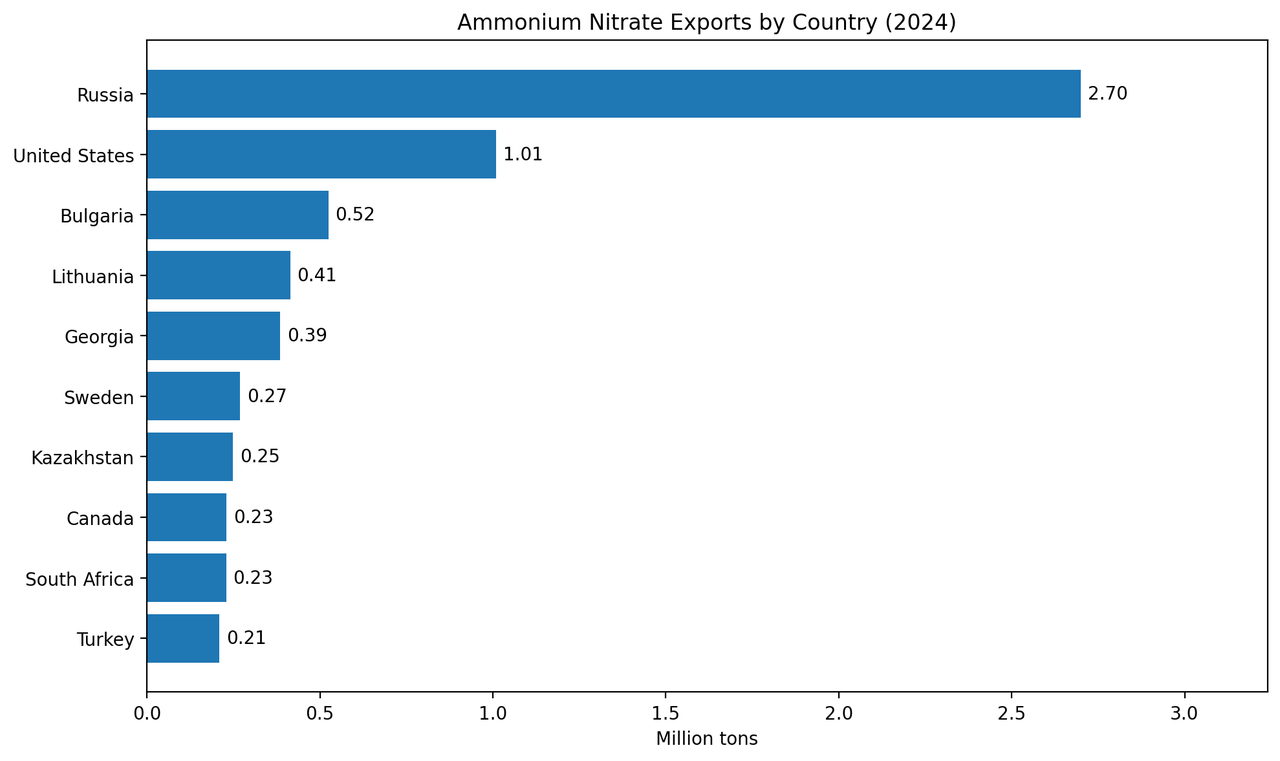
Russia is the world's largest producer of ammonium nitrate. In 2024, the country produced about 12 million tons, roughly 47% of the global output of the plant nutrient. It was also the largest exporter at about 2.7 million tons, around 37% of global export volume and 40% of export value.

Export disruptions of the critical crop nutrient can hit import-dependent buyers hard, especially in markets such as Brazil, Canada, India, Peru, and Ukraine.

Russia's temporary export comes at the worst possible timing as the Northern Hemisphere planting season begins in some regions. 

The risk now is that, as the Middle East conflict enters its fourth week, a global energy shock is also spreading to fertlizer markets and may only suggest a delayed food price shock later this year. 

"The speed of the move [energy shock] pushed volatility sharply higher, with energy once again becoming the primary transmission channel for geopolitical risk into broader macro pricing," UBS analyst Claudio Martucci warned clients earlier this month. 

Claudio pointed out, "Agricultural markets reacted more indirectly to the energy shock via higher fertilizer costs, and higher input and biofuel costs lifted soybean oil to two-year highs, while wheat experienced elevated volatility and some profit-taking late in the week despite an otherwise supportive commodity backdrop."

Last week, former central banker advisor Alexandra Prokopenko warned on X that the near-shutdown of the Strait of Hormuz has triggered an energy shock that risks morphing into a "slower, more consequential story": fertilizers.

"A near-shutdown of the Strait of Hormuz is triggering a supply shock that will show up in food prices 6–9 months from now," Prokopenko wrote on X, adding, "Putin's gains here may be more long-term than simply lining his pockets with petrodollars."....

****

.... Bloomberg macro strategist Simon White recently warned, "But food prices are likely to be as troublesome for second-round inflationary effects. Less well known is that the shock to food prices was worse than the oil price shocks of the 1970s, following the Arab oil embargo and the Iranian revolution. Food inflation in the US was already rising before both shocks, and contributed more to headline CPI than energy through almost all of the 70s."

Prokopenko pointed out, "Consequences already material. Urea up 25-30% since Feb. 28. Gulf producers have declared force majeure on contracts to South America and Asia. ~1 million metric tons of fertilizer physically stranded in the Gulf. Force majeure means contracts are legally severed, not delayed. Buyers must find alternatives now."....

....MUCH MORE

The analysts should be aware of "The Great Grain Robbery" in late summer 1972. If you look at the chart immediately above. that is when food prices began to spike and were actually coming down by the time oil prices quadrupled during/after the 1973 oil embargo.

It was the move in grains and then in meats that convinced me the CIA was either corrupt and made (big) money off of what happened or they were incompetent and didn't see what was happening.
The first (most relevant) hit is October 2020's "Turning air into bread":

Since I have been, and will be, going on about ammonia as a carrier for hydrogen 

NH3 - ammonia - three hydrogens attached to a nitrogen:

https://thiscondensedlife.files.wordpress.com/2016/05/ammonia.jpg?w=389&h=272

about fertilizer and guano, about Yara and Norsk Hydro and Birkeland and explosives, I thought it time to add another post to our nitrogen mini-library....

The outro has these backlinks: 

Previously on our friend, nitrogen:
"How Making One Chemical Created the Modern World"
"Can We Grow One of the World's Largest Food Crops Without Fertilizer?"
The Adventures of a Nitrogen Atom
This Could Be A Big Deal: Norway's Yara and the Australian Nitrogen Economy
Shipping: "UK Department of Transport recommends launch of ammonia / hydrogen powered vessels within 5-15 years"
Ammonia, it's what everyone is talking about.
And if your crowd isn't, you'll be the best-informed next-gen energy storage/transport-medium connoisseur at the Thursday afternoon salon!

The $100M Synthetic Biology Bet From Bayer and Ginko Bioworks (YAR:Oslo; CF)
"Saudi Arabia Sends Blue Ammonia to Japan in World-First Shipment"
Nitrogen Upgraded, Potash Target Lowered; Ununquadium Decayed (AGU, CF; TRA; POT)
That Time A Dozen Norwegians Stopped the Nazis From Developing the Atom Bomb and Possibly Saved Europe 
Many more links have been posted over the ensuing half-decade and are accessible via the search sorted by date (reverse chronological order):

https://climateerinvest.blogspot.com/search?q=nitrogen&max-results=20&by-date=true 

Tuesday, November 29, 2022

Nitrogen: "Netherlands to close up to 3,000 farms to comply with EU rules"

From The Telegraph, November 28:

Government tries to cut down on nitrogen pollution in a move set to reignite tensions with farmers who say the industry is unfairly targeted
The Dutch government plans to buy and close down up to 3,000 farms near environmentally sensitive areas to comply with EU nature preservation rules. The Netherlands is attempting to cut down its nitrogen pollution and will push ahead with compulsory purchases if not enough farms take up the offer voluntarily.
 
Farmers will be offered a deal “well over” the worth of the farm, according to the government plan that is targeting the closure of 2,000 to 3,000 farms or other major polluting businesses.
 
Earlier leaked versions of the plan put the figure at 120 per cent of the farm’s value but that figure has not yet been confirmed by ministers.  “There is no better offer coming,” Christianne van der Wal, nitrogen minister, told MPs on Friday. She said compulsory purchases would be made with “pain in the heart”, if necessary. 
 
Biodiversity under threat
The Netherlands needs to reduce its emissions to comply with EU conservation rules and agriculture is responsible for almost half the nitrogen emitted in the proud farming nation.

The Dutch environment agency has warned that native species are disappearing faster in the Netherlands than in the rest of Europe and that biodiversity is under threat. 
 
But the new plan looks set to reignite tensions with farmers over nitrogen reduction.  Dutch farmers have staged mass protests, burnt hay bales, dumped manure on highways and picketed ministers' houses over the last three years.  In 2019 a ruling by the Dutch Council of State meant every new activity that emits nitrogen, including farming and building, needs a permit....

....MUCH MORE

Friday, December 9, 2011

Credit Suisse: "Two Top Picks in Fertilizers" (POT; MOS)

From Barron's Investors' Soapbox A.M.:
Credit Suisse likes Potash Corp. of Saskatchewan and Mosaic.
Credit Suisse
Despite the significant unease over the economy and European debt situation, agricultural fundamentals remain positive in our view.

Grain prices are still at profitable levels for farmers, and we see fundamental support for $5-plus per bushel corn prices looking out over the next one to two years. Demand is solid with record high U.S. ethanol production rates helping to offset sluggish U.S. corn export orders. Low inventory levels leave little cushion in the event of adverse weather conditions. At corn prices of $5 per bushel, farmers are incentivized to plant more acres and apply optimal amounts of fertilizer to maximize yields.

North American fertilizer stocks are more than factoring in potential downside risks. Given the economic uncertainty, distributors are exercising more caution and the lack of buying activity has lent a bearish tone to the market. Nitrogen prices have plummeted, and the Indians are requesting discounts on existing phosphate and potash contracts.

However, we anticipate volumes and prices will hold up better than the market expects due to favorable farmer economics, elevated costs for marginal nitrogen and phosphate producers, and strong industry discipline in potash. Based on valuations in the North American fertilizer sector, we estimate the market is pricing in 30% price declines and flat volumes for nitrogen, 30% price declines and 20% volume declines for phosphate, and 15% price declines and 20% volume declines for potash.

The risk/reward is most favorable for the potash and phosphate sectors in our view as the market is already factoring in overwhelmingly bearish scenarios.

Our top picks are Potash Corp. of Saskatchewan (ticker: POT) and Mosaic (MOS). The nitrogen names CF Industries Holdings (CF) and Agrium (AGU) also look compelling as 2012 price expectations are overly bearish with higher-cost Chinese product needed to meet demand. However, with Chinese product not available until the country's low tax export window in July and buyers deferring orders until the first quarter, we see potential for nitrogen prices to fall further near term (potentially towards Ukrainian cash cost levels), which would weigh on nitrogen shares.
-- Elaine Yip
Also at Investor's Soapbox:
Three High-Quality Small Banks 
Credit Suisse: 2 Drug Stocks We Like 

Thursday, August 4, 2022

Three Provincial Premiers Reject Canadian Central Government Nitrogen Decrees

These aren't just any provinces. I mean New Brunswick is nice, and huge shout-out to Gander, Newfoundland but the three provinces in the headline are the breadbasket of Canada and a world-class agricultural resource.

The Premiers of Saskatchewan:

And Alberta:

And Manitoba:

As noted in the outro from yesterday's Nitrogen: "Was the Colosseum Paid for with Pee?":

That's it for Messy Nessy for this week. I had been feeling as though I was depriving our readers of that cyber cabinet of curiosities but it's August in Paris and posting will be light.

We on the other hand, despite a few hundred posts on the topic, have barely scratched the surface in our review of nitrogen: Money, Power, Glory, Guano! 

There is a concerted effort to decrease meat consumption, with or without the concurrence of the citoyens, and the focus recently has been on what makes protein, protein, nitrogen. From the decrees in Canada and The Netherlands to article's such as this in Scientific American, July 27: "Nitrogen Emissions: "Eating Too Much Protein Makes Pee a Problem Pollutant in the U.S.""

The biggest problem with moving too fast on this stuff:
Three Billion People Eat Food Grown With Natural Gas Derived Nitrogen Fertilizer

It would be best if we had an alternative in place before going all command-and-control and recreating in food what is being done in energy.

Friday, April 22, 2022

Deliberately Shrinking Food Supplies (CF; UNP)

A press release unlike any I have ever seen. From CF Industries, April 14:

CF Industries: Union Pacific Curtails Fertilizer Shipments, Delaying Deliveries and Preventing New Rail Orders from Being Taken

CF Industries Holdings, Inc. (NYSE: CF), a leading global manufacturer of hydrogen and nitrogen products, today informed customers it serves by Union Pacific rail lines that railroad-mandated shipping reductions would result in nitrogen fertilizer shipment delays during the spring application season and that it would be unable to accept new rail sales involving Union Pacific for the foreseeable future. The Company understands that it is one of only 30 companies to face these restrictions.

CF Industries ships to customers via Union Pacific rail lines primarily from its Donaldsonville Complex in Louisiana and its Port Neal Complex in Iowa. The rail lines serve key agricultural areas such as Iowa, Illinois, Kansas, Nebraska, Texas and California. Products that will be affected include nitrogen fertilizers such as urea and urea ammonium nitrate (UAN) as well as diesel exhaust fluid (DEF), an emissions control product required for diesel trucks. CF Industries is the largest producer of urea, UAN and DEF in North America, and its Donaldsonville Complex is the largest single production facility for the products in North America.

“The timing of this action by Union Pacific could not come at a worse time for farmers,” said Tony Will, president and chief executive officer, CF Industries Holdings, Inc. “Not only will fertilizer be delayed by these shipping restrictions, but additional fertilizer needed to complete spring applications may be unable to reach farmers at all. By placing this arbitrary restriction on just a handful of shippers, Union Pacific is jeopardizing farmers’ harvests and increasing the cost of food for consumers.”

On Friday, April 8, 2022, Union Pacific informed CF Industries without advance notice that it was mandating certain shippers to reduce the volume of private cars on its railroad effective immediately. The Company was told to reduce its shipments by nearly 20%. CF Industries believes it will still be able to fulfill delivery of product already contracted for rail shipment to Union Pacific destinations, albeit with likely delays. However, because Union Pacific has told the Company that noncompliance will result in the embargo of its facilities by the railroad, CF Industries may not have available shipping capacity to take new rail orders involving Union Pacific rail lines to meet late season demand for fertilizer. 

The application of nitrogen fertilizer is critical to maximizing crop yields. If farmers are unable to secure all the nitrogen fertilizer that they require in the current season because of supply chain disruptions such as rail shipping restrictions, the Company expects yield will be lower. This will likely extend the timeline to replenish global grains stocks. Low global grains stocks continue to support high front month and forward prices for nitrogen-consuming crops, which has contributed to higher food prices.

CF Industries intends to engage directly with the federal government to ask that fertilizer shipments be prioritized so that spring planting is not adversely impacted.....

....MORE

Thursday, December 22, 2022

"Researchers chart environmentally friendlier methods to produce nitrogen fertilizer"

It won't be enough to please the U.N and EU poobahs.
I don't think anything will satisfy them because their stated goal seems not to be the real goal.

As noted elsewhere, over the years:

I am getting the same vibe I get when talking with a very clever rhetorician or playing chess with someone much better than I, that somehow my options are being circumscribed, in ways and for purposes that I don't quite understand.....

From Mining.com, December 21:

Researchers at ETH Zurich and the Carnegie Institution for Science have shown how nitrogen fertilizer could be produced more sustainably, thus reducing countries’ dependence on imported natural gas.

In a study published in the journal Environmental Research Letters, the researchers explain that intensive agriculture is possible only if the soil is fertilized with nitrogen, phosphorus and potassium. However, while phosphorus and potassium can be mined as salts, nitrogen fertilizer has to be produced laboriously from nitrogen in the air and hydrogen. The production of hydrogen is energy-intensive, currently requiring large quantities of natural gas or—as in China—coal. 

The way nitrogen fertilizer has been produced so far means that besides having a correspondingly large carbon footprint, its manufacturing process is vulnerable to price shocks in the fossil fuels markets. Thus, the scientists evaluated three alternative options that may be environmentally friendlier and economically safer.

The first option is producing the necessary hydrogen using fossil fuels as in the business-as-usual, only instead of emitting the greenhouse gas CO2 into the atmosphere, it is captured in the production plants and permanently stored underground. This requires not only infrastructure for capturing, transporting and storing the CO2 but also correspondingly more energy. Despite this, it is a comparatively efficient production method. However, it does nothing to reduce dependence on fossil fuels.

The second option involves electrifying fertilizer production by using water electrolysis to produce hydrogen. This requires, on average, 25 times as much energy as today’s production method using natural gas, so it would take huge amounts of electricity from carbon-neutral sources. For countries with an abundance of solar or wind energy, this might be an appealing approach. However, given plans to electrify other sectors of the economy in the name of climate action, it might lead to competition for sustainable electricity.

The third option is synthesizing hydrogen for fertilizer production from biomass. Since this option requires a lot of arable land and water, ironically this production method competes with food production. But the study’s authors point out that it makes sense if the feedstock is waste biomass—for example, crop residues....

....MUCH MORE

Related in concept:
September 2022

It's not going to happen on the scale required and the people pitching the substitution of electric vehicles for internal combustion power have known this for twenty years. Anyone with a calculator has known this for twenty years.

As we've pointed out it appears that the ICE vehicles will be forced off the road before there are replacements, in exactly the same way that the European energy crisis was created by making coal, natural gas and in Germany's case nuclear power generation, illegal before you have a replacement ready to go....