Showing posts sorted by relevance for query hydrogen. Sort by date Show all posts

Tuesday, September 21, 2021

CB Insights on Hydrogen

It appears they are bullish.

And have a lot of names they are interested in.

From CB Insights, September 20:

How Hydrogen Will Help Industrials Meet Decarbonization Goals And Leave Fossil Fuels Behind

With funding and industry interest in hydrogen tech reaching record highs, we explain how the element can be used to decarbonize operations — across manufacturing, transportation, and utilities — and address key challenges and opportunities in the space.  

As the manufacturing, transportation, and utility sectors look to reduce their carbon emissions, hydrogen could be the most promising energy source.

But for adoption to catch on broadly, the price of hydrogen needs to drop considerably to compete with fossil fuels. Hydrogen production capacities and distribution networks will also need to ramp up to support higher volumes.

To address these challenges, investors plan to pour about $500B into hydrogen projects globally through 2030. These initiatives are designed to reduce the price of hydrogen — especially green hydrogen — dramatically.

Meanwhile, companies are beginning to power factories, vehicles, and utilities with hydrogen as they work toward their carbon-neutral goals.

Below, we address the following questions:

  • What is hydrogen? How is it produced, distributed, and used? 
  • Why does hydrogen matter?
  • What do manufacturing, transportation, and energy companies need to consider for adoption?
  • What does hydrogen investment activity look like? Who are the key players?
  • What’s ahead?

What is hydrogen? How is it produced, distributed, and used?  

Hydrogen is the most abundant element on earth, and it has a history of being used for energy. In the 1950s, NASA used liquid hydrogen as rocket fuel — and today, the industrial gas is commonly used in petroleum refining and fertilizer production.  

Hydrogen has also recently gained attention for its potential to help decarbonize manufacturing, transportation, and energy. The molecule only emits water vapor when used as a fuel in hydrogen fuel cells, and it does not emit CO2 emissions when combusted.

That said, there are still some risks in using hydrogen for energy. For example, powering production by burning hydrogen creates NOx (nitrogen oxide) — a poisonous gas — so companies that choose to combust hydrogen will still need to implement scrubbers to clean waste gases.

The hydrogen rainbow

There are 3 kinds of hydrogen: gray hydrogen, blue hydrogen, and green hydrogen. The production process and emissions vary by type.
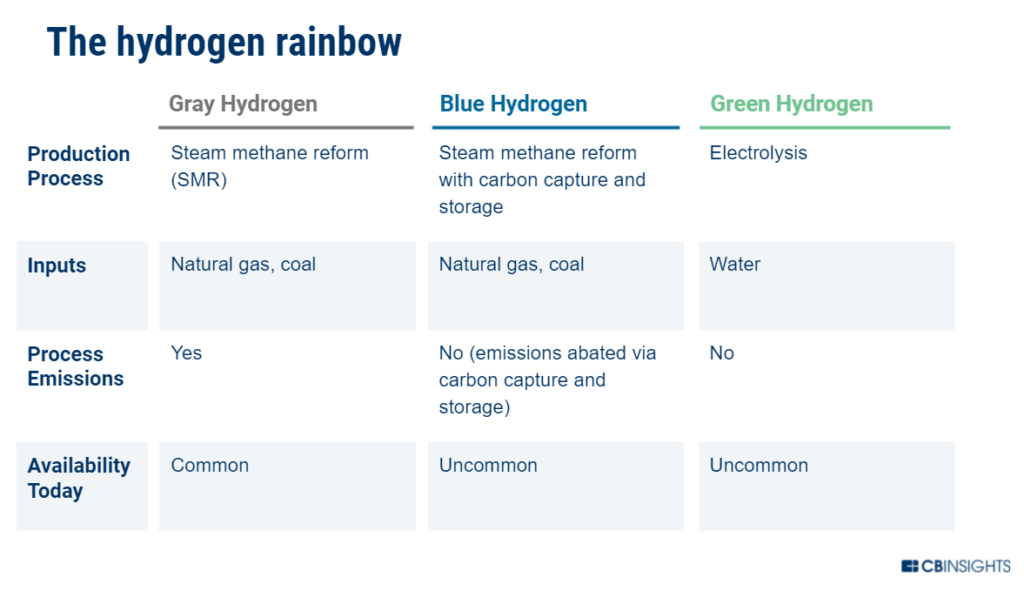
Most hydrogen produced today is gray and made via steam methane reform (SMR), which produces process emissions. 

As companies work towards carbon neutrality goals, they are aiming to use more blue and green hydrogen. This means that more hydrogen will need to be produced via electrolysis — the splitting of water (H2O) into oxygen and hydrogen.

Electrolyzers — the units that induce electrolysis — are key to increasing the green hydrogen supply. Most plants being built employ proton exchange membrane (PEM) electrolyzers, which can produce hydrogen with intermittent renewable energy flow more easily than older electrolyzer types.  

The hydrogen value chain....

....MUCH MORE

I am pretty much au courant with this stuff and see names with which I am unfamiliar. Worth a look for everybody but the most obsessive hydrogen wonk.  And maybe even them.

Wednesday, September 30, 2020

Huh, Bloomberg Seems Rather Enthusiastic About Hydrogen

From Bloomberg:

Hydrogen Breaks Through as the Hottest Thing in Green Energy
Wind and solar power are the main focus in the fight against climate change, but there are sources of greenhouse gases they can’t clean up. Manufacturing steel, cement and chemicals has traditionally required fossil fuels, either to burn to create the extreme temperatures needed, or as raw materials and catalysts for chemical reactions. That’s why hydrogen is becoming the new climate bet. It burns far more cleanly than fossil fuels, can stand in for carbon in some reactions and so-called green hydrogen — gas produced using electricity from renewable sources — is essentially emissions free. Hydrogen is also seen as a clean solution for fueling cars, trucks and ships and heating buildings. All that involves vast expense and work of creating a new energy industry almost from scratch, and bringing costs down to competitive levels.

1. What’s hydrogen’s advantage?
Hydrogen flames hot and clean. Replacing the fossil fuels now used in furnaces that reach 1,500 degrees Celsius (2,700 Fahrenheit) with hydrogen could make a big dent in the 20% of global carbon dioxide emissions that now come from industry. In steelmaking, hydrogen could replace the coal that’s now used not only for heat but as a purifying agent. Hydrogen also removes the oxygen from the iron ore, but the result is water vapor rather than CO2.

2. How is it made?
There’s plenty of hydrogen in the atmosphere around us, but harnessing it for industrial purposes is a different matter. Here are the main techniques for manufacturing it:
  • A way of making green hydrogen is via electrolysis, a process that sends an electric current through water to split hydrogen atoms from oxygen. Using renewable electricity to feed the process is key to harvesting the full benefit of hydrogen. Nowadays, most of the hydrogen used as fuel is derived by splitting it off from molecules of natural gas. But that requires a good deal of energy and also produces carbon dioxide at the same time, making the process decidedly unclean. So switching to electricity generated by renewables is key to harvesting the full benefit of hydrogen.
  • Another technology option for producing hydrogen from renewables is steam reforming of biomethane and biogas, in which high-temperature steam reacts with the methane source, in the presence of a catalyst.
  • There are also other less developed technologies, such as pyrolysis, which heats up natural gas until it generates hydrogen. Carbon is produced as a residue, but in a solid form that’s easier to store without adding to atmospheric emissions.
3. Who’s doing this?
The European Union has set a target to build 40 gigawatts of renewable hydrogen electrolyzers by 2030, the equivalent of twice the capacity of China’s Three Gorges Dam, the world’s largest energy plant. For that, it envisages as much as 470 billion euros of public and private investments by 2050 and plans to kickstart a global hydrogen market, allowing the fuel to be traded as a liquid commodity denominated in euros. In Germany, Chancellor Angela Merkel’s climate cabinet said in September green hydrogen would play a central role in “rebuilding” Germany’s industrial base as it moves to zero emissions by 2050.
4. What’s happening elsewhere?
In Asia, a number of countries are pursuing hydrogen more as a way of diversifying their energy sources, than on the need to reduce carbon emissions. Most countries in the region are focusing on the use of hydrogen for transport and electricity generation. Japan has the world-largest renewable powered hydrogen project, with 10 gigawatts of capacity, and is the leader in hydrogen refueling stations. South Korea plans to have six cities completely fueled by hydrogen by 2025 as part of the country’s efforts to accelerate the energy transition. The U.S. has 6,500 fuel cell electric cars available to costumers or running on the roads — the world’s largest fleet, accounting for almost half of the global market.

5. What’s the private sector doing?
Most of the world’s energy companies and big industrial groups are involved in hydrogen somehow. Among the most recent announcements were Mitsubishi Power Americas Inc., that plans to build three hydrogen-ready gas-fired power plants in the U.S. and Germany’s RWE, which plans to supply hydrogen to steel maker Thyssenkrupp AG and to promote the use of the fuel at its planned liquefied natural gas terminal in Germany. The U.K.’s ITM Power and Ceres Power, Sweden’s Powercell and Norway’s Nel ASA are among the listed companies whose core business involve hydrogen technologies. Australia’s Infinite Blue Energy said it plans an initial public offering that would make it the first zero-emissions hydrogen company to list on the Australian Stock Exchange. Utility giant Entergy Corp. is taking steps to throttle back its reliance on natural gas by investing in hydrogen production with Mitsubishi Power. And European planemaker Airbus SE is working on designs for hydrogen-powered aircraft as it races to bring a zero-carbon passenger plane into service by 2035....
....MUCH MORE

We too have heard the siren song of hydrogen.
A Google search of the blog shows 484 posts:
site:climateerinvest.blogspot.com hydrogen

Indeed, at times I was concerned long-suffering reader would get bored so we tried to liven things up:

I'm tellin' ya

http://www.nakedcapitalism.com/wp-content/uploads/2014/05/Chameleon.jpg

It may be in fits and starts but hydrogen is coming.
.
"Hi, do you have a moment to learn about the potential of hydrogen and/or ammonia?"

https://cottagelife.com/wp-content/uploads/2017/05/vgpyn8diytxduj0kpgvn.jpg
Bear via Cottage Life
Caption idea by way of the incomparable Paul Bronks
We've been banging this drum* so long I feel I have to at least try to keep patient, yet wary, reader amused. 


"Hydrogen Fuel-Cell Stocks Are Soaring. Yes, It’s a Bubble"
Have I mentioned hydrogen?

An approach you probably won't see at Bloomberg.

Monday, April 28, 2014

Blimp My Ride: Taking A Deep Dive Into Hydrogen (Charts, Graphs, Tables, More)

It's a long road to anything approaching a hydrogen economy and here are some of the reasons why.
From Clean Technica:
We cover quite a lot of university and research institute news here on CleanTechnica. I know a lot of readers love that stuff, but there’s an important downside to news from those sources that is quite prevalent. That news is often overly colorful, optimistic, and revolutionary in its style of writing. Some of those advances will make an impact, some will make a huge impact, but almost none of them are starting a technological revolution any time soon.

Why am I mentioning all of those? Because hydrogen is a cleantech topic that gets a lot of attention in these places, and a lot of people think a hydrogen revolution is being repressed and there’s a conspiracy to keep it from the market. Not the case. Hydrogen has a good deal of potential and is used somewhat in a variety of arenas — energy storage and transportation, most notably. But it is actually not ready for the big time yet. A new factbook on hydrogen, Hydrogen-Based Energy Conversion — More than Storage: System Flexibility*, really deals with hydrogen’s potential and limitations in a realistic and useful way.
Part of a primer sent to me along with the report, here are a few summary paragraphs:
According to the Factbook, the value of hydrogen-based solutions lies predominantly in their ability to convert renewable power into chemical energy carriers. But hydrogen is more than just an energy carrier. Utilizing the current energy networks hydrogen also acts as a bridge between the different branches of the energy supply system — optimizing the use of energy generated from renewable power at the energy-system level.

The main challenge for hydrogen conversion, however, lies not in its technology but in its economics. Most technologies in the hydrogen value-chain are proved, albeit at different stages of maturity. The FactBook considers that cost reduction is the next prerequisite on the road to commercialization, especially for flexible water electrolysis technologies. Beyond innovations that could disrupt the technology landscape, the principal areas of focus is engineering and manufacturing to allow for greater scalability and capitalize on accumulated knowledge.

Costs are only one side of the commercialization equation. The versatility of hydrogen opens the way to a wide range of end-uses that valorize the power conversion to hydrogen as a service or the hydrogen generated as a product. However, the benefits of hydrogen solutions remain difficult to assess and monetize as most end-markets are virtually non-existent today and are subject to the growing penetration of variable renewables.

If you take a stroll through the Factbook, you will see that is is extremely thorough and is a very science-based report. Of course, I haven’t made my way through the complete report yet — it’s a 280-page PDF! But from what I’ve read, it matches up excellently with the most useful information I’ve ever found on some key hydrogen topics, and then adds much more. Without a doubt, this is going to be my go-to source for information, context, and perspective on hydrogen and hydrogen-related topics for the foreseeable future....
http://i1.wp.com/cleantechnica.com/files/2014/04/types-of-energy-storage.png

....MORE

A visit to Sustainable Energy-without the Hot Air may be in order:
Ch 20 page 129

Hydrogen cars – blimp your ride

I think hydrogen is a hyped-up bandwagon. I’ll be delighted to be proved
wrong, but I don’t see how hydrogen is going to help us with our energy
problems. Hydrogen is not a miraculous source of energy; it’s just an en-
ergy carrier, like a rechargeable battery. And it is a rather inefficient energy
carrier, with a whole bunch of practical defects.
The “hydrogen economy” received support from Nature magazine in...
...Ch 20 page 130
He concludes:

Ch 20 page 131
...Here are some other problems with hydrogen. Hydrogen is a less convenient
energy storage medium than most liquid fuels, because of its bulk,
whether stored as a high pressure gas or as a liquid (which requires a
temperature of -253 °C). Even at a pressure of 700 bar (which requires a
hefty pressure vessel) its energy density (energy per unit volume) is 22%
of gasoline’s. The cryogenic tank of the BMW Hydrogen 7 weighs 120 kg
and stores 8 kg of hydrogen. Furthermore, hydrogen gradually leaks out
of any practical container.E If you park your hydrogen car at the railway
station with a full tank and come back a week later, you should expect to
find most of the hydrogen has gone.E
....
The he is David MacKay whom we visited yesterday.

Wednesday, July 19, 2023

Adam Tooze Looks At Hydrogen

As unofficial ambassadors of the Adam Tooze fan club we invite you to join the fun and accept the official AT coffee mug as our gift. 
Or see New York Magazine's "The Cult of Adam Tooze".

From Foreign Policy Magazine, July 14:

Hydrogen Is the Future—or a Complete Mirage
The green-hydrogen industry is a case study in the potential—for better and worse—of our new economic era.

With the vast majority of the world’s governments committed to decarbonizing their economies in the next two generations, we are embarked on a voyage into the unknown. What was once an argument over carbon pricing and emissions trading has turned into an industrial policy race. Along the way there will be resistance and denial. There will also be breakthroughs and unexpected wins. The cost of solar and wind power has fallen spectacularly in the last 20 years. Battery-powered electric vehicles (EVs) have moved from fantasy to ubiquitous reality.

But alongside outright opposition and clear wins, we will also have to contend with situations that are murkier, with wishful thinking and motivated reasoning. As we search for technical solutions to the puzzle of decarbonization, we must beware the mirages of the energy transition.

On a desert trek a mirage can be fatal. Walk too far in the wrong direction, and there may be no way back. You succumb to exhaustion before you can find real water. On the other hand, if you don’t head toward what looks like an oasis, you cannot be sure that you will find another one in time.

Right now, we face a similar dilemma, a dilemma of huge proportions not with regard to H2O but one of its components, H2—hydrogen. Is hydrogen a key part of the world’s energy future or a dangerous fata morgana? It is a question on which tens of trillions of dollars in investment may end up hinging. And scale matters.

For decades, economists warned of the dangers of trying through industrial policy to pick winners. The risk is not just that you might fail, but that in doing so you incur costs. You commit real resources that foreclose other options. The lesson was once that we should leave it to the market. But that was a recipe for a less urgent time. The climate crisis gives us no time. We cannot avoid the challenge of choosing our energy future. As Chuck Sabel and David Victor argue in their important new book Fixing the Climate: Strategies for an Uncertain World, it is through local partnership and experimentation that we are most likely to find answers to these technical dilemmas. But, as the case of hydrogen demonstrates, we must beware the efforts of powerful vested interests to use radical technological visions to channel us toward what are in fact conservative and ruinously expensive options.

Using hydrogen as an energy store is hugely inefficient. With current technology producing hydrogen from water by way of electrolysis consumes vastly more energy than will be stored and ultimately released by burning the hydrogen. Why not use the same electricity to generate the heat or drive a motor directly? The necessary electrolysis equipment is expensive. And though hydrogen may burn cleanly, as a fuel it is inconvenient because of its corrosive properties, its low energy per unit of volume, and its tendency to explode. Storing and moving hydrogen around will require huge investment in shipping facilities, pipelines, filling stations, or facilities to convert hydrogen into the more stable form of ammonia.

The kind of schemes pushed by hydrogen’s lobbyists foresee annual consumption rising by 2050 to more than 600 million tons per annum, compared to 100 million tons today. This would consume a huge share of green electricity production. In a scenario favored by the Hydrogen Council, of the United States’ 2,900 gigawatts of renewable energy production, 650 gigawatts would be consumed by hydrogen electrolysis. That is almost three times the total capacity of renewable power installed today.

The costs will be gigantic. The cost for a hydrogen build-out over coming decades could run into the tens of trillions of dollars. Added to which, to work as a system, the investment in hydrogen production, transport, and consumption will have to be undertaken simultaneously.

Little wonder, perhaps, that though the vision of the “hydrogen economy” as an integrated economic and technical system has been around for half a century, we have precious little actual experience with hydrogen fuel. Indeed, there is an entire cottage industry of hydrogen skeptics. The most vocal of these is Michael Liebreich, whose consultancy has popularized the so-called hydrogen ladder, designed to highlight how unrealistic many of them are. If one follows the Liebreich analysis, the vast majority of proposed hydrogen uses in transport and industrial heating are, in fact, unrealistic due to their sheer inefficiency. In each case there is an obvious alternative, most of them including the direct application of electricity.

Nevertheless, in the last six years a huge coalition of national governments and industrial interests has assembled around the promise of a hydrogen-based economy.

The Hydrogen Council boasts corporate sponsors ranging from Airbus and Aramco to BMW, Daimler Truck, Honda, Toyota and Hyundai, Siemens, Shell, and Microsoft. The national governments of Japan, South Korea, the EU, the U.K., the U.S., and China all have hydrogen strategies. There are new project announcements regularly. Experimental shipments of ammonia have docked in Japan. The EU is planning an elaborate network of pipelines, known as the hydrogen backbone. All told, the Hydrogen Council counts $320 billion in hydrogen projects announced around the world.

Given the fact that many new uses of hydrogen are untested, and given the skepticism among many influential energy economists and engineers, it is reasonable to ask what motivates this wave of commitments to the hydrogen vision.

In technological terms, hydrogen may represent a shimmering image of possibility on a distant horizon, but in political economy terms, it has a more immediate role. It is a route through which existing fossil fuel interests can imagine a place for themselves in the new energy future. The presence of oil majors and energy companies in the ranks of the Hydrogen Council is not coincidental. Hydrogen enables natural gas suppliers to imagine that they can transition their facilities to green fuels. Makers of combustion engines and gas turbines can conceive of burning hydrogen instead. Storing hydrogen or ammonia like gas or oil promises a solution to the issues of intermittency in renewable power generation and may extend the life of gas turbine power stations. For governments around the world, a more familiar technology than one largely based on solar panels, windmills, and batteries is a way of calming nerves about the transformation they have notionally signed up for....

....MUCH MORE

Recent visits with Professor Tooze include:
From Adam Tooze's Chartbook:

https://substackcdn.com/image/fetch/w_1456,c_limit,f_auto,q_auto:good,fl_progressive:steep/https%3A%2F%2Fbucketeer-e05bbc84-baa3-437e-9518-adb32be77984.s3.amazonaws.com%2Fpublic%2Fimages%2F51816835-1800-45f7-a553-0ef4422f073d_2138x1188.png

Wednesday, July 17, 2019

Hydrogen: "Is This Big Oil’s Next Secret Weapon?"

We try to avoid question marks in the headline, Betteridge's law* and all.
But in addition it's a wishy-washy way to present an argument and almost duplicitous in a way somewhat similar to the way passive-agressive folks are duplicitous:
"But I didn't say 'It's the Next Secret Weapon'" for the former, "You misunderstood..." [whatever was being insinuated] for the latter.
(I need a thesaurus way, way, way bad)

That quibble aside, and meaning no disparagement of the source (it's a click-getter in a tough business) this is some solid reporting from OilPrice:
Reducing global carbon emissions to net zero “is the only way to go,” Shell’s chief executive Ben van Beurden said earlier this month, in yet another reminder from a top executive that Big Oil needs to produce and sell more energy with low carbon intensity.
Oil majors are investing in various alternative energy solutions in response to increased investor pressure to start thinking about reducing emissions instead of just growing profits.

Some supermajors are investing in EV charging networks, others in research and development of advanced lower-emissions technologies, and a few others are looking into hydrogen and its various possible uses as a clean fuel--not only for cars but also for heavy industries and home heating.  
Several major oil firms have included hydrogen and related research and applications in their alternative energy portfolios, but a meaningful large-scale hydrogen use with low or zero emissions in heavy industries—where emissions are the most and the hardest to cut—is years, if not decades, away.

This doesn’t discourage Equinor, Shell, and Total, for example, from looking into hydrogen as a cleaner energy source.
However, producing hydrogen from something other than fossil fuels—such as from sunlight or out of thin air—is currently cost prohibitive, and the majors are taking their research and pilot projects one step at a time.

Currently, hydrogen is already used on a large scale, but it is almost entirely produced from natural gas and coal, and its production is responsible for annual carbon dioxide (CO2) emissions equivalent to those of Indonesia and the United Kingdom combined, the International Energy Agency (IEA) said in a report last month.

“Harnessing this existing scale on the way to a clean energy future requires both the capture of CO2 from hydrogen production from fossil fuels and greater supplies of hydrogen from clean electricity,” the IEA said.

Commenting on hydrogen’s potential, Steinar Eikaas, Vice President Low Carbon Solutions at Equinor, told Houston Chronicle’s James Osborne:

“We don’t need hydrogen cars because electric cars are so superior.”
“Where we need it is heavy sectors. With small adjustments gas powered plants can burn hydrogen,” Eikaas said.
Equinor admits that hydrogen can be part of an energy transition future, but it would take supplemental technologies to make hydrogen production zero-emission.

Equinor said in its Energy Perspectives 2019 report that “The competitiveness of hydrogen as a fuel depends on the costs of producing and transporting it safely to consumers, and on costs of modifying boilers, engines etc., to accommodate the new fuel.”

“If hydrogen is to be part of an energy transition, fossil fuel-based production must be equipped with CCUS [carbon capture use and storage] or replaced by electrolysis based production utilising zero-carbon electricity,” according to the Norwegian major, which has several ambitious projects for hydrogen use.

Equinor is evaluating the possibility, together with partners, of converting a natural gas plant in the Netherlands into a hydrogen-powered plant, potentially reducing emissions by the equivalent of emissions of more than 2 million cars annually.

Equinor is also studying how 3.7 million homes and 40,000 businesses in northern England, currently heated by natural gas, could be converted to hydrogen and made emission-free by 2034.....
....MUCH MORE

*Betteridge's law of headlines states that when you see a question posed in a headline that can be answered with a binary yes/no, go with "no".

Previously on hydrogen:
"A Major Existential Threat Is Arising For Natural Gas"
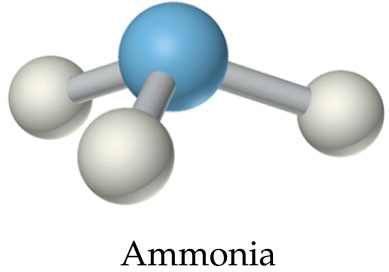
...One approach NH3 - ammonia - three hydrogens attached to a nitrogen:

https://thiscondensedlife.files.wordpress.com/2016/05/ammonia.jpg?w=389&h=272
See:
Feb. 2019
Shipping: "UK Department of Transport recommends launch of ammonia / hydrogen powered vessels within 5-15 years"
Ammonia, it's what everyone is talking about.
And if your crowd isn't, you'll be the best-informed next-gen energy storage/transport-medium connoisseur at the Thursday afternoon salon!

Feb. 2019
Electricity: Here Come The Big Batteries
This is a very tricky time for end users weighing their options for long-lived energy storage infrastructure.
This article focuses on lithium ion batteries but there are a couple other battery technologies that work for large scale uses that don't work for vehicle applications, see links below.

Additionally the use of ammonia (for the hydrogen) as an energy storage medium is being persued by some very big players, Yara, Siemens, and the U.S. ARPA-E researchers to name just three.
And as Australia is finding out with their giant Tesla lithium battery, the things don't work so well in extreme heat. Ditto for extreme cold as the owners of electric vehicles found during the recent polar vortex experience.
Aug. 2018
This Could Be A Big Deal: Norway's Yara and the Australian Nitrogen Economy 

April 2014 
Blimp My Ride: Taking A Deep Dive Into Hydrogen (Charts, Graphs, Tables, More)
A visit to Sustainable Energy-without the Hot Air may be in order:
Ch 20 page 129

Hydrogen cars – blimp your ride

I think hydrogen is a hyped-up bandwagon. I’ll be delighted to be proved
wrong, but I don’t see how hydrogen is going to help us with our energy
problems. Hydrogen is not a miraculous source of energy; it’s just an en-
ergy carrier, like a rechargeable battery. And it is a rather inefficient energy
carrier, with a whole bunch of practical defects.
The “hydrogen economy” received support from Nature magazine in...
...Ch 20 page 130
He concludes:

Ch 20 page 131
...Here are some other problems with hydrogen. Hydrogen is a less convenient
energy storage medium than most liquid fuels, because of its bulk,
whether stored as a high pressure gas or as a liquid (which requires a
temperature of -253 °C). Even at a pressure of 700 bar (which requires a
hefty pressure vessel) its energy density (energy per unit volume) is 22%
of gasoline’s. The cryogenic tank of the BMW Hydrogen 7 weighs 120 kg
and stores 8 kg of hydrogen. Furthermore, hydrogen gradually leaks out
of any practical container.E If you park your hydrogen car at the railway
station with a full tank and come back a week later, you should expect to
find most of the hydrogen has gone.E
....
The he is David MacKay whom we visited yesterday.

Sadly Professor MacKay died far to young and the world is a lesser place for his passing.

Sunday, June 28, 2020

Asia: "Hydrogen: A game-changer for Asean"

A deep dive from the Bangkok Post, June 25:
For the past two decades, hydrogen has rarely been mentioned by proponents of renewable energy although it is frequently used in the ammonia production, petrochemical and oil refining industries.
However, recently the adoption of hydrogen usage has been accelerating in all sectors as it is versatile and can be produced from many energy sources. Hydrogen fuels thus present an untapped potential as a clean form of energy if the world embraces its adoption and usage.

Currently, the annual production of hydrogen is about 120 million tonnes globally, of which two-thirds is pure hydrogen and one-third is mixed with other gases. Hydrogen is a clean energy source which can be produced from either fossil fuels or renewables.

As of today, about 95% of hydrogen is produced from coal and gas -- known as "grey hydrogen", and only small amounts are produced with Carbon Capture, Sequestration and Storage (CCS) -- known as "blue hydrogen". Less than 5% of total hydrogen production is produced from renewables -- "green hydrogen".

Reducing global greenhouse gas emissions (GHGs) is high on the agenda under the Paris Agreement (COP21) and under the upcoming COP26 which will require leaders to pursue alternative fuel pathways.

Although the share of hydrogen fuel remains small in global energy consumption, it represents a positive growth potential as world leaders start to see the great benefits to abate climate change. Hydrogen fuel has already enjoyed political support in many advanced countries including Germany, the Netherlands and many OECD countries.

The potential use of hydrogen in transportation, power generation and industries has been shown by projects around the world. Hydrogen has attracted the leaders' attention as an option to increase the share of renewables in electrical grids amid the falling cost of electricity from winds and solar.
The International Renewable Energy Agency (Irena) predicted the cost of electrolysers, the devices used to produce hydrogen from water, will halve from US$840 (25,905 baht) today to $420 (12,952 baht) by 2040. If coupled with the falling cost of renewables in general, the prospect of renewable hydrogen production could be the cheapest energy option in the foreseeable future.

Eria's research in hydrogen energy over the past two years has identified the significant potential to meet supply and demand needs in East Asia. By 2040, the cost of hydrogen will decrease by more than 50% if it is adopted across all sectors.

At this price, hydrogen is competitive with the price of gasoline. The current cost of supplying the renewable is about three to five times higher than gas, mainly due to the limited investment in hydrogen supply chains and the lack of a wider adoption strategy.

Further, the wide adoption of hydrogen will need time to ensure cost competitiveness as well as its safety in its use in all sectors, especially in automobiles. The large-scale hydrogen-based energy transition from the "grey" and "blue" towards "green" hydrogen will happen concurrently with a global shift to renewables. Green hydrogen can address current system integration challenges that have prohibited a higher share of wind and solar....
....MUCH MORE

And related from Hellenic Shipping News, June 16: 
ITOCHU group and Vopak Singapore to sign Memorandum of Understanding to study ammonia marine fuel supply chain in Singapore

Sunday, March 31, 2024

"‘If this exists, it's fantastic’: The frantic rush to find buried hydrogen"

From Sifted.eu, March 28:

If the hydrogen deposits underground are large enough and can be safely extracted, they could prove world-changing

In 1987, in the remote Malian village of Bourakébougou, an engineer digging a water well lights up a cigarette and, in doing so, sets off an explosion. 

He had inadvertently hit upon a deposit of naturally occurring hydrogen: a colourless, odourless gas, which — as he came to realise — is highly flammable. In 2011, Canadian energy company Hydroma started extracting hydrogen from the site to help power Bourakebougou.

Similar deposits could be sitting elsewhere. And — if they’re large enough and can be safely extracted — they could prove world-changing.

A quantum leap?
Hydrogen is a clean fuel when burned — water is its only byproduct. The catch: the majority of the hydrogen used today is grey hydrogen, produced by splitting methane (CH4) using fossil fuels. Green hydrogen, which is produced using renewables, is expensive.

“The price of green hydrogen is estimated to be $4 to $6 a kilo,” says Alexandre Flamant, investor at HCVC. Estimates suggest a producing tonne of green steel would need 50kg of hydrogen, costing $200-$300. That’s made technologies that rely on hydrogen, like tech to decarbonise heavy industry, a trickier investment case, Flamant says. 

“We've always kind of struggled to see what quantum leap is going to happen in the industry that could make that change,” he says. 

And then Flamant came across natural hydrogen. Sometimes called white hydrogen, it is produced when groundwater reacts with minerals, splitting water into hydrogen. 

“If this exists, it's fantastic,” Flamant says, estimating that natural hydrogen could cost a dollar or less per kilo. “It gives much needed momentum to all the existing companies that are leveraging hydrogen: sustainable aviation companies, green steel or clean shipping,” he says.

This possibility could buoy up the parts of the climate tech world which rely on hydrogen — it’s also triggered a number of stealthy exploration startups to pop up.

Bill Gates gets involved
It’s been a busy time in the natural hydrogen world. Last year, scientists at the University of Lorraine found a deposit in north-east France while searching for methane — a discovery which has sparked growing interest in natural hydrogen.

Then, in February this year, American startup Koloma, which is working on exploration to find natural hydrogen, raised a big $245m round (it costs roughly $10m to dig a single hole into the Earth’s crust). 

Koloma’s raise came from Bill Gates’ Breakthrough Energy Ventures,  Khosla Ventures, Amazon’s Climate Pledge Fund, United Airlines and Energy Impact Partners. Gates’ comments to The Economist at the end of last year sum up much of the feeling around natural hydrogen: “It could be gigantic or it could be a bust, but if it’s really there... wow!” 

An industry insider tells me the Koloma fundraise was exciting because to raise the amount it did, the company is likely to have strong evidence of a large deposit and a plan to extract it safely. News out of Koloma is hotly anticipated....

....MUCH MORE

Previously:

Thursday, December 19, 2019

Japan's Strategic Hydrogen Roadmap

With the news the other day that MOL was going to be testing a hybrid hydrogen-fueled propulsion system* we thought it was time to look into the official government position.
Despite very advanced battery manufacturing infrastructure (e.g. Panasonic at Gigafactory 1 for Tesla)  Japan has tilted toward fuel cells as their next-gen power source, mainly due to the big automakers leaning that way.
So here's the plan, right now just a placeholder for actual analysis and stuff. Fortunately the English language translation was put on METI's website late last month.

First up, Japan's Ministry of Economy Trade and Industry, March 12, 2019:

Agency for Natural Resources and Energy
Formulation of a New Strategic Roadmap for Hydrogen and Fuel Cells
In order to ensure the achievement of the goals set forth in the Basic Hydrogen Strategy and the Fifth Strategic Energy Plan toward the realization of a hydrogen-based society, on March 12, 2019, the Council for a Strategy for Hydrogen and Fuel Cells renewed the existing Strategic Roadmap for Hydrogen and Fuel Cells. The renewed roadmap defines: (i) new targets on the specification of basic technologies and the breakdown of costs; (ii) necessary measures for achieving these goals; and (iii) that Japan will convene a working group consisting of experts to review the status of implementation in each area stipulated by the roadmap.

1. Background and purpose
The Council for a Strategy for Hydrogen and Fuel Cells formulated the Strategic Road Map for Hydrogen and Fuel Cells in 2014, and revised it in 2016.
Subsequently, hydrogen-related policy materials, namely, the Basic Hydrogen Strategy (December 2017), the Fifth Strategic Energy Plan (July 2018), and the Tokyo Statement (October 2018) were formulated and released. With the release of these additional materials, the council considered that the existing roadmap needed significant revision, and it undertook the current revision of the roadmap. Toward the achievement of goals set forth in this revised Strategic Roadmap for Hydrogen and Fuel Cells, industry, academia, and government will mutually cooperate to accelerate their efforts.

2. Highlights of the renewed roadmap
The renewed roadmap defines (i) new targets on the specification of basic technologies and the breakdown of costs, and necessary measures for achieving these goals, and (ii) that Japan will convene a working group consisting of experts to review the status of implementation in each area stipulated by the roadmap.

Appendix
Note: The English version of the Roadmap (Full text) was posted on November 22, 2019.
And an overview of the of the earlier Basic Hydrogen Strategy by France's "Études de l’Ifri", October 2018:

Japan’s Hydrogen strategy and its economic and geopolitical implications
With the Basic Hydrogen Strategy (hereafter, the Strategy) released on December 26, 2017, Japan reiterated its commitment to pioneer the world’s first “Hydrogen Society”. The Strategy primarily aims to achieve the cost parity of hydrogen with competing fuels, such as gasoline in transport and Liquified Natural Gas (LNG) inpower generation. The retail price of hydrogen is currently around 100 yen per normal cubic meter (yen/Nm3)1(90 USD ($) cents/Nm3) and the target is to reduce it to 30yen/Nm3by 2030 and to 20yen/Nm3(17 cents/Nm3) in the long-term. Toward this end, over the past six years, the Japanese government has dedicated approximately $1.5 billion to technology Research and Development (R&D) and subsidies in support of:
  • Achieving low cost, zero-emission hydrogen production from overseas fossil fuels + Carbon Capture and Storage (CCS), or from renewable energy electrolysis;
  • Developing infrastructure for import and domestic distribution of hydrogen;
  • Scaling up hydrogen use across various sectors, such as mobility, residential Combined Heat and Power (CHP), and power generation.
....MUCH MORE (78 page PDF)

*Shipping Giant Mitsui O.S.K. Lines Begins Study Into Hybrid Battery / Hydrogen / LNG Car Carrier

Sunday, August 2, 2020

"Hydrogen Fuel-Cell Stocks Are Soaring. Yes, It’s a Bubble"

Have I mentioned hydrogen?

From Barron's, July 25:
Wall Street discovered hydrogen this year. It has been around for 13 billion years, but the big bucks earmarked for green-energy projects, and a fresh craze for shares of companies aiming to make hydrogen-fueled trucks, have raised the investment profile of all things connected to this ubiquitous gas.
That includes shares of hydrogen fuel-cell makers such as Plug Power, Ballard Power Systems, and Bloom Energy, the first two of which are up fourfold in the past 12 months. Trading at more than 50 times future cash flow, the stocks look priced to disappoint.

Fueling the fuel-cell bubble is a growing consensus that hydrogen will provide green energy in places where solar and wind can’t, such as heavy transport, backup power, and industry. The European Union unveiled a plan this month to invest hundreds of billions of euros in technologies enabling it to get a substantial share of its energy from hydrogen by 2050. The news lifted the shares of big hydrogen-gas sellers Linde (ticker: LIN) and Air Products & Chemicals (APD), and it ignited a stampede into hydrogen pure plays Plug (PLUG), Ballard (BLDP), and Bloom (BE).

In the race to stop global warming, hydrogen power can’t arrive soon enough. But it could take a decade before environmentally friendly hydrogen is competitively priced with natural gas. Moreover, small companies are up against big players, including government-backed rivals in China and deep-pocketed manufacturers, such as Cummins (CMI).

A fuel cell is a battery-like device that combines hydrogen gas with oxygen to generate electricity that can power a forklift, train, or data center. The fuel cell’s only other outputs are heat and water, making it much cleaner than internal combustion. Most hydrogen today is made from natural gas in a process that emits carbon exhaust. To be a climate-change solution, hydrogen must be made in a carbon-neutral way.
Bubble, Bubble
Wall Street’s infatuation with hydrogen-powered trucks has inflated the shares of hydrogen gas sellers and fuel-cell makers. Smaller companies could face formidable competition, however.
* Adjusted. Last four quarters.
Source: Bloomberg
Industrial-gas suppliers Air Products and Air Liquide (AI.France) get about 24% and 10% of their revenue, respectively, from hydrogen. Linde gets about 5%. The hydrogen suppliers’ interim solution is to capture their carbon exhaust and sequester it underground, but the goal is to power most hydrogen production with solar or wind farms. These renewable energy sources will drive electrolyzers— devices that use electricity to separate water into hydrogen and oxygen, in a process that’s the reverse of a fuel cell.

On July 8, the EU announced a plan calling for Europe to have at least six gigawatts of renewable hydrogen electrolyzers by 2024, versus one gigawatt (a billion watts) of electrolyzers in the bloc today. By 2050, the EU aims for 500 gigawatts. China, Japan, and Korea also have ambitious hydrogen goals.

If the sort of government incentives and mandates that spawned industries in solar, wind, and electric cars come to hydrogen, it will be good for polar bears and electrolyzer makers, such as the New Power unit of Cummins, and European specialists like NEL (NEL.Norway) and ITM Power (ITM.UK), which have soldiered through years of modest sales and negative cash flow. Their stocks were neglected until hydrogen’s star started rising....
....MUCH MORE

Wednesday, June 16, 2021

"Japan’s Big Bet On Hydrogen Could Revolutionize The Energy Market"

We attempt to keep up with what's cookin' in Japan but there is just so much. Some links below.

From the Wall Street Journal, June 15:

The country’s effort to be carbon-free by 2050 relies on a fuel source many see as too expensive and unrealistic

Japan built the world’s third-largest economy on an industrial base powered by imported oil, gas and coal.

Now, it is planning to shift a big chunk of that power to hydrogen, in one of the world’s biggest bets on an energy source long dismissed as too costly and inefficient to be realistic.

The change is a vital piece of the country’s plan to eliminate carbon emissions in 30 years. If it succeeds, it could also lay the groundwork for a global supply chain that would finally let hydrogen come into its own as an energy source and further sideline oil and coal—similar to the way the country pioneered liquefied natural gas in the 1970s, some experts say.

Hydrogen has been hyped before, and there are still big economic and technical challenges to overcome. Japan’s approach is likely to be a gradual process of moving away from fossil fuels over many years, so it won’t cut carbon emissions quickly at first. Nor will it resolve its dependence on foreign energy. The country is planning to use hydrogen produced largely from imported fossil fuels initially.

But like many countries, Japan is realizing it can’t achieve its goal of zero emissions by 2050 with renewable sources like solar and wind alone. Hydrogen emits water vapor when used, rather than greenhouse gases like carbon dioxide. It can be used to replace fossil fuels in industries where renewables don’t work as well.

The Japanese government more than doubled its hydrogen-related research-and-development budget to nearly $300 million in the two years to 2019, a figure that doesn’t include the millions invested by private companies.

In December, Japan published a preliminary road map that called for hydrogen and related fuels to supply 10% of the power for electricity generation—from virtually zero now—as well as a significant portion of the energy for other uses like shipping or steel manufacture by 2050. The government is honing a final energy plan now, which could contain official targets for hydrogen development and an estimate of how much it will cost.

Eventually, the government is expected to provide subsidies, as well as disincentives for carbon-emitting technologies. Japan’s industrial powerhouses are building ships, gas terminals and other infrastructure to make hydrogen a big part of everyday life.

Japan’s biggest power company, JERA Co., is planning to reduce carbon emissions by mixing the hydrogen compound ammonia into its coal-fired plants, and in May signed a memorandum of understanding with one of the world’s biggest ammonia manufacturers to develop supply.

The country’s conglomerates are seeking out places to source ammonia and hydrogen. Shipping companies like Nippon Yusen Kabushiki Kaisha are designing boats that run on those fuels.

The world’s first liquefied hydrogen carrier—a 380-foot vessel bearing the letters “LH2” in blue and black—sits at the port of Kobe in southwest Japan, preparing for its trial run to Australia, around 5,600 miles away.

“The real game-changer here is that if there is a breakthrough in Japan and the entire value chain is figured out to service the Japanese market, I think there will be rapid adoption” of hydrogen globally, says David Crane, the former chief executive of U.S. power producer NRG Energy Inc., who sits on the board of JERA.

Hydrogen has key advantages. One is that it can be used in modified versions of existing power plants and other machinery designed to run on coal, gas or oil. That will help countries avoid scrapping billions of dollars of legacy assets as they transition to a new-energy future.

It can also be stored and used in fuel cells, which pack more power into the same amount of space than electric batteries. That makes hydrogen better suited for airplanes or ships that have to carry energy supplies long distances.

Another advantage is that hydrogen is a technology in which Japan can take the lead and reduce reliance on China, which is emerging as a major alternative energy power and the world’s biggest supplier of solar panels and electric batteries. 

With 80% of solar panels now coming from China, “we have some concern” about future energy security, says Masakazu Toyoda, chairman of the Institute of Energy Economics, Japan, who also sits on a committee advising the government on energy strategy.....

....MUCH MORE

If interested see also: 

Japan's Strategic Hydrogen Roadmap

Shipping Giant Mitsui O.S.K. Lines Begins Study Into Hybrid Battery / Hydrogen / LNG Car Carrier  

The First International Hydrogen Supply Chain Is a Big Deal 

"Kawasaki Heavy Industries Aims to Replicate LNG Supply Chain with Hydrogen" 

Japan’s National Maritime Research Institute (NMRI) Is Working to Develop Hydrogen and Ammonia Fueled Engines 

"Solar-to-Hydrogen Tech Sees "Remarkable" Efficiency Jump"

The Holy Grail is cost-competitive "green hydrogen" with "blue hydrogen", produced with natural gas via steam reformation and carbon capture being the second choice and "gray hydrogen" fossil fuel reformation without capturing the CO2 not making a lot of sense at this point.

There is still a long way to go on this quest for the green. The European majors are focusing on the "blue" as a stepping stone and as a reason to build out the hydrogen infrastructure while awaiting some fancy materials science to manifest in somebody's lab. 

"Saudi Arabia Sends Blue Ammonia to Japan in World-First Shipment" 

Just A Reminder, Toyota's President Says Electric Vehicles Are 'Overhyped' (TM; TSLA)

We last mentioned Toyota in July when CMA CGN joined the CEO-and-above pressure group The Hydrogen Council:

These are not the little guys.
The new co-chair is Takeshi Uchiyamada, Chairman of Toyota ($275 billion revenue).
He joins Benoît Potier Chair and CEO of Air Liquide ($26 billion revs.) who has been co-chair since 2017.  

Uchiyamada and his lieutenant Mr. Toyoda run one of the few organizations that can command greater automotive resources than Elon Musk.

Which may set up an interesting confrontation as Mr. Musk is on record as saying hydrogen fuel cells are "mind-bogglingly stupid."

He's also called them  “incredibly dumb” and “fool cells.”

Sunday, March 23, 2025

Meanwhile In France: Mining For Hydrogen

A bit late getting to this but something that might be worth the wait.

From EU-Startups, February 7:

Natural hydrogen exploration startup Mantle8 raises €3.4 million to scale 

Mantle8, a Grenoble-based natural hydrogen exploration company, has announced today the close of its €3.4 million Seed financing round to run a technological pilot to image and quantify hydrogen systems in the ground.

The funding round saw participation from Kiko Ventures and Breakthrough Energy Ventures Europe (BEV-E), with additional participation from prominent angel investors.

Our science-first approach represents a paradigm shift in hydrogen exploration. It makes hydrogen discovery more scalable, accurate, faster and profitable,” said Emmanuel Masini, Founder and CEO of Mantle8. “Our technology was founded on broad and intimate collaboration with the scientific community. The next step was finding the right partners that would enable us to deliver this technology boldly. With the support of our investors, we now have the fuel to move at the necessary pace.”

Mantle8 was founded in 2024 and comprises a team of geologists with 20 years of experience in the field. Mantle8 has developed geological models and imaging technologies that detect the best natural hydrogen locations with “world-first accuracy“. The company’s validated technologies visualise the entire hydrogen generating system – including the amount and quality of hydrogen present.

This technology enables Mantle8 to identify optimal natural hydrogen reservoirs and target hydrogen production at €0.77/kg – a price point that could “revolutionise the clean energy market“.

The new funds will be used to run a technological pilot to image and quantify hydrogen systems in the ground. Mantle8 will also further develop the cross-border scalability of its technology and expand its team by hiring new AI and geochemistry experts.

Natural hydrogen is produced by nature when water reacts with iron rich rocks underground. Unlike conventional hydrogen production methods, natural hydrogen does not require energy-intensive separation processes.

While low-carbon alternatives such as electrolysis from renewable energies have emerged, Mantle8 argues that they remain costly. As industries worldwide seek sustainable alternatives for hard-to-decarbonise sectors like steel, cement and aviation, natural hydrogen has the potential to eliminate the green premium and become the sustainable solution for achieving net-zero goals.

Most existing approaches to natural hydrogen extraction are based on trial and error, but Mantle8’s proprietary technology is based on rigorous science,” added Rob Trezona from Kiko Ventures. “We are big believers in the hydrogen economy and exited our last investment in hydrogen at over a billion; this could be even more valuable.”....

....MORE

Previously:

Meanwhile, In Albania: Hydrogen"

Want To Be A Hydrogen Tycoon? Maybe Prospect For Ophiolite And Chromite Ore

"There's hydrogen in them thar hills" 

https://images.squarespace-cdn.com/content/v1/5ae11809f93fd4f365d1d2c3/1542637113588-D3TOKWUJPXZZUSZ0XGJI/Ballad+of+Buster+Scruggs+%282%29.JPG?format=1500w

Grizzled prospector intently looking for hydrogen.

just kidding, that's Tom Waits in the Coen brothers film “The Ballad of Buster Scruggs.

Thursday, December 23, 2021

The World Wants Green Hydrogen. Namibia Says It Can Deliver

 From the Wall Street Journal, December 18:

LÜDERITZ, Namibia—This old diamond-mining town, perched on the rocky Atlantic coastline of this sparsely populated desert nation, last boomed at the start of the 20th century, when diamonds were discovered in the nearby dunes.

Now Namibia is positioning itself as a leader in the emerging market for another hot resource: green hydrogen, which is made using renewable electricity.

With bright sunshine 300 days a year and vicious winds that rip along a nearly 1,000-mile coast, renewable experts and government officials say the southwest African nation has outsize potential for renewable energy production. That is piquing the interest of investors seeking to grow their foothold in the mushrooming green-energy asset class.

Namibia is already putting up to €40 million in funding, worth $45.3 million, from former colonial power Germany to use on feasibility studies and pilot projects related to so-called green hydrogen. That is made by using renewable energy like wind or solar to separate and distill the hydrogen atoms in water, as opposed to making hydrogen from fossil fuels, which is known as gray hydrogen, or blue hydrogen if the emissions from the fossil fuels are captured.

Most hydrogen produced today isn’t green. Hydrogen can be burned in engines to power autos and airplanes instead of petroleum fuels, or in power plants instead of coal or natural gas.

Germany’s government says Namibia’s natural advantages could help it produce the world’s cheapest green hydrogen—a crucial ingredient in policies hoping to cut carbon emissions to the net-zero benchmark by 2050. Green hydrogen could also provide long-term storage for renewable energy—using green power to make hydrogen, then burning the hydrogen in a power plant, thus “storing” that electricity for later. Namibia expects to be able to export green hydrogen before 2025.

Namibia is one of many countries seeking to cash in on the green energy rush. There are efforts all over the world to increase production of hydrogen, from Morocco to Australia to Chile. The U.S. Department of Energy has said that the race to make clean hydrogen is the equivalent of this generation’s “moonshot.” Over the last 12 months, there has been a 50-fold increase in announced green hydrogen projects globally, according to consulting firm Wood Mackenzie. But such projects require expensive infrastructure.

The road to widespread use of green hydrogen is a long one: the costly technology needs to be more-widely used to reduce costs and prices.

Another hurdle to overcome is how to export the finished product. Lüderitz will need a new deep water port to export via ship, which the government expects to fund via a public-private partnership. And as an extremely arid nation, Namibia’s green hydrogen production will include seawater desalination. Desalination plants are typically expensive, though the German government says the process accounts for just 1% of hydrogen production costs.....

....MUCH MORE

Friday, May 22, 2020

BP Smacks Exxon Upside Head With New Green Hydrogen Scheme (can SunCable to Singapore be far behind?)

A couple of the approaches being talked about, make hydrogen in Australia and send it to Singapore or use submarine electrical cable to carry (solar) electricity to Singapore.*
From CleanTechnica, May 10:
Why, it seems like only yesterday that ExxonMobil was forecasting a rosy scenario for fossil gas in the sparkling green economy of the future. Now along comes rival BP with a deep dive into green hydrogen. Renewable energy is already threatening gas in the power generation market, and if all goes according to plan renewable H2 will push gas out of the coveted industrial energy marketplace, too.

The Fossil Gas & Hydrogen Connection

For those of you new to the topic, the huge global market for hydrogen overlaps with fossil gas, aka natural gas. Hydrogen doesn’t just pop up out of nowhere. It has to be produced, and right now the main source of hydrogen is fossil  gas.

All sorts of hydrogen-reliant industrial activities, from fertilizer and food to fuel and pharmaceuticals, have been pushing the market for gas.

Gas is also being touted as a cleaner alternative to coal, for steel-making, and for other industrial processes that require heat. This is all on top of the electricity generation sector, in which low cost fossil gas has successfully squeezed coal to second-rate status while laying dubious claim to the “cleaner” title.

No wonder ExxonMobil has continued to envision a strong position for fossil gas. In a report dated August 28, 2019, the company’s energy demand forecast for 2040 leaned on growth in both the industrial and electricity sectors to conclude that “natural gas grows the most of any energy type, reaching a quarter of all demand” by 2040.

From Fossil Gas to Green Hydrogen

Dream on, Klingon. Even before the COVID-19 crisis upended the global economy, the threat of green hydrogen was already looming on the horizon

Green hydrogen, also referred to as renewable hydrogen, can be produced from water by applying an electrical current. Source the electricity from renewable energy, and there you have sustainable hydrogen from renewable resources.

Green hydrogen has yet to plant its feet in the commercial market, but the technology has been improving and costs have been coming, partly because the cost of renewable energy has been dropping.

Back in 2017, BP revived its once-dormant interest in solar power by forming a 50/50 partnership with the solar company Lightsource to form Lightsource BP, and it seems that the partners are already looking beyond clean power to dip into the renewable hydrogen field.
Last week BP Australia announced that it has been greenlighted to explore the idea of producing ammonia with renewable hydrogen at a facility in Geraldton.

Ammonia is currently made from fossil gas and other gassified fossils. It is mainly used as a fertilizer but it has many other applications in manufacturing as well as refrigeration and water purification. Cutting fossils out of that market would be a big deal — and the Geraldton project is aimed at the global market as well as sales in Australia....
....MORE

*See:
May 8
"Australia launching an Advancing Hydrogen Fund, set to become hydrogen exporter"
December 2019
Baby Steps: Australia Issues National Hydrogen Strategy 
There are all sorts of arguments both arcane and germane surrounding the particulars of the Aussie document, is it green enough, is there political will to power over speed-bumps etc but the fact the plan was thought out is the takeaway here.
August 2018
This Could Be A Big Deal: Norway's Yara and the Australian Nitrogen Economy
June 2019
"A Major Existential Threat Is Arising For Natural Gas"
...One approach NH3 - ammonia - three hydrogens attached to a nitrogen:


https://thiscondensedlife.files.wordpress.com/2016/05/ammonia.jpg?w=389&h=272
Feb. 2019
Shipping: "UK Department of Transport recommends launch of ammonia / hydrogen powered vessels within 5-15 years" 
Ammonia, it's what everyone is talking about.
And if your crowd isn't, you'll be the best-informed next-gen energy storage/transport-medium connoisseur at the Thursday afternoon salon!

Feb. 2019
Electricity: Here Come The Big Batteries
This is a very tricky time for end users weighing their options for long-lived energy storage infrastructure.
This article focuses on lithium ion batteries but there are a couple other battery technologies that work for large scale uses that don't work for vehicle applications, see links below.
Additionally the use of ammonia (for the hydrogen) as an energy storage medium is being persued by some very big players, Yara, Siemens, and the U.S. ARPA-E researchers to name just three.
And as Australia is finding out with their giant Tesla lithium battery, the things don't work so well in extreme heat. Ditto for extreme cold as the owners of electric vehicles found during the recent polar vortex experience....

And many, many more.
Use the 'search blog' box if interested.

Saturday, January 28, 2023

"Report: Japan's 'hydrogen society' policy 'has clearly been a complete failure'" (TM; TSLA)

But it was sounding so promising. Just eighteen months ago the Wall Street Journal headline was "Japan’s Big Bet On Hydrogen Could Revolutionize The Energy Market".

From New Atlas, January 25:

In 2017, Japan created a pioneering national hydrogen strategy, envisaging a carbon-neutral "hydrogen society." But a Renewable Energy Institute report slams the policy as catastrophically misguided, with 70% of its 10-year budget "spent on bad ideas."

Despite the fact that it's been "revised somewhat" over the last 5-6 years, the REI claims Japan's strategy needs a complete overhaul if the country is to have any chance of catching up with Europe, China and other countries, let alone regaining any kind of early-mover advantage. Ideas like the futuristic Toyota/Woven Planet "Woven City" with its extensive use of hydrogen canisters for home energy and fuel cell vehicles for short-range transport are wildly misaligned with what this stuff is actually good for. A strategy that should be focused on decarbonization is actually pushing Japan toward higher emissions in some cases, and it's killing the country's fledgling green hydrogen industry.

The key issues in a report titled Re-examining Japan's Hydrogen Strategy: Moving Beyond the "Hydrogen Society" Fantasy can be broken down into three main areas. 

1) Japan is targeting hydrogen at the wrong applications

Hydrogen is a wasteful and inefficient energy carrier compared with batteries and direct electrification, so most of the world has arrived at an understanding that hydrogen and its carriers are best targeted at things that can't be decarbonized in some other, easier way. Aviation, shipping, heavy transport and steelmaking are good examples of areas where hydrogen looks like a competitive solution.

Japan's strategy, on the other hand, pushes hydrogen heavily toward things like passenger cars (where consumers overwhelmingly prefer battery EVs) and combined "Ene-Farm" heat/power systems for buildings, when this sort of thing can be done cheaper and more energy-efficiently with heat pumps. Not to mention, who wants a situation where you're constantly having to replace hydrogen fuel canisters to keep your home powered up?

"Japan’s hydrogen strategy places 'bad idea' applications as its main focus," reads the report. As a result, the vast majority – around 70% – of the 460 billion Japanese Yen (US$3.5 billion) in primary government budgets for hydrogen programs are being directed toward things like fuel cell passenger cars, hydrogen refueling infrastructure and residential fuel cells....

....MUCH MORE

Probably related, Electrek, January 26:

Toyota cracks amid electric vehicle movement, CEO replaced by Lexus chief

Toyota CEO Akio Toyoda, who has been leading the company since the global financial crisis, is stepping down amid mounting pressure as the industry moves to electric vehicles.

Toyoda, the 66-year-old grandson of the company’s founder has been one of the most outspoken critics of going all in on electric vehicles despite the rest of the industry moving forward....

....MUCH MORE

We'll give Elon Musk the last word, from another of our 2021 posts:

We last mentioned Toyota in July when CMA CGN joined the CEO-and-above pressure group The Hydrogen Council:

These are not the little guys.
The new co-chair is Takeshi Uchiyamada, Chairman of Toyota ($275 billion revenue).
He joins Benoît Potier Chair and CEO of Air Liquide ($26 billion revs.) who has been co-chair since 2017.  

Uchiyamada and his lieutenant Mr. Toyoda run one of the few organizations that can command greater automotive resources than Elon Musk.

Which may set up an interesting confrontation as Mr. Musk is on record as saying hydrogen fuel cells are "mind-bogglingly stupid."

He's also called them  “incredibly dumb” and “fool cells.”

Monday, February 14, 2022

"Australia is sending the world’s first liquified hydrogen shipment to Japan via the Suiso Frontier, the world’s first LH2 carrier"

This braunkohle/biomass feedstock is not a very green process much less an eventually-cost-competitive way to move sunshine* to Japan but maybe the plan will pan out.

From OffshoreEnergy.biz, February 14:

World’s 1st LH2 shipment exported via Suiso Frontier

At the end of January, Victoria’s Port of Hastings marked the Suiso Frontier‘s arrival from Japan to Australia. Before that, in December, the world’s first liquid hydrogen carrier left Japan to pick up its first cargo in Australia.

This is a major milestone in the A$500 million ($355 million) Hydrogen Energy Supply Chain (HESC) pilot project. The project is the first in the world to extract, liquefy and transport LH2  by sea to an international market.

The Suiso Frontier will transport the super-cooled LH2 from Port Hastings to Kobe, Japan.

Australia is investing around $1 billion into the development of its hydrogen industry. This also includes $329.5 million to develop clean hydrogen industrial hubs in regional Australia....

....MUCH MORE

Last month: 
*If interested see also:
"Solar-to-Hydrogen Tech Sees "Remarkable" Efficiency Jump"

The Holy Grail is cost-competitive "green hydrogen" with "blue hydrogen", produced with natural gas via steam reformation and carbon capture being the second choice and "gray hydrogen" fossil fuel reformation without capturing the CO2 not making a lot of sense at this point.

There is still a long way to go on this quest for the green. The European majors are focusing on the "blue" as a stepping stone and as a reason to build out the hydrogen infrastructure while awaiting some fancy materials science to manifest in somebody's lab.

"Controversial Aussie gas-to-hydrogen power plant gets the green light"
An awkward headline and some awkward physics, what with the molar mass of the two gasses.
Yo, Avogadro, I got your number

And many more. Use the 'Search blog' box upper left if interested.