Following on With The Victory Of Die Linke (The Left) In Berlin And The Probability Of The City's First Muslim Mayor: "First We Took Manhattan, Then We Took Berlin" earlier today.
The fact that Die Linke not only won the election for the city-state (Stadtstaaten) of Berlin but did so in the face of the rise of AfD really is notable and raises the question: "Whither the Nation-State?"
Some previous looks at this query. First up, the headline post from September 2017:
Because, as mentioned in the introduction to "Trends to Watch: "Can mayors actually rule the world?":
In low-key but very persistent ways technocrats* have been aiming at this target for years and now it seems to be gathering some momentum. Here's a good introduction by Harvard's Diane Davis....
And because there is serious money pushing this idea, it is sometimes challenging to discern whether a piece of writing is reporting or advocacy.From Aeon:
As always, it's your call.
Return of the city-state
Nation-states came late to history, and there’s plenty of evidence to suggest they won’t make it to the end of the century
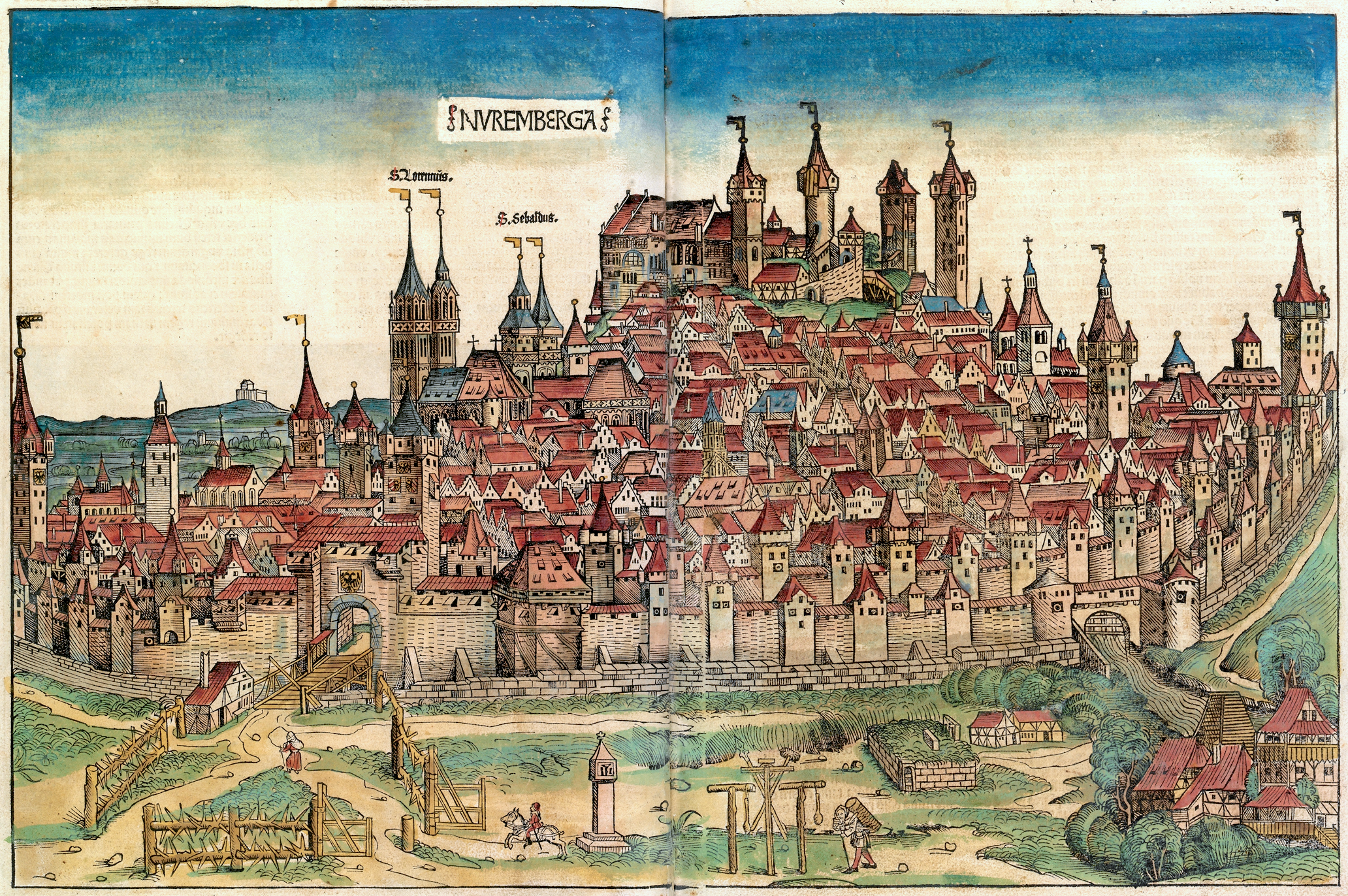
If you’d been born 1,500 years ago in southern Europe, you’d have been convinced that the Roman empire would last forever. It had, after all, been around for 1,000 years. And yet, following a period of economic and military decline, it fell apart. By 476 CE it was gone. To the people living under the mighty empire, these events must have been unthinkable. Just as they must have been for those living through the collapse of the Pharaoh’s rule or Christendom or the Ancien Régime.
We are just as deluded that our model of living in ‘countries’ is inevitable and eternal. Yes, there are dictatorships and democracies, but the whole world is made up of nation-states. This means a blend of ‘nation’ (people with common attributes and characteristics) and ‘state’ (an organised political system with sovereignty over a defined space, with borders agreed by other nation-states). Try to imagine a world without countries – you can’t. Our sense of who we are, our loyalties, our rights and obligations, are bound up in them.
Which is all rather odd, since they’re not really that old. Until the mid-19th century, most of the world was a sprawl of empires, unclaimed land, city-states and principalities, which travellers crossed without checks or passports. As industrialisation made societies more complex, large centralised bureaucracies grew up to manage them. Those governments best able to unify their regions, store records, and coordinate action (especially war) grew more powerful vis-à-vis their neighbours. Revolutions – especially in the United States (1776) and France (1789) – helped to create the idea of a commonly defined ‘national interest’, while improved communications unified language, culture and identity. Imperialistic expansion spread the nation-state model worldwide, and by the middle of the 20th century it was the only game in town. There are now 193 nation-states ruling the world.
But the nation-state with its borders, centralised governments, common people and sovereign authority is increasingly out of step with the world. And as Karl Marx observed, if you change the dominant mode of production that underpins a society, the social and political structure will change too.
The case against the nation-state is hardly new. Twenty years ago, many were prophesising its imminent demise. Globalisation, said the futurists, was chipping away at nation-states’ power to enforce change. Businesses, finance and people could up sticks and leave. The exciting, new internet seemed to herald a borderless, free, identity-less future. And climate change, internet governance and international crime all seemed beyond the nation-state’s abilities. It seemed too small to handle international challenges; and too lumbering to tinker with local problems. Voters were quick to spot all this and stopped bothering to vote, making matters worse. In 1995, two books both titled The End of the Nation State – one by the former French diplomat Jean-Marie Guéhenno, the other by the Japanese organisational theorist Kenichi Ohmae – prophesised that power would head up to multinational bodies such as the European Union or the United Nations, or down to regions and cities.
Reports of its death were greatly exaggerated, and the end-of-the-nation-state theory itself died at the turn of the millennium. But now it’s back, and this time it might be right.
There were only tens of millions of people online in 1995 when the nation-state was last declared dead. In 2015, that number had grown to around 3 billion; by 2020, it will be more than 4 billion. (And more than 20 billion internet-connected devices.) Digital technology doesn’t really like the nation-state. John Perry Barlow’s ‘Declaration of the Independence of Cyberspace’ (1996) sums it up well: the internet is a technology built on libertarian principles. Censorship-free, decentralised and borderless. And now ubiquitous.
This is an enormous pain for the nation-state in all sorts of ways. It’s now possible for the British National Health Service to be targeted by ransomware launched in North Korea, and there are few ways to stop it or bring perpetrators to justice. App technology such as Uber and Deliveroo has helped to produce a sudden surge in the gig economy, which is reckoned to cost the government £3.5 billion a year by 2020-1. There are already millions of people using bitcoin and blockchain technologies, explicitly designed to wrestle control of the money supply from central banks and governments, and their number will continue to grow. It’s also infusing us with new values, ones that are not always national in nature: a growing number of people see themselves as ‘global’ citizens....MUCH MORE
That was followed by a counter-argument in October 2017:
...We've been kicking around ideas on how to profit from a devolution of power from larger entities (nation-states) to smaller (city-states) should said devolution occur. So, stealing a way of thinking from Eisenhower, in another context, obvs.:
In preparing for battle I have always found that plans are useless, but planning is indispensable.- Dwight D. Eisenhower
And in December 2018:
What Wharton Is Thinking About: "Nation-States Are Failing…Will a New, Feudal Order Replace Them?"
Are nation-states failing?
They are changing, that's for sure. And there are lots of people who would like to shape/reshape the world to whatever image of how-things-should-be that they happen to prefer.
Who knows how people should organize themselves? Or, be organized? Seriously, who knows. A lot of people act as if they know and push one direction or another but maybe no one knows.
From Knowledge@Wharton....
Some related posts:
February 2017 - Trends to Watch: "Can mayors actually rule the world?"Local authorities are pushing to fundamentally move away from the longstanding dominance of the nation-state. How can we ensure that this is for the best?....
September 2017 - A Warning On Mayors Ruling The World From A Surprising Source
There is a determined push to decrease the importance of nation-states while elevating the worldwide political power of municipalities and their mayors, a trend I had assumed CityLab backed come hell-or-high-water.
Maybe not.
The writer of this piece, Amy Liu, hangs her hat at Brookings....
October 2017 - Pope Francis Calls For "Rethinking of the figure and the role of the Nation-State..."
November 2017 - "Mayoral Powers in the Age of New Localism"
One of the problems with politics is that the people attracted to power are exactly the ones who should not be allowed anywhere near it.
Go figure.
We've been watching the mission-creep trend in municipal governance for a while now, trying to get in front of it—"Il faut bien que je les suive, puisque je suis leur chef"*—to make a bucko or two but, to date, have only come up with the tautology that these people would rather jet off to Buenos Aires during the Northern Hemisphere winter for the Global Parliament of Mayors** than stay home and fix potholes.
It was ever thus, or at least has been since 1967 when John Lennon noted "4000 holes in Blackburn, Lancashire"
*Ledru-Rollin, 1848—schoolboy French translation: "I must follow them for I am their leader."
**This year the get-together was actually held in Stavanger in late September. Nice 'hood, nice time of year....
April 2019 - "Cities Are Rising in Influence and Power on the Global Stage"
A subject near and dear to our jaded hearts.
It's the manifestation of the age-old thirst for power, to make the world as you want it, and an acknowledgement that fixing potholes is boring....
May 2019 - "Money and trust. Amsterdam moneylenders and the rise of the modern state..."
It has always been about trust.
From the smallest group, immediate family, up through larger and larger populations, clans, tribes etc, to the nation state, and, some hope, transnational and global agglomerations.
When trust is lost people instinctively pull back to the group or even the individuals they believe they can trust.
The other city-states among Germany's sixteen states are Hamburg and Bremen.
We'll keep an eye on them but for now the action is in what used to be called in the 1920's, red Berlin.

