Monday, July 6, 2015

New York Fed: Will Silicon Alley Be the Next Silicon Valley? Will Henry Blodget's Sensibilities Be Vindicated?

Back in the day--well, May 16, 2007--Former Merrill analyst Henry Blodget launched a website named Silicon Alley Insider.

Silicon Alley Insider

Anyhoo, the financial mess slowed New York's tech scene to almost nothingness (Boston's Route 128 basically died before it was resurrected) and the former flagship vertical (that's how people used to talk) of Business Insider declined as Clusterstock rose to prominence.
Pretty much all that remains of the original are three little letters in the "Technology" vertical of BI:
http://www.businessinsider.com/sai
This intro has been a long meander to get to the Federal Reserve Bank of New York's Liberty Street Economics blog who, by-the-bye, only asked the first of the headline questions:

Will Silicon Alley Be the Next Silicon Valley?

LSE_2015-silicon-alley_bram450
 
For at least the past few decades, New York City’s economy, both its booms and busts, have been driven primarily by the finance sector, or more specifically the securities industry (a.k.a. Wall Street). In contrast, the city’s current economic boom—one of the strongest on record—has seen virtually no job growth on Wall Street. Much of the job creation has been in lower-paying sectors like retail trade, restaurants and hotels, and health care and social assistance, with some of the fastest job growth going on in what would be considered “information technology” industries—jobs that pay quite well for the most part. But how big is the Big Apple’s “tech sector,” how fast has it been growing, and how does it stack up against other tech hubs across the United States? Before addressing these questions, we must first answer a more fundamental question: what exactly is the tech sector?

How We Define the Tech Sector
This question is actually trickier and more subjective than it may appear. Traditional industries are classified based on what they produce, be it a manufacture or a service. But what we often think of as tech companies are actually just firms that are good at exploiting current technology in more traditional industries: local firms like Etsy (retail marketplace), Spotify (music distribution), Refinery29 (fashion magazine), and Uber (transportation services). A recently published study on the city’s “tech ecosystem” defines tech industries as those that “enable or produce technology,” but also notes that there plenty of tech jobs (based on occupational classifications) in non-tech industries.

While we recognize the important role and sizable number of tech jobs in traditional industries—for example here at the New York Fed—we will focus on a handful of industries in which firms use technology as the core of their business strategy. These industries will serve as a rough proxy for the tech sector. We then use these specific industry codes, as defined by the North American Industrial Classification System (NAICS), to approximate the relative size of New York City’s tech sector, to gauge how fast it has grown, and to compare New York with other leading high-tech cities. For the analysis presented below, we specifically focus on the following industry codes:

• NAICS 334Computer Manufacturing
• NAICS 454111Electronic Shopping
• NAICS 5112Software Publishing
• NAICS 518Data Processing, Hosting & Related Services
• NAICS 51913Internet Publishing & Broadcasting and Web Search Portals
• NAICS 5415Computer Systems Design & Related
• NAICS 5471Scientific R&D Services
There are other industries that we arguably could have included—most notably telecommunications. However, we opt to exclude this industry, because most of these jobs are not what are typically viewed as “techie.” In fact, the vast majority of employment is at firms that rely more on existing infrastructure (such as fiber optic networks) than the development and creative implementation of technology as their primary productive asset.

A Geographic Profile of New York City’s Tech Sector
When asked where tech firms in the city are located, many New Yorkers will mention Silicon Alley in Manhattan—roughly speaking, the area between the Lower and Midtown Manhattan skylines. But as shown in the map on page 13 of this study, there are also plenty of tech firms in both Lower and Midtown Manhattan, as well as some clustered in neighborhoods of Brooklyn and Queens near the East River, where distance to Manhattan is minimized. Similarly, this map of New York tech start-ups shows that they proliferate throughout the southern part of Manhattan, while there are a few such clusters in nearby parts of Brooklyn and Queens.

Using 2014 data from the Quarterly Census of Employment and Wages, we see that the vast majority of the city’s tech sector jobs (86 percent) are in Manhattan, while most of the rest are in Brooklyn and Queens. Overall, tech, as defined here, accounts for about 3½ percent of jobs citywide but almost 5 percent in Manhattan, which is about a percentage point above the nationwide share. Moreover, these industries, taken together, pay fairly well: an average of roughly $118,000 per year citywide as of 2013—not quite on par with the securities industry, but well above the citywide average for all jobs of $84,000. By far the largest of these industries is defined as Computer Systems Design & Related, which accounts for more than half of the city’s tech jobs (above the U.S. average of 40 percent). New York City also has a relatively high concentration of jobs in Electronic Shopping and Internet Publishing & Broadcasting and Web Search Portals. This makes sense when we consider that such firms as Spotify, Facebook, Etsy, BuzzFeed, and Seamless all have offices located in New York City. The numbers above illustrate the current tech landscape here, but how has this landscape changed over the past few years?

Recent Trends in the Tech Sector
Tallying up jobs or even income in just these industries will tend to understate the absolute size of New York City’s tech sector because it misses some businesses like online magazines, web-based advertising firms, and so forth. This count also does not include the self-employed—for instance, web designers, programmers, and other consultants who work on contract and are not on any firm’s payroll. Still, these job tallies can be useful for gauging trends and growth rates in the tech sector. The chart below shows how employment in New York City’s tech sector, as we define it, changed from 2007, before the Great Recession, to 2014, for which we have the latest available data....MUCH MORE

Sunday, July 5, 2015

Foreign Exchange: Euro Declines Versus Dollar

It's down there, bottom right.
1.0987

From FinViz:


For oil shorts an old joke:
As the financier jumping from the 10th floor said at floor 5: "So far, so good".

For the Greek people:
Good luck.

"A "No" Victory Appears Probable: What Happens Next According To Deutsche Bank"

Although the FT's Greek coverage has been first rate, probably the best available in English, today ZeroHedge seems more nimble.

From ZH:
With early forecasts all telegraphing a modest victory for the "Oxis", barring some last minute miracle, the Varoufakis gambit - with some last minute assistance by the IMF - may succeed. What happens next? Here is Deutsche Bank's "map for the post referendum" which presents the four possible outcomes
In this document DB, which is one of the banks that may stand to lose the most from any major stresses to Europe's precarious status quo as a result of its tens of trillions of notional derivatives, lays out the possible post-referendum scenarios.
Here is how the German megabank sees the possible outcomes of what is shaping up to be a "No" vote:
  • N1 – Soft deal: The most unlikely scenario is that the euro-area partners offer a much softer programme to Greece.
  • N2 – Default-and-stay: Moderately less unlikely is a scenario where Greece defaults but stays in the euro thanks to a direct recapitalisation of Greek banks by the euro-area partners, with the Greek government using only domestic resources for the country’s fiscal needs.
  • N3 – New deal: The third scenario is one in which the rising economic and political cost of a closed banking system results in the Syriza government being replaced by a new government of national unity and a new deal with creditors being reached.
  • N4 – Grexit: In our view, Grexit and Scenario N3 are the most likely – with about equal probabilities. That said, we see the probability of Grexit increasing the larger is the margin of victory of the NO vote. Even with a NO vote, the cumulative probability of the first three scenarios still exceeds that of Grexit.
And the details:
NO, Scenario #N1. Soft deal
This, in our view, is by far the least likely outcome, as it would generate significant moral hazard issues, which in the longer term could be as damaging as an exit. If Europe were to offer significant concessions to Greece following a no vote, it would de facto incentivize other borrowing countries to call domestic referenda to improve the terms of their rescue packages. This would be unsustainable in the long-run as (a) it would create obvious political issues in creditor countries, (b) it would not deal with the structural adjustments and political integration which are necessary for the longer term viability of the euro area....MORE
Also at ZeroHedge:
Risk Off: FX Carry Trades Tumble, Euro Opens Under 1.10; USDJPY Under 121

Earlier:
Greek Referendum: Barclays On What Comes Next
"Grexit: What might it mean for the US? 3 things to consider"
Greek Vote: "No" Vote On Bailout Terms Seen Ahead By Most

The 37 Artificial Intelligence Projects Elon Musk Is Funding

From the Future of Life Institute:

New International Grants Program Jump-Starts Research to Ensure AI Remains Beneficial
Elon-Musk-backed program signals growing interest in new branch of artificial intelligence research

Amid rapid industry investment in developing smarter artificial intelligence, a new branch of research has begun to take off aimed at ensuring that society can reap the benefits of AI while avoiding potential pitfalls.

The Boston-based Future of Life Institute (FLI) today announced the selection of 37 research teams around the world to which it plans to award about $7 million from Elon Musk and the Open Philanthropy Project as part of a first-of-its-kind grant program dedicated to “keeping AI robust and beneficial”. The program launches as an increasing number of high-profile figures including Bill Gates, Elon Musk and Stephen Hawking voice concerns about the possibility of powerful AI systems having unintended, or even potentially disastrous, consequences. The winning teams, chosen from nearly 300 applicants worldwide, will research a host of questions in computer science, law, policy, economics, and other fields relevant to coming advances in AI.

The 37 projects being funded include:
  • Three projects developing techniques for AI systems to learn what humans prefer from observing our behavior, including projects at UC Berkeley and Oxford University
  • A project by Benja Fallenstein at the Machine Intelligence Research Institute on how to keep the interests of superintelligent systems aligned with human values
  • A project lead by Manuela Veloso from Carnegie-Mellon University on making AI systems explain their decisions to humans
  • A study by Michael Webb of Stanford University on how to keep the economic impacts of AI beneficial
  • A project headed by Heather Roff studying how to keep AI-driven weapons under “meaningful human control”
  • A new Oxford-Cambridge research center for studying AI-relevant policy

As Skype-founder Jaan Tallinn, one of FLI's founders, has described this new research direction, "Building advanced AI is like launching a rocket. The first challenge is to maximize acceleration, but once it starts picking up speed, you also need to to focus on steering."...
...MORE 

Greek Referendum: Barclays On What Comes Next

Via MarketWatch:

...MORE

"Grexit: What might it mean for the US? 3 things to consider"

The stronger dollar/weaker euro play seems like such a no-brainer that I fear central bank intervention just to screw up the FX trade (and oil).

Via Pethokoukis@AEIdeas, June 29:
Over time, a Greek exit could impose significant economic and geopolitical costs on the United States. This could occur through the following three channels. Again, from AEI’s Desmond Lachman:
1.) In the immediate aftermath of a Greek exit, one must expect a significant further depreciation of the Euro as the ECB took more forceful measure to prop up the European periphery and as investors fled to the safety of the dollar. This would have the effect of causing a further effective appreciation of the dollar that would come on top of a 15% such appreciation over the past year. As the Federal Reserve has noted, a strong dollar appreciation could constitute a significant headwind to the US economic recovery and could exert significant downward pressure on US headline inflation.

Lachman Grexit and US dollar 6-29-15 chart 1

2.) Any eventual spread of the Eurozone debt crisis to other countries in the European periphery, like Italy, Portugal, and Spain, could roil global financial markets and dent European household and investor confidence....MORE

Greek Vote: "No" Vote On Bailout Terms Seen Ahead By Most

From ZeroHedge:
At 7pm local time the Referendum polls closed. Here is what the early forecasts predict:
  • A poll by GPO on Mega TV gave 51.5% in favor of “no” and 48.5% in for “yes”
  • Metron Analysis on Antenna TV showed “no” leading with 52% vs 48% for “yes”
  • MRB on Star TV showed “no” leading with 49%-54% vs 46%-51% for “yes”
  • Marc opinion poll for Alpha TV shows “no” ahead with 49.5%-54.5% vs 45.5%-50.5%
...MORE

Also at ZeroHedge:
The Economist Calls Victory For "No" Camp: Sees 60% Voting "Oxi"
Europarliament President Threatens Greeks With Armageddon If They Vote No
Trillion-Dollar Asset Managers Warn On Greece Fallout: "No Blueprint" Means "All Kinds Of Uncertainty"

Saturday, July 4, 2015

"Adam Smith on the Economics of U.S. Independence"

From The Conversable Economist:
For economists around the world, 1776 means the publication date of Adam Smith's classic The Wealth of Nations.  Book IV, Chapter 7, is entitled "Of Colonies." Smith expresses the view that Europe contributed very little to the economic success of its American colonies--except for some talented people. He also believed that the while England benefited from trade with its colonies, England also had to bear the costs of defense and of the monopolies on trade that it created. He painted a picture of how the American colonies might be allowed democratic representation, but viewed it as a politically unlikely outcome. He also predicted that even when a nation didn't benefit from having colonies, it was still reluctant to let the colonies go peacefully. The quotations here are from the ever-useful "Library of Economics and Liberty," which has number of classic works  of economics freely available in searchable form on-line.


Here's Smith on the topic of what Europe contributed to its American colonies (with footnotes  omitted for readability): 
"The policy of Europe, therefore, has very little to boast of, either in the original establishment or, so far as concerns their internal government, in the subsequent prosperity of the colonies of America. Folly and injustice seem to have been the principles which presided over and directed the first project of establishing those colonies; the folly of hunting after gold and silver mines, and the injustice of coveting the possession of a country whose harmless natives, far from having ever injured the people of Europe, had received the first adventurers with every mark of kindness and hospitality.... MUCH MORE
HT: Fourth of July: Economics and Ruminations

Thursday, July 2, 2015

Chartology: Oil At Support

From the NYMEX:
$56.60 down 36 cents.

Very interesting, eh what?
More tomorrow to come.

Blackstone's Byron Wein On The Only Way to Make Serious Money

It means stepping outside of one's comfort zone.
Back in the day you could maybe out-analyze the crowd on the home-team utility or some Graham and Dodd net-net but no more. You must have some exposure to growth.

On the other hand if you are just trying to keep the loot you've already plundered you have a few more options.
But that's a story for another post.

From Barron's Wall Street's Best Minds column:

The Wall Street veteran interviews a wise colleague who argues that tech and biotech is where the action is.
 For the past fifteen years I have written annually about a person I have come to call “The Smartest Man in Europe.” For new readers, he is a finance person in his 80’s who has built his reputation by identifying important trend changes early and putting serious money behind his conclusions. Descended from a mercantile family that operated canteens selling food and weather protection along the Silk Route, he was educated in Europe, trained in New York and returned home to take advantage of the wealth-creating opportunities resulting from the post-war recovery. Listening to conversations around the dinner table, he was encouraged to focus on the major events early, and his success is a product of this skill. That success is reflected in his homes and other comforts he enjoys. His art collection spans centuries, from Canaletto to Koons, but what keeps him vibrant is ideas.

Notable among the past events he was early to observe are the rise and fall of Japan, the opportunities in China after the death of Mao, the end of the command economy in Russia and the unrealistic valuations of technology at the end of the last century. We get together a few times a year, but this year our conversation was by telephone. 

“The whole world is suffering from too much debt. As a result, growth almost everywhere is going to be slow. I know you believe the problem is insufficient demand, but the major industrialized countries already have considerable debt and do not want to add any more to it to stimulate the consumer. Japan is an exception. They already have the highest debt to Gross Domestic Product (GDP) of any major country and they are willing to add more. China is an exception on the other side. They are in a position to take on more debt because their debt to GDP ratio is low. Without more fiscal stimulus, demand will be tepid and growth will be disappointing. This is the state of the world now, and it is likely to endure for some time. In the near term, I don’t see a calamity, just sluggish economies and many equity markets not doing much. 

“It is not easy to make money these days. In the past, if you had the right asset allocation, you could do well for institutional investors. Now most asset classes are fully valued. The bond market is expensive, equities are not cheap anywhere, gold is dead; other commodities are in bear markets, the emerging markets are generally not attractive, China is dangerous, and Europe and Japan are reasonably fully priced. As I said last year, the only way to make serious money is by carefully investing in innovation. You can make a modest return in equities in the major markets – I agree with you that the U.S. market will end the year higher than it is now. But if you want to make real money investing, you will have to do it by picking stocks in technology and biotechnology, and I would emphasize the latter. 

“Most people still don’t recognize the gigantic implications of this phenomenon. Major breakthroughs are going to be taking place in cancer, heart disease, Alzheimer’s, diabetes, multiple sclerosis and other diseases. Picking the right companies can produce impressive returns in a difficult overall market environment. Right now there are literally hundreds of small companies working on significant products. Many of them will fail, but a few will change the world the way Google and Facebook did. Most are located in California and Boston, but there are also some in Europe and Asia. The United States is dominant, however. You should spend your time trying to understand what these companies are doing. The returns for picking the winners could be huge. What’s more, the pace of innovation is quickening. The rewards for proper asset allocation will be very modest. I like Facebook (ticker: FB ); Salesforce.com ( CRM ); biotech ETFs; an industrial company, CS Industries ; Visa ( V ); Apple ( AAPL ) , of course; Alibaba ( BABA ); and Palo Alto Networks. I am out of Google. 
 
“Think of all the tasks your smartphone can do for you. There is almost no question that comes to mind that cannot be answered with a Google search, from politics to sports to business to entertainment. I am convinced technology has made the world more productive, but it is hard to measure. The recent figures on productivity are negative, meaning there is less output per worker hour, but the benefits of information technology may be difficult to determine in traditional ways. 

“There is also a question of the impact technology is having on the middle class. Millions of jobs have been eliminated through robotics and other forms of technology. The technical skills required to get and hold a good job are increasing all the time. Service jobs are growing, but manufacturing jobs are rising more slowly, and service jobs generally are lower-paying. Many kids completing college cannot find jobs in their chosen field and are forced to work at something temporary to pay the bills and student loan debts. This is a problem that is likely to get worse as more technology breakthroughs take place, so the social implications of this phenomenon are enormous. Advances in biotechnology also have the social costs, as more people live longer.

“In addition there is the problem of wasting time. Playing video games rather than reading books, and communicating with followers on Twitter, can keep a young person busy. The typical Facebook user is said to be spending twenty hours a month on that site. According to recent studies, the average college student only spends one hour a night studying alone, perhaps because of other distractions. These numbers could signal problems for American competitiveness going forward, so there is a downside to what is happening in technology....MORE

Minneapolis Fed Interview With A Nobel Laureate: "Stanford economist on matching theory, kidney markets and the importance of coffee"

HT up front to The Conversable Economist for this pull-quote:
God makes wheat, but the Chicago Board of Trade makes #2 hard red winter wheat. It has a lot less variance than wheat. You know what you’re going to get and, therefore, you don’t have to care who you’re buying it from....
From the Federal Reserve bank Of Minneapolis
Published June 15, 2015
Interview conducted March 11, 2015
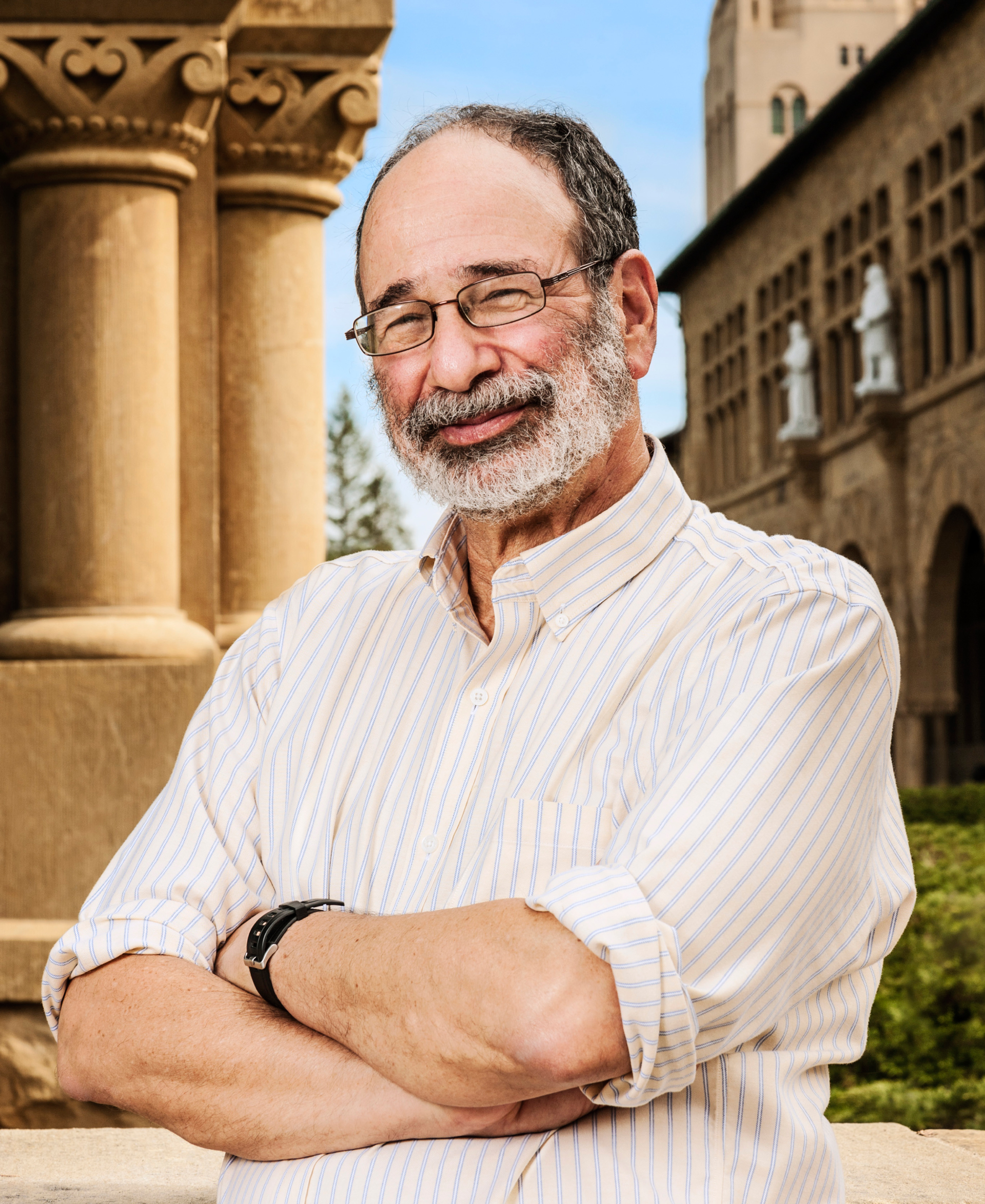
Alvin Roth
In “normal” markets, prices adjust to equate demand and supply; the market clears. This simple premise is at the core of economic thought. But with surprising frequency, prices are not enough and can even be irrelevant. These markets are broken in the sense that price adjustment won’t clear them, and economists have long struggled to understand efficient allocation in such cases.
Alvin Roth began studying these “broken” markets in the 1970s. Decades later, in 2012, this body of work was recognized with the Nobel prize. By extending theory developed by mathematician Lloyd Shapley, his Nobel co-recipient, Roth had “generated a flourishing field of research and improved the operation of many markets,” said the Nobel committee. “An outstanding example of economic engineering.”
Roth’s theoretical, empirical and experimental research has transformed how medical residents find jobs, parents find good schools for their children and renal patients find kidneys that save their lives. Economics is often deemed impractical—too abstract from the real world to have pragmatic importance. Roth’s career is solid refutation of that notion.
Inspired by Shapley’s mathematical proof with David Gale that stable matches—those in which currently paired partners see no benefit from a different match—can exist in theory, Roth discovered that the mechanism used successfully since the 1950s to match U.S. medical residents with hospital jobs was quite similar to the Gale-Shapley algorithm. This careful analysis led to a 1995 invitation from doctors who had found that the growing number of married couples seeking hospital posts undermined the existing algorithm. No longer were matches stable. Roth helped redesign the algorithm, used with success ever since.
Similar analysis and redesign have been at the heart of Roth’s work, applied to kidney donations, public schools, law student clerkships and a wide variety of health care labor markets. Others have extended it into financial intermediation, Internet advertising auctions and even dating services. He addresses many of these topics in the following conversation, along with the success of experimental economics, the ubiquity of “repugnant” markets and the vital importance of coffee.
Photos by Peter Tenzer

MATCHING MARKETS

Region: Perhaps we could begin with some general background on matching markets. In your Nobel lecture, you said, “You can’t just tell Google that you are showing up for work. They have to hire you.”
Roth: They do indeed.

Region: And you continued: “Matching markets are markets in which you can’t just choose what you want (even if you can afford it). You also have to be chosen.”
That suggests that prices alone don’t clear markets in certain cases. Could you elaborate on which markets that applies to, and why prices don’t equate supply and demand in those situations?
Roth: Well, it might be easiest to first talk about commodity markets because they are markets where we think price does do all the work. It takes a lot of design to make something into a commodity market....MUCH MORE

CJR: Inside the Tensions At Bloomberg News

A major piece from the Columbia Journalism Review:

Bloomberg’s new regime and tensions over the editorial vision
In April, Zachary Mider’s groundbreaking story on corporate tax inversions won Bloomberg News the first Pulitzer Prize in its 25-year history. When Mider collected his award a month later, at the annual Pulitzer luncheon at Columbia University, the rest of his team was there to applaud him, as were the highest-ranking editors from other winning newsrooms, including Dean Baquet at The New York Times, Marty Baron from The Washington Post, and Gerard Baker of The Wall Street Journal. The missing editors? Bloomberg’s top ranks, including editor-in-chief John Micklethwait and chief content officer Josh Tyrangiel.
Company officials, it turns out, offer quite plausible reasons for not attending. Micklethwait, for example, was said to be visiting the UK for his son’s graduation, while Tyrangiel was said to be in Hong Kong. But fair or not, several editors and reporters in the newsroom took their absence from the lunch as a snub. To them, it symbolized what they fear are the shifting priorities of the new top editors at Bloomberg, ever since Michael Bloomberg returned to the helm in January.**

In the intervening months, the former mayor’s homecoming has reshaped the newsroom, giving rise to dramatic changes to the masthead and a tense struggle over its editorial vision. The regime change has also produced a series of resignations, bitter disagreements over what stories to pursue, and an intricate Kremlinology of the newsroom’s future. One of the chief concerns is that Micklethwait, who replaced Matt Winkler seven months ago, may not be as committed to pursuing the kind of ambitious, hard-edged journalism that brings home Pulitzer Prizes.

The departures in recent months have included several highly respected journalists. The team that Winkler brought in to raise investigative ambitions at Bloomberg News, many lured away from The Wall Street Journal, have been either sidelined or pushed out. Among them were senior executive editor Laurie Hays, who was at one point in line for Winkler’s job until she got nudged aside in favor of Micklethwait; executive editor of enterprise John Brecher, who quit in April, around the same time that Tyrangiel was promoted to chief content officer of Bloomberg LP; and Jonathan Kaufman, the executive editor for company news, who resigned earlier this month after overseeing Mider’s Pulitzer project. Friday’s resignation of star reporter Renee Dudley was the most recent to draw newsroom attention. After her newsy scoop on a Wal-Mart executive, Dudley was hired away to do investigations for Reuters. In September, Daniel Golden, the celebrated investigative journalist who directly edited Mider’s series, will be taking a leave of absence to write a book.

These developments have all but dismantled an approach that Winkler and Hays created, a system that paired Bloomberg News reporters, some of whom had never written more than 1,000 words before, with experienced enterprise editors who nurtured their skills and ideas into award-winning investigative series. Modeled after legacy newsrooms, it was an approach that yielded investigative series that explored a broad range of issues, and typically took months to report. Notable examples were “Education Inc.,” which was supervised by Kauffman and won Polk and Loeb awards, and Mehul Srivastava’s award-winning series about malnutrition and political corruption in India. Winkler is now editor in chief emeritus.*...MORE

What Happens When Greece Votes On Sunday?

From The Economist's Buttonwood's Notebook:

An Oxi-dent waiting to happen
WHAT happens if the Greeks vote Oxi, or No, on Sunday? Of course, what might happen is that the Greek government's wishes are fulfilled and that creditors come back with a new, better, offer. But thoughts are now turning to the more likely scenarios - that Greece leaves the euro (Grexit) or is stuck in the position of being formally within the euro zone, but without access to ECB credit (dubbed Grimbo).

Three reports have just been published, a short blog from the Peterson Institute and longer (but private) reports from Standard & Poor's and Citigroup. They don't agree on all the details but they do suggest that the widely-touted benefits of Grexit (the reduction in debt service costs, the boost to competitiveness from a lower currency) need to be heavily qualified. S&P suggests that Greek GDP may be 20% lower than it would otherwise have been if Grexit occurs. The effect on the rest of Europe would be much more limited; perhaps a cut of 0.3%-0.5% in GDP growth over the next 1-2 years, says Citigroup.

The immediate impact of a No vote would presumably be that Greek banks will still be cut off from additional liquidity funding from the ECB. This would make it impossible for Greece to repay the various debts due over the next weeks and months (including money owed to the ECB). This will exacerbate...MORE

Oil: There Go The Shale Driller's Hedges

From Bloomberg: 

Shale Drillers' Safety Net Is Vanishing
The insurance protecting shale drillers against plummeting prices has become so crucial that for one company, SandRidge Energy Inc., payments from the hedges accounted for a stunning 64 percent of first-quarter revenue.

Now the safety net is going away.

The insurance that producers bought before the collapse in oil -- much of which guaranteed minimum prices of $90 a barrel or more -- is expiring. As they do, investors are left to wonder how these companies will make up the $3.7 billion the hedges earned them in the first quarter after crude sunk below $60 from a peak of $107 in mid-2014.

“A year ago, you could hedge at $85 to $90, and now it’s in the low $60s,” said Chris Lang, a senior vice president with Asset Risk Management, a hedging adviser for more than 100 exploration and production companies. “Next year it’s really going to come to a head.”

The hedges staved off an acute shortage of cash for shale companies and helped keep lenders from cutting credit lines, many of which are up for renewal in October. With drillers burdened by interest payments on $235 billion of debt, $89 billion of it high-yield, a U.S. regulator has warned banks to beware of the “emerging risk” of lending to energy companies.

Payments from hedges accounted for at least 15 percent of first-quarter revenue at 30 of the 62 oil and gas companies in the Bloomberg Intelligence North America Exploration and Production Index. Revenue, already down 37 percent in the last year, will fall further as drillers cash out contracts that paid $90 a barrel even when oil fell below $44.

Increased Efficiency
West Texas Intermediate for August delivery added 23 cents to $57.19 a barrel in electronic trading on the New York Mercantile Exchange at 11:46 a.m. London time.

Hedges purchased from banks or other traders allow drillers to lock in a sale price. Some guarantee a specific value. Others ensure a minimum payment regardless of how much the market moves, but require the oil company to pay some of it back if the price exceeds a certain threshold.

SandRidge, the Oklahoma City-based producer, had about 90 percent of its oil and natural gas liquids output hedged in early 2015, according to a regulatory filing. Next year, the hedges cover less than a third. SandRidge stock traded yesterday at 85 cents, down 88 percent in the last year. More than $3 billion of its bonds are trading at 62 cents on the dollar or less.

Jeff Wilson, a spokesman for the company, said declining well costs and increased efficiency are helping SandRidge achieve returns comparable to what the company made at higher prices. SandRidge issued $1.25 billion in bonds last month, which gives the company the liquidity it needs, Wilson said....MORE
Previously:
Apr. 2015
Who Is On the Hook For $26 Billion In Oil Industry Hedges?

And on the King of the Bakken, Continental Resources:

Oct. 29 
Godfather of the Bakken: "There Is No Oil Glut" (CLR)
Whatevs.
Nov. 7
Oil: Bakken Bigwig Calls It a Bottom, Pulls All His Hedges (CLR)
If I were a psychologist I'd wonder if this stubbornness was in any way related to his impending divorce.
December WTI $78.92 up $1.01.  

"How Social Networks Create The Illusion Of Popularity"

From MIT's Technology Review:

The Social-Network Illusion That Tricks Your Mind 
Network scientists have discovered how social networks can create the illusion that something is common when it is actually rare. 
One of the curious things about social networks is the way that some messages, pictures, or ideas can spread like wildfire while others that seem just as catchy or interesting barely register at all. The content itself cannot be the source of this difference. Instead, there must be some property of the network that changes to allow some ideas to spread but not others.

Today, we get an insight into why this happens thanks to the work of Kristina Lerman and pals at the University of Southern California. These people have discovered an extraordinary illusion associated with social networks which can play tricks on the mind and explain everything from why some ideas become popular quickly to how risky or antisocial behavior can spread so easily.

Network scientists have known about the paradoxical nature of social networks for some time. The most famous example is the friendship paradox: on average your friends will have more friends than you do.
This comes about because the distribution of friends on social networks follows a power law. So while most people will have a small number of friends, a few individuals have huge numbers of friends. And these people skew the average.

Here’s an analogy. If you measure the height of all your male friends. you’ll find that the average is about 170 centimeters. If you are male, on average, your friends will be about the same height as you are. Indeed, the mathematical notion of “average” is a good way to capture the nature of this data.

But imagine that one of your friends was much taller than you—say, one kilometer or 10 kilometers tall. This person would dramatically skew the average, which would make your friends taller than you, on average. In this case, the “average” is a poor way to capture this data set.

Exactly this situation occurs in social networks, and not just for numbers of friends. On average, your coauthors will be cited more often than you, and the people you follow on Twitter will post more frequently than you, and so on.

Now Lerman and co have discovered a related paradox, which they call the majority illusion. This is the phenomenon in which an individual can observe a behavior or attribute in most of his or her friends, even though it is rare in the network as a whole.

They illustrate this illusion with a theoretical example: a set of 14 nodes linked up to form a small world network, just like a real social network (see picture above). They then color three of these nodes and count how many of the remaining nodes link to them in a single step.

Two versions of this setup are shown above. In the left-hand example, the uncolored nodes see more than half of their neighbors as colored. In the right-hand example, this is not true for any of the uncolored nodes....MORE

Wednesday, July 1, 2015

"US oil settles down 4.2%, at $56.96 a barrel"

From Reuters via CNBC:
Oil prices slumped 4 percent Wednesday, with U.S. crude headed for its sharpest daily loss since late May, on signs of progress in Iranian nuclear talks and after the first rise in crude stockpiles in the United States in more than two months.

U.S. crude broke below its two-month trading band as an Iranian diplomat said technical experts from Iran and six world powers had finished a draft agreement on the country's nuclear program and foreign ministers would review it Thursday and Friday in Vienna.

U.S. crude futures closed down 4.2 percent, at $56.96 a barrel—the lowest since April 22. Front-month Brent crude futures were trading at $62 per barrel at, down $1.60 or 2.6 percent.

World powers and Iran held talks throughout Wednesday, extending an original June 30 deadline for a nuclear accord by a week.

"If the nuclear negotiations with Iran are brought to a positive conclusion, there is also the 'threat' of additional oil reaching the market from Iran," said Carsten Fritsch, analyst at Commerzbank....MORE 
Earlier:
Major Oil ETFs Nearing Collapse (XLE; XOP)
Oil Falls as Inventories Rise

Major Oil ETFs Nearing Collapse (XLE; XOP)

Following up on Friday's "Major Integrated Oil Stocks Once Again At Support (XLE; XOP)".
You have a lot of hot money that came into the sector that really didn't know what it was up against and now the hot is not and the playas are spooked. Back in November we posted "Energy Stocks Are Not Declining As Fast as Crude: So Which Is Wrong? (XLE)":
This has frustrated yours truly. When I go into the Monday meeting and say, "No, really, the equities should be trading lower." and I get "Or crude trades higher?"
Brent $82.84 down 2.13%, WTI $76.77 down 2.55%; XLE $83.99 down 2.38%....
Well, come Monday it's probably going to be the reverse.
Here's where the ETFs stand at the moment:
XLE-The Energy Select Sector SPDR ETF, $74.03 down $1.13 and $2.33 above the Jan. 14, 2015  $71.70 multi-year low:

XLE  The Energy Select Sector SPDR Fund daily Stock Chart
And the one that tipped us to the potential downside:
XOP- The SPDR S&P Oil & Gas Exploration & Production ETF, $45.13 down $1.53 and $3.50 above the January low.
XOP  SPDR S&P Oil & Gas Exploration & Production ETF daily Stock Chart

A break below the prior lows opens the gates of hell the way lower for the longs.

Oil Falls as Inventories Rise

NYMEX WTI traded down to $57.73, currently $57.99, off  $1.48.
From the Wall Street Journal:

Oil Declines on U.S. Inventory Data
Futures fell as weekly data showed the first increase in crude-oil supplies in nine weeks
 Oil prices extended their losses on Wednesday after weekly inventory data showed the first increase in U.S. crude-oil supplies in nine weeks.

Light, sweet crude for August delivery recently fell $1.55, or 2.6%, to $57.92 a barrel on the New York Mercantile Exchange. Brent, the global benchmark, fell $1.04 cents, or 1.6%, to $62.55 a barrel on ICE Futures Europe.

Commercial crude-oil inventories in the U.S. rose by 2.4 million barrels in the week ended June 26, the U.S. Energy Information Administration said Wednesday. Analysts surveyed by The Wall Street Journal had expected a decline of 1.2 million barrels.

U.S. oil supplies have shrunk in recent weeks since hitting a record high in April, as refineries have processed more crude into gasoline and other fuels. The inventory drops have helped boost U.S. oil prices by 25% in the second quarter.

But last week, stockpiles rose even as refinery utilization increased from 94% to 95% of capacity, the EIA said.

“Even at these high utilization rates, we are not drawing enough inventory,” said Andy Lipow, president of Lipow Oil Associates in New York. “This portends continued crude-oil price weakness through the balance of the year,” especially in the fall when refineries shut units to perform seasonal maintenance, he said. ...MORE
Here are the last couple weeks of trading via FinViz:

Largest U.S. Public Employee Pension Fund, CalPERS. To Fall Short Of Assumed Returns Once Again

This is not the same as oops, "missing your target".
The return assumptions are part of the actuarial funding matrix required to keep the pension fund solvent. We've been calling CalPERS out for faulty assumptions since 2007, and are starting to think maybe they aren't very good at what they do.

Here's a post from July 2012:
FAIL: CalPERS Posts 1% Return for Fiscal Year Ended June 30, 2012.
CalPERS is the largest pension fund in the United States with assets of $233 Billion.
California taxpayers are on the hook for any shortfall in investment gains vs. the benchmark.

We have dozens of posts on the behemoth, does anyone else remember this from Patricia K. Macht, Assistant Executive Officer, Office of Public Affairs in March '09

Read more here: http://blogs.sacbee.com/the_state_worker/2009/03/calpers-other-pensions-oversta.html#storylink=cpy
Beware of the anti-pension ideologues who come out of the woodwork during market downturns. Like vultures, they prey on the highly charged and negative investment environment, looking for ways to convince you a temporary performance downturn will be typical for all time!

They know -- but don't tell you so -- that we set our rates based on a fiscal year investment return. They don't tell you that our assumed rate of return is made based on advice from a range of experts within CalPERS and within the industry and that it is regularly evaluated every two to three years in public session. They don't tell you what you would learn from a textbook on pension management: that some years investment returns are as expected; other years, they will be more than expected and yes, some years they will be less than expected...
They put that out when the fund assumed a 7.75% annual return.
They only this year were shamed into lowering it to 7.5%.

Following up on January's "CalPERS Earns 1.1% in Calendar 2011, a Bit Less Than the 7.75% They Need"....
As that post, and others, goes on to say, the embedded assumptions in the 1999 pension law, SB 400, are 25,000 on the Dow Jones Industrial Average by 2009 and 28,000,000 by 2099.

And the latest, from the Los Angeles Times:
CalPERS likely to fall short of annual investment goals
The nation's biggest public pension fund is falling far short of its annual investment goals, a setback for a system already straining to keep up with looming obligations.

The California Public Employees' Retirement System earned only 3% in the 10 months that ended April 30 and is likely to fall short of its 7.5% annual target when the fiscal year ends Tuesday, the pension giant's investment chief said.

Absent a "remarkable rally in the global stock market," said Ted Eliopoulos, CalPERS' chief investment officer, the ground to make up in two months is too great to avoid a likely shortfall.

"We don't like to get too excited about any one-year return," he said. "As the board is well aware, we would like to look at longer time periods as they are much more meaningful in measuring our performance."
Eliopoulos' remarks came in a prepared statement to the CalPERS board last week. A video of the public meeting was posted on YouTube, but not yet on CalPERS' website. CalPERS posted monthly financial data Thursday.

The performance of CalPERS, with investments totaling $304.9 billion at the end of April, is closely watched in the financial world and has broad implications for California taxpayers.

Charged with paying benefits to 1.7 million current and future retirees, CalPERS has the power to compel government employers to make up any shortfall in its fund. The pension plan was only 77% funded at the end of last June....MORE
We have so many posts on CalPERS (and the slightly smaller CalSTRS) that it is easiest, if interested, just to do a Google search rather than list individual posts which run into the hundreds:
site:climateerinvest.blogspot.com calpers 

Major Asset Classes | June 2015 | Performance Review

From the Capital Spectator:
The markets staggered to the year’s midpoint with a thud, with most of the major asset classes suffering losses in June. The exception: broadly defined commodities (Bloomberg Commodity Index), which posted a modest 1.7% gain last month. The rest of the field was either flat or (in most cases) in the red. The big loser: US real estate investment trusts (REITs), which shed a hefty 4.6% in June....MORE
http://www.capitalspectator.com/wp-content/uploads/2015/07/gmi.01jul2015.png

Despite the uptick in commods see also last week's "Commodity Producers Still Struggling (CRBQ)".

Britons can't stand the heat when it goes above 28 degrees (82.4°F)

From CityA.M.:

Seriously, it's hotter than the Sun right now (Source: Getty)
Today's heatwave will push temperatures several degrees above what Britons consider acceptably warm.
Today is expected to be the hottest day of the year, with the Met Office forecasting temperatures as high as 35 degrees in some parts of the country. 
Despite spending the vast majority of the year complaining about the cold, it seems we're not that keen on the heat either. 
A YouGov study found that the optimum temperature for the average Briton is in fact 21 degrees. [69.8°F]
By the time it gets to 28 degrees, we've decided it's too hot. 
We're definitely more comfortable further down the thermometre. On average we consider six degrees to be too cold – although Scots can take it down two more notches to four degrees. Londoners have a lower tolerance, however: their cold cut-off point is seven degrees. ...MORE
Which may explain why Paul Murphy, honchō of FT Alphaville and Godfather of today's main event posted: What to wear at Camp Alphaville yesterday.