Showing posts sorted by date for query ever given suez. Sort by relevance Show all posts

Friday, August 7, 2026

"A Police HQ, Wind Farms, and Natural Gas: Mapping China's Investments in Europe"

Don't forget the ports. The Chinese are enamored with European (and many other) ports.*

From the Organized Crime and Corruption Reporting Project, July 24:

Through an opaque network of shell companies in the British Virgin Islands and Luxembourg holding firms, an agency that manages China’s foreign reserves has discreetly scooped up stakes in Europe’s critical infrastructure, utilities, and real estate.  

From a gas company in Spain to a police headquarters in Belgium, an agency directed by China’s central bank has been quietly acquiring stakes in companies and properties across Europe over the past decade.

By trawling through data from European business and land ownership registries, reporters were able to uncover a complex web of offshore Caribbean companies and Luxembourg holding firms through which this state agency holds its assets — and effectively keeps its ownership out of the public view.

While investors of any origin routinely use offshore vehicles and elaborate corporate structures for tax efficiency, the findings give a rare insight into how the authority that manages China's foreign exchange reserves, the State Administration of Foreign Exchange (SAFE), makes investments in Europe. 

SAFE is known for shrouding its investments and decision-making processes in secrecy, according to experts who focus on China’s foreign investments and trade. 

“SAFE recently has gone to significant lengths to mask the size of its investments, so it clearly is keen to stay out of the limelight,” said Brad Setser, a fellow at the Council of Foreign Relations focused on China and ex-deputy assistant secretary of the U.S. Treasury. 

About the OpenLux Project

This reporting is part of OpenLux — a cross-border investigation coordinated by OCCRP and Le Monde using data from the Luxembourg corporate registry.

Journalists from OCCRP’s partners De Tijd (Belgium), Le Monde (France), infoLibre (Spain), FRONTSTORY.PL (Poland), VSquare (Central Europe), and Follow the Money (Netherlands) cross-referred the Luxembourg data with other European business and land ownership registries to trace the assets.

OCCRP and partners have now identified 28 Luxembourg-registered companies linked to SAFE that have over the past 14 years acquired equity stakes in an eclectic range of European assets including a fiber-optic cable company in France, wind farms in the U.K., and the building housing a luxury hotel in the Netherlands. 

Most of the Luxembourg holding firms have never been publicly linked to SAFE until now....

....MUCH MORE 
*Although not directly related to the OCCRP article this is a much bigger story. Orders of magnitude bigger: 
 
Beijing exerts variable degrees of influence over some 90 deepwater ports overseas... 
As we've seen—most recently with Israel's Mossad in Iran and Ukraine's Operation Spiderweb in Russia—tractor-trailers and shipping containers make dandy places to hide your weapons of war. Also handy for transporting same. More after the jump... 

....our interest goes back much further.

March 2018 - "5 New Silk Road Projects That Will Alter Your View Of How The World Works".

July 2018 - "China’s strategic investments in Europe: The case of maritime ports"

November 7, 2020 - Shipping: "China Makes Waves, Seeking To Control World Shipping"

Keeping track of Chinese investment in other nation's ports could be a full-time job, and that is just one aspect of what they are doing. Good luck to the EU and MENA, they are going to need it....

October 2021 - "The Chinese military is thinking about how to stealthily destroy enemy ports and just set off a big explosion to see how it might work"

That seems so complicated. 

Couldn't you just make the McKinseyite spawn of Marxist Gramscian Professor Joseph Buttigieg the Secretary of Transportation? 

I mean, that's the highest expression of Rudi Dutschke's Long March through the Institutions, and without all the loud booms from the explosions. 
They scare the dogs.
Here's the Communist Party's outward-facing propaganda organ, Global Times with the article ref'd above:
I'm beginning to see a pattern here.*

*****

*Starting with the Bosporus/Dardanelles between the Black and Mediterranean Seas:
"China will buy Turkey on the cheap"
Why Turkey is Important

And the Panama Canal:
China Will Help Panama Secure the Canal Against Terrorists

and:
"Don't Fear China's Arctic Takeover"
And all of a sudden you have China on-site on three of the world's MAJOR shipping chokepoints and what could very well become the fourth at the Bering Straits.

Battery Metals and Rare Earths: The U.S. Will Use The Slightly Controversial Blanche DuBois Extraction Method

....It's just that, as we've seen over the last year, supply lines are fragile, a weak spot even without unfriendlies doing an interdiction.

Should someone actively attempt to halt transportation it would make the Ever Given snafu look like child's play. As just one example, China has been very active in extending their belt and road initiative in Panama, including a $1.4 billion bridge over the canal and rail and other infrastructure.

And that's just one potential flashpoint. The Chinese influence in Brazil, hitherto based on VALE and iron ore could potentially go exponential as Brazil expands/modernizes its shipping and rail infrastructure. And then there's Australia...and...

I suppose somebody should keep an eye on Morocco to note if the Chinese set up camp on the Strait of Gibraltar. 

Which was followed in July 2024 by: "Chinese EV battery makers are building huge factories in Morocco to cash in on U.S. electric vehicle subsidies" (and China is now camped at most of the world's chokepoints) " 
I say, isn't Morocco on the Strait of Gibralter?*

A month later, August 2024:

Logistics: "A $2 Trillion Reckoning Looms as Ports Become Pawns in Geopolitics"

May 2025 - "Chinese companies bought up European ports — and now Brussels is starting to worry"
Now the Eurocrats are starting to worry? Now?*
*March 1, 2018 - "Sizing up Chinese Investments in Europe"
July 12, 2018 - Shipping: "Hamburg: China’s European trade hub"
October 25, 2021 - "Hamburg Is at the Heart of Germany's Growing Dilemma Over China"
October 25, 2022 - China's COSCO Near Deal To Buy Into Port Of Hamburg
November 2022 - "Europe is fretting over China owning key EU infrastructure. Here's why"
March 2025 - "Plans for a Chinese Port Roil the Politics of a Former Soviet Nation" 
Have I mentioned the Chinese affinity for water?

March 2025 - Panama Canal—"Pro-Beijing paper: Anti-sanctions law can block Li’s ports deal"

March 2025 - BlackRock - CK Hutchison Panama Canal Ports Deal Will NOT Be Consumated Next Week

July 2025 - "China Threatens to Block Panama Ports Deal Unless Its Shipping Giant Is Part of It"

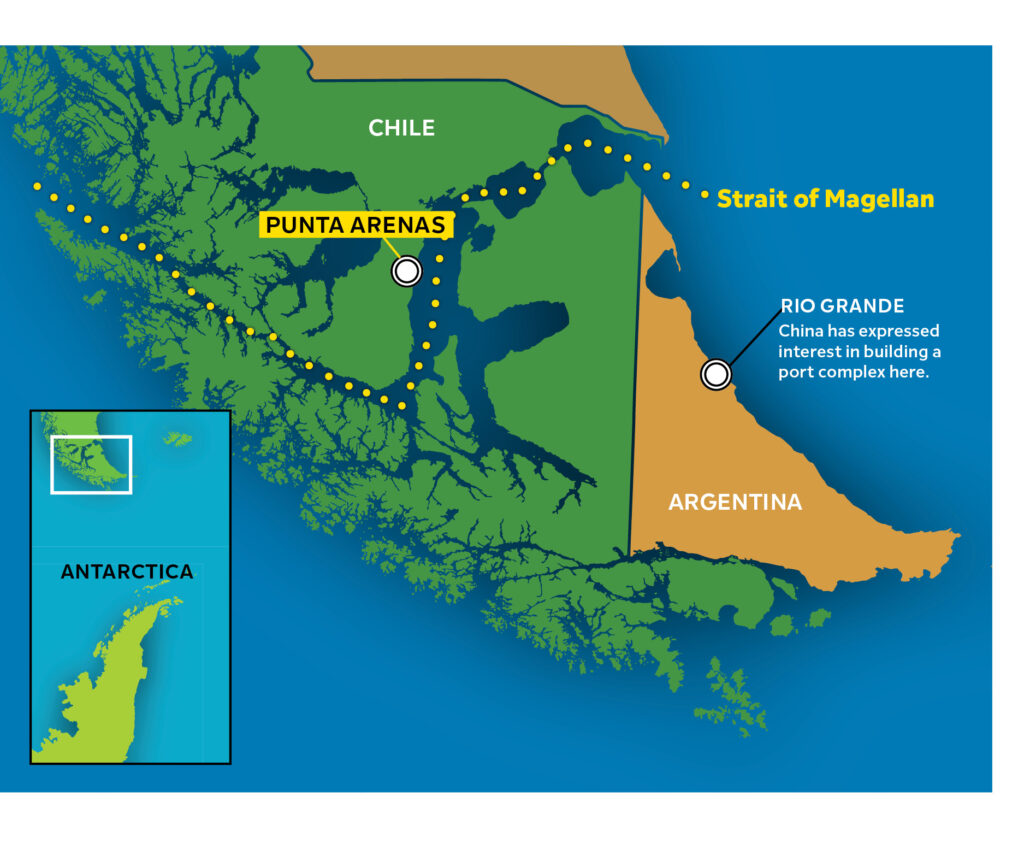
 China built a bridge across the Panama Canal. It cost them $1.4 billion. Should that bridge fall down the quickest route for moving U.S. naval assets from the Atlantic to the Pacific would be shut down for weeks to months, leaving the long trip down to the Strait of Magellan as the only option.

However....

"Why the U.S. and China Suddenly Care About a Port in Southern Chile"

And on the Pacific side, June 2024 - "Peru: Chinese Megaport Is Rattling the U.S."

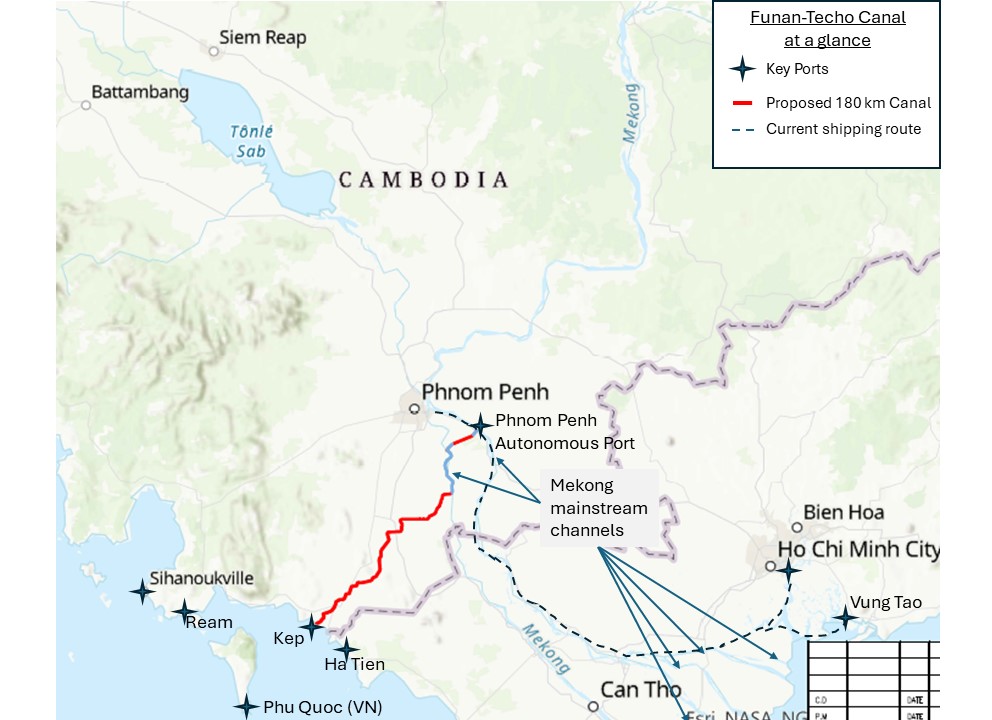
Back to Asia, April 2024 - "Cambodia getting a China-backed, game-changing canal"

https://i0.wp.com/asiatimes.com/wp-content/uploads/2024/04/Cambodia-Funan-Techo-Canal-.jpg?w=620&ssl=1 

Followed by April 2025's "Will China Bypass Singapore And The Strait of Malacca With A Canal Across Thailand Into The Indian Ocean?":

....You can see how this project ties in with China's naval base across the Gulf of Thailand on Cambodia's west coast at Ream:

https://photos.smugmug.com/Living-In-Asia/Thai-Canal/i-9X59nFz/0/532d935f/X3/thai-canal-X3.png 

 From April 2025s "RAND: "The Gulf of Thailand May Be the Next U.S.-China Flashpoint": 
https://www.stimson.org/wp-content/uploads/2024/05/Figure-A.jpg

In fact the Kra canal project would allow China's navy a much more direct route to their only other overseas base on the route into the Suez Canal.

February 2024 -  "Red Sea Rivalries"

The most amazing thing that has been pointed out over the last couple months is that China's base on Djibouti's Gulf of Aden coast, at the approaches to the Bab al-Mandab chokepoint into the Red Sea, gives them the perfect location to monitor Houthi action and American reaction:
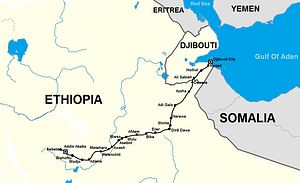
China Officially Sets Up Its First Overseas Base in Djibouti

—China Officially Sets Up Its First Overseas Base in Djibouti, The Diplomat

From Phenomenal World, February 15....

July 2025 - Indonesia/Malaysia/Singapore: "From Gallipoli to the Strait of Malacca: Why maritime choke points still decide the fate of nations"

So Mr. Risk Manager, what's your 2027 plan? 

Sunday, April 26, 2026

Malacca Strait: How one volcano could trigger world chaos

From the BBC, 17 January 2023:

It's only a few hundred miles long, but when a natural disaster strikes near the Malacca Strait, the consequences could be global, writes Tom Ough.

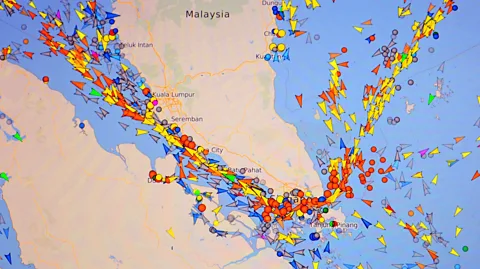
Every year, approximately 90,000 ships pass through the narrow sea lane of the Malacca Strait, which links the Indian Ocean to the Pacific. Their cargo – grain, crude oil, and every other commodity under the Sun – comprises an estimated 40% of global trade. Above these ships is one of the busiest air routes in the world, and below them, running along the seabed, is a dense array of submarine internet cables that keep the world online. 

Together, these factors make the Malacca Strait one of the most vital arteries of the global economy. It has been classified as a trade choke point in reports by the World Trade Organization, the US Energy Information Administration and Chatham House, the London-based foreign affairs think-tank.

All of which is to say: nice strait you've got there. Be a shame if something… happened to it.

Researchers are warning that it's only a matter of time before a natural disaster like an earthquake or volcano strikes the region – and when it does, we can expect global consequences.

Alamy Ship-tracking technology reveals just how many travel through the Malacca Strait (Credit: Alamy) 

Ship-tracking technology reveals just how many travel through the Malacca Strait (Credit: Alamy) 

Disruption of key trade routes is a well-established problem, due to crime or human error. Piracy has long bedevilled the area, but the strait, cooperatively policed by Indonesia, Malaysia, Singapore, and Thailand, is generally under control. Still, it is not uncommon for ships to collide here: 10 American sailors died as a result of the USS John McCain running into a Liberian-flagged tanker in 2017. But at 1.7 miles (2.7 km) at its narrowest, the strait is not slender enough to be blocked by an errant container ship in the way that the Suez Canal was by the 400m (1,312ft) Ever Given in 2021. 

The greatest menaces to the Malacca Strait, which separates the Malay Peninsula from the Indonesian island of Sumatra, lie in the natural world. Of the many intriguing maps of activity in the region, the most arresting is the one that collates the world's active volcanoes and recent earthquakes. Along the coast of Sumatra and the more southerly part of Java, following the course of the Sunda Trench, is a band of earthquake activity, and several volcanoes.

On Java, two volcanoes, Semeru and Merapi, have recently erupted. In the Sunda Strait, which separates Java from Sumatra, is Krakatau, and to the east is Tambora, whose eruption in 1815 caused crop failure as far afield as in Europe and the eastern United States.

The Tambora eruption was magnitude VEI7 in the Volcanic Explosivity Index (VEI), on a logarithmic scale going up to VEI8. An event like 1815 might occur once or twice per millennium. But an eruption need not be of quite so high a magnitude to cause severe problems at a global choke point, especially if it happened at one of the volcanoes closer to the Malacca Strait.

In 2018, researchers at the University of Cambridge's Centre for Risk Studies envisaged the effects of scenarios including a VEI6 eruption at Marapi. The eruption, they suggested, might produce ash clouds and fine tephra – fragments of rock ejected into the air – that waft across the Malacca Strait towards Singapore and Malaysia. The resultant damage to local infrastructure and supply chains, with aviation particularly badly affected, would combine with a global temperature drop of 1C to wipe an estimated $2.51tn (£2tn/€2.3tn) off global GDP over a five-year period. That figure dwarfs the estimated $5bn (£4bn/€4.6bn) that the VEI4 eruption of Eyjafjallajökull, in Iceland, wiped from the global economy.

Marapi's last VEI4 eruption was 2010. A VEI6 eruption at Marapi is lower-probability: its return period, which is the estimated average time between eruptions, is 750 years. Yet the stakes are high enough to merit taking the prospect seriously, says Lara Mani, a volcanologist at the University of Cambridge's Centre for the Study of Existential Risk. And Marapi is one of several active volcanoes in the region. VEI4, VEI5 and VEI6 eruptions, says Mani, "can still really disrupt the strait. And the thing is, when a volcano starts, it doesn't tell you when it's going to stop."....

....MUCH MORE 

And more recently than 2023:

Indonesia/Malaysia/Singapore: "From Gallipoli to the Strait of Malacca: Why maritime choke points still decide the fate of nations" 

Chokepoint: U.S. and Indonesia Jointly Announce Major Defense Agreement

Singapore's Top Diplomat Drops Some F(act)—Bombs On Iran's Position

Monday, March 23, 2026

Five Years Ago Today The Ever Given Blocked The Suez Canal

From Dredging Today, March 23:

From Ever Given to Hormuz: Spotlight on strategic importance of maritime chokepoints

As the Middle East conflict throttles global trade via the Strait of Hormuz, five years ago a stranded cargo ship revealed a frail transport system. On this day, the 400m-long Ever Given ran aground in the Suez Canal, Egypt, completely blocking the waterway for six days. 

The 20,000 TEU vessel was buffeted by strong winds on the morning of 23 March, and ended up wedged across the waterway with its bow and stern stuck on opposite canal banks, blocking all traffic and creating one of the most dramatic disruptions in modern shipping history.

The incident halted roughly 12% of global trade, costing the Egyptian economy millions in daily revenue.

Salvage teams from multiple countries worked around the clock to refloat the vessel, employing dredgers, tugboats and careful maneuvering. Dredgers were brought in and dug 30,000 cubic meters of mud and sand from beneath the ends of the ship....

....MUCH MORE 

https://upload.wikimedia.org/wikipedia/commons/thumb/1/15/Container_Ship_%27Ever_Given%27_stuck_in_the_Suez_Canal%2C_Egypt_-_March_24th%2C_2021_cropped.jpg/960px-Container_Ship_%27Ever_Given%27_stuck_in_the_Suez_Canal%2C_Egypt_-_March_24th%2C_2021_cropped.jpg 

Via Wikipedia 

And via one of our contemporaneous posts: 

Wednesday, December 10, 2025

"How China Built a Network of Ports Encircling the Globe"

As we've seen—most recently with Israel's Mossad in Iran and Ukraine's Operation Spiderweb in Russia—tractor-trailers and shipping containers make dandy places to hide your weapons of war. Also handy for transporting same. More after the jump

From Bloomberg, November 27:

With shipping outposts on six continents, Beijing has cemented its trade dominance. That some could be used by its navy has other nations worried. 

Over the past two decades, China has invested tens of billions of dollars in building or investing in a global network of commercial ports on every continent save Antarctica. Dominating trade infrastructure through shipping, highways and rail is a central pillar of President Xi Jinping’s Belt and Road Initiative, and it’s become a growing strategic advantage amid President Donald Trump’s trade war.

With the US retreating from foreign investment just as China accelerates, these projects have dwarfed similar efforts by any other country. China's state-owned or affiliated entities reportedly have invested more than $60 billion in 129 overseas port projects. Within this expansion is something the US and other nations consider a disturbing trend: As we explain in this Bloomberg Originals mini-documentary, many of those ports have potential military uses that experts contend could be exploited in a crisis. 

Since World War II, the US has maintained a constellation of military bases across the globe. But as America steps back from the international stage amid a focus on domestic politics and growing internal instability, China is moving to fill the gap. At least 14 ports with Chinese majority ownership have been identified as having potential military uses, a development that has som countries rethinking earlier agreements. In Australia for example, the government said it plans to reclaim the port of Darwin from its Chinese leaseholder. And the European Union is considering tightening controls on foreign ownership of what it calls “critical transport infrastructure.”

For Trump, the more immediate concern is how China could leverage the ports it controls as part of trade tensions. The Republican president has expressed particular concern about Beijing’s influence over the Panama Canal, which US President Jimmy Carter long ago returned to Panama. Two ports on either side of the canal are owned by Hong Kong-based conglomerate CK Hutchison. Trump aides have claimed that control of these ports by Chinese companies could allow Beijing to impede canal traffic in a time of conflict, trade or otherwise. This could be a major threat to the US economy, since 40% of the country’s container traffic passes through the canal....

....MORE, including video. 

On October 19 Bloomberg Businessweek published "China’s Global Network of Shipping Ports Is Too Big for Trump to Unravel" but our interest goes back much further.

March 2018 - "5 New Silk Road Projects That Will Alter Your View Of How The World Works".

July 2018 - "China’s strategic investments in Europe: The case of maritime ports"

November 7, 2020 - Shipping: "China Makes Waves, Seeking To Control World Shipping"

Keeping track of Chinese investment in other nation's ports could be a full-time job, and that is just one aspect of what they are doing. Good luck to the EU and MENA, they are going to need it....

October 2021 - "The Chinese military is thinking about how to stealthily destroy enemy ports and just set off a big explosion to see how it might work"

That seems so complicated. 

Couldn't you just make the McKinseyite spawn of Marxist Gramscian Professor Joseph Buttigieg the Secretary of Transportation? 

I mean, that's the highest expression of Rudi Dutschke's Long March through the Institutions, and without all the loud booms from the explosions. 
They scare the dogs.
Here's the Communist Party's outward-facing propaganda organ, Global Times with the article ref'd above:
I'm beginning to see a pattern here.*

*****
*Starting with the Bosporus/Dardanelles between the Black and Mediterranean Seas:
"China will buy Turkey on the cheap"
Why Turkey is Important

And the Panama Canal:
China Will Help Panama Secure the Canal Against Terrorists

and:
"Don't Fear China's Arctic Takeover"
And all of a sudden you have China on-site on three of the world's MAJOR shipping chokepoints and what could very well become the fourth at the Bering Straits.

Battery Metals and Rare Earths: The U.S. Will Use The Slightly Controversial Blanche DuBois Extraction Method

....It's just that, as we've seen over the last year, supply lines are fragile, a weak spot even without unfriendlies doing an interdiction.

Should someone actively attempt to halt transportation it would make the Ever Given snafu look like child's play. As just one example, China has been very active in extending their belt and road initiative in Panama, including a $1.4 billion bridge over the canal and rail and other infrastructure.

And that's just one potential flashpoint. The Chinese influence in Brazil, hitherto based on VALE and iron ore could potentially go exponential as Brazil expands/modernizes its shipping and rail infrastructure. And then there's Australia...and...

I suppose somebody should keep an eye on Morocco to note if the Chinese set up camp on the Strait of Gibraltar. 

Which was followed in July 2024 by: "Chinese EV battery makers are building huge factories in Morocco to cash in on U.S. electric vehicle subsidies" (and China is now camped at most of the world's chokepoints) " 
I say, isn't Morocco on the Strait of Gibralter?*

A month later, August 2024:

Logistics: "A $2 Trillion Reckoning Looms as Ports Become Pawns in Geopolitics"

May 2025 - "Chinese companies bought up European ports — and now Brussels is starting to worry" 
Now the Eurocrats are starting to worry? Now?*
*March 1, 2018 - "Sizing up Chinese Investments in Europe"
July 12, 2018 - Shipping: "Hamburg: China’s European trade hub"
October 25, 2021 - "Hamburg Is at the Heart of Germany's Growing Dilemma Over China"
October 25, 2022 - China's COSCO Near Deal To Buy Into Port Of Hamburg
November 2022 - "Europe is fretting over China owning key EU infrastructure. Here's why"
March 2025 - "Plans for a Chinese Port Roil the Politics of a Former Soviet Nation" 
Have I mentioned the Chinese affinity for water?

March 2025 - Panama Canal—"Pro-Beijing paper: Anti-sanctions law can block Li’s ports deal"

March 2025 - BlackRock - CK Hutchison Panama Canal Ports Deal Will NOT Be Consumated Next Week

July 2025 - "China Threatens to Block Panama Ports Deal Unless Its Shipping Giant Is Part of It"

 China built a bridge across the Panama Canal. It cost them $1.4 billion. Should that bridge fall down the quickest route for moving U.S. naval assets from the Atlantic to the Pacific would be shut down for weeks to months, leaving the long trip down to the Strait of Magellan as the only option.

However....

"Why the U.S. and China Suddenly Care About a Port in Southern Chile"


And on the Pacific side, June 2024 - "Peru: Chinese Megaport Is Rattling the U.S."

Back to Asia, April 2024 - "Cambodia getting a China-backed, game-changing canal"

https://i0.wp.com/asiatimes.com/wp-content/uploads/2024/04/Cambodia-Funan-Techo-Canal-.jpg?w=620&ssl=1 

Followed by April 2025's "Will China Bypass Singapore And The Strait of Malacca With A Canal Across Thailand Into The Indian Ocean?":

....You can see how this project ties in with China's naval base across the Gulf of Thailand on Cambodia's west coast at Ream:

https://photos.smugmug.com/Living-In-Asia/Thai-Canal/i-9X59nFz/0/532d935f/X3/thai-canal-X3.png 

 From April 2025s "RAND: "The Gulf of Thailand May Be the Next U.S.-China Flashpoint": 

https://www.stimson.org/wp-content/uploads/2024/05/Figure-A.jpg

In fact the Kra canal project would allow China's navy a much more direct route to their only other overseas base on the route into the Suez Canal.

February 2024 -  "Red Sea Rivalries"

The most amazing thing that has been pointed out over the last couple months is that China's base on Djibouti's Gulf of Aden coast, at the approaches to the Bab al-Mandab chokepoint into the Red Sea, gives them the perfect location to monitor Houthi action and American reaction:

China Officially Sets Up Its First Overseas Base in Djibouti

—China Officially Sets Up Its First Overseas Base in Djibouti, The Diplomat

From Phenomenal World, February 15....

July 2025 - Indonesia/Malaysia/Singapore: "From Gallipoli to the Strait of Malacca: Why maritime choke points still decide the fate of nations"

So Mr. Risk Manager, what's your 2027 plan? 

Saturday, August 2, 2025

"Ancient human highways revealed beneath the sea"

Sea level has been rising for a very, very long time.

From Earth.com, July 25:

Much of Earth’s ancient past lies beneath the sea. Professor Jerome Dobson of the University of Kansas coined the term “aquaterra” to describe now-submerged lands once inhabited by early humans who used them to migrate. These regions vanished as sea levels rose after the last ice age.

In collaboration with Giorgio Spada of the University of Bologna and Gaia Galassi from the University of Urbino, Dobson examined these landscapes using an advanced sea-level reconstruction model. 

The researchers tracked human migration patterns between Africa and Eurasia over the past 30,000 years, focusing on coastal corridors, especially across Egypt and the Red Sea region.

Reconstructing ancient shorelines
The team’s method involved Glacial Isostatic Adjustment (GIA) models, which simulate how Earth’s crust responds to glacial melting and sea-level changes.

Using the SELEN4 model, they reconstructed ancient coastlines with accuracy, including transitions around the Mediterranean, Red Sea, and Nile Valley.

Their findings reveal that over 11 percent more land existed at the Last Glacial Maximum (LGM) than today. This exposed land formed crucial migration bridges.

Dobson emphasized, “We hope this enables people to see and explore the landscapes that were exposed during the last ice age.”

Paths early humans once traveled
Maps generated from their study reveal several alternative routes into and out of Africa.

These include a path from Foul Bay to the Nile River, the overland corridor across the Isthmus of Suez, the Gulf of Aqaba passage leading to the Levant, the Bab el-Mandeb crossing into Arabia, and the sea routes through the Sicily and Messina Straits.

Genetic analysis supports several of these paths. Wohns et al. (2022) mapped ancient DNA lineages, revealing strong ancestral roots near Meroë in Sudan. Archaeological evidence remains scarce in some areas, perhaps due to submersion....

....MUCH MORE 

And a repost from May 2021:

"Global Warming, It’s Always a Shore Thing"

Cute title. I was going to try to get even cuter with "On this day in history, Jericho founded 9600 B.C.", the joke being that no one knows when/what day Jericho was founded, just that it's been around for a long, long time.
As a joke it is not all that funny. Sorry. 
 
From Australia's Quadrant Magazine:

The history of all hitherto existing society is the history of global warming.

Biologically speaking, human beings may have emerged 200,000 years ago. Geographically speaking, they apparently spread to cover the entire Old World of Afro-Eurasia some 50,000 years ago. But socially speaking, our paleolithic progenitors didn’t amount to much. It may have taken a dozen ancient hunters working together to bring down a woolly mammoth, but you don’t have to be very social to organise a hunt. Just ask the English.

You can only hunt and gather your way so far down the road to civilisation, and that’s not very far. Meaningful human society only becomes possible when people put down roots and put up walls. The anthropology profession may not like to hear that, but Bruce Pascoe gets it. You can’t claim native title to “no fixed address”.

The earliest known permanent human settlement is Jericho, whose own walls famously fell to the blows of rams’ horns. The first village at Jericho is believed to date from around 9600 BC. It’s probably no coincidence that 9600 BC is also the conventional date given for the end of the last Ice Age. As the glaciers retreated, the truly big game got scarce, and people switched from hunting mammoth to herding sheep. Sheep’s wool turned out to be much more spinnable than mammoth wool, mothers starting knitting baby boots, and the rest is, well, history.

It is just possible that human society got its start in Jericho, smack in the middle of the land that God would later promise to Abraham and Moses. (God may be “infinite, eternal, and unchangeable in his being, wisdom, power, holiness, justice, goodness, and truth”, but no one ever said He was fair.) Soon after the death of Moses, Joshua led the ancient Israelites into Canaan, and Jericho was the first city to go. The Israelites “utterly destroyed all that was in the city, both man and woman, young and old, and ox, and sheep, and ass, with the edge of the sword”. Joshua went on to flatten Ai, Makkedah, Libnah, Lachish, Eglon, Debir and Hazor, but it’s Jericho that gets all the press.

Jericho lies 850 feet below sea level, but it is a mere forty miles from the sea. If it weren’t for the intervening hills, it would be completely swamped by water from the Mediterranean. In fact, it has been suggested that the fabled walls of Jericho were actually flood levees. But cut off as it was from Mediterranean trade, it seems more likely that ancient Jericho was a remote desert village than a bustling desert metropolis. For the first three thousand years of its settlement, Jericho didn’t even have pottery. If Joshua really did destroy “all that was in the city”, it may have been because there wasn’t much worth keeping.

As attractive as the Holy Land is to the holy, most reasonable people prefer to live by the sea. That was even more true in the ancient world than it is today. Until the coming of the railway, moving anything overland was hard work, with the sole exception of meat on the hoof. Inland life was fine if you were a shepherd watching over your flock by night. For everyone else, the ocean was where the action was.

But where was the ocean? Back in the glory days of prehistoric Jericho, sea level was 200 feet lower than it is today. That suggests that all the best neolithic city sites are probably now resting, undiscovered, under 200 feet of water. The world map looked very different ten thousand years ago. Albion didn’t become an island until 6100 BC. The Black Sea was a blue lake until 5600 BC. When archaeologists excavate neolithic settlements that are now on dry ground, they’re uncovering the remains of the uncouth mountain folk of deep antiquity. All the truly civilised cities probably went the way of Atlantis.

Sea level rose by an average of more than three feet for every century between 9000 and 4000 BC; it’s no wonder that every ancient culture has a flood story. The Bible’s flood story doesn’t say exactly where Noah lived, but the Epic of Gilgamesh gives a similar account of “the” flood, and Gilgamesh was the king of Uruk in what is now southern Iraq. He seems to have reigned around 2700 BC. Gilgamesh got the story from an old man named Utnapishtim who claimed to have actually lived through the flood. Fortunately for him (but unfortunately for us), Utnapishtim was immortal, so the fact that he was still alive to tell the story in 2700 BC doesn’t do much to fix the exact date.

Noah’s descendant Abraham washed up in Ur sometime around 2000 BC. Ur was then on the shore of what is now the Persian Gulf, some fifty miles to the south-east of Uruk. Abraham would have heard the flood story first-hand from his great-great-great-great-great-great-great grandfather Shem, who lived to be 500 years old. Shem was a young man of ninety-eight when his father Noah rounded up his family and loaded them on the ark. That places the biblical flood sometime around 2400 BC, more than two centuries after the reign of Gilgamesh. Maybe it was a different flood.

Either way, it seems a safe bet that amidst all the floods of the neolithic Middle East, “the” flood took place somewhere around the Persian Gulf. The flood story may be an almost historical memory of a catastrophic tidal wave that hit Mesopotamia in the 2000s BC. That’s the romantic view. Or it might be a much dimmer memory of the slowly rising sea levels that submerged some of the primest real estate of the neolithic world way back between the 8000s and 6000s BC.

The oldest known city site in Mesopotamia, Eridu, dates from 5400 BC and is just a few miles from Ur—that is, the ancient coastline. Ironically, despite the ensuing rise in sea level, Ur and Eridu are now stranded some 150 miles inland. Salt water initially inundated the flat, marshy plains of southern Mesopotamia, but then sediment from the Tigris-Euphrates river system built the land back up again. The net result is that any earlier cities that might once have dotted the shores of the ancient Persian Gulf would now lie 150 feet under the muds of Basra....

....MUCH MORE

Bring on the scuba-diving antiquarians/archaeologists/treasure hunters. 

It is easy to forget just how long some of these places have been around. And how in geological terms it's all just the blink of an eye.

Friday, July 5, 2024

Chinese EV battery makers are building huge factories in Morocco to cash in on U.S. electric vehicle subsidies" (and China is now camped at most of the world's chokepoints)

I say, isn't Morocco on the Strait of Gibralter?*

From Fortune, July 3:

After the United States passed new subsidies designed to boost domestic electric vehicle production and cut into Beijing’s supply chain dominance, Chinese manufacturers began investing in an unlikely place: Morocco.

In the rolling hills near Tangiers and in industrial parks near the Atlantic Ocean, they have announced plans for new factories to make parts for EVs that may qualify for $7,500 credits to car buyers in the United States.

Similar investments have been announced in other countries that share free trade agreements with the United States, including South Korea and Mexico.

But few countries have seen the kind of boom that Morocco has.

At least eight Chinese battery makers have announced new investments in the North African kingdom since President Joe Biden signed the Inflation Reduction Act, the $430 billion U.S. law designed to fight climate change, according to an Associated Press tally.

By moving operations to U.S. trading partners like Morocco, Chinese players that have long dominated the battery supply chain are seeking a pathway to cash in on increasing demand from American carmakers like Tesla and General Motors, said Kevin Shang, a senior battery analyst at the consulting firm Wood Mackenzie.

“Chinese companies definitely don’t want to miss this big party,” he said.

The United States and European Union have both imposed major new tariffs on Chinese vehicle imports since May. The United States also finalized eligibility rules governing the tax credits in May. The latter limit companies with ties to U.S. adversaries, but give carmakers time to reduce their reliance on China. To qualify for the subsidies, carmakers cannot source critical minerals or battery parts from manufacturers in which China and other “foreign entities of concern” control more than 25% of the company or its board.

Critics say the rules are a giveaway to China and will extend its EV dominance. The Biden administration says the rules pave the way for billions in investment in EV manufacturing in the United States.

Between East and West
In Morocco, a largely agrarian economy where the median income is $2,150 a month, giant industrial parks full of American, European and Chinese component makers have sprung up in the rural outskirts of Tangiers, Kenitra and El Jadida.

Expanding on infrastructure that has made Morocco a car manufacturing hub, they hope to meet growing demand and overcome rules designed to exclude them from the incentives the Inflation Reduction Act is injecting into the U.S. car market, the world’s second-largest....

....MUCH MORE
*
Blowing the dust off our gazetteer we see that yes, yes it is.

***** 
*Starting with the Bosporus/Dardanelles between the Black and Mediterranean Seas:

And the Panama Canal:
China Will Help Panama Secure the Canal Against Terrorists

and:  

 And all of a sudden you have China on-site on three of the world's MAJOR shipping chokepoints and what could very well become the fourth at the Bering Straits.

Battery Metals and Rare Earths: The U.S. Will Use The Slightly Controversial Blanche DuBois Extraction Method

....It's just that, as we've seen over the last year, supply lines are fragile, a weak spot even without unfriendlies doing an interdiction.

Should someone actively attempt to halt transportation it would make the Ever Given snafu look like child's play. As just one example, China has been very active in extending their belt and road initiative in Panama, including a $1.4 billion bridge over the canal and rail and other infrastructure.

And that's just one potential flashpoint. The Chinese influence in Brazil, hitherto based on VALE and iron ore could potentially go exponential as Brazil expands/modernizes its shipping and rail infrastructure. And then there's Australia...and...

I suppose somebody should keep an eye on Morocco to note if the Chinese set up camp on the Strait of Gibraltar.  
 
Also February 2024's "Red Sea Rivalries": 

The most amazing thing that has been pointed out over the last couple months is that China's base on Djibouti's Gulf of Aden coast, at the approaches to the Bab al-Mandab chokepoint into the Red Sea, gives them the perfect location to monitor Houthi action and American reaction:

China Officially Sets Up Its First Overseas Base in Djibouti

—China Officially Sets Up Its First Overseas Base in Djibouti, The Diplomat

And April 2024 Why the U.S. and China Suddenly Care About a Port in Southern Chile": 


And all of a sudden (after years of development) China is hanging out at the entrance to some very strategic sea lanes. In fact, the only major chokepoint not seeing a Chinese development that comes to mind is the Strait of Malacca between Singapore/Malay Peninsula and Indonesia's Sumatra.

Sunday, February 18, 2024

"Red Sea Rivalries"

The most amazing thing that has been pointed out over the last couple months is that China's base on Djibouti's Gulf of Aden coast, at the approaches to the Bab al-Mandab chokepoint into the Red Sea, gives them the perfect location to monitor Houthi action and American reaction:

China Officially Sets Up Its First Overseas Base in Djibouti

—China Officially Sets Up Its First Overseas Base in Djibouti, The Diplomat

From Phenomenal World, February 15:

Egypt, Ethiopia, and histories of maritime war 

Every few years, a crisis in the Red Sea makes global headlines. In 2014, the Yemeni Civil War spilled into the Red Sea after the Houthis captured the capital Sana‘a and dissolved the parliament. As a warning, the Houthis allegedly conducted two missile strikes on US Navy ships, prompting a swift but limited retaliation from a US warship. In 2021, a malfunctioning commercial vessel was left stranded in the Suez Canal for six days, obstructing the trade of an estimated $9 billion in commercial goods passing through the Red Sea each day. The scale of the economic impact was so severe that the Egyptian government, which profits from tolls on Suez transport, initially demanded close to a billion-dollar settlement from the Japanese owner of the vessel.

Since October of 2023, the Houthi organization, the de facto governing authority in Yemen backed by Iran, has launched a barrage of attacks on several commercial ships in response to the war in Gaza and US support for Israel. The goal of these attacks has been to undermine US military presence in the area as well as to restrict the passage of Israeli commercial ships.

In light of the Houthis’ unprecedented military capability, the US has organized a coalition to secure Red Sea trade. The political implications of these naval operations are momentous. India, for example, has taken the opportunity to flex its own naval might, deploying warships east of the Red Sea in response to its rising concerns about its exports, 50 percent of which travel through the Bab-El-Mandeb Strait.

This most recent escalation invites a deeper reflection on the history of a small but profoundly important body of water—a history which traverses several centuries and crucially takes place on both sides of the sea, recounting persistent rivalries of great and middle empires. In particular, we can look to Egypt and Ethiopia’s battle for dominance in the Red Sea to contemplate current crises. Their rivalry embroils powers like the United States, Saudi Arabia, and China, extends to the wars in Palestine and Israel, and implicates past and present national claims in the Horn of Africa. While the actors may have fluctuated over centuries, the singular significance of this water passageway to the global political economy has endured.

Geographies of power

It is difficult to overplay the Red Sea’s economic importance. At the northern edge of the sea, the Egyptian-owned Suez Canal connects it with the Mediterranean. By extension, the Bab-El-Mandeb at its southern edge serves as the gateway between Europe and Asia. In normal times, up to 15 percent of all global trade passes through the Red Sea, though recent conflicts have cut this volume by nearly half. The current crises in the region have disrupted the supply chain of critical commercial goods, including grains, oil, and natural gas. Given these high economic stakes, it is no surprise that established and emerging powers alike have sought to project naval power in the region. 

Well before the latest series of crises, the Red Sea served as a battleground for states seeking a higher position within the global order. Much of the focus of these new power contentions has been on the Horn of Africa, lying at the crossroads of the Red Sea, the Gulf of Aden, and the Indian Ocean. Traditionally, the Horn was dominated by the influence of Egypt, the United Kingdom, and France. Beginning in 1896, the latter utilized Djibouti as a strategic hub for its colonial endeavors along the coast, known as French Somaliland. The Djibouti base enabled France to monitor maritime trade routes from the Red Sea to the Indian Ocean and facilitated the expansion of its military operations in the 1930s.

Power within the Red Sea has shifted throughout the period of US hegemony and then with the emerging multipolar order of the twenty-first century. In 2001, the United States took ownership of the Camp Lemonnier base under the guise of the War on Terror. With its own pretext of combating piracy, China established its first overseas naval base in Djibouti in 2017. The same year, Turkey established its largest overseas military base in Somalia. The Gulf Powers have also been eager to spread their influence west of the Suez; after failing to garner concessions from Djibouti, both Saudi Arabia and the United Arab Emirates (UAE) secured agreements for military installations in Eritrea, another coastal state in the Horn. 

This diplomatic interest has, since 2018, eroded the traditional geopolitical divide between the Horn of Africa and the Middle East. The Gulf monarchies were quick to assert their influence west of the Suez, investing billions of dollars and brokering groundbreaking peace agreements between Eritrea and Ethiopia....

....MUCH MORE

We watch chokepoints:
You Knew China Had A Base At The Approaches To The Red Sea, Right? "...Chinese, Iranian and Indian Warships Are Now in the Red Sea, Gulf of Aden"
July 25, 2021
"China & Egypt Strengthen Belt And Road Collaborations Including The Suez Canal International Logistics Zone"
I'm beginning to see a pattern here.*
*Starting with the Bosporus/Dardanelles between the Black and Mediterranean Seas:

And the Panama Canal:
China Will Help Panama Secure the Canal Against Terrorists

and:  

 And all of a sudden you have China on-site on three of the world's MAJOR shipping chokepoints and what could very well become the fourth at the Bering Straits.

Battery Metals and Rare Earths: The U.S. Will Use The Slightly Controversial Blanche DuBois Extraction Method

....It's just that, as we've seen over the last year, supply lines are fragile, a weak spot even without unfriendlies doing an interdiction.

Should someone actively attempt to halt transportation it would make the Ever Given snafu look like child's play. As just one example, China has been very active in extending their belt and road initiative in Panama, including a $1.4 billion bridge over the canal and rail and other infrastructure.

And that's just one potential flashpoint. The Chinese influence in Brazil, hitherto based on VALE and iron ore could potentially go exponential as Brazil expands/modernizes its shipping and rail infrastructure. And then there's Australia...and...

I suppose somebody should keep an eye on Morocco to note if the Chinese set up camp on the Strait of Gibraltar. 

Friday, January 19, 2024

"Red Sea attacks already bigger issue for supply chain than pandemic, maritime advisory warns"

From CNBC, January 18:

  • The Red Sea crisis and continued Houthi rebel attacks on cargo ships and tankers is now a bigger impact event for shipping than the early pandemic, according to the latest data from maritime advisory firm Sea-Intelligence which measures changes in vessel capacity.
  • The only event in recent years to have a bigger impact on the supply chain was when the cargo ship “Ever Given” got stuck in the Suez Canal in 2021.
  • The longer transit around the Cape of Good Hope is having a significant impact on vessels available to pick up containers, but unlike during Covid, there is excess vessel capacity currently unused which could be put back into service and help solve the issues.

A leading ocean supply chain advisory firm is warning that the disruptions to shipping from the Houthi rebel attacks in the Red Sea are already more damaging to the supply chain impact than the early Covid-19 pandemic.

Sea-Intelligence analyzed current vessel delays compared to delays over the last several years in a report for clients. The data shows that the longer transit around the Cape of Good Hope as ships divert from the Red Sea is already having a more significant impact on vessels available to pick up containers at ports than during the pandemic. This supply chain measure is known in the industry as “vessel capacity.”

The vessel capacity drop is the second largest in recent years, according to Alan Murphy, CEO of Sea-Intelligence. The only single event with a bigger impact than the Red Sea crisis was the “Ever Given,” the giant cargo ship which got stuck in the Suez Canal for six days during March 2021. Billions in trade were at a standstill during that event. With that exception, “This [the Red Sea crisis] is the largest single event – even larger than the early pandemic impact,” Murphy said....

Also at CNBC, January 17: "Red Sea crisis could last a year with Houthi attacks ‘just increasing’: Experts"

Saturday, December 23, 2023

You Knew China Had A Base At The Approaches To The Red Sea, Right? "...Chinese, Iranian and Indian Warships Are Now in the Red Sea, Gulf of Aden"

I've been meaning to post something on that addition to the chokepoints the Peoples Liberation Army (Navy) overlooks* but every time I approach the keyboard, K.C. and the Sunshine Band fires up with Sheikh, Sheikh, Sheikh, Sheikh, Sheikh, Sheikh, Sheikh, Djibouti, Sheikh Djibouti.
(I am so sorry)
From naked capitalism, December 23: 
 
Breaking News: Chinese, Iranian and Indian Warships Are Now in the Red Sea, Gulf of Aden
Yves here. I have to admit to suffering from a lack of sufficient imagination. When I saw the tweet below from guurst, I thought the motive was to put US/NATO ships at risk so as to strengthen the US case for other countries to join the inaptly named Operation Prosperity Guardian, to protect commercial commercial ships transiting from Houthi fire (as we and many others have described, much easier said than done). Over my pay grade, but one wonders why the many countries that opposed Israeli action in Gaza would go along (assuming they are). But having Chinese, Iranian and Indian warships in theater to keep tabs on the potentially not friendly Operation Prosperity Guardian warships.

By John Helmer, the longest continuously serving foreign correspondent in Russia, and the only western journalist to direct his own bureau independent of single national or commercial ties. Helmer has also been a professor of political science, and an advisor to government heads in Greece, the United States, and Asia. He is the first and only member of a US presidential administration (Jimmy Carter) to establish himself in Russia. Originally published at Dances with Bears

A Russian military blog post posted on Thursday, December 21 at 11:33 Moscow time, has revealed the hitherto secret positions of all warships in the area which the Pentagon has announced for its OPERATION PROSPERITY GUARDIAN.

The fresh data and the open map (lead image) were not available when yesterday’s report was published at 09:32 Moscow time of Russia’s “two-track” strategy for opposing the US and NATO,  and for protecting Russian oil shipments while  the Houthi drone and missile operations are under way against Israel.

No Russian Navy vessel is in the area at present although Russian crude oil cargoes are moving through the Red Sea with Iranian and Houthi agreement. Because these ship movements are defying US and NATO sanctions, it has been decided in Moscow to negotiate safe passage with Iran and Yemen rather than deploy the Russian Navy to protect them. However, the new combined US and NATO operation, targeting the Houthis and their Iranian support and supply systems,  increases the possibility of a direct American, allied, or false-flagged attack on a tanker carrying Russian oil.

In yesterday’s morning report, I indicated that “the current whereabouts of the [Chinese] warship group has not been reported in the open press.”

The Russian source map is now reporting that the Chinese Navy’s 45th Escort Task Force, comprising the Type-052 destroyer Urumqi,  the Type-547 frigate Linyi,  and supply ship Dongpinghu were at  berth at the Chinese base at Djibouti as of Wednesday, December 20.

The Russian map also reveals that the Iranian vessel MV Behshad is in a standing position in the Red Sea (lead image, top left of map). According to the Russian source, it is operating as an electronic surveillance, command and control centre to monitor friendly state ship movements – Russian, Chinese, Indian – and also  hostile vessels of the US, British and French navies, tracking their positions; and relaying the data to Iran and probably to shore positions in Yemen. Although US media and Pentagon statements accuse the Ansar Allah government in Yemen and Houthi forces of acting as Iranian proxies in the war against Israel, there has been no disclosure before now of this vessel in the Red Sea....

....MUCH MORE

*July 25, 2021
"China & Egypt Strengthen Belt And Road Collaborations Including The Suez Canal International Logistics Zone"

I'm beginning to see a pattern here.*

From Silk Road Briefing, July 23:

Egypt’s Free Trade Agreements with AfCFTA and the EU make it an attractive Chinese investment destination to access new export markets

China and Egypt have signed a deal to establish an intergovernmental cooperation committee aimed at further enhancing bilateral relations, in an agreement signed by Chinese Foreign Minister Wang Yi and his Egyptian counterpart Sameh Shoukry. Wang is on an official visit to Egypt and has also visited Syria.

“Egypt is one of China’s most important strategic partners among Arab countries, in the Islamic world, in Africa and among developing countries,” Wang said, reiterating that Beijing appreciates Cairo for its support on issues concerning Beijing’s core interests and said China also supports Egypt in safeguarding its own sovereignty, security, and development interests.

“China is ready to work with Egypt to deepen the alignment of their development strategies, expand cooperation in production capacity, infrastructure, new energy, space and aviation, as well as new and high-tech industries, and open up new prospects for mutually beneficial cooperation,” he said, adding that China will continue to support Egypt’s localized production of vaccines to help the country fight Covid-19.

For his part, Shoukry said that “Egypt is willing to work with China to strengthen their cooperation in economy, trade, industry, science and technology within the framework of the Belt and Road Initiative (BRI), expand people-to-people and cultural exchanges and maintain communication on the reform of the United Nations Security Council and other international and regional issues,” he added.

Egypt is currently regaining stability after the ”Arab Spring” disturbances and problems with fighting ISIL. It is a huge market of some 100 million people and an important regional player. Russia has also been making inroads into Egypt with a Special Economic Zone at Port Said near the mouth of the Suez Canal, building Egypt’s hi-speed Red-Mediterranean Sea railway and is shortly to conclude an Egyptian-Eurasian Economic Union free trade agreement....

....MUCH MORE 
*Starting with the Bosporus/Dardanelles between the Black and Mediterranean Seas:

And the Panama Canal:
China Will Help Panama Secure the Canal Against Terrorists

and:  

 And all of a sudden you have China on-site on three of the world's MAJOR shipping chokepoints and what could very well become the fourth at the Bering Straits.

Battery Metals and Rare Earths: The U.S. Will Use The Slightly Controversial Blanche DuBois Extraction Method

....It's just that, as we've seen over the last year, supply lines are fragile, a weak spot even without unfriendlies doing an interdiction.

Should someone actively attempt to halt transportation it would make the Ever Given snafu look like child's play. As just one example, China has been very active in extending their belt and road initiative in Panama, including a $1.4 billion bridge over the canal and rail and other infrastructure.

And that's just one potential flashpoint. The Chinese influence in Brazil, hitherto based on VALE and iron ore could potentially go exponential as Brazil expands/modernizes its shipping and rail infrastructure. And then there's Australia...and...

I suppose somebody should keep an eye on Morocco to note if the Chinese set up camp on the Strait of Gibraltar.  

—from "China & Egypt Strengthen Belt And Road Collaborations Including The Suez Canal International Logistics Zone",  July 25, 2021

Thursday, June 8, 2023

Morocco's King Is Back And The Country Is Doing Business

Following on May 14's "The mystery of Morocco’s missing king", from Barron's June 4:

Morocco's King, After Long Trips Abroad, Works To 'Restore Authority'

Morocco's king has embarked on a whirlwind of public activities, which observers say aim to "restore the authority" of the monarchy, as international media have questioned his prolonged absences from the country.

Royal watchers say King Mohammed VI spent about 200 days outside the North African country in 2022, mostly in France and Gabon.

In March, he returned from another, three-months-long stay in Gabon as a guest of his friend President Ali Bongo, coming home on the eve of the Muslim holy month of Ramadan.
He has not left Morocco since, but his lengthy absences in recent times have raised questions among some Moroccan commentators and in the international media.

British news weekly The Economist published a report entitled "The mystery of Morocco's missing king" in April, which detailed his close ties with a trio of German-Moroccan brothers, two of whom are mixed martial arts stars, and how are known for their extravagant lifestyles.

Over the past two months, since coming back to Morocco, the 59-year-old king has engaged in a flurry of public appearances.

They have ranged from attending religious sermons during Ramadan, meeting with charities and addressing the issue of water shortages to presiding over the council of ministers and appointing new senior officials.

The king has also been seen inaugurating construction sites, a medical centre in Casablanca, a new university hospital in Tangier and a vocational training institute near Rabat.
The objective is "to restore the authority of monarchical power, which depends less on the regular functioning of institutions than on the physical presence of the king", said Omar Brousky, an academic and journalist from the Orient XXI website....

....MUCH MORE

And though the deals with Israel are more numerous, the big one with China might be more important. From Reuters via Nasdaq, June 1:

Chinese EV battery maker Gotion mulls factory in Morocco

Morocco's government and China-based battery maker Gotion High Tech have agreed to look into setting up an electric vehicle battery plant in the kingdom with up to $6.3 billion in eventual investment, Morocco's investment agency said.

The agency, AMDIE, gave no details on when a final decision on the plant would go ahead but said the two sides were looking at a factory with a production capacity of 100 gigawatts.

Reuters was the first to report Morocco was negotiating an EV battery plant in July 2022.

Moroccan officials have often pitched the kingdom as a good location for very large EV battery factories because of its existing automotive and renewable energy sectors and the presence of raw materials including cobalt and phosphates....

....MORE

In addition to the size of the investment for the battery plant, the phosphate (fertilizer) mention is intriguing. It has nothing to do with batteries but Morocco and 80% Moroccan-controlled Western Sahara sit on 75% of the world's phosphate resource. Additionally as noted in July 2021's "China & Egypt Strengthen Belt And Road Collaborations Including The Suez Canal International Logistics Zone"
I'm beginning to see a pattern here.*
****
*Starting with the Bosporus/Dardanelles between the Black and Mediterranean Seas:
"China will buy Turkey on the cheap"
Why Turkey is Important

And the Panama Canal:
China Will Help Panama Secure the Canal Against Terrorists

and:  

 And all of a sudden you have China on-site on three of the world's MAJOR shipping chokepoints and what could very well become the fourth at the Bering Straits.

Battery Metals and Rare Earths: The U.S. Will Use The Slightly Controversial Blanche DuBois Extraction Method

....It's just that, as we've seen over the last year, supply lines are fragile, a weak spot even without unfriendlies doing an interdiction.

Should someone actively attempt to halt transportation it would make the Ever Given snafu look like child's play. As just one example, China has been very active in extending their belt and road initiative in Panama, including a $1.4 billion bridge over the canal and rail and other infrastructure.

And that's just one potential flashpoint. The Chinese influence in Brazil, hitherto based on VALE and iron ore could potentially go exponential as Brazil expands/modernizes its shipping and rail infrastructure. And then there's Australia...and...

I suppose somebody should keep an eye on Morocco to note if the Chinese set up camp on the Straits of Gibraltar. 
 
And on to the Israeli connections:
May 29: "Israel inks three transportation deals boosting links with Morocco"

Make of all that what you will but I'll repeat the outro from the 2021 post:

I suppose somebody should keep an eye on Morocco to note if the Chinese set up camp on the Strait of Gibraltar.