Showing posts sorted by relevance for query Messy Nessy. Sort by date Show all posts

Monday, August 1, 2022

"What To Do When Paris Becomes A Ghost Town"

From Messy Nessy Chic, July 30:

https://static.messynessychic.com/wp-content/uploads/2022/07/A9B5B410-787D-4B9C-BEB6-122006E7D499.jpeg

If you’re not subscribed to the Messy Nessy Chic newsletter (hint hint), you may be wondering why we’ve gone a little quiet these past few weeks. The fact that the MNC HQ is based in Paris may give you a clue. You see, Parisians close up shop for August to chase the last rays of summer outside la capitale, turning the city into a veritable ghost town. Tourists and locals alike are left wondering where on earth they can find an open boulangerie, where they can shop, dine, and make merry while tumbleweeds roll down the Champs-Elysées…

....MUCH MORE

A random selection of previous visits with Vanessa and her crew:

And many, many more. But instead of our usual "search blog' box upper left spiel, here's the Messy Nessy home page.

Friday, August 2, 2019

"Extrinsic Factors and Inherent Value -- "

From one of the internet's tiny treasures, Delancey Place, August 2:

Today's selection -- from The Elephant In The Brain by Kevin Simler and Robin Hanson.
The impact of extrinsic factors on what we consider to be valuable:
"Consider the lobster -- as David Foster Wallace invites us to do in an essay of the same name. 'Up until sometime in the 1800s,' writes Wallace,
lobster was literally low-class food, eaten only by the poor and insti­tutionalized. Even in the harsh penal environment of early America, some colonies had laws against feeding lobsters to inmates more than once a week because it was thought to be cruel and unusual, like making people eat rats. One reason for their low status was how plen­tiful lobsters were in old New England. 'Unbelievable abundance' is how one source describes the situation.
 "Today, of course, lobster is far less plentiful and much more expensive, and now it's considered a delicacy, 'only a step or two down from caviar.'

"A similar aesthetic shift occurred with skin color in Europe. When most people worked outdoors, suntanned skin was disdained as the mark of a low-status laborer. Light skin, in contrast, was prized as a mark of wealth; only the rich could afford to protect their skin by remaining indoors or else carrying parasols. Later, when jobs migrated to factories and offices, lighter skin became common and vulgar, and only the wealthy could afford to lay around soaking in the sun.

"Now, lobster and suntans may not be 'art' exactly, but we neverthe­less experience them aesthetically, and they illustrate how profoundly our tastes can change in response to changes in extrinsic factors. Here, things that were once cheap and easy became precious and difficult, and there­fore more valued. Typically, however, the extrinsic factors change in ways that make things easier rather than more difficult.

"Prior to the Industrial Revolution, when most items were made by hand, consumers unequivocally valued technical perfection in their art objects. Paintings and sculptures, for example, were prized for their realism, that is, how accurately they depicted their subject matter. Realism did two things for the viewer: it provided a rare and enjoyable sensory experience (intrinsic properties), and it demonstrated the artist's virtuosity (extrin­sic properties)....MUCH MORE
And from another of the internet's tiny treasures, Messy Nessy Chic, January 2017:

There's Realism, There's Hyperrealism, There's Photo-Realism and Then There's This
From Messy Nessy Chic, January 2017:
I Refuse to Believe these are Paintings
http://static.messynessychic.com/wp-content/uploads/2017/01/yigal-ozeri-24.jpg
I consider this a super human talent. Alien in fact. Seriously, why aren’t they checking this painter’s DNA for extra-terrestrial origins? His name is Yigal Ozeri, an oil painter from Isräel best-known for his cinematic-scale portraits of pretty girls hanging out with nature in perfect sunlight. Let me know when  you see a brushstroke…
 http://static.messynessychic.com/wp-content/uploads/2017/01/zemack-banner_1140_475_c1.jpg
...Oh come ON! That’s a painting? My huge bulky professional camera doesn’t even take photographs this good…MUCH MORE
http://static.messynessychic.com/wp-content/uploads/2017/01/186e287d38e3.png

That last is vaguely reminiscent of Ophelia but kinda makes Millais look like an amateur:

https://upload.wikimedia.org/wikipedia/commons/9/94/John_Everett_Millais_-_Ophelia_-_Google_Art_Project.jpg

I'm thinking of taking back my suggestion in 2016's "Yellen: Fed Should Explore Purchasing ‘Broader Range of Assets’" :
Fine wines, single family detached housing, Pre-Raphaelite paintings (esp. Millais) junk silver coins etc....
The closest talent we've had on the blog is probably:

So, You Think You Can Draw? Ha! Meet Paul Cadden

http://www.dailyartfixx.com/wp-content/uploads/2011/08/NVA6-Paul-Cadden.jpg

whose pencil drawings are amazing but as Nessy says, Ozeri is from another universe.

Previously from Messy Nessy:
Construction Used to Be More Labor Intensive (and other pictures you may not have seen before) CMB
Picasso Pics For Sale, Cheap (chateau included)
The Man Who Sold The Eiffel Tower, Twice and A (bath) Room With A View
Art Institute of Chicago Recreates Van Gogh's Bedroom, Puts it On Airbnb
Huh, Apparently The Barbie Doll Began Life As a High-end German Call Girl Named Lilli 

Tuesday, December 1, 2020

Ethanol: Now That's Hungover

From Vanessa at Messy Nessy Chic: 

The Victorian “Two Penny Hangover”: How the term “hungover” originated

https://static.messynessychic.com/wp-content/uploads/2020/11/two-penny-hangover.jpg

At one of the first homeless shelters in London, for two pennies a night people could sleep resting over a rope (they were forbidden from lying down). It was called the “two-penny-hangover” and it may likely be where the term “hungover” originates from.

Full article found on Historic UK

Messy Nessy home 

Previously from Messy Nessy.

Thursday, October 20, 2016

Picasso Pics For Sale, Cheap (chateau included)

From Messy Nessy Chic:

Picasso Drew all Over the Walls of this French Chateau For Sale
I grew up part-time near a town called Uzès in the South of France and on our way into town, we would always pass a mysterious property by the roadside. I remember my mother telling us it used to belong to a famous art collector, and she would even let us stop and sneak up to the gate on occasion to get a closer look, squeezing our little faces in between the iron bars. It’s been over twenty years since I’ve seen the house, until today, when I happened to be day-dreaming on the Sotheby’s real estate site, and found these photographs of a property that gave me such a feeling of déjà vu. It was the same house! And all these years later, it’s secrets are finally revealed to me…
uzes1
Indeed, this was the house of a famous collector, Douglas Cooper, who bought the Château de Castille (also known as Chateau d’Argilliers) in 1950. As one of the world’s most important private collectors of Cubist art, Cooper counted a certain Mr. Pablo Picasso as one of his close friends, who frequently visited the 13th century château. Picasso liked the house so much, he even tried to buy it from Cooper. And when that wasn’t possible, he convinced Cooper to give him “one of his walls”. If I had known back when I was a kid that there were five giant Picasso frescoes hiding behind the walls of that house, I sure hope I would have had the sense to squeeze my way through the gate somehow and go take a look at them myself…
bn-ll877_1204de_j_20151127121447

...MUCH MORE

Previously: 

The Man Who Sold The Eiffel Tower, Twice and A (bath) Room With A View
We've visited Messy Nessy a few times, most recently on Van Gogh's bedroom and then on the high-end German call-girl antecedents of the Barbie Doll.

This time she's just straight up showing off.
From Messy Nessy Chic...

Thursday, March 10, 2016

The Man Who Sold The Eiffel Tower, Twice and A (bath) Room With A View

We've visited Messy Nessy a few times, most recently on Van Gogh's bedroom and then on the high-end German call-girl antecedents of the Barbie Doll.

This time she's just straight up showing off.
From Messy Nessy Chic:

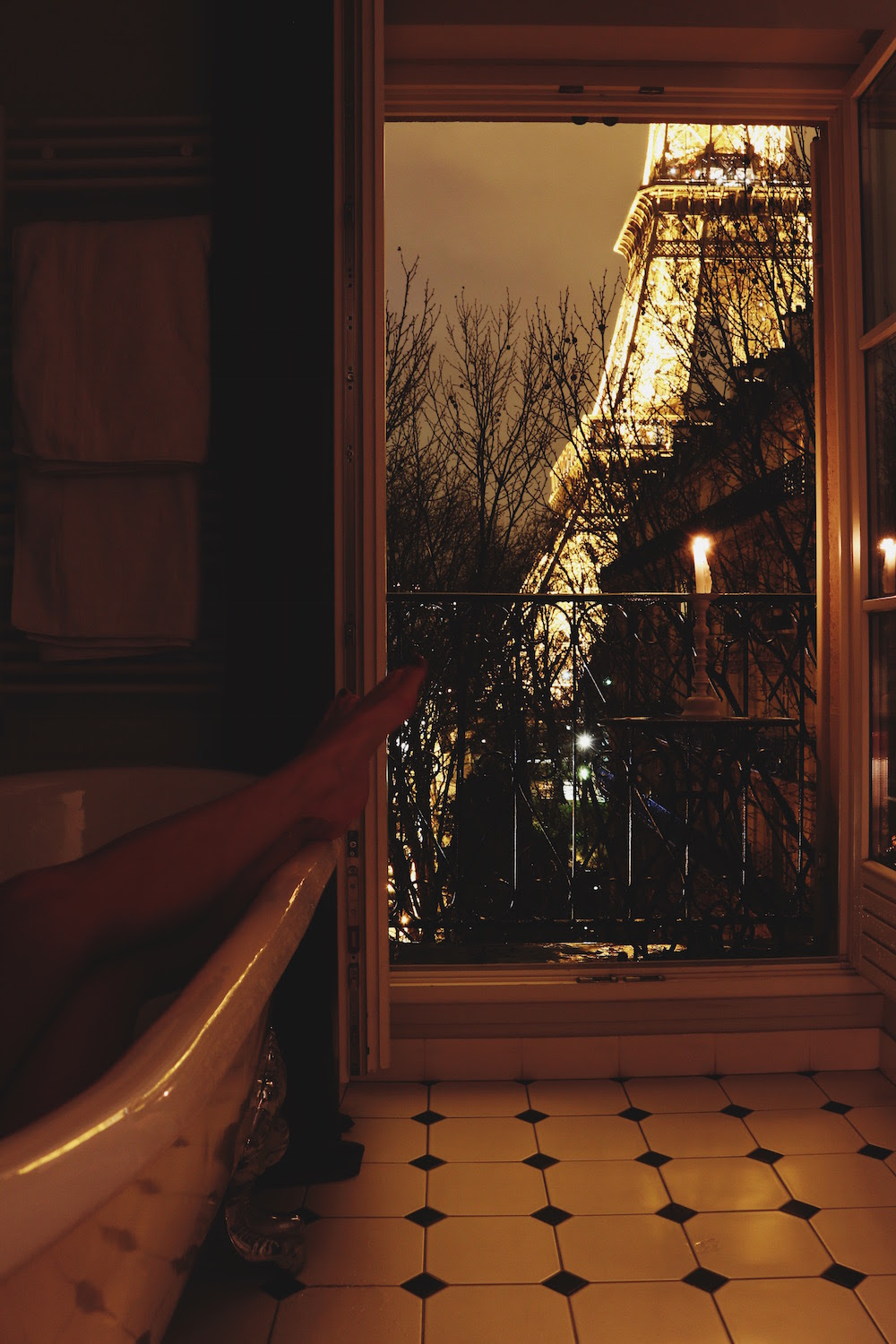
Taking a Bath in Front of the Eiffel Tower
...If you’ve followed my adventures over the years in the city of light, you’ll know they haven’t included many trips up the Eiffel Tower (unless I’m time-travelling with Gustave Eiffel) and almost never involve feeling like a tourist; possibly one of my biggest phobias. Paris with Messy Nessy is a little less traditional, more off-the-beaten-path and avoids clichés like the French avoid soap– okay, okay, I promise that particular cliché really doesn’t have an ounce of truth to it, but it brought me so fittingly to this next part where I explain what lured me to the foot of the most visited tourist attraction in the world…
Processed with VSCOcam with s3 preset
It was a bath tub. But not just any old tub....
...Behind the frosted sliding doors of a cozy bedroom inside a 5th floor Parisian apartment, draw the bath after dark and wait for the show to start…
Processed with VSCOcam with 4 preset
Bath time will never be the same again....MUCH MORE
And from Smithsonian Magazine:

The Man Who Sold the Eiffel Tower. Twice.
“Count” Victor Lustig was America’s greatest con man. But what was his true identity? 
The air was as crisp as a hundred dollar bill, on April 27, 1936. A southwesterly breeze filled the bright white sails of the pleasure boats sailing across the San Francisco Bay. Through the cabin window of a ferryboat, a man studied the horizon. His tired eyes were hooded, his dark hair swept backwards, his hands and feet locked in iron chains. Behind a curtain of grey mist, he caught his first dreadful glimpse of Alcatraz Island.

“Count” Victor Lustig, 46 years old at the time, was America’s most dangerous con man. In a lengthy criminal career, his sleight-of-hand tricks and get-rich-quick schemes had rocked Jazz-Era America and the rest of the world. In Paris, he had sold the Eiffel Tower in an audacious confidence game—not once, but twice. Finally, in 1935, Lustig was captured after masterminding a counterfeit banknote operation so vast that it threatened to shake confidence in the American economy. A judge in New York sentenced him to 20 years on Alcatraz.

Lustig was unlike any other inmate to arrive on the Rock. He dressed like a matinee idol, possessed a hypnotic charm, spoke five languages fluently and evaded the law like a figure from fiction. In fact, the Milwaukee Journal described him as ‘a story book character’. One Secret Service agent wrote that Lustig was “as elusive as a puff of cigarette smoke and as charming as a young girl’s dream,” while the New York Times editorialized: “He was not the hand-kissing type of bogus Count—too keen for that. Instead of theatrical, he was always the reserved, dignified noble man.”

The fake title was just the tip of Lustig’s deceptions. He used 47 aliases and carried dozens of fake passports. He created a web of lies so thick that even today his true identity remains shrouded in mystery. On his Alcatraz paperwork, prison officials called him “Robert V. Miller,” which was just another of his pseudonyms. The con man had always claimed to hail from a long line of aristocrats who owned European castles, yet newly discovered documents reveal more humble beginnings.

In prison interviews, he told investigators that he was born in the Austria-Hungarian town of Hostinné on January 4, 1890. The village is arranged around a Baroque clock tower in the shadow of the Krkonoše mountains (it is now a part of the Czech Republic). During his crime spree, Lustig had boasted that his father, Ludwig, was the burgomaster, or mayor, of the town. But in recently uncovered prison papers, he describes his father and mother as the “poorest peasant people” who raised him in a grim house made from stone. Lustig claimed he stole to survive, but only from the greedy and dishonest.

More textured accounts of Lustig’s childhood can be found in various true crime magazines of the time, informed by his criminal associates and investigators. In the early 1900s, as a teenager, Lustig scampered up the criminal ladder, progressing from panhandler to pickpocket, to burglar, to street hustler. According to True Detective Mysteries magazine he perfected every card trick known: “palming, slipping cards from the deck, dealing from the bottom,” and by the time he reached adulthood, Lustig could make a deck of cards “do everything but talk.”

First-class passengers aboard transatlantic ships became his first victims. The newly rich were easy pickings. When Lustig arrived in the United States at the end of World War I, the “Roaring Twenties” were in full swing and money was changing hands at a fevered pace. Lustig quickly became known to detectives in 40 American cities as ‘the Scarred,’ thanks to a livid, two-and-a-half inch gash along his left cheekbone, a souvenir from a love rival in Paris. Yet Lustig was a considered a “smoothie” who had never held a gun, and enjoyed mounting butterflies. Records show that he was just five-foot-seven-inches tall and weighed 140 pounds.

His most successful scam was the “Rumanian money box.” It was a small box fashioned from cedar wood, with complicated rollers and brass dials. Lustig claimed the contraption could copy banknotes using “Radium.” The big show he gave to victims was sometimes aided by a sidekick named “Dapper” Dan Collins, described by the New York Times as a former ‘circus lion tamer and death-defying bicycle rider.’ Lustig’s repertoire also included fake horse race schemes, feigned seizures during business meetings, and bogus real estate investments. These capers made him a public enemy and a millionaire....MORE
A counterfeit $5 banknote that it is believed to be created by Lustig and Watts.
A counterfeit $5 banknote that it is believed to be created by Lustig and Watts. (Courtesy of Jeff Maysh)
HT: Longform

I can see privately issued currency making a comeback should large denominations of the official stuff be scrapped, the demi-monde can usually be counted on to creatively fill a need.
And we've already got a resurgence of magic black-box deals populating Silicon (your choice on which syllable to emphasize) Valley, so, what was old is new again.

Sunday, April 11, 2021

French History Messy Nessy Style: "Little Tuscany in the Heart of Paris"

The ladies are very good at this stuff, this time it's Louise McNutt rather than Vanessa.

From Messy Nessy Chic, April 9:

https://static.messynessychic.com/wp-content/uploads/2021/04/s-l1600-930x683.png

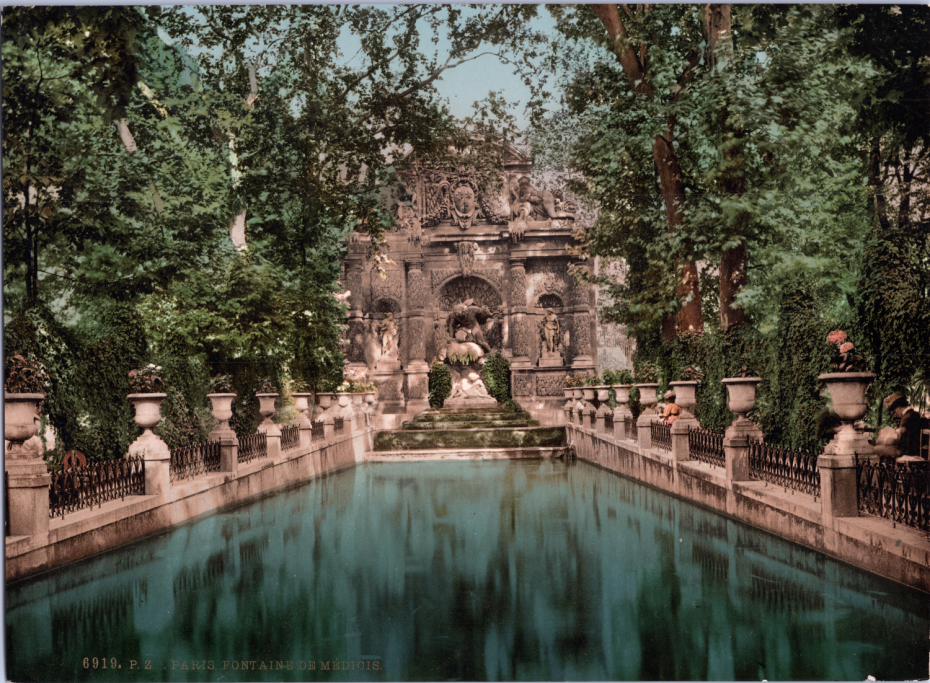
Medici Fountain, Jardin de Luxembourg

As if plucked from a 17th century Mediterranean estate waiting to transport Parisians to the hills of Florence; tucked away in a corner of Paris’ Luxembourg gardens is one of the city’s most underrated beauty spots. The Medici Fountain, crowned with an Italian grotto and flanked by ivy drapes, is an impossibly romantic place alluding to the story of a troubled, homesick queen. In fact, throughout the iconic Jardins de Luxembourg, you’ll find clues to the legacy of a woman far from home, nostalgic for the surroundings of her beloved Florence. And this forgotten Italian connection is perhaps most evident in the near-replica of a Tuscan palace she had built right at the heart of Paris’ most famous park…

https://static.messynessychic.com/wp-content/uploads/2021/04/0003-930x531.jpg

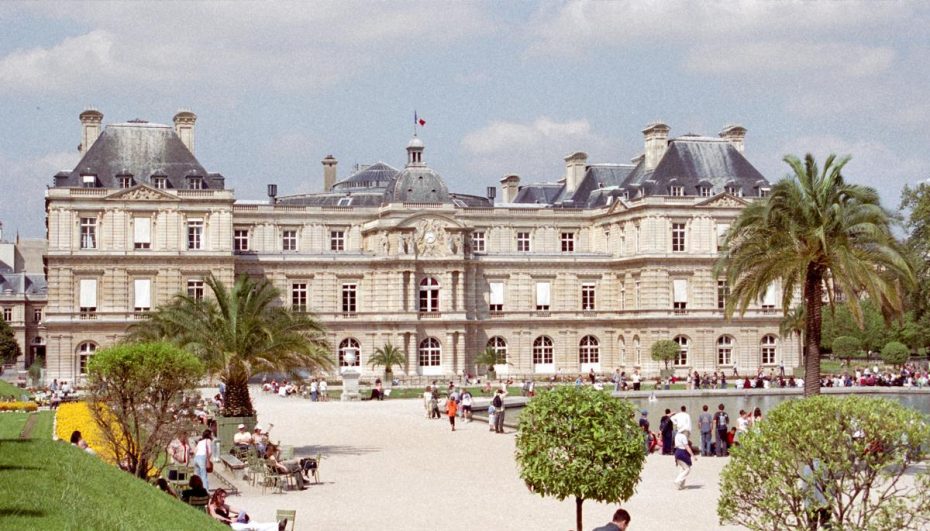
Palais du Luxembourg

The Palais du Luxembourg may not be up there with the most iconic of Parisian landmarks, taking a backseat to the Eiffel Tower and the Sacré Cœur when it comes to the sites that visitors traditionally flock to. Home to the French Senate since the 1950s, on a Sunday afternoon, you’ll find dapperly-dressed children sailing toy boats out on the front pond and couples strolling arm in arm enjoying the surrounding gardens, largely unaware of its intriguing Italian backstory.

*****

You could indeed be forgiven for thinking that this typically Parisian scene is the result of just another French regent with expensive taste, but this extravagantly ornate palace with all its lavish embellishments is in fact modelled on the Tuscan childhood home of an Italian princess, Maria de’ Medici, who incidentally became France’s most hated queen. 

*****

Marie de’ Medici (born Maria) was a member of the notoriously powerful Florentine banking family; the daughter of Francesco I de Medici, Grand Duke of Tuscany. Her childhood was filled with the sort of tragedy and scandal one might expect from a Brothers Grimm fairy tale. When Marie was just a toddler, her mother, the Archduchess Joanna of Austria fell to her untimely death while heavily pregnant with her unborn child. Her deathbed was still warm when Marie’s father took up with the woman who would become her stepmother (many suspected that his late wife’s unfortunate tumble may have been more of a push). The Grand Duke however didn’t have to endure the suspicion for very long because within a few years, both he and his second wife were dead too – some historians say they were poisoned by Marie (hence her historical nickname: the “Poison Queen”), while some believe they were killed by malarial fever. Whatever their cause of death, it now made Maria de’ Medici the richest heiress in Europe.

*****

Despite her rather morbid reputation, Marie still remained somewhat of a hot prospect on the royal European dating scene thanks to the significant newfound wealth. The fact that she was also considered quite the looker didn’t hinder her chances either....

....MUCH MORE

The paintings alone are worth the price of admission but when you add in Marie being described as a hottie, well say no more....

Messy Nessy Chic home

Saturday, November 6, 2021

"What Happened to the Secret Bunker beneath the Eiffel Tower?"

We haven't visited Vanessa at Messy Nessy Chic in a while and while we won't get her idiosyncratic view of Paris on this trip, she does have two writers stepping up to the challenge that is Messy Nessy Chic. First up with the headliner, Hannah Steinkopf-Frank, a grad student at the Paris Institute of Political Studies (Sciences Po):


You may or may not be aware that Gustave Eiffel used his iconic Eiffel Tower as a personal start-up lab for scientific innovation (hint: you probably heard it from us). But did you know that there’s also a “secret” military bunker still buried beneath, with an entrance near the south pillar?

The bunker — which was not originally created to withstand army bombardments — was constructed in 1909 for the military telecommunications that took place from the Eiffel Tower. The tower was designed as the grand entrance to the 1889 Exposition Universelle, but soon after, Eiffel was trying to find ways to save his eponymous project; after all, it was only meant to stay up for 20 years and received much criticism about its architectural aesthetic. So the engineer gave personal financial backing to army general and radio pioneer Gustave-Auguste Ferrié’s plan to build a wireless telegraphy station at the top of the tower....

....MUCH MORE

And giving us a chance to reprise a pretty picture, "Bal du moulin de la Galette", as well as read some history, someone we saw last April in "French History Messy Nessy Style: 'Little Tuscany in the Heart of Paris'"
The ladies are very good at this stuff, this time it's Louise McNutt rather than Vanessa. 

Postcards from the Last Windmill in Paris

https://static.messynessychic.com/wp-content/uploads/2021/10/Auguste_Renoir_-_Dance_at_Le_Moulin_de_la_Galette_-_Muse%CC%81e_dOrsay_RF_2739_derivative_work_-_AutoContrast_edit_in_LCH_space-930x691.jpeg

Renoir’s Bal du moulin de la Galette [Musée d'Orsay]

In the dappled light coming through the trees, a jovial bohemian crowd have gathered to dance and dally at the Moulin de la Galette, one of the many windmills that originally stood at the northern tip of Paris. By the time Renoir’s famous painting had captured the scene in 1876, the unlikely venue was already a centre piece for the artistic crowd who had found themselves in Montmartre at the end of the 19th century. That very year, Renoir had setup in a small workshop within the heart of the hilltop village that was still not yet considered a part of Paris. He painted his own friends into the picture, including his lover, Margot, but on any given day, you might have run into Pablo Picasso, Henri Matisse, Edgar Degas, Toulouse-Lautrec and later, Gertrude Stein, Ernest Hemingway and F. Scott Fitzgerald. A humble flour mill turned epic village fête, it was a non-stop party during the Belle Epoque at the Moulin de la Galette, and thankfully, there are the postcards (and a few paintings you make know) to prove it....

https://static.messynessychic.com/wp-content/uploads/2021/10/6162538370_8e1170c6fc_b-930x549.jpg

Postcard showing one of the infamous dance events at the Moulin de la Galette

....MUCH MORE

Monday, November 15, 2021

Tate Puts Trigger Warnings On Hogarth

Good grief, grow up. I am not going back to our every usage of "Gin Lane" to add a "this may offend your sensibilities" tag.

I thought I was going above and beyond the call just to make clear the old saying:

Drunk for a penny
dead drunk for tuppence
clean straw for nothing

-Inscription on the arch of the gin celler
 "Gin Royal" in Hogarth's Gin Lane

The motto is inscribed above the arch, bottom left-click to enlarge.

And from one of the founders of The Critic:

Here's the Tate's webpage on the exhibition.

And here's a freebie,  Trigger Warning!!! The etymology of "hungover" about a century after the above: 

Ethanol: Now That's Hungover

From Vanessa at Messy Nessy Chic: 

The Victorian “Two Penny Hangover”: How the term “hungover” originated

https://static.messynessychic.com/wp-content/uploads/2020/11/two-penny-hangover.jpg

At one of the first homeless shelters in London, for two pennies a night people could sleep resting over a rope (they were forbidden from lying down). It was called the “two-penny-hangover” and it may likely be where the term “hungover” originates from.

Full article found on Historic UK

Messy Nessy home 

Previously from Messy Nessy.

Tuesday, November 23, 2021

"Spanish renters are declaring 'war' on the American private equity firms that bought up all the apartments in their neighborhoods"

From Business Insider, November 23:

  • US private equity firms that own property in Spain have been evicting residents during the pandemic, the NYT reports.
  • Tenants and housing activists have declared "war," protesting evictions by squatting in apartments.
  • They argue that the investment firms have been profiting off the economic strain caused by the pandemic.

Renters who can't afford to pay their landlords are being evicted, and they're furious about it. They're especially mad that their landlord is a large investment firm headquartered in Wall Street.

But what if I told you this was happening thousands of miles away from New York City, an ocean away even, in Spain? And what if I told you the Spanish evictees aren't taking it lying down?

Large American private equity firms have been evicting renters from their apartments in Spain as the residents have struggled to pay rent during the pandemic. Renters, however, have been organizing against the landlords, lawyers, and police officers trying to evict them, refusing to leave their own homes and squatting in others. 

A group called "Guerra a Cerberus" — War Against Cerberus — has been fighting back against eviction attempts, The New York Times reported this week. The organization, made up of both residents and long term housing activists in Spain, are protesting the firms that they argue have been profiting off the financial strain of the pandemic, as well as the court system, which they view as favoring landlords in eviction cases. 

Cerberus — named for the three-headed dog that guards the underworld in Greek mythology — is a giant investment firm that began buying cheap properties across Spain after the global financial crisis started in 2008. Cerberus and other firms, such as Blackstone and Lone Star, are based in the US, but collectively purchased thousands of properties across the European country. 

Members of War Against Cerberus have been taking action when police officers and lawyers representing private equity firms attempt to force residents out of their homes. As they are physically removed from their apartments, members of the organization squat in properties owned by the firms in other parts of the city. 

Dozens of households have occupied buildings owned by private equity firms, War Against Cerberus told the Times. The pressure the squatters exert on the large firms is quantifiable: it can take several years in court and millions of dollars in legal fees to have squatters removed. 

War Against Cerberus often posts their encounters with law enforcement on social media. They also use platforms such as Twitter to rally support when residents are evicted from their homes. 

"Today the vulture fund Cerberus wants to take out Yousra and her family," the group posted on Twitter last week. "The neighborhood has woken up with people from all over, showing an organized and combative movement." A picture posted with the tweet shows a blockade that the group formed in front of the apartment they were demonstrating in front of. 

"Our lives are worth more than all their properties, so #GuerraACerberus," an organizer shouted during one group meeting in October. 

The housing crisis in Spain worsened during the pandemic — with evictions rising by 14% in early 2021 compared to the same period in 2020, according to the government — but has been hitting residents hard since the financial crisis of 2008. Homeowners went bankrupt, evictions rose, and thousands of people lost their homes. In the last decade, the number of renters in Spain grew by more than 40 percent, the Times estimates....

....MORE

It's always something. Just a few years ago it was mobsters and short-term rentals:
July 6, 2017
Russian Gangsters and Airbnb Are Pricing the Locals Out of Residential Real Estate in Barcelona

Speaking of short-term rentals, Vanessa at Messy Nessy Chic highlighted this Spanish Airbnb, also 2017:

Some Airbnbs Are Better Looking Than Others

Kind of an artsy-fartsy day, what with the big auctions and perfectly executed risk management and all.
just kidding, it was far from perfect, hence yesterday's disappearing act and today's spiffy new risk manager hat.

Via Messy Nessy Chic, 13 Things I Found on the Internet Today (Vol. CCXXXV), May 15:

3. This Airbnb Location

Designed by Ricardo Bofill and built in 1973, La Muralla Roja is an insanely colourful apartment complex which sits out on the rocks of a coastal town in Calpe, Spain.


http://static.messynessychic.com/wp-content/uploads/2017/05/town5-930x1256.jpg

...MORE

Also in Vol. CCXXXV:
1. Stevie Nicks Kicking Butt in platform shoes in a 1983 Self Defense Manual

Previously from Messy Nessy:

There's Realism, There's Hyperrealism, There's Photo-Realism and Then There's This
Construction Used to Be More Labor Intensive (and other pictures you may not have seen before) CMB
Picasso Pics For Sale, Cheap (chateau included)
The Man Who Sold The Eiffel Tower, Twice and A (bath) Room With A View
Art Institute of Chicago Recreates Van Gogh's Bedroom, Puts it On Airbnb
Huh, Apparently The Barbie Doll Began Life As a High-end German Call Girl Named Lilli

Sunday, April 19, 2020

"Sex Worker Brides & the Rise of “Millionaires” in the Twisted Tale of a Forgotten Economic Crash"

Continuing today's slightly askew look at things French, we'll visit Vanessa at Messy Nessy Chic:
Once upon a time, in pre-revolutionary Paris, French prisoners were set free under the condition that they married prostitutes and emigrated with them to Louisiana. The newlyweds were chained together, escorted to the port and sent to the land of the free. This bizarre and little-known anecdote of history comes from the story of one of the earliest examples of an economic bubble that gave birth to the term, “millionaire“, first coined in 18th century France.

Ever heard of the Mississippi Company or the Mississippi bubble? Maybe you glossed over it in high school history class. The Compagnie du Mississippi was a corporate monopoly founded in France to profit from trade in the French colonies within North America and the West Indies. At the start of the 18th century, France found itself bankrupt no thanks to Louis XIV and his long drawn-out wars, excessive spending and general f*ckery. But the country still owned the Louisiana Territory, which promised to be a “Garden of Eden”, rich in gold, fur and rubies…

Enter John Law, a passionate economist and mathematician with a gambling problem. Yeah – one of those. So this guy pitches up in Paris and starts hobnobbing with nobility at high stakes gambling parties and becomes chummy with powerful people like the Duke of Orléans, who has just become Regent for the country’s new five year-old king. With Law’s influence and charm, soon enough he convinces French authorities to support a complex plan to create the country’s first central bank with a monopoly on national finance – and the Mississippi Company … to do its dirty work. In order to sell shares in that company, he then sets about convincing the French people that Louisiana is going to make them all rich. And they buy it, quite literally.

Everyone wants a piece in the Mississippi Company, and share prices skyrocket. Meanwhile John Law has the government printing more paper money than there is gold and silver to back it. When shares quickly sell out, the public starts buying shares from each other with paper money. And more of the green stuff gets printed....
....MUCH MORE, including some dandy pics.

Previously from Nessy:
For Sale: "An Abandoned Overgrown Estate is the Last of its Kind in the Heart of Paris"
"The Louvre’s Secret Apartments"
Huh, Apparently The Barbie Doll Began Life As a High-end German Call Girl Named Lilli  
Picasso Pics For Sale, Cheap (chateau included)
Art Institute of Chicago Recreates Van Gogh's Bedroom, Puts it On Airbnb
Now It Can Be Told: Mohammed bin Salman Was the Mystery Buyer of the $300 Million French Château
There's Realism, There's Hyperrealism, There's Photo-Realism and Then There's This
The Man Who Sold The Eiffel Tower, Twice and A (bath) Room With A View
...Behind the frosted sliding doors of a cozy bedroom inside a 5th floor Parisian apartment, draw the bath after dark and wait for the show to start…
Processed with VSCOcam with 4 preset

Messy Nessy Chic homepage

And on John Law and the Mississippi Company:
France and the Mississippi Bubble
The fact that this bubble was contemporaneous with the English South Sea Bubble and the lesser-known Dutch Wind bubble is just amazing.
France and the Mississippi Bubble: "Money for nothing: A history of mania in John Law's Mississippi Company stock"
New York Fed: "The Mississippi Bubble of 1720 and the European Debt Crisis"
Pathology: Lottery Mania and Market Bubbles
Lessons From the Mississippi Bubble--Edward Chancellor

And that Dutch bubble?
So You Are Well Versed In South Sea Bubble Lore, Know Law and the Mississippi Madness But Do You Recall....
...The Dutch 'Wind-trade', which also popped and dropped during those memorable months of 1719 - 1720?
From Professor (Erasmus U., Rotterdam) David Smant's personal website:

DUTCH MIRROR OF FOLLY, Windhandel 1720
...MORE

Wednesday, April 5, 2017

There's Realism, There's Hyperrealism, There's Photo-Realism and Then There's This

From Messy Nessy Chic, January 2017:

I Refuse to Believe these are Paintings

http://static.messynessychic.com/wp-content/uploads/2017/01/yigal-ozeri-24.jpg
I consider this a super human talent. Alien in fact. Seriously, why aren’t they checking this painter’s DNA for extra-terrestrial origins? His name is Yigal Ozeri, an oil painter from Isräel best-known for his cinematic-scale portraits of pretty girls hanging out with nature in perfect sunlight. Let me know when  you see a brushstroke…
 http://static.messynessychic.com/wp-content/uploads/2017/01/zemack-banner_1140_475_c1.jpg
...Oh come ON! That’s a painting? My huge bulky professional camera doesn’t even take photographs this good…MUCH MORE
http://static.messynessychic.com/wp-content/uploads/2017/01/186e287d38e3.png

That last is vaguely reminiscent of Ophelia but kinda makes Millais look like an amateur:

https://upload.wikimedia.org/wikipedia/commons/9/94/John_Everett_Millais_-_Ophelia_-_Google_Art_Project.jpg

I'm thinking of taking back my suggestion in 2016's "Yellen: Fed Should Explore Purchasing ‘Broader Range of Assets’" :
Fine wines, single family detached housing, Pre-Raphaelite paintings (esp. Millais) junk silver coins etc....
The closest talent we've had on the blog is probably:

So, You Think You Can Draw? Ha! Meet Paul Cadden

http://www.dailyartfixx.com/wp-content/uploads/2011/08/NVA6-Paul-Cadden.jpg

whose pencil drawings are amazing but as Nessy says, Ozeri is from another universe.

Previously from Messy Nessy:
Construction Used to Be More Labor Intensive (and other pictures you may not have seen before) CMB
Picasso Pics For Sale, Cheap (chateau included)
The Man Who Sold The Eiffel Tower, Twice and A (bath) Room With A View
Art Institute of Chicago Recreates Van Gogh's Bedroom, Puts it On Airbnb
Huh, Apparently The Barbie Doll Began Life As a High-end German Call Girl Named Lilli

Thursday, March 22, 2018

News You Can Use: "What to Bid on at the Historic Ritz Paris Auction"

From Messy Nessy Chic, March 21:

http://static.messynessychic.com/wp-content/uploads/2018/03/ritz-paris-hotel-suite-imperiale-upsell-1_0-930x499.jpg
When they closed the Ritz Paris for a four year renovation in 2012, my mind often went to that place where I imagine I can walk through walls and suddenly, I’m roaming empty hallways and rooms with the ghosts of the city’s most storied hotel. Sometimes I wandered into the secret Ritz warehouse (yes, such a place exists), where thousands of pieces of furniture and decorative objects lived during much of the renovation and redesign. It would be just like walking through the warehouse of treasures from the final scene of Citizen Kane....

....As it turns out, the reality isn’t that far off. In 2017, a team of 10 lucky people were “locked inside” the secret Ritz furniture warehouse for 6 months to inventory 10,000 items in preparation for their auction this Spring. From Hemingway-era bar stools and beds from the Coco Chanel suite to minibars and the signature hotel bathrobes, it’s all there, and it’s all about to go up for sale. Take a look inside the warehouse…MUCH, MUCH, SO MUCH MORE
Previously from Messy Nessy;
Now It Can Be Told: Mohammed bin Salman Was the Mystery Buyer of the $300 Million French Château
Some Airbnbs Are Better Looking Than Others
There's Realism, There's Hyperrealism, There's Photo-Realism and Then There's This
Construction Used to Be More Labor Intensive (and other pictures you may not have seen before) CMB
Picasso Pics For Sale, Cheap (chateau included)
The Man Who Sold The Eiffel Tower, Twice and A (bath) Room With A View
Art Institute of Chicago Recreates Van Gogh's Bedroom, Puts it On Airbnb
Huh, Apparently The Barbie Doll Began Life As a High-end German Call Girl Named Lilli 

Wednesday, August 3, 2022

Nitrogen: "Was the Colosseum Paid for with Pee?"

From Messy Nessy Chic:

What we know as the famous Roman “Colosseum” might have been paid for with pee, more specifically poor people’s pee. Built under the rule of Emperor Vespasian of the Flavian dynasty, he is one of the only known rulers in history to have imposed a urine tax on the sale and distribution of urine from the city’s public toilets, which in the time of Ancient Rome, apparently had very good resale value. Let us explain…  

Roman Emperors had controversial lifestyles, but the Emperor that preceded Vespasian – Nero – trumped them all and bankrupted the empire with reckless spending. The senate declared him a public enemy, he committed suicide and a civil-war broke out. Rising from this chaos was Vespasian, a commoner and civil servant known for his fiscal responsibility and military campaigns. Basically, the opposite of Nero. His peers nicknamed Vespasian “Mulio,” or mule-breeder, because he sold mules to get to finance the North African Province he governed rather than exploiting the local resources. 

Now Emperor, Vespasian found the imperial treasury depleted and needed to generate funds. He did this by raising taxes. Most of his taxes targeted the rich. He even extorted nobles by promoting them, only to then imprison them and make them pay fines for their freedom. People said he used these men as “sponges” – soaking them when they were dry and squeezing them when wet. 

However, his most infamous tax targeted the commoners. Most Romans were generally “too poor to have a pot to piss in” as the saying goes, and had to go to local public latrines to relieve themselves. Landlords would collect and sell the peasants’ pee. Buyers paid the tax. Why would anyone buy urine, you ask? Tanners, wool producers and launderers coveted piddle for its high ammonia content and some Romans even believed it could be used it for whitening their teeth.....

....MUCH MORE 

That's it for Messy Nessy for this week. I had been feeling as though I was depriving our readers of that cyber cabinet of curiosities but it's August in Paris and posting will be light.

We on the other hand, despite a few hundred posts on the topic, have barely scratched the surface in our review of nitrogen: Money, Power, Glory, Guano! 

There is a concerted effort to decrease meat consumption, with or without the concurrence of the citoyens, and the focus recently has been on what makes protein, protein, nitrogen. From the decrees in Canada and The Netherlands to article's such as this in Scientific American, July 27: "Nitrogen Emissions: "Eating Too Much Protein Makes Pee a Problem Pollutant in the U.S.""

The biggest problem with moving too fast on this stuff:
Three Billion People Eat Food Grown With Natural Gas Derived Nitrogen Fertilizer

It would be best if we had an alternative in place before going all command-and-control and recreating in food what is being done in energy.

Thursday, January 23, 2020

For Sale: "An Abandoned Overgrown Estate is the Last of its Kind in the Heart of Paris"

From one of the internet's tiny treasures, Messy Nessy Chic, January 21:
Wild and consumed by nature, like a scene described by Dickens in Great Expectations – an estate frozen in time, fit for the reclusive Miss Havisham herself – a “country house” in the centre of the city, surrounded by Paris’ most coveted real estate, will go up for sale this week at auction.

In a neighbourhood dominated by designer shops and luxury hotels, just a five minute walk from the LVMH-owned Bon Marché department store and overlooking Yves Saint Laurent’s former home, it’s a 2,000 m2 property that seems impossible for Paris’ 21st real estate market.

The rare pearl that is 12, rue Oudinot in the 7th arrondissement, has long been a place of mystery for neighbouring residents, its facade sealed and walled-up from the street. Left to deteriorate for at least two decades, last in use as a collective of artist ateliers and artisanal workshops, the property will be put up for auction at 6 million euros on January 23rd at the Palais de Justice. The good news is, whoever buys it is obligated to restore the vast estate “identically” to its former romantic style. ...MUCH MORE
Some of our previous visits with Vanessa:

Huh, Apparently The Barbie Doll Began Life As a High-end German Call Girl Named Lilli  
Picasso Pics For Sale, Cheap (chateau included)
Art Institute of Chicago Recreates Van Gogh's Bedroom, Puts it On Airbnb
The Man Who Sold The Eiffel Tower, Twice and A (bath) Room With A View
...Behind the frosted sliding doors of a cozy bedroom inside a 5th floor Parisian apartment, draw the bath after dark and wait for the show to start…
Processed with VSCOcam with 4 preset

Messy Nessy Chic homepage

Wednesday, January 4, 2017

Construction Used to Be More Labor Intensive (and other pictures you may not have seen before) CMB

This link is pretty much the definition of eclectic.

From Messy Nessy Chic:

In the Grand Scheme of Things
As you can imagine, I collect a lot of images from the internet. And sometimes, I need to unload them to clear some space on the old laptop. So this is me, doing that, in a meaningful way. I hope you’ll find the theme of today’s spring clean larger than life…
buildingbig
Workers pose during construction of 60-story tall Chase Manhattan Bank headquarters in NYC, 1959.

trump
The house that Donald Trump couldn’t buy. circa 1991. 
The time Donald Trump’s empire took on a stubborn widow and lostsource.

...MANY MORE

Previously from Messy Nessy:

Picasso Pics For Sale, Cheap (chateau included)
The Man Who Sold The Eiffel Tower, Twice and A (bath) Room With A View
Art Institute of Chicago Recreates Van Gogh's Bedroom, Puts it On Airbnb
Huh, Apparently The Barbie Doll Began Life As a High-end German Call Girl Named Lilli

Thursday, May 18, 2017

Some Airbnbs Are Better Looking Than Others

Kind of an artsy-fartsy day, what with the big auctions and perfectly executed risk management and all.
just kidding, it was far from perfect, hence yesterday's disappearing act and today's spiffy new risk manager hat.

Via Messy Nessy Chic, 13 Things I Found on the Internet Today (Vol. CCXXXV), May 15:

3. This Airbnb Location

Designed by Ricardo Bofill and built in 1973, La Muralla Roja is an insanely colourful apartment complex which sits out on the rocks of a coastal town in Calpe, Spain.


http://static.messynessychic.com/wp-content/uploads/2017/05/town5-930x1256.jpg

...MORE

Also in Vol. CCXXXV:
1. Stevie Nicks Kicking Butt in platform shoes in a 1983 Self Defense Manual

Previously from Messy Nessy:

There's Realism, There's Hyperrealism, There's Photo-Realism and Then There's This
Construction Used to Be More Labor Intensive (and other pictures you may not have seen before) CMB
Picasso Pics For Sale, Cheap (chateau included)
The Man Who Sold The Eiffel Tower, Twice and A (bath) Room With A View
Art Institute of Chicago Recreates Van Gogh's Bedroom, Puts it On Airbnb
Huh, Apparently The Barbie Doll Began Life As a High-end German Call Girl Named Lilli

Saturday, May 6, 2023

"Travelling Modern Europe with a Victorian Railway Guidebook"

Earlier today we had a post "In 1983, Steve Jobs typed this reply to a letter asking for his autograph." that came to us via Messy Nessy Chic and someone (ahem) forgot to link to MNC,

That's been rectified but here are her last three "13 Things I Found on the Internet Today" posts may be of interest to our readers:

(Vol. DCXLVII)

(Vol. DCXLVI), the one that led to Steve Jobs.

(Vol. DCXLV)

And the headline story, from Messy Nessy Chic, April 28:


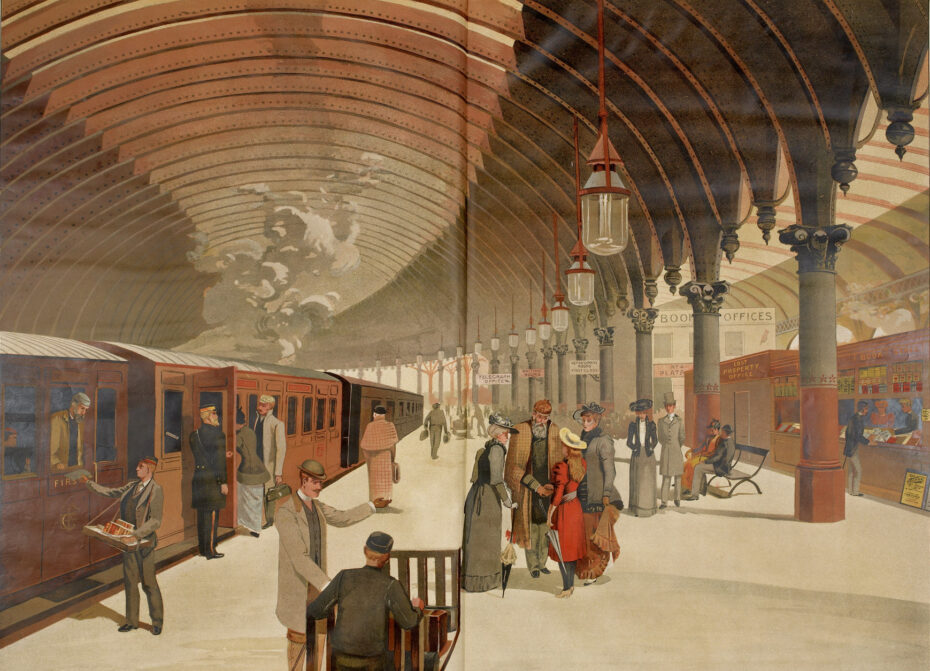
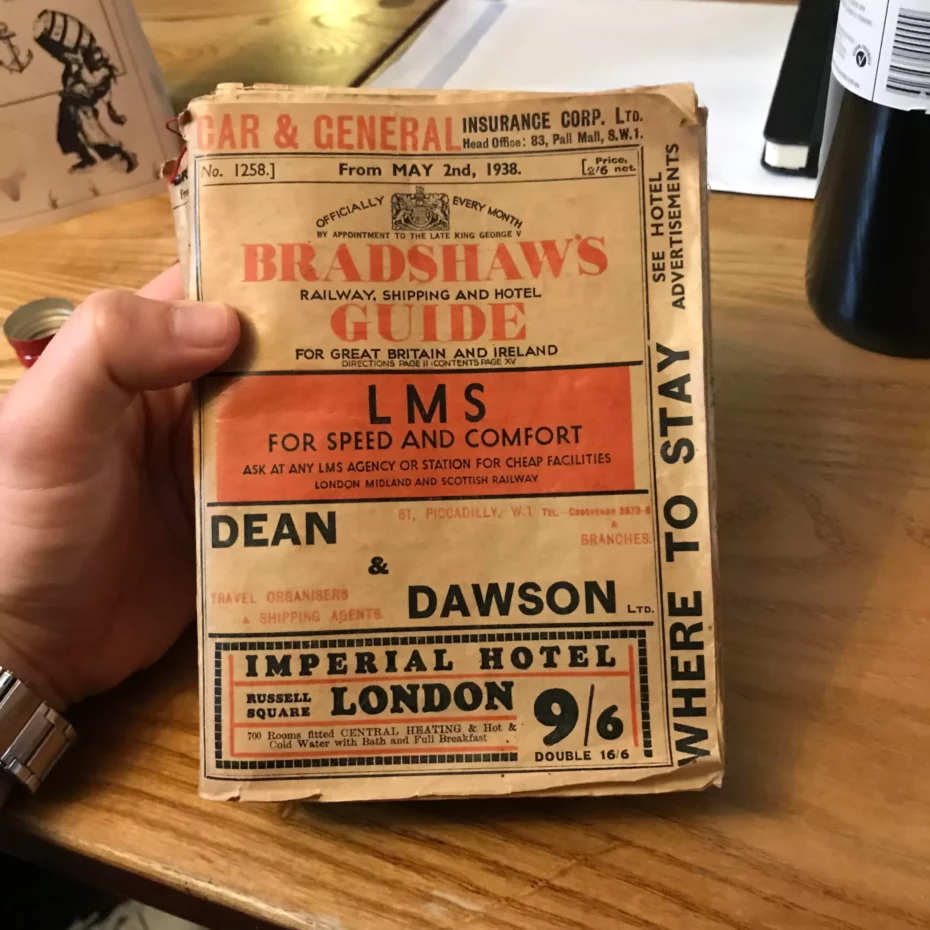
Are you looking for a way to travel back in time? Well, we haven’t cracked the laws of physics yet, but we have the next best thing – a guidebook from another time. Move over Lonely Planet, Bradshaw’s was one of the original guides that inspired the British to travel the Continent for leisure. 

Bradshaw’s also carries significant cultural clout. In fact, some of the most iconic travellers in literature confided in their trusty copy. Dracula is spotted reading an “English Bradshaw’s Guide” as he prepped for his journey to England in Bram Stoker’s classic, and literature’s most iconic traveller, Phileas Fogg also carries a copy with him in Jules Verne’s Around the World in 80 Days. If it’s good enough for Dracula and Phileas Fogg, it’s good enough for us!....

....MUCH MORE

And speaking of travel, one of the "13 Things..." posts above has a link to:

If the ancient Romans had Google Maps
OmnesViae is a modern route planner based on the roads of the Roman Empire.

Sunday, September 27, 2020

The Brothel Boss Lady Who Helped Build Seattle

Another repost, this one from 2018:

Entrepreneurs: Before There Was Bezos, The Woman Who Helped Build Seattle
We haven't visited Vanessa in a while and have a queue of links built up.

From Messy Nessy Chic, August 30:
The Brothel Boss Lady who Helped Build Seattle

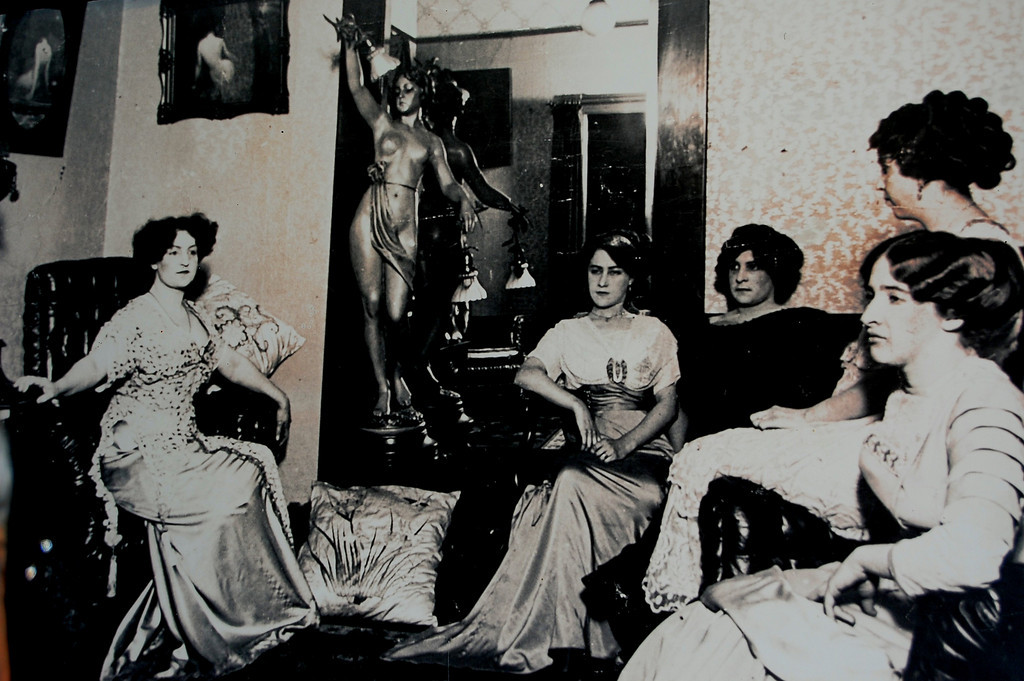
Madame Lou’s parlor
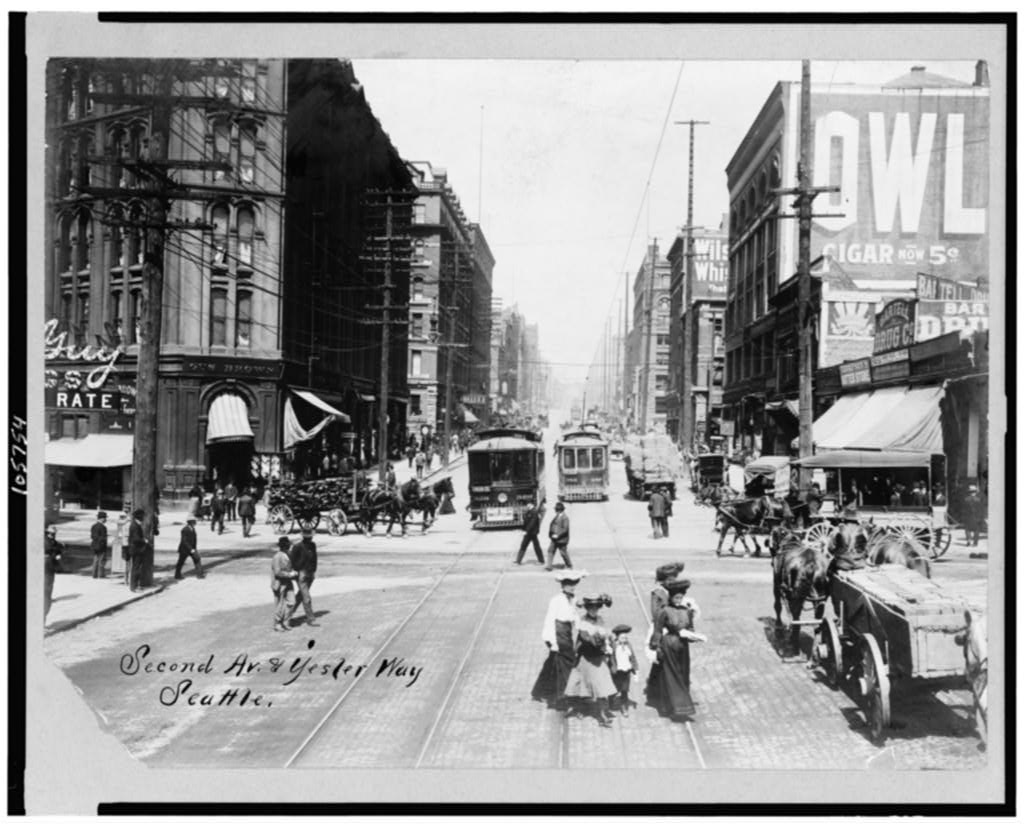
Like many West Coast settlements, Seattle is a city built on sin. As a logging town and port city their main industry might have been lumber, but the businesses that kept them competitive were the ones that could keep the sailors and other labourers entertained. Madame Lou Graham was a businesswoman through and through, and while she might have been notorious for the business that went on inside her mansion, she was also responsible for financing a lot of the infrastructure that allowed the city to grow into what it is today.

Lou must have been especially good at what she did to have convinced the city leaders to let her set up shop. Just a few years prior to her entering the scene, Seattle had allowed women the right to vote– and it had almost bankrupted the city. Women elected uncorrupted officials who enforced the laws of the land and cleaned up the streets.
Brothels and gambling dens were shut down, and with them gone, so too were the sailors who frequented them, moving along the coast to greener pastures. Seattle’s budget, which relied heavily on fines and licenses from those establishments, disappeared, and the city very quickly revoked women’s suffrage, not to make an appearance again until the 1919 constitutional amendment 30 years later.

When she entered the scene in the 1880s the men of the city were set against having to “deal” with women. But Lou convinced them otherwise, she proposed a luxury building for the needs of the finer men in the city. A place to take visiting dignitaries to relax and unwind....MUCH MORE
Seattle could probably use more of those women and fewer of the Mayor Jenny Durkan types who, before the murders, was referring to the CHAZ/CHOP as the "Summer of Love."

Previously from Messy Nessy:
For Sale: "An Abandoned Overgrown Estate is the Last of its Kind in the Heart of Paris"
"The Louvre’s Secret Apartments"
There's Realism, There's Hyperrealism, There's Photo-Realism and Then There's This
Construction Used to Be More Labor Intensive (and other pictures you may not have seen before) CMB
Now It Can Be Told: Mohammed bin Salman Was the Mystery Buyer of the $300 Million French Château
Picasso Pics For Sale, Cheap (chateau included)
The Man Who Sold The Eiffel Tower, Twice and A (bath) Room With A View
Art Institute of Chicago Recreates Van Gogh's Bedroom, Puts it On Airbnb
Huh, Apparently The Barbie Doll Began Life As a High-end German Call Girl Named Lilli  

Friday, December 4, 2020

Agde, France: "The Coming Resurrection of a Sleeping Art Nouveau Palace"

 From Messy Nessy Chic:

Gatsby’s mansion has nothing on Chateau Laurens. Perched majestically on a river bend on the outskirts of Agde, a former Ancient Greek colony in the south of France, this exceptional place lost in time has spawned countless stories and speculation about what went on behind its mysterious walls. Some say that the lavish villa was the site of endless extravagant parties hosted by its wealthy owner, while there’s another theory that it was a hub for a burgeoning religious sect. After 35 years of abandonment, nature has had its way with Chateau Laurens, but extensive renovations have been slowly underway over the last decade in an attempt to save this rare cathedral of Art Nouveau treasure. Expertly captured in its limbo state by leading urbex photographer Romain Veillon, as this diamond in the rough prepares to reveal its secrets to the public for the first time, let’s take one last look before the dust is cleared…


So who was the Gatsby of this mansion? Emmanuel Laurens was a 25 year-old student practising medicine in the nearby city of Montpellier when he was unexpectedly bequeathed a gargantuan fortune from a distant cousin, equivalent to approximately 110 million dollars today.

Sounds like the beginning of an epic novel right? Well after spending a few years travelling, he decided with all that coin he would build a cutting edge chateau, inspired by distant lands....

....MUCH MORE

And in other real estate stories at Messy Nessy:

1. A “Wee House” that sits on Loch Shin in the Highlands


 That's from this week's 13 Things I Found on the Internet Today (Vol. DXXXI)

If you recall your Roman numerals, D is getting pretty deep into the schema.

Thursday, June 29, 2023

"2023 is the summer of Barbie"

From Morning Brew, June 27:

Kris Jenner works hard, but Barbie’s marketing team works harder.

On Monday, Airbnb listed a real-life Barbie Malibu Dreamhouse hosted by “Ken.” It’s only available for two one-night stays, but if you’re lucky enough to score one of them, it won’t cost you a dime: “Ken’s thing is beach, not math,” according to a press release.

The Dreamhouse rental is yet another viral marketing stunt for the upcoming Barbie movie, which has cemented itself as the cultural event of the summer. A promotional effort that began in the spring with a selfie generator and a beguiling trailer (what exactly is the plot?) has ballooned to include seemingly infinite partnerships and even a themed boat cruise in Boston, proving that Kris Jenner works hard, but Barbie’s marketing team works harder.

In fact, the hype around the movie has inspired a whole new wave of interior design:

  • It’s leading more adults to decorate their homes in Barbiecore, “a palette made up primarily of hot pink, and similarly bold rosy hues like fuchsia and magenta,” the NYT reported.
  • According to the Times, searches for “Barbie aesthetic bedroom” on Pinterest jumped 1,135% from May 2022 to May 2023.

The pink fuzz is generating ear-piercing buzz

With every brand under the Malibu sun trying to get in on the Barbie action, Barbiecore is proving to be more than just a color palette. Mattel, the company that launched Barbie in 1959, and its 100+ brand collaborators, are seeing opportunity in seemingly every consumer category:

  • For gamers…Xbox is making a Barbie-themed console.
  • For style influencers…Aldo is collaborating with Barbie on pink shoes and accessories....

....MUCH MORE

Previously:

New York Fed: The Federal Reserve and Barbie
Here Comes Artificial Intelligence Barbie
The Promise of 3D Printing, Fulfilled: Open source 3D printed medieval armor for your Barbie doll
"Limited Edition Andy Warhol Barbie Hits the Shelves"
From artnet:

The Andy Warhol Foundation and toy manufacturer Mattel collaborated to create the doll. Photo: InStyle
The Andy Warhol Foundation and toy manufacturer Mattel collaborated to create the doll.
Photo: via InStyle

And another repost, this time featuring the detective work of Messy, Nessy Chic:

Huh, Apparently The Barbie Doll Began Life As a High-end German Call Girl Named Lilli

Barbie Adds Tall, Curvy and Petite Body Types to its Doll Line
It's about time.
As Mattel rolls out some additions to the Barbie line-up, three new body types, "tall, curvy and petite" along with seven skin tones, 22 eye colors and 24 hairstyles--collectors are calling their banks to confirm their credit lines-- here's some backstory from Messy Nessy Chic:

Meet Lilli, the High-end German Call Girl who became America’s Iconic Barbie Doll

lilliebarbie1
So it turns out Barbie’s original design was based on a German adult gag-gift escort doll named Lilli. That’s right, she wasn’t a dentist or a surgeon, an Olympian gymnast, a pet stylist or an ambassador for world peace. And she certainly wasn’t a toy for little girls…
barbie-museum-prague

Lilli on display at the Barbie Museum in Prague
Unbeknownst to most, Barbie actually started out life in the late 1940s as a German cartoon character created by artist Reinhard Beuthien for the Hamburg-based tabloid, Bild-Zeitung. The comic strip character was known as “Bild Lilli”, a post-war gold-digging buxom broad who got by in life seducing wealthy male suitors....
...She was famously quick-witted and known to talk back when it came to male authority. In one cartoon, Lilli is warned by a policeman for illegally wearing a bikini out on the sidewalk. Lilli responds, “Oh, and in your opinion, what part should I take off?”....
....MUCH MORE

Please don't judge me.