Entropy. Stasis. Death.
But tonight, we dance!
From Forbes, March 16:
Earlier today Chamath Palihapitiya, the founder of Social Capital and co-host of the All-In Podcast, published a lengthy thought experiment on X (formerly Twitter) that has since drawn nearly 800,000 views and more than 3,200 likes. The post, titled "The Collapse of Terminal Value," discusses how we might value markets in a post AI era. It poses a unsettling question: what if artificial intelligence erodes competitive advantages and moats so quickly that markets can no longer rationally assign value to what companies might earn in year ten or beyond?
The answer, Palihapitiya suggests, could require a fundamental re-pricing of equity markets at a scale that would make the 2008 financial crisis look modest.
The Argument From First Principles
Palihapitiya grounds his thesis in the basic mechanics of equity valuation. Modern capital markets assign value to companies not only on the basis of what they earn today, but on discounted projections of what they will earn in the future. This "terminal value," the sum of all projected cash flows beyond a forecast period, accounts for a substantial portion of any company's stock price. For high-growth technology companies, that figure is especially large.
In his post, Palihapitiya writes that the S&P 500 currently trades at roughly 22 times earnings, with top technology companies at 30 to 60 times. For most of these businesses, he estimates that 60 to 80 percent of their equity value is embedded in terminal value rather than near-term cash generation. That figure is consistent with broader analysis of large-cap technology valuations. Goldman Sachs Research has noted that the S&P 500's price-to-earnings multiple ranked at the 93rd historical percentile in late 2024, a level that embeds substantial assumptions about future earnings growth.
He asks investors a direct question: what annual probability of AI disruption would you honestly assign to the most important holding in your portfolio? He suggests that any number below 10 percent is difficult to defend given what the industry itself says about the pace of change.
Historical Precedents for Duration Discounting
Palihapitiya’s framework is not new. He draws on four industries where markets previously applied steep duration discounts to businesses generating real cash flows, and where those discounts proved to be correct.
The newspaper industry between 2005 and 2015 is his first example. As digital advertising destroyed the print revenue model, companies that had traded at 12 to 15 times EBITDA compressed to 2 to 4 times. Tribune Company and the Philadelphia Inquirer, among others, eventually filed for bankruptcy. Cash flows were real in year one; they were gone before year seven. Retail experienced a comparable repricing between 2016 and 2020 as Amazon dismantled the economics of brick-and-mortar stores. Department stores and specialty retailers compressed to 3 to 6 times free cash flow even while generating significant cash. The market was pricing duration risk, not current earnings.
Energy companies between 2019 and 2021 saw a similar valuation decline. Major oil producers with decades of proven reserves traded at 4 to 6 times free cash flow as markets priced in the possibility that falling demand for fossil fuels would strand those assets before they could be fully monetized.
The most extreme case, Palihapitiya argues, was the taxi market. Medallion Financial, which provided loans against New York City taxi medallions, watched its collateral collapse from over one million dollars per medallion to under one hundred thousand. These assets were cash-flowing assets with decades of operating history yet the market repriced them to near zero once it became apparent that Uber had made the endpoint of their cash flows visible, even if Uber had not yet finished the job.
The Scale of a Generalized Repricing
What makes Palihapitiya's thesis novel is the proposition that this kind of duration discounting, historically applied one sector at a time, could now be applied across the economy simultaneously. The aggregate market capitalization of the S&P 500 currently sits at approximately $58 trillion. Corporate free cash flow from index constituents runs at roughly $2.8 trillion annually. At a 5 times free cash flow multiple, the midpoint of Palihapitiya's disruption range, the index would be worth approximately $14 trillion. That represents a 75 percent drawdown from current levels. First Trust Advisors' analysis has already flagged that the "Buffett Indicator," which compares total market capitalization to GDP, reached an all-time high of 167 percent of GDP in late 2024, a level Buffett himself originally cited as a warning sign before the dot-com crash.
Palihapitiya is careful to frame this as a thought experiment rather than a forecast. He describes the equilibrium as likely self-defeating. If markets repriced to 2 to 7 times free cash flow, the capital expenditure that drives AI disruption would dry up. AI development would slow. Moats would begin to look durable again. The fear would fade and the cycle would reverse. His more considered conclusion is not a permanent regime change but an oscillating transition: shorter innovation cycles, higher volatility, periodic crises of confidence in long-duration equity valuations, and a structural rise in the equity risk premium.
The Venture Capital Question...
....MUCH MORE
There is no way I would ever invest in one of his deals but he raises a good point about knowing how your discounted-cash-flow model works.
If interested see:
May 2025 - We've Entered The Predation Phase Of The A.I. Boom: Chamath Palihapitiya Edition
From September 2022's "A Look At Chamath Palihapitiya's SPAC's":
Anyone in the media who gave this guy any oxygen, at all, is an idiot.
(after typing that I thought, "maybe one should check the archive before, rather than after, using the word 'Idiot').*
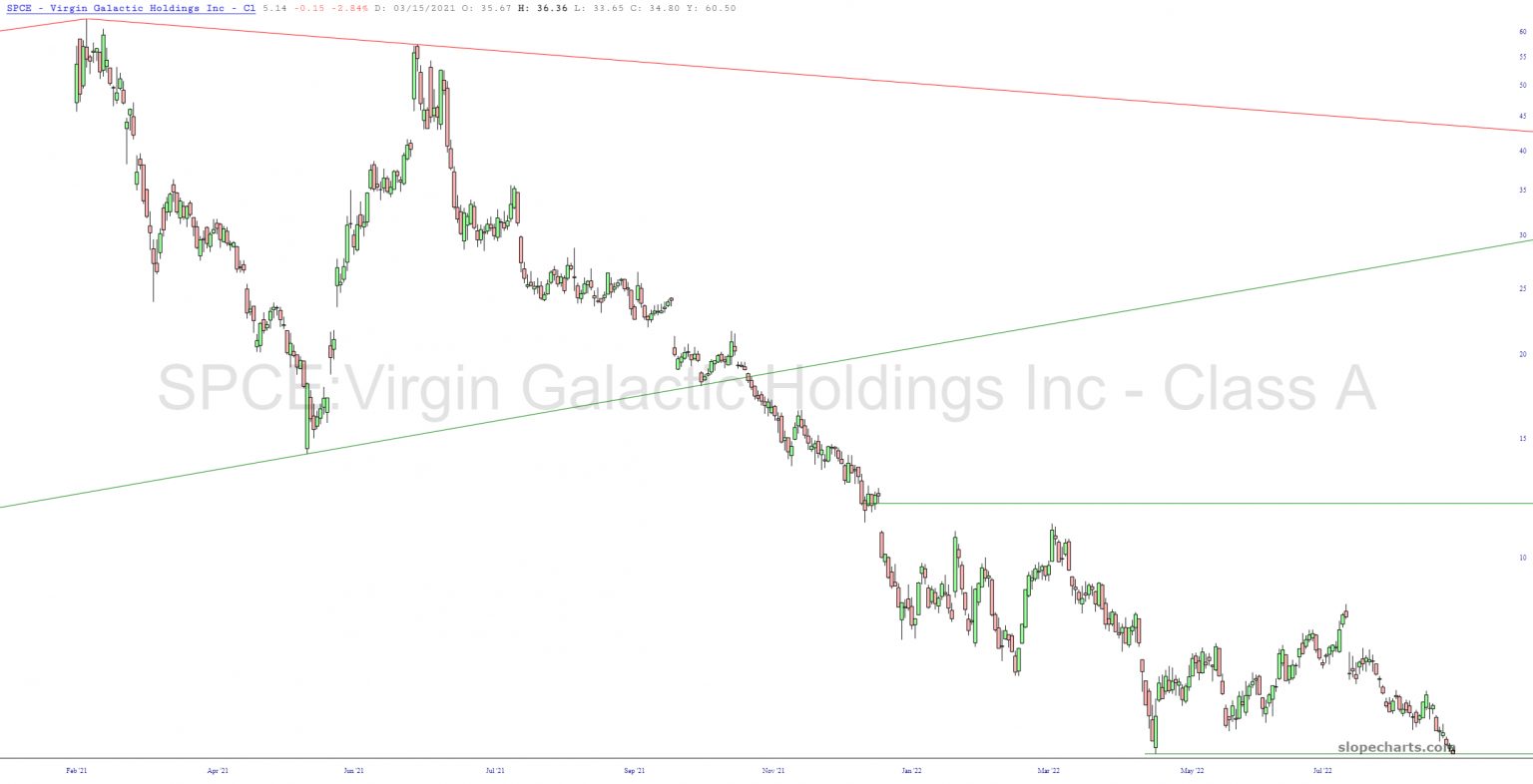
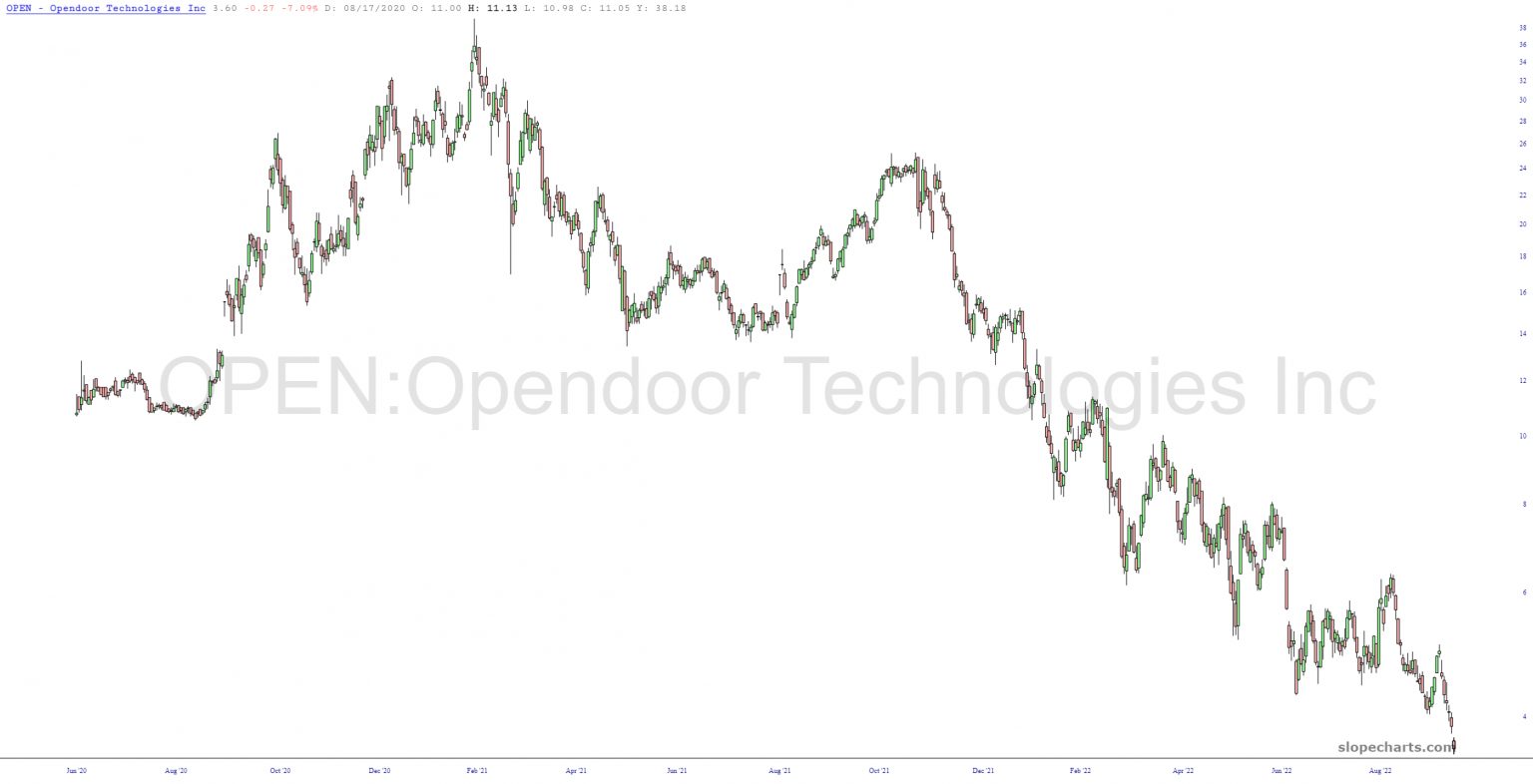
I'm A SPAC Cowboy....
Bet you weren't ready for that.
Because shorting stocks based on valuation (vs fraud) in a bull market is so dangerous, we don't talk about it all that much. There have been a few, the Great Kinder Morgan short of '14* being a wonderful memory, along with a few tactical i.e. quick shorts of Tesla over the years (in direct violation of the decade-long "Don't short TSLA" admonition), but as a general rule, on the blog we only short frauds in a bull. In a bear, "Short 'em all" as one of my mentors used to say.
The fact we don't put every last thought that pops into our collective heads out in public actually benefits our readers as a couple of things that hurt results in 2020 never made it to the blog.
But I don't like blind pools.
And I especially don't like SPAC's with PIPES
And with that confessional we'll turn the narrative over to the professional....
"The short-term, dopamine-driven feedback loops we've created are destroying how society works. No civil discourse, no cooperation; misinformation, mistruth. And it's not an American problem — this is not about Russians ads. This is a global problem."
—Former Facebook Vice Presidentfor Addicting Users, Chamath Palihapitiya

