Sunday, September 7, 2008

Fannie Mae, Freddie Mac Roundup II: Saturday (FNM; FRE)

We'll have a post or two when details of the bailout come out this afternoon. In the meantime here, in no particular order, is some of the more interesting thinking from Saturday.

From theStreet.com:
Cramer: Fannie, Freddie Takeover Changes the Game

Right now, at this moment, many people know that something good is going to come from this government takeover of Fannie (FNM) and Freddie (FRE), but they don't know how it relates to the market.

So, let me tell you how I see things unfolding. We know that our economy started rolling over because so much money -- trillions -- has been bet on house-price appreciation.

The wagering on American house-price appreciation has taken place in every venue and, in many cases, with gigantic leverage, magnifying a problem of historic proportions with a financial Armageddon quality we have not seen EVEN IN THE GREAT DEPRESSION. In other words, not since the Great Depression, but including the Great Depression. That's how important it was for houses to appreciate.

We are now in a double-digit decline of housing that has made most houses bought since 2005 worth less than their mortgages. House-price depreciation has been so relentless, particularly in Florida and California, believe it or not, two states that could bring the whole financial edifice down, that if it isn't stemmed then it's difficult to stop a severe recession, if not depression, given the abrupt slowdown of the rest of the world and our own skyrocketing unemployment.

The only hope to break the chain of despair and turn around the endless declines in home values to the point where you SHOULD walk away from a home with a mortgage larger than the value of your house, is to stop this house-price depreciation.

So far we have failed so badly in doing so that borrowers of even the highest quality are now defaulting. That's wrecking the bonds and derivatives and the insurers of the bonds and derivatives and anyone that is holding mortgage paper.

The Treasury's takeover of Fannie and Freddie can change that because once mortgage paper packaged by the government enterprises is federal government paper, then ANYTHING can be worked out with the borrowers, and the borrowers represent the lions' share of the troubled homeowners in the country who have not already defaulted....MORE

From Naked Capitalism:
NY Times: Freddie Overstated Its Capital

The New York Times, in "Loan Giant Overstated Its Capital Base," sets forth an interesting bill of particulars as to where Freddie deviated from what one might consider a full and fair statement of its financial condition. Indeed, the article says that the widely-expected Sunday intervention was triggered by the GSE's regulator determining that the firms' capital was short of the reported level (note that Fannie's practices were not as aggressive as Freddie's). Bloomberg had indicated yesterday that the rescue was being announced prior to a FHFA [Federal Housing Finance Agency] evaluation of their capital. We noted:
... it seems likely that there was something due to be released [in the report] that either gave James Lockhart, the head of FHFA, the smoking gun to intervene, or was sufficiently troubling to run the risk of an adverse market reaction...

Yet, as Calculated Risk pointed out, the Times had an artfully worded comment (emphasis ours)
The company had made decisions that, while not necessarily in violation of accounting rules, had the effect of overstating the companies’ capital resources and financial stability.

CR said, "I doubt Freddie violated any accounting rules this time" without explaining why....MORE


From the Ludwig Von Mises Institute (Aug. 22):
The Real Cost of a Full Bailout

A recent study from the Congressional Budget Office (CBO) has zero credibility. It pegged likely taxpayer losses in the Fannie Mae and Freddie Mac bailouts at $25 billion. For those with a sense of history, it is worth remembering that the S&L bailout had a $160 billion price tag. The numbers diverge so far from reality as to be laugh-out-loud funny. Funny, that is, except that the CBO estimate demonstrates a willful disconnect with the actual consequences of federal government actions.

As demonstrated below, the real cost of the bailouts will easily exceed $1.3 trillion. In fact, the real cost is likely to range between $1.3 trillion to $1.6 trillion, and is not unlikely to reach $2.5 trillion....MORE


From The Market Ticker:
GSE Fraud - And YOU Are About To Get The Bill!

...These two gigantic hedge funds intentionally manipulated their accounting to show a capital position that was stronger than reality, by pushing forward losses instead of recognizing them as they occurred.

While not illegal, it had the effect of lying to the markets, which put both firms at risk of all-on collapse.

Now the government proposes to bail them out at your expense and risk the collapse of the government's funding, instead of indicting the executives of these firms and placing them into rundown, forcing the losses to be taken by the people who profited from the gains during the "salad years."

And once again, I reproduce the specific language on the front of a July 2008 Fannie Mae "passthrough" debt certificate:

I didn't make this up folks. It is on the face of every single debt prospectus issued since these firms were public companies - thirty years worth of time.

In other words every single holder of current debt issued by these firms has this on the face of their prospectus. Every single one. All of the GSE debt outstanding is 30 years or less in duration; ergo, every single person who has ever purchased any of this debt is well-aware of the risk involved in doing so.

Period....MORE

We'll have more this afternoon.


Saturday, September 6, 2008

Theoretical Declines of a Bursting Oil Bubble. And: Warren Buffett Swings By

What, wary reader asks, am I doing in the office on a Saturday evening?
As I mentioned in "Markets: I Scream, Triple Dip ":
Among other duties (coffee A.M, turn out lights P.M.) I think of likely (and more importantly, unlikely) scenarios of where the markets might be heading....
What with Fannie and Freddie, we will have a very emotional start to the week and I can't help thinking of Benjamin Graham's Mr. Market, as recounted in Warren Buffett's 1987 Chairman's Letter to the Shareholders of Berkshire Hathaway. (see * below)
The question is, will Mr. Market be manic or depressive?

Last week Bespoke had three posts that conveyed a lot of information. First up is the headliner:
...Again, odds are that oil has no shot of getting back to the $30s anytime soon, but since the rise in oil was very comparable to the tech and housing bubbles, it's interesting to see what a comparable decline would look like. (source, worth a visit)

Theoretdeclines

Next, some nice charts on year-to-date oil complex inventories:
As the lower charts illustrate, natural gas and distillate inventories remain above average, while crude oil and gasoline inventories are still below average. While distillate inventories are above average, this year the build plateaued several weeks ahead of schedule. While these reports are generally bullish for energy commodities, this morning's article in the WSJ may cause traders to view the numbers with a more skeptical eye....CHARTS
Lastly a quick comparison:

Oil, Stock, and Housing Declines

Ironically, oil is now down more than the stock market and even home prices! From their peaks, oil is down 27.18%, the S&P 500 is down 22.16%, and the S&P/Case-Shiller 10-City Median Home Price index is down 20.46%.

Oilspxhousing


*Mr. Market
...Ben Graham, my friend and teacher, long ago described the
mental attitude toward market fluctuations that I believe to be
most conducive to investment success. He said that you should
imagine market quotations as coming from a remarkably
accommodating fellow named Mr. Market who is your partner in a
private business. Without fail, Mr. Market appears daily and
names a price at which he will either buy your interest or sell
you his.

Even though the business that the two of you own may have
economic characteristics that are stable, Mr. Market's quotations
will be anything but. For, sad to say, the poor fellow has
incurable emotional problems. At times he feels euphoric and can
see only the favorable factors affecting the business. When in
that mood, he names a very high buy-sell price because he fears
that you will snap up his interest and rob him of imminent gains.
At other times he is depressed and can see nothing but trouble
ahead for both the business and the world. On these occasions he
will name a very low price, since he is terrified that you will
unload your interest on him.

Mr. Market has another endearing characteristic: He doesn't
mind being ignored. If his quotation is uninteresting to you
today, he will be back with a new one tomorrow. Transactions are
strictly at your option. Under these conditions, the more manic-
depressive his behavior, the better for you.

But, like Cinderella at the ball, you must heed one warning
or everything will turn into pumpkins and mice: Mr. Market is
there to serve you, not to guide you. It is his pocketbook, not
his wisdom, that you will find useful. If he shows up some day
in a particularly foolish mood, you are free to either ignore him
or to take advantage of him, but it will be disastrous if you
fall under his influence. Indeed, if you aren't certain that you
understand and can value your business far better than Mr.
Market, you don't belong in the game. As they say in poker, "If
you've been in the game 30 minutes and you don't know who the
patsy is, you're the patsy."

Ben's Mr. Market allegory may seem out-of-date in today's
investment world, in which most professionals and academicians
talk of efficient markets, dynamic hedging and betas. Their
interest in such matters is understandable, since techniques
shrouded in mystery clearly have value to the purveyor of
investment advice. After all, what witch doctor has ever
achieved fame and fortune by simply advising "Take two aspirins"?

The value of market esoterica to the consumer of investment
advice is a different story. In my opinion, investment success
will not be produced by arcane formulae, computer programs or
signals flashed by the price behavior of stocks and markets.
Rather an investor will succeed by coupling good business
judgment with an ability to insulate his thoughts and behavior
from the super-contagious emotions that swirl about the
marketplace. In my own efforts to stay insulated, I have found
it highly useful to keep Ben's Mr. Market concept firmly in mind....

Scientists get death threats over Large Hadron Collider

From The Telegraph:

Scientists working on the world's biggest machine are being besieged by phone calls and emails from people who fear the world will end next Wednesday, when the gigantic atom smasher starts up....

...The head of public relations, James Gillies, says he gets tearful phone calls, pleading for the £4.5 billion machine to stop.

"They phone me and say: "I am seriously worried. Please tell me that my children are safe," said Gillies.

Emails also arrive every day that beg for reassurance that the world will not end, he explained....MORE

Also from The Telegraph:

  • Rap about Large Hadron Collider becomes YouTube hit
  • The Big Bang: atom-smashing could uncover truth
  • Time travellers from the future 'could be here in weeks'

  • Hurricane Watch: "Ike's coming to the Gulf. Time to pay attention."

    UPDATE: Sunday, 6:00 p.m. EDT.
    From the Houston Chronicle's SciGuy:

    If you live along the Gulf of Mexico, and you're wondering when to become concerned about Hurricane Ike, the time is now.

    After encountering wind shear during the last 24 hours the storm's winds have fallen to 115 mph (UPDATE: 110 mph at 10 a.m.), but Ike is now moving away from the strongest shear and should slowly re-strengthen as it moves west-southwest toward Cuba or Florida. Interaction with either landmass would weaken Ike, but it's still probable a large hurricane will enter the Gulf of Mexico early next week.

    And such a storm, like Gustav, would pose a grave threat to the U.S. Gulf Coast.

    THE TURN

    imageUFQwesterlies.jpg

    Tropical systems move vast amounts of heat from the tropics toward the poles. As such, most storms form in the eastern regions of the Atlantic tropics, and move west due to the easterly trade winds.

    While doing so the storms gain latitude and gradually encounter the westerlies between 30 to 60 degrees that predominantly affect U.S. weather. Once subject to these westerlies, a tropical storm turns northward and typically begins moving toward the northeast, taking its heat poleward....MORE


    From the South Florida Sun-Sentinel:
    11am0906.gif


    From Jeff Masters' Wunderblog:
    ...Track forecast for Ike
    The latest 06Z (2 am EDT) computer models foresee a probable direct hit by Ike on Grand Inagua Island in the Southeast Bahamas, with the Turks and Caicos Islands also getting hit hard. The eye is about 27 miles in diameter, so a region about 50 miles wide will feel Category 3 hurricane winds in the Southeast Bahamas. These islands can expect a storm surge of 6-12 feet, and extreme damaging winds. Ike will pass 40-80 miles north of northwestern Haiti, and will bring rains of 3-6" to the Dominican Republic, and 4-8" to northern Haiti. These rains will likely cause additional severe flooding in Haiti, where the death toll is nearing 200 in the aftermath of Hurricane Hanna.

    All of the major models agree that Ike will hit eastern Cuba on Sunday night. After this point, the models diverge. A southern camp of models, the ECMWF and UKMET, take Ike across eastern Cuba and into the western Caribbean, then through the narrow Yucatan Channel between Cuba and Mexico's Yucatan Peninsula, eventually hitting Texas a week from now. This track would bring tropical storm conditions to the Cancun/Cozumel area beginning Tuesday afternoon or evening, with possible hurricane conditions by Wednesday morning.

    The northern camp of models, including the GFS, NOGAPS, GFDL, and HWRF, turn Ike west-northwest over Cuba, forecasting that Ike will pop off the coast of Cuba near the Florida Keys on Tuesday, then swing north to threaten the west coast of Florida. The NOGAPS and GFDL both forecast that Ike will pass within 50 miles of Tampa on Thursday, while the GFS and HWRF put Ike several hundred miles off the west coast of Florida. I'm leaning towards this northern solution, since the GFDL model has been performing so well for both Ike and Gustav. The GFDL forecasts Category 3 strength winds will affect Key West and the Upper Keys, despite a track by Ike over Cuba....

    Friday Fannie, Freddie Bail Out Round Up (FNM; FRE)

    Those who know do not speak,
    those who speak do not know.
    -Lao Tzu
    The Tao Te Ching

    Nobody knows anything
    -William Goldman
    Adventures in the Screen Trade

    We'll have more throughout the weekend. For now this is what some smart people are saying.
    From the Wall Street Journal:
    U.S. Near Deal on Fannie, Freddie
    Plan Could Amount to Government Takeover;
    Management Shakeup Is Expected
    The Treasury Department is putting the finishing touches to a plan designed to shore up Fannie Mae and Freddie Mac, according to people familiar with the matter, a move that would essentially result in a government takeover of the mortgage giants....MORE
    From the New York Times:

    U.S. Rescue Seen at Hand for 2 Mortgage Giants
    Senior officials from the Bush administration and the Federal Reserve on Friday called in top executives of Fannie Mae and Freddie Mac, the mortgage finance giants, and told them that the government was preparing to place the two companies under federal control, officials and company executives briefed on the discussions said....MORE

    From Bloomberg:

    Paulson Plans to Bring Fannie, Freddie Under Government Control
    Treasury Secretary Henry Paulson is preparing to announce plans to bring Fannie Mae and Freddie Mac under government control, seeking to halt the crisis of confidence in the companies that make up almost half the U.S. mortgage market.

    Paulson met with Fannie Mae Chief Executive Officer Daniel Mudd and Freddie Mac CEO Richard Syron yesterday to brief them on the decision to put the companies into a conservatorship, where they would be removed from their jobs, according to a person briefed on the discussions. A public announcement is expected this weekend, the person said....MORE

    From The Big Picture:
    Here Comes the Half Trillion Dollar Fannie/Freddie Bailout!
    A series of high-level meetings between Federal Reserve Chairman Ben Bernanke, Treasury Secretary Henry Paulson, and the chief executives of Fannie Mae (FNM) and Freddie Mac (FRE), along with the companies' new regulator, the Federal Housing Finance Agency took place today.

    Rumors of the meetings had obviously leaked out earlier in the day, as the Financials and Homebuilders ramped up into the afternoon. Beazer Homes gained +8%, and Lennar popped 8.5%, despite the 4 million plus homes in inventory....MORE
    From Naked Capitalism:
    NY Times: Fannie, Freddie Nationalization (aka Conservatorship) Imminent

    Guess the powers that be were unwilling to risk playing chicken with the markets and losing.

    So much for the theory espoused by some that the government couldn't put the GSEs into custodianship absent a breaching of statutory minimums (technically, by being insolvent under the "fair asset" valuation method, Freddie is already on plenty thin ice). Nevertheless, this is quite a Friday night bombshell, particularly since the plan, as the Times appears to have garnered a few more details beyond the initial reports, is not minimalist (say an preferred equity purchase with no management changes). Conservatorship officially makes the GSEs wards of the state....
    From Infectious Greed:
    Why is FRE/FNM Being Underplayed?

    Is the Freddie/Fannie bailout plan being underplayed? News late today that Treasury plans are likely to be announced imminently strikes many people, myself included, as one of the biggest financial events in modern memory, and yet it feels underplayed.

    Why do I say that? Well, until recently, it was the second story on the front page of the WSJ this afternoon, and it hadn't even made the front page of the NY Times site last I looked. Marketplace on NPR, which I listen to most afternoons, shrugged it off in a 15-second drive-by comment as some late-breaking news that the market may have noticed....MORE

    From Market Movers:
    Rescuing Frannie

    It's easy to get caught up in the minutiae -- should shareholders be wiped out, or merely massively diluted? What should happen to preferred shareholders? Can the government create a new class of senior subordinate debt, and if so, should it? But for me everything finally clicked into place just when I saw the headline above on Bloomberg.

    Of course Frannie should be under government control; of course the CEOs should depart. The government is bearing all the risk; the CEOs have done nothing but destroy billions of dollars in value over the past year, and have proven themselves incapable of raising vital new equity capital....MORE


    Friday, September 5, 2008

    Wind, Sun Are New Frontiers For Maker Of Electrical Infrastructure (PWR)

    From Investor's Business Daily:

    Texas, of course, is the prime source of oil in the U.S. But anyone who's been out on the Texas prairie knows that it has another abundant energy source: wind.

    Over the last two years, the Texas government has been working to develop 7,000 megawatts of new wind-power capacity in the state. On July 17, lawmakers took a crucial step by creating Competitive Renewable Energy Zones (CREZ) to build transmission lines carrying the new energy to end users.

    That got analysts following Quanta Services (PWR) excited. Houston-based Quanta is the country's biggest builder of electrical infrastructure.

    "We're talking about a project worth $5 billion," said Sanjay Shrestha, an analyst at Lazard Capital. "Given Quanta's strong presence, it's in a position to earn a significant chunk of that."

    Since CREZ is new and the government runs slow, a deal has yet to be announced. But in an interview with IBD, Quanta Chief Executive John Colson sounded confident that his firm could handle such a project....MORE

    Green on the Screen: Solars

    It is not a market for "Til Death Do Us Part" but the solar group is bouncing off today's bottoms.
    The first four trading days of September have been brutal. At today's lows we've seen declines of:

    FSLR... 20.8%%
    YGE..... 20.6%
    TSL...... 20.1%
    STP...... 19.4%
    LDK..... 18.6%
    SPWR...17.5%
    ENER ...17.0%

    Basically a bear market in 3 1/2 trading days.
    So we can look for a bounce but think of these names as a trade; bear markets can suck you in. When I first came to the market, one of the older traders told me he was saved in the '73-'74 bear by a cartoon:
    (click to enlarge)

    That's Alfred Frueh's January 16, 1932 New Yorker classic, "Just around the Corner", commenting on President Hoover's statement that "Prosperity is just around the corner".

    Chemists create 'powdered methane'

    From Nature:

    Methane and natural gas are usually shipped around in pressurized pipelines and canisters. But chemists have now developed a new way to transport the gases: as a powder.

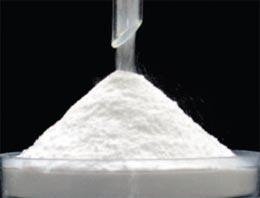
    Andrew Cooper and his colleagues at the University of Liverpool, UK, have found that they can trap methane in a bizarre material dubbed 'dry water', a mixture of silica and water that looks and acts like a fine white powder. The methane reacts with the water to produce a crystalline material called methane gas hydrate, in which individual methane molecules sit inside ice-like cages of water molecules....MORE

    dry water'Dry water' looks like a powder - but a quick squeeze is enough to release the fluid.A. Cooper et al / ACS

    The Economics of Drill Here, Drill Now

    Most folks who visit our little corner of the WWW have seen the estimates of the price-at-the-pump impact of new (American) production coming into the market (not much). Tyler Cowen brings up a factor that I haven't seen mentioned elsewhere, the value of the taxes imposed on extraction and profits. I am agnostic on the virtues/vices (which is how the debate has come to be framed) of drilling. From an economic point of view I see value in leaving the stuff in the ground as an appreciating asset and an argument can be made from a security angle that burning the Mideast's petroleum first is advantageous.
    On the other hand you could go with the soundbite argument, "Just as the best time to plant a tree was ten years ago, the same is true of drilling an oil well".
    Whatev, here's Marginal Revolution:

    Matthew Kotchen and Nicholas Burger have done a real study of the economics of drilling in ANWR (ungated, published version here). Ben Muse reports some of their results:

    What are the benefits? Kotchen and Burger estimated that the oil had a value of $374 billion (writing in July 2007, they assumed a long-term price of $53/barrel), but that it would cost $123 billion to extract and market. The net return of $254 billion is divided consists of industry rents of $90 billion, Alaska tax revenues of $37 billion, and Federal tax revenues of $124 billion.

    Under the authors' understanding of incidence, consumers wouldn't benefit much at all because oil prices would not fall noticeably. Still, drilling makes economic sense if the loss of environmental amenities is valued at less than $1,141 a person (per American, not per Alaskan) and that was with a price of oil roughly half of today's price....

    HT: to Mr. Cowen himself- "Silly me"
    (I had missed the post yesterday)

    Attention Trina Solar Shareholders: China central bank may need government bailout (TSL)

    From MarketWatch:

    The People's Bank of China, China's central bank, has begun discussions with the finance ministry on ways to shore up its capital, The New York Times reported, citing three people familiar with the discussions.
    The move could make it less likely that China will allow the yuan to continue rising against the dollar and accepting an injection of capital from the finance ministry could also reduce the independence of the central bank, the report said.

    Halting the appreciation of the yuan could heighten trade tensions with the U.S., which has sought a stronger Chinese currency to reduce the competitiveness of Chinese goods and lower the U.S trade deficit, the report said.

    The central bank is in need of capital because of its roughly $1 trillion purchase of U.S. Treasury bonds and Fannie Mae- and Freddie Mac-issued mortgage-backed debt.

    Those dollar-denominated investments have fallen in value against the strengthening yuan, pressuring the Bank of China's $3.2 billion capital base, the report said....MORE
    UPDATE: Naked Capitalism has a theory-
    ...Remember the ploy used by Henry Kissinger in his negotiations with the North Vietnamese? He presented Nixon as crazy, not the paranoiac that he was, but violent, impulsive, prone to extreme reactions if provoked. The notion that Nixon was an utter nut who would do something unthinkable (presumably the unspoken threat was dropping a nuclear bomb) was believed to have served Kissinger well.

    Something like that may be at work here. Perhaps a genuine internal power struggle is being played up and positioned to persuade the hot money speculators that the finance ministry may soon have the upper hand, and the finance ministry is crazy enough and determined enough to keep the yuan weak, no matter how dangerous that might be in the long term. That would hopefully convince the hot-money players that their fast-profit revaluation hopes were misguided, and they'd shift their mony back overseas, providing some relief to inflationary pressures....


    "Meltdown"-Société Générale

    From The Big Picture:

    When people try to figure out what was the cause of today's 344 point whackage, one of the items they will point to will be SocGen's alert today from Albert Edwards:

    ***Alert****Economic and equity market meltdown imminent****Alert***

    Last week saw the publication of Q2 US whole economy profits data. They were shockingly bad. Core measures of profitability are in free-fall and have now reached a tipping point, where corporate activity could easily implode. We have also reached the point where companies give up ‘manipulating’ their profits higher and admit they are actually in free-fall. A combination of economic and reported profits slumping will catalyse the next equity downleg....MORE

    A couple of prior posts on Société Générale's calls:

    June 26
    Société Générale: “We see a y-shaped global recession. We are going down before looping backwards”

    May 8
    This Week’s Advice: Canned Food, Guns and a Ham Radio
    ...*Soc Gen strategists have been bearish for about a decade, as they note in their commentary, as they expected equities to go through a period of “valuation de-rating similar to Japan.” ...

    Potash: Very positive Fertilizer call from Morgan Stanley (POT)

    From Notable Calls:
    Morgan Stanley is out with a very positive Fertilizer call saying they think the business model meltdown implied in fertilizer equities’ recent ~35% decline will prove unfounded. Firm believes that peak earnings are likely to come in 2011 (rather than in 2008, as implied by the equity market) and be substantially higher than the market discounts. Finally, they expect profits ultimately to trough above 2008 levels....MORE

    ...Notablecalls: We saw some bottoming action in several Fert names late yesterday, which may indicate the liquidation sellers are at least taking a break. Plus, we have CSFB out today upgrading MON.
    Think the sector could be in for a bounce.

    Thursday, September 4, 2008

    HSBC says super-rich clients moving into cash

    From the International Herald Tribune:
    Many of the world's wealthiest people have moved their money out of stocks and bonds and into cash, the head of HSBC's Swiss private banking unit said on Monday.

    "The first half of 2008 has seen a notable change in client expectations and investment choices," said Peter Braunwalder, chief executive of HSBC Private Bank (Suisse), the bank's main affiliate catering to the ultra-rich.

    "Faced with inflation worries, volatile asset prices and sudden changes in exchange rates, a majority of investors have reduced their transaction volumes in equities, bonds, and structured products," he told a news briefing in Geneva....MORE

    Bill Gross: Big Bet, Big Fail?

    A threefer. First up, Financial Ninja:
    I don’t like Bill Gross at all.

    Pimco: Treasury needed to stop asset deflation: “To stop a sell-off of debt and other assets, the U.S. government will have to bring in new policies to open up the Treasury Department's balance sheet, said the manager of the world's biggest bond fund on Thursday.

    "If we are to prevent a continuing asset and debt liquidation of near historic proportions, we will require policies that open up the balance sheet of the U.S. Treasury," wrote Bill Gross, chief investment officer of Pacific Investment Management Co, or Pimco, in his September Investment Outlook.

    "To ultimately stop this asset/debt deflation, a fresh and substantial new source of buying power is required," Gross wrote....
    ...You see, Bill Gross is balls deep into Fannie Mae (FNM) and Freddie Mac (FRE) agency debt. He bet big on a bailout that would make him whole. The rat-bastard will only make money if taxpayers get raped.

    Pimco’s chief piles into mortgage debt: “Bill Gross, the manager of the world’s biggest bond fund, has switched gears to make a big bet on mortgage debt, almost tripling his holding of it to more than 60 per cent of the fund....MORE
    From Infectious Greed:
    Am I the only one irritated by the fawning treatment given Pimco's Bill Gross and his commentary today? His implicit threat of a bond buyer's strike -- he wants the Fed to get off its ass and backstop Freddie/Fannie -- is so deliriously self-serving. He is into mortgage-backed bonds and FHM/FRE up to his neck, and now he wants Treasury to bail him out or he'll stop buying? How lovely. And, oh yes, I'm highly fond of the "new balance sheet" euphemism than he coins in the piece.
    From Naked Capitalism:
    Bill Gross of Pimco's monthly newsletter, "There's a Bull Market Somewhere?" is out and making the rounds. The title refers to a Jim Cramer dictum. Tthe bond chief uses to argue that asset prices are declining on all fronts, which he then contends that the US government must reverse (boldface his):...

    ...Despite Gross' lament (his firm is a big holder of Fannie and Freddie paper, so the pain must be acute), this isn't factually correct. As readers have pointed out repeatedly, Treasuries are in what one might contend is a massive bull market, with the ten year bond trading under 4% (it was 3.74% a couple of days ago). The dollar has rallied and Gross is overselling his case on commodites. Yes, they are down markedly since July, but over the last 12 months, they are still up nicely. 30% plus gains in a year (and some indexes are up nearly 45%) is nothing to sniff at.

    The next bit is a doozy:...MORE

    As Potash Corp. shares plummet, RBC predicts stock will double (POT)

    From the Financial Post:

    Even as shares of Potash Corp. of Saskatchewan Inc. are plummeting today, falling by more than 4% to under $158 in mid-afternoon trading, RBC Capital is expecting the stock to more than double to $375 as Chinese potash buyers begin negotiations for a pricey new contract in Seattle, Wash.

    Analysts Fai Lee and Owen Martin say in a research note that Potash Corp, one of the world's largest potash producers, is currently trading at a flat realized potash price of US$430 per tonne (about US$530 per tonne delivered), but RBC believes this is far below market prices which range between US$900 and $US1,100 per tonne....MORE

    WSJ: CFTC Probes Oil-Supply Data For Manipulation

    Okay, she's got my vote.
    That would be Ann Davis of the Wall Street Journal.
    Talk about a pit bull in lipstick, she has been digging away in some arcane/obscure/opaque parts of the oil markets for going on a year now. Last October she started out in Cushing Oklahoma with "Where Has All The Oil Gone?". On July 7 it was "Oil: Commodities Regulator Under Fire". We saw her last month in "Oil, Computers, and Momentum Trading" and then two weeks ago in "'Speculator' in Oil Market Is Key Player in Real Sector".
    Today, front page of the Journal's Money & Investing section:

    CFTC Regulators Look at Energy Firms,
    Take Depositions About Oddball Trading

    Commodity-market regulators are investigating whether energy-market players are injecting false data into the marketplace to influence perceptions about crude-oil supply and demand, people familiar with the probe say.

    Among other things, regulators are concerned that companies may be reporting inventory levels that benefit their own trading positions but that may not be accurate, people familiar with the regulators' thinking say.

    [oil markets chart]

    Unexpected drops in oil inventories reported each Wednesday by the U.S. Energy Information Administration can spark price spikes on the main oil futures benchmark on the New York Mercantile Exchange. A company could theoretically underreport barrels in its tanks, for example, at a key hub to suggest oil is scarcer than it really is, and then sell its physical oil at a premium when oil prices jump on misleading news....Continued

    Columbia Journalism Review, are you getting all this?

    I don't know if that continuation link will be good tomorrow, if not CattleNetwork has the story.

    Continental Airlines: Oil Spike Not Over, Stock To $9. Or $45. Whatever (CAL)

    We last visited Credit Suisse's airline analysts on August 13, keeping tabs on one of the most untimely calls I've ever seen. In "How (not) to Do Stock Price Forecasting- Credit Suisse Edition"
    ...The point is, fundamental analysis will help you avoid disaster but it doesn't forecast prices.
    Thirty days ago Daniel McKenzie, airline analyst at Credit Suisse, cut his outperform ratings on Continental and American Airlines to neutral, after they had declined from $37.79 to $6.74 and $51.60 to $3.43 respectively.

    The next day they bottomed out and are up 160% and 270% in the last thirty days.
    So working at a big firm doesn't really help....
    That post was a follow-up to July 22nd's "Ahem... US Airways and UAL are Up... (LCC; UAUA)"
    ...56 and 57%, today. One of our loyal readers may be in the money in the "CNBC Million Dollar Challenge" because of "Dear CFTC: About those Oil Markets. And: A Stock Tip".
    We'll be setting up a PayPal account to celebrate his good fortune should he walk with any GE loot.

    On the other hand, this untimely bastard may be out of a job. First he waits for the stocks to drop 90% before changing his ratings, then, well it doesn't get any worse (Monday, July 14, 2008):...
    Which was itself a follow-up to our July 14 post, "Ahead of the Bell: Credit Suisse cuts airlines (AAI: ALK; CAL; UAUA)"
    ...The other two have similar trajectories, I'll stick with Dear CFTC: About those Oil Markets. And: A Stock Tip.
    Today ClusterStock gives us the update:
    How often does an analyst have a Neutral rating on a stock when his/her price target is 50% below the stock price? When the analyst covers airlines.

    Credit Suisse has reiterated its $9 target price on Continental Airlines (CAL), whose stock currently sits above $18. The analyst also thinks the stock could suddenly jump to $45. The bank's thesis is essentially that the oil crash is temporary and therefore to adjust the rating or target would be speculative:

    Given macro volatility, our rating is temporarily misaligned with the downside to our PT [price target], tho the recent run in shares is consistent w/ our 7/30/08 trade alert where we pointed out that significant short term (i.e. 1-2 month) upside was likely given falling crude prices. We pointed out that under the scenario where crude prices fell to $100 thru 2009, we pointed out CAL could fetch $45/share (vs $14.21 at the time of our alert & $17.84 today). Our $9 PT is based on CAL's EV trading at 7.5x our 09E EBITDAR; we model crude at $130 in 2009 and believe it's too early to revise ests. given WTI volatility, tho will revisit soon....MORE

    Sometimes you get wrong-footed and it is really hard to get back in synch.

    Hedge funds caught out as Hurricane Gustav fails to lift oil price

    From the Times of London:

    Several hedge funds face big financial losses after wrongly predicting that oil and gas prices would rise as a result of Hurricane Gustav slamming into the Gulf coast of the US earlier this week.

    As Gustav swept towards New Orleans on Monday, catastrophe experts were predicting insured losses of up to $7 billion (£3.9 billion) as offshore oil rigs faced destruction and the storm threatened energy supplies.

    Commodities hedge funds saw the glum prediction as an opportunity, betting heavily, using the futures market, that prices would surge in the wake of the hurricane chaos....MORE

    HT: FT Alphaville

    Wednesday, September 3, 2008

    Morgan Stanley's Roach Says Slump Has Only Just Begun

    From Bloomberg:
    The global economic downturn has only just begun, with the U.S. heading into a recession and the impact of the credit crunch still to be fully felt, said Stephen Roach, Morgan Stanley's Asia chairman.

    ``There's more to this macro event than just the credit- market contagion itself,'' Roach said in an interview with Bloomberg Television in New York today. ``Maybe two-thirds of that is behind us, but the impacts on the real side of the U.S. economy and the global economy are at an early stage.''

    Growth in the U.S., the world's largest economy, is likely to weaken in the second half after a stronger-than-forecast second quarter as rising unemployment and falling home values crimp consumer spending. That will hurt European and Asian exports and hamper the global expansion, according to Roach.

    ``We're in the early stages of the downturn in the U.S. and global business cycle,'' he said. ``As the U.S. consumer goes into post-bubble funk, Asian exporters will feel it. That's certainly evident now in China and it's spreading through developing Asia.''>>>MORE

    HT: BloggingStocks who add-
    ...Economist David H. Wang told BloggingStocks Wednesday Roach's analysis and comments should not be ignored by executives, small business owners, or typical citizens as they set their budgets and financial plans for the year ahead.

    "Of course, we are in an election year in the United States, when the rhetoric from politicians is fast and loose, and it can confuse investors. So Roach's comments on global conditions are both pertinent and valid, in my interpretation of the data. Asia exports are likely to slow, Europe will likely accompany the U.S. in a recession, and global growth will fall below 3%," Wang said. "And we have serious concerns regarding what will get the U.S. economy out of its funk. We haven't been able to identify a catalyst, a point that Roach also makes. So the economic doldrums are far from over, both in the U.S. and globally."...

    Corn falls for 4th day as Gustav brings rain to crops. And: Wheat Yields Drop in Dreary Washington Weather

    From MarketWatch:
    Corn futures fell for a fourth straight session Wednesday, as rain brought by Hurricane Gustav was expected to support crop growth in the Corn Belt region of the Midwest.
    Corn futures for December delivery lost 7 cents, or 1.2%, to close at $5.62 a bushel on the Chicago Board of Trade. Earlier corn fell to $5.50, the lowest since Aug. 15.
    There is no sign of freezing in the Corn Belt for at least the next two weeks, according to AccuWeather.com, as remnants of Gustav are expected to bring rain to central areas of the region this week....MORE
    And, from StormWire:

    Wheat farmers are reporting below average yields across the state this season.
    – Unseasonably cold and wet weather delays Washington wheat harvest by 2 weeks.
    – Speculating farmers will take losses for refusing to sign fixed-price contracts last year.
    Optimism is in short supply for wheat farmers in Washington, as unseasonably cold and rainy weather continues to delay harvests across the state. Recently cold, wet weather has forced wheat harvests two weeks behind schedule, costing farmers valuable time and revenue this season.

    Problems began earlier this year when a snowy winter delayed much of the spring planting. When a large quantity of the 600,000 acres of spring wheat finally emerged, the fragile shoots were battered by scorching heat one week and unforgiving frost the next.

    Making matters worse, record grain prices last winter prompted growers not to sign large fixed-price contracts this year, because they hoped to capitalize on another market price boom. The harsh weather has caused their risky decision to backfire, forcing several farmers to face far lower yield prices....MORE

    SunPower CEO sees 10-20 pct price drop next year (SPWR)

    The group is down for the second straight day, Sunpower was recently at $85.19 down $5.95 after dropping $6.41 yesterday. From Reuters:
    SunPower Corp (SPWR: Quote), a leading U.S. maker of photovoltaic solar panels, expects its sales prices to drop by between 10 and 20 percent next year, Chief Executive Officer Thomas Werner said on Wednesday....
    Update: here's a better link.
    (in Reuters words "Adds quotes, details")

    A couple of our August posts on SPWR:

    Aug. 29
    First Solar, SunPower, To Get Clobbered In 2009, Sell After Trade Show (FSLR, SPWR, AMAT)

    Aug. 26
    Why we Didn't get too Excited about the Sunpower/PG&E Deal (PCG; SPWR)

    The Coffeyville Horror

    On September 3, 1970 a monster descended on Coffeyville Kansas:


    NCAR scientist Nancy Knight holds a hailstone that fell in Coffeyville, Kansas, in 1970.
    The largest hailstone ever documented, it weighs 0.75 kilograms (1.67 pounds),
    and spans 14.4 centimeters (5.67 inches). Source: University Corporation for Atmospheric Research


    That is one big hunk of ice. Until that day the big ice story in Coffeyville was the townfolk shooting up the Dalton Gang, killing four in "a hail of bullets" and putting Emmett Dalton on ice for fourteen years.

    The Dalton Defenders Museum is home to a replica of the monster (the stone, not Emmett, he was pardoned)
    See: Kansas Spring Break Gone Wild-Small towns are stranger than you think

    From TexasEscapes comes the story of Ripley's mistakenly swallowing the story of a nine-pounder in Waco:
    The World's Heaviest, Fastest and Most Beloved Hailstone
    or
    "I Can't Believe It's Not an Ice Cube"

    by Luke Warm

    Which ends with this suggestion to the citizens of Coffeyville:
    Note: I have just two words for Coffeyville, Kansas: Hailstone Festival. Drinks could be chilled by hailstone replicas, and pea-sized colored hailstones could be thrown to the crowds below from women secured to the wings of vintage biplanes. Just let me have the Iced-Coffey concession.
    The Coffeyville stone was surpassed by one that fell at Aurora Nebraska on June 22, 2003. From NOAA:
    ...5. AURORA, NEBRASKA HAILSTONE
    The largest hail associated with the Aurora supercell was confined to the northern portions of the town. The largest hailstone ultimately measured 7.0 inches (17.78 cm) in diameter, with an 18.75 inch (47.63 cm) circumference (Fig. 9). Since the hailstone struck a house roof in its descent and partially broke (survey by second author), an accurate weight of the hailstone was not possible. Property damage from the large hail was estimated at $500,000, with $1 million estimated in crop damage across Hamilton County (NCDC 2003). Large hail left craters in the ground up to 14.0 inches (35.56 cm) in diameter and 3.0 inches (7.62 cm) in depth in Aurora (NWS Hastings survey and UCAR).

    The measured size of the Aurora hailstone exceeded the previous record of the Coffeyville, Kansas hailstone of 3 September 1970. In accordance with the National Climatic Data Center's (NCDC) Climate Extremes Committee, the Aurora, Nebraska hailstone of 22 June 2003 is now officially recognized as the largest hailstone, in terms of diameter and circumference, in United States history. The previous record of the Coffeyville, KS stone weighed 1.65 pounds (0.75 kg) with a diameter of 5.7 inches (14.48 cm) and circumference of 17.6 inches (44.70 cm) (UCAR). The Coffeyville hailstone still retains the U.S. record for maximum hailstone weight.

    I am sure that over the course of human habitation of North America there were larger hailstones, probably pre-NCDC (and pre-refrigeration). Worldwide, India is the record holder.

    Looking forward to this anniversary I got to thinking about protection for pedestrians during hailstorms and sure enough there are metal umbrellas:
    METAL UMBRELLA
    United States Patent 3454022
    or the more stylish
    Vented metal umbrella
    United States Patent 3345786

    Here are a couple that would protect against pound-and-a-half chunks of ice falling on your head:
    A Metal Umbrella by moniquz.

    Metal umbrella by paulmorriss.

    The one downside I can see is that you are walking around with what is basically a lightning rod, in your hand. Well it could be worse (click to enlarge):


    tornado

    Oldest known photograph of a tornado
    Image ID: wea00206, NOAA's National Weather Service (NWS) Collection
    Location:
    22 miles southwest of Howard, South Dakota

    Photo Date:
    1884 August 28

    From NOAA
    HT: Wicked Weather Pics


    Las Vegas Lock Of The Week: OPEC Will Cut Production

    Yeah, I'd have to make that my Five Star Tip of the Week too. From 24/7 Wall Street:

    ...The leaves OPEC which has one of its big shindigs in the desert next week with all of the dancing girls and Hummers that the oil ministers can muster. Wall St. wonders whether the cartel will cut production. Why wonder at all? There is no money in keeping production where it is. Crude has come down too much. OPEC is leaving cash on the table every day. Member nations showed no compassion when oil was at $140.

    Why would they show any compassion now?

    Five Places to Look for Next Investment Bubble: Matthew Lynn

    From Bloomberg:
    Dot-coms? Done that. Property? Oil? Corn? Been there, got the T-shirt and nursed the losses, as well.

    One thing we know for sure about today's global economy is that there is always an investment bubble somewhere. If you get in early enough, you can make a fortune riding the boom.

    So with property prices collapsing faster than a tent on a stormy day and with the oil-and-commodity bandwagon gone, where should investors be looking for the next big thing? There are five areas worth thinking about: Old Europe, automobiles, stockbroking, the dollar, and private islands....

    ...Here are some places to start looking, bearing in mind that bubbles come in five basic types: places, industries, financing, currencies and luxuries.

    FIGs Beat BRICs

    First, the place: Old Europe. Forget about the BRICs. The next decade will belong to the FIGs -- France, Italy and Germany. We have written them off for so long that we're in danger of forgetting that all three have been among the richest societies in the world for more than 1,000 years....MORE


    MEMC Maintains Q3 View; Warns On Semi Sector Demand (WFR)

    From Tech Trader Daily:
    ...In a statement, CEO Nabeel Gareeb said that recent silane and polysilicon production rates at its Pasadena, Texas facility, combined with strength in demand from solar customers, “could allow us to achieve results in the upper half of our targeted financial range.” But he also says that “there is increased softness in demand from semiconductor application customers, primarily due to their inventory reduction initiatives.” Net net, MEMC left its old forecast in place....

    Potash Corp. Warns Strike May Impact Deliveries (POT). And: RBC Capital Re-its $375 Target

    From StreetInsider:
    In a recent research note on Potash Corp. of Saskatchewan, Inc. (NYSE: POT), JPMorgan said the company warned North American customers that a strike may impact deliveries, which could further limit supply.

    The firm said, absent a settlement, Potash Corp may soon be forced to declare force majeure, which allows a company to miss delivered because of circumstances beyond its control....MORE
    From Zacks via the EarthTimes:

    Potash Still Considered Buyable

    ...Potash Corp. (NYSE: POT) has leverage in higher fertilizer application rates, higher crop plantings, increasing demand for biofuels and rising crop prices. The company is located in low cost areas and its financials are solid. Hence, we rate the stock a Buy with a target price of $250. This is 18.9x our 2008 estimate.

    Potash Corporation enjoys significant cost advantage with regard to raw materials. All potash produced by the company in Saskatchewan is in the area, where extensive potash deposits are found. Moreover, the company has lower cost nitrogen operations in Trinidad due to the long-term, lower-cost gas contracts with Natural Gas Company of Trinidad and Tobago Limited as well as a proximity to the U.S. market....

    From Notable Calls:
    - RBC Capital is positive on Potash (NYSE:POT) reiterating their $375 tgt telling to look for sig. potash price increases in China.
    From the Vancouver Sun:
    Hurricane Gustav spares platforms, smashes TSX instead

    Hurricane Gustav ripped a few shingles off Canadian stock markets Tuesday, blowing the S&P/TSX Composite over for its biggest down day since January.

    Crude oil prices plunged, taking a bite out of the commodity trade, as the U.S. Coast Guard reported no structural damage to oil platforms in the Gulf of Mexico, and no spills.

    Investors sold positions in grain, fertilizer and precious metals, buying U.S dollars and U.S. long bonds....

    GT Solar Signs $173 Million Contract With DC Chemical (SOLR)

    Press release via Reuters:
    U.S. Company To Increase Export of Polysilicon Production Equipment To South Korea

    GT Solar Incorporated, a global provider of specialized equipment
    and technology for the solar power industry, announced that on July
    11, 2008, it signed a $173 million contract with DC Chemical Co.,
    Ltd., a leading Korean chemical company. The signing of the contract
    has previously been disclosed.

    Under the terms of the agreement, GT Solar will provide DC
    Chemical with state-of-the-art polysilicon CVD reactors, which are
    used to manufacture polysilicon, a key raw material utilized to
    produce solar cells. This latest agreement marks the third contract
    between the two companies since GT Solar began offering CVD reactors
    and related equipment in 2006....

    Tuesday, September 2, 2008

    Noble Environmental Power offers 24M shares in IPO (NEPI; WNDY)

    This should be an interesting offering circular. If you recall, Nobel Environmental was one of the wind project developers mentioned in the Aug. 17, 2008 New York Times story "In Rural New York, Windmills Can Bring Whiff of Corruption":
    ...Last month, Mr. Cuomo subpoenaed two wind companies, Noble Environmental Power, based in Connecticut, and First Wind, based in Massachusetts, seeking a broad range of documents. Both companies say they are cooperating with the attorney general....
    Here's the IPO story, from MHT (MassHighTech):
    In a followup to a May announcement of Essex, Conn.-based Noble Environmental Power LLC filing for an initial public offering, the company has reported that it plans to offer about 24.44 million common shares, according to published reports.

    Noble Environmental Power did not reveal an updated price range of the stock shares, PE Hub reports, although in May the company announced its intention to raise $375 million.

    The company plans to trade on the Nasdaq under ticker symbol NEPI. Lehman Brothers, Credit Suisse and JPMorgan are serving as co-lead underwriters.

    Noble Environmental Power currently operates 282 megawatts of wind power, and is planning on more than 4,000 megawatts under management by 2012. The company’s current and future projects are located predominantly in New York, Vermont, New Hampshire, Maine, Texas, Minnesota and Michigan....MORE

    Toward textile-based solar cells

    From the SPIE:
    A fiber-based organic photovoltaic may form the building block of cost- effective, energy-harvesting textiles.

    A 100km2 area covered with 10% efficient solar cells can produce enough electricity to satisfy the national requirement.1 Unfortunately, the total area of cells produced and installed to date is 1,000 times smaller than needed. Despite the high annual growth rate of the photovoltaic (PV) industry, current manufacturing methods face a scalability barrier that makes fulfilling demand unlikely in the next 20 years. Manufacturing of organic pigment-based solar cells could be expanded, because the dyes are made at the commodity scale. In addition, device-quality organic thin films can be deposited onto virtually any kind of substrate at room temperature2 without the need to make crystalline bonds between the two.3 Unfortunately, the relatively low efficiency—about 5%—of organic solar cells, the need for expensive ingredients like indium tin oxide (ITO), and the substantial installation costs prevent widespread deployment.


    Figure 1. The large yellow square represents an area of land that would need to be covered with 10% efficient solar cells to satisfy the national energy demand. In comparison, the arrow points to a small red square whose relative area represents the worldwide area of solar cells currently manufactured and installed. The area of the fabrics image represents the total square meters of textiles imported to the United States. The bottom right image shows the fiber-based organic solar cell, photographed near a penny for size comparison.

    To address these challenges, we developed an ITO-free, fiber-based organic cell that could become the building block in rapid, cost-effective manufacturing of energy-harvesting textiles....MORE

    HT: Meme Box's Future Scanner


    Another Day, Another Oilman in the Wind Biz -GreenHunter Energy (GRH)

    GreenHunter put out the press release last week, this is from Renewable Energy World:
    GreenHunter Wind Energy LLC, a wholly-owned subsidiary of GreenHunter Energy Inc. announced that it has won new power transmission capacity on the soon to be built Wyoming-Colorado Intertie (WCI) power transmission line through an auction. The WCI power transmission line will be the first transmission line built in this region of the U.S. in more than five years.

    The WCI line has an expected in-service date of 2013, according to The Wyoming Infrastructure Authority. A section of the line will run within 15 miles of GreenHunter Wind Energy’s Wheatland Wind project, which is located on approximately 20,000 acres of federal BLM land situated near the town of Wheatland, Wyoming. The Wheatland Wind project has the potential to have up to 600 megawatts (MW) in wind generation capacity.

    “We believe our recent success in the Wyoming-Colorado Intertie power transmission auction is a real coup for GreenHunter Wind Energy. By winning the capacity on a planned transmission line of this magnitude, we believe we have added significant value to our proposed 20,000 Wheatland, Wyoming wind development project," said Stephen Wiley, president of GreenHunter Renewable Power. "This auction and the ensuing contract we have entered into is essentially a reservation to transmit power on the WCI power transmission line into a market that we believe shows very promising demand for renewable power.">>>MORE

    For folks unfamiliar with GRH and its CEO, Gary Evans, here's the Dallas Business Journal from last year:
    Energy veteran bets on renewables
    Gary Evans' GreenHunter Energy raising $60 million, snapping up distressed assets

    A Dallas entrepreneur who founded, built and ultimately sold oil and gas company Magnum Hunter Resources Inc. for billions of dollars is trying his hand again at the energy business.

    But this time it won't be in fossil fuels.

    Gary Evans, who's satisfying an increasing global hunger for alternatives to polluting carbon, nine months ago started GreenHunter Energy Inc., which will sell only renewable energies including biofuels, wind and solar.

    With more than $25 million invested so far, GreenHunter is poised to manufacture biodiesel fuel in Texas as well as to supply electricity wholesale from a biomass plant in California and from wind farms in three western states....

    ...While it took 20 years to build Magnum Hunter, Evans says that won't be the case with GreenHunter. He and his team are hoping to develop GreenHunter into a multibillion-dollar, renewable-energy powerhouse within three years.

    "There are so many options," Evans said. "Our biggest problem is to sort through (them). ... We're going down our own path. We're only following the crowd to make sure we don't do what they do.">>>MORE


    Solar: Silicon rally

    From The Economist:

    FOR 40 years or so, the price of solar panels fell steadily, as volumes grew and technology improved. But in 2004 Germany enormously increased subsidies for solar power, prompting a surge in demand. The supply of pure silicon, the main component of most solar cells, did not keep pace. Its price rose from $25 a kilogram in 2003 to as much as $250 this year, abruptly halting the downward march in the price of panels. If making energy from sunlight is ever to become as cheap as burning fossil fuels, the price of silicon will have to fall.

    Happily, it seems likely to do so soon. Silicon producers, whose biggest customers were always chipmakers, have been slow to cater to the solar industry. They were scarred by the memory of the technology bust of 2001, which had weighed them down with excess capacity, and so delayed expansion—despite the boom in solar. Moreover, it takes three years or so to get a new plant going, so new silicon supplies are only just beginning to materialise....MORE

    HT: ClusterStock

    Marc Faber: Oil to Extend Drop With U.S. in Recession

    From Bloomberg:
    Oil will likely drop further in the next three to six months, according to investor Marc Faber, who reiterated his forecast that the second half of 2008 won't be ``favorable'' for commodities.

    The decline in crude, which today slid to a five-month low, is a ``symptom'' of economic slowdowns in the U.S. and Europe, Faber, who forecast the so-called Black Monday crash in 1987, said in an interview with Bloomberg Television from Bangkok.

    ``In the U.S., if statistics were compiled properly, the economy would be in recession. Same in Europe,'' said Faber, 62. ``Oil coming down is a symptom of economic weakness.''>>>MORE

    HT: Naked Capitalism

    Carbon offset developer raises $280 million: source

    From Reuters:
    Sindicatum Carbon Capital has raised $280 million from U.S. endowment funds and a Dubai sovereign wealth fund, Istithmar, to fund carbon emissions cuts around the world, a source close to the deal said on Tuesday.

    Global trade in carbon offsets depends on supportive climate change policies, and allows countries and companies in the developed world to pay others to cut greenhouse gas emissions on their behalf....

    ....The fund will co-invest alongside SCC in a pipeline of more than 40 projects, supplying 80 percent of investment and SCC the rest.

    It will invest 10-15 percent in the United States, 10-15 percent in India, and 70-80 percent in China and south-east Asia including Indonesia, Thailand and Malaysia, the source said.

    Investors in SCC itself include Citi Alternative Investments, AIG Global Investment Group and a subsidiary of Cargill.

    Hurricane Watch:Gustav's inland. What's next in the tropics? And: Hats off to the hurricane center

    Two from SciGuy:

    Let's do a tour of the tropics. First up, the season's fourth hurricane:

    HURRICANE HANNA

    The computer models have come into strikingly good accord for the 75-mph Hurricane Hanna today, and it's now with some confidence that we can predict a moderate hurricane will strike the southeastern U.S. late this week, probably along the Georgia or South Carolina coasts or possibly Florida....

    ...ELSEWHERE IN THE TROPICS

    There are a lot of potential tropical storms and hurricanes lurking out there in the tropics. The Hurricane Center has identified three of them in addition to Gustav, Hanna and T.D. Nine. Here's the hurricane center's latest tropical outlook map:...Continued

    atl_overview090108.jpg

    And:

    ...The average error for a five-day forecast is more than double the 120 statute miles they were off by. Moreover, their intensity forecast at five days out called for a 115-mph hurricane at landfall, and it came in at 110 mph. That's incredible.

    The hurricane center gets beaten up when it misses on forecasts, so it's only fair they should get credit when they absolutely nail one.

    In fact, during the last four days prior to landfall, the hurricane center did an exceptional job of keeping the forecast point of landfall on central Louisiana. What do I mean? Take a look at the computer model runs from midday Friday:...

    Bank of China Buys into Britain's Largest Coal-Fired Power Plant Owner

    We almost nailed it:
    I would not be surprised to wake up one day to find that China Investment Corp. had made a bid for BTU.
    Just substitute the People's Bank of China for CIC, move down the value chain from a coal-producer to a coal-burner, instead of U.S. based, insert British....hmmm, actually not that close at all. Maybe next time, the Chinese really, really want coal based assets.
    From The Telegraph:

    People's Bank of China powers into Britain

    China's central bank has acquired a secret stake in Drax, the owner of the UK's biggest coal-fired power station.

    The People's Bank of China is understood to have been building its stake in Drax for about a year and now owns just over 0.7pc of the company.

    The stakebuilding provides a further illustration of the extent to which the Chinese government is deploying its vast foreign exchange holdings in overseas markets as it seeks greater returns than those yielded by its holdings of US treasury bills....MORE

    U.S. stock futures jump as oil stumbles $8 a barrel. And the New Oil Calculus

    Oil was recently down $7.53 at $107.93. From MarketWatch:
    U.S. stock futures climbed on Tuesday to start a holiday-shortened week after limited hurricane damage to the Gulf Coast and the oil installations in the Gulf of Mexico caused oil futures to tumble.
    S&P 500 futures rose 10.6 points to 1,293.20 and Nasdaq 100 futures rose 20 points to 1,895.00. Dow industrial futures rose 98 points.
    U.S. stocks ended Friday on a dour note, with the Dow Jones Industrial Average losing 171 points, the Nasdaq Composite dropping 44 points and the S&P 500 losing 17 points....
    And from 24/7 Wall Street:
    Earlier this year, it did not take much to disrupt the price of oil and send it rocketing up. The market was inclined to believe that almost all news about crude was bad news. OPEC was aligned against US interests. Demand in China was insatiable. Speculators were making hundreds of millions of dollars manipulating prices higher to profit from their long positions.

    Most of that has clearly changed, but the evidence from Gustav's run through the Gulf shows that it has changed more than expected and that the alterations may be nearly permanent.

    As recently as June, news of a supply interruption would move crude up a few dollars. A broken pipeline in Canada did it and so did concerns about storms in the North Sea and political unrest in Nigeria. Oil would move to $200 and nothing was likely to stop it.

    In the case of Gustav, oil prices dropped $4 to $109 before the damage from the storm could even be assessed. Some companies made statements that there had been no devastation, but not one could state with certainty that they had not lost some capacity.

    In just three months, the psychology of oil prices have moved from one of neurosis to one of normality....MORE