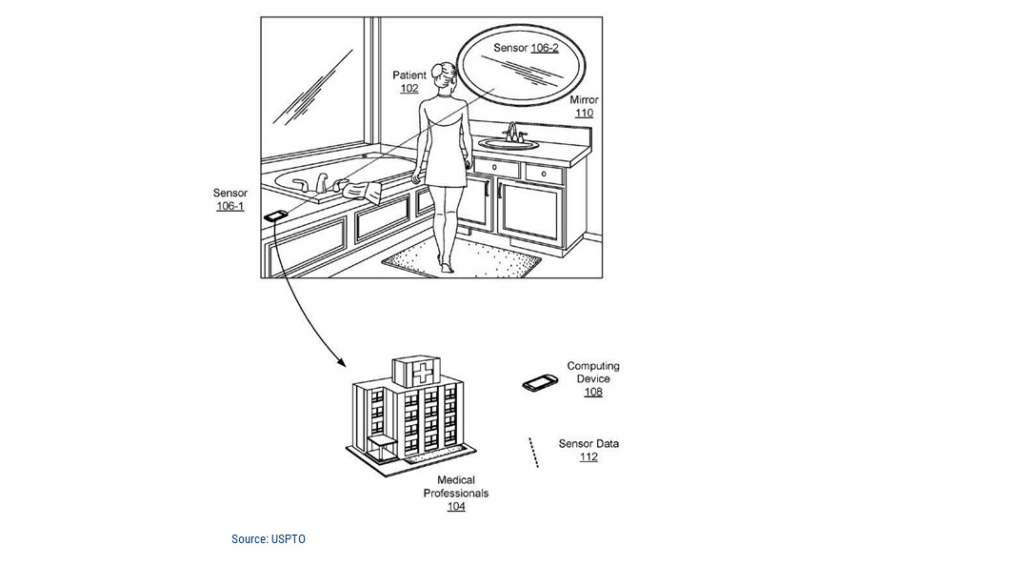
From IEEE Spectrum, June 10:
A man raises his phone as police move into a crowd. The video is
shaky, loud, immediate. Within minutes, it is online. Within hours, it
is everywhere. This is how accountability works now. Something happens,
someone records it, and that footage can show what really happened,
sometimes contradicting official accounts. It can empower citizens and
create consequences for officials.
But the footage’s life cycle does not end there.
In recent months, civil liberties groups have warned
that adding facial recognition to consumer smart glasses could turn
everyday recording into something more troubling: real-time facial identification. It reflects a broader shift already underway, where images and videos captured for one purpose can later be searched, matched, and used for another.
An
ouroboros is an ancient Egyptian symbol, a snake or dragon eating its
own tail. As I began to see patterns in my broader research on
surveillance corporatism and governance lag, I began using the term
“surveillance ouroboros” to describe this recursive pattern of
observations intended to hold power accountable becoming new input for
the same surveillance infrastructure.
Facial recognition changes accountability
During the George Floyd protests in 2020, people filmed police in real time. Phones were pointed at officers, not at each other. The goal was simple: to show what the state was doing. That footage spread quickly and became part of a much larger pool of public data.At the same time, reporting from outlets including The New York Times and BuzzFeed News
showed that law enforcement agencies were using facial-recognition
tools, including systems built by Clearview AI. Those systems were built
from billions of images scraped from across the internet, including
publicly available photos and videos.
The basic approach is now routine: People record the state, or anything else (as in the January 6 attack
on the U.S. Capitol), and the state compiles that footage and data into
a searchable environment, which may later be used to identify some of
the same people who made the footage.
Facial-recognition systems used by law enforcement are increasingly outpacing the legal safeguards.
A 2023 Government Accountability Office review
found that federal law enforcement agencies continued to expand their
use of facial-recognition systems for criminal investigations despite
ongoing concerns around training, privacy protections, civil-liberties
safeguards, and oversight. Earlier GAO findings showed that agencies had
conducted roughly 60,000 facial-recognition searches before formal
training requirements were put in place for personnel using the systems.
The American Civil Liberties Union and other groups have warned
that these tools could be used to identify people from images shared
online, including protest-related footage. Concerns about facial
recognition led some U.S. states and cities,
including San Francisco and Boston, to restrict or ban government use
of the technology, while federal agencies have continued to face scrutiny over how such systems are tested, deployed, and audited. A 2024 analysis published in Internet Policy Review
warned that facial-recognition systems used by law enforcement are
increasingly outpacing the legal safeguards meant to govern them,
creating growing tensions around data protection, oversight, and
proportional use.
The spy network that built itselfSurveillance
used to require infrastructure. Cameras had to be installed, and data
had to be collected deliberately. That is no longer the case. People
carry cameras everywhere. They record constantly and upload in real
time. Events are documented from multiple angles without planning or
coordination. The cumulative result is a continuous stream of usable
data: faces, locations, timestamps, and interactions. The Internet of
Things (IoT) also waits all around us, gathering information and releasing it when people least expect it, as Andrew Guthrie Ferguson describes in a recent excerpt of his book Your Data Will Be Used Against You.
RELATED: “Sensorveillance” Turns Ordinary Life Into Evidence
Similar dynamics are emerging globally. A recent analysis in the International Journal of Law and Information Technology
examined how facial-recognition systems in China and Japan are
expanding faster than the legal frameworks governing them. Reporting by The Guardian
described the limited legal protections around the rapid deployment of
AI-assisted surveillance infrastructure across parts of Africa.
There
used to be a clear distinction between surveillance and accountability.
Surveillance meant the powerful watching the people; authorities tended
not to share their imagery except under duress or a court order
and usually after a long delay. Accountability meant the people
watching the powerful and often publishing imagery immediately to head
off or counteract official mischief. That distinction no longer holds.
The same footage can serve both roles. A recording meant to expose
misconduct can later be used to identify someone else entirely.
Surveillance ouroboros is not a future risk. It is already here.
This
dynamic persists because people still need to record. In many places,
it is one of the only tools available when formal accountability breaks
down. When oversight institutions weaken or fail, public documentation
becomes a substitute. In that environment, people turn to visibility.
But that visibility comes with a cost. The more people that document,
the more data that exists. The more data that exists, the easier it is
to search, match, and store. Every video feeds the ouroboros. People are
not feeding the system because they trust it. They are feeding it
because the alternative is silence.
Most of the people in these
videos are not the focus. They are in the background, passing by or
standing nearby. But that distinction does not matter once the footage
enters a system. Today’s facial recognition can identify even a face
that passed through the corner of a frame. Someone who did nothing can
still become part of a dataset without ever knowing it. As recognition
systems improve, older footage becomes more useful—and invasive....
MUCH MORE, including links to previous IEEE Spectrum articles including the voyeuristic "We like to watch."
Regarding cameras, there is a nascent movement to remove bodycams from police officers because the cameras reveal some unpleasant behaviors on the part of those on whom the cameras are focused.
Regarding panopticons, here's University College London's Faculty of Laws:
The panopticon penitentiary, from the Greek παν-
(‘all’) and -οπτικος (‘seeing’) was based upon an idea of Jeremy’s
younger brother, Samuel, who, while working in Russia for Prince
Potemkin, hit upon the ‘central inspection principle’, which would
facilitate the training and supervision of unskilled workers by
experienced craftsmen.
Jeremy came to adapt this principle for his
proposed prison, an ‘Inspection House’ envisaged as a circular
building, with the prisoners’ cells arranged around the outer wall and
the central point dominated by an inspection tower....
They still wheel Bentham out for board meetings at UCL:
December 2013 - Why Didn't Anyone Tell Me The Dessicated Corpse of Jeremy Bentham Attended A Board Meeting At University College London?
Though the picture link in our post has rotted (unlike Jeremy) the original at Metro UK is still online:

Point of order: The late Jeremy Bentham joins the farewell committee meeting (Picture: UCL)
In the run-up to Christmas 2016 we posted "'Can your city change your mind?' (Jeremy Bentham does a cameo) ":
The linked article used a photo of Illinois' Stateville Prison* which reminded me of this from Alex Wellerstein, historian of science at the Stevens Institute of Technology.
I like the idea of Santa as Panopticon. Bummer kid, ho, ho, ho.
From Curbed:
The design of our spaces can heal us, hurt us, and alter the way we think...
* Panopticon of F House, Stateville Correctional Center
Illinois State Prison, Joliet, IL
"Monolithic Dome Design...However, this design caused amplified sound of 350 inmates like a sensory nightmare"