Showing posts sorted by date for query buffett reinsurance. Sort by relevance Show all posts

Sunday, April 12, 2026

"Hedge Fund Money Is Reshaping a 180-Year-Old Insurance Model"

Though this has been going on for years the offloading of risk is starting to draw some serious attention. And with the simultaneous specter of lower and lower premiums caused by the flood of capacity the bag-holders will be, if not retail, then unsophisticated players.

This is the point in the cycle where Warren Buffett and Ajit Jain would decline to cover perils they can't get paid for.

As noted exiting January 12, 2026's ""How GE Vernova’s ‘Good Times’ Could Mean Bad Times for Its Stock" (GEV)": 

Warren Buffett ran into similar situations in Berkshire's reinsurance business. When re profits were good, everyone and his brother would flood into the market, writing policies at prices that Warren didn't think covered the risk. Rather than withdrawing completely he continued to offer policies at prices he thought were fair while telling the insurance companies that needed reinsurance cover that Berkshire would be there when the others had skedaddled.

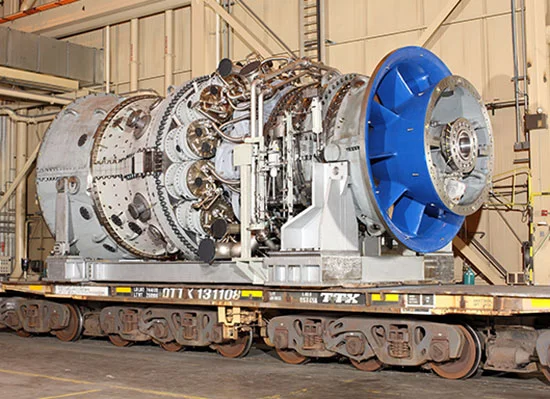
The same is true for GE Vernova. They've been manufacturing and maintaining generators/turbines since Thomas Edison and J.P. Morgan formed the General Electric Company in 1889.

They'll be around to come make a service call when you think your turbine is making a funny sound....

From Bloomberg April 12:

Alternative investment managers are pouring unprecedented sums of money into the market for property cover, and reshaping a 180-year-old reinsurance model in the process.

Allocations to catastrophe bonds and other insurance-linked securities popular among hedge funds and institutional investors rose 18% to reach a record $136 billion last year, according to data provided by broker Aon Plc. That rise in alternative capital and “its influence in the broader reinsurance market is growing because of the record growth in catastrophe bonds,” Aon told Bloomberg.

The shift promises to alter the face of a market whose basic role is to provide stable property cover during periods of sustained losses. It also raises questions as to whether reinsurers will gradually play a smaller role as the ultimate backstop for covering catastrophe risk.

Reinsurers may end up becoming more like risk managers, “shifting the risk to the capital markets which have trillions of dollars to invest,” Brian Schneider, senior director of insurance at Fitch Ratings, said in an interview. And if “more and more of this business gets shifted to the capital markets, then maybe the traditional companies become less and less relevant.”

Reinsurers covered just over 10% of total insured catastrophe losses in 2024, well below the historical average of 20%, according to S&P Global Ratings. The industry’s biggest firms have more than halved their exposure to insured disaster losses in recent years, S&P also said.

Reinsurers are themselves the driving force behind the shift. That’s as urbanization, higher inflation and climate change combine in ways that mean natural catastrophes are both more frequent and more devastating when they hit. The industry’s response has been to look for ways to offload risk to capital markets.

They mainly do this by issuing cat bonds, an asset class that saw “breathtaking” growth in issuance last year, according to John Seo, managing director and co-founder of Fermat Capital Management, the biggest hedge fund investor specialized in such securities. Speaking in a February interview, Seo said he thinks “the issuance surge we’re seeing is far from over.”

Reinsurers are also attracting record levels of private capital into so-called sidecars. Such vehicles give third-party investors access to premiums, in exchange for which they must accept a slice of the risk associated with natural disasters. It’s a market that’s nearly tripled in size since 2023, reaching as much as $18 billion today, with much of the growth coming from property catastrophe coverage, according to AM Best, a rating agency that tracks the insurance industry. 

Germany’s Hannover Re recently set up a Bermuda-based insurance agent to create bespoke catastrophe-related portfolios for hedge funds, pensions and other professional money managers.

“As part of the overall ILS activities that we have, we felt this was the missing piece,” said Michael Eberhardt, chief executive of the new venture, Hannover Re Capital Partners. “It allows us to leverage our own underwriting expertise and partner with third-party capital investors.”

Fitch notes that investors in sidecars can face potentially bigger losses than holders of cat bonds, should a natural disaster result in a trigger event. That’s because sidecars tend to be exposed to losses from more common secondary perils such as hailstorms, wildfires and floods.

“There’s concern that maybe some naive capital is coming in,” and that “investors don’t really think they’re going to get hit by a lot of these secondary perils,” Schneider said....

....MUCH MORE

I may end up purloining "naive capital" rather than having to explain who the "dentist from Peoria" is.:

October 2023
"Weather derivative market activity soars on belief extremes to increase: Report"
Action, baby, action!

Friday, March 27, 2026

Betting On The Weather, On Catastrophes, On Natural and Unnatural Phenomena

This is pretty much dead-center on our wheelhouse.

From Aeon Magazine, March 27:

Catastrophe markets
Americans love to gamble. But placing bets on wildfires, floods and storms comes with serious moral and social costs 

Will a Category 5 hurricane make landfall in the US before 2027? Will there be a megaquake by 30 June? Will 2026 be the hottest year ever? You can bet on these and dozens of other disasters in the online prediction markets Kalshi and Polymarket, where users trade ‘yes’ and ‘no’ shares in the outcome of future events in politics, sports, popular culture, business, and weather. Interspersed with trending categories like ‘Ukraine’, ‘Trump’ and ‘Crypto’ are event markets in ‘Hurricanes’, ‘Natural disasters’ and ‘Climate change’.

In January 2025, emergency management officials and insurance companies began estimating losses in the Los Angeles wildfires that ultimately included 440 deaths, of which 31 were direct deaths, and between $76 billion and $131 billion in property and capital losses. Online bettors had been wagering on this event and tallied their winnings or losses in catastrophe markets. By mid-January, Polymarket bets on the wildfires’ spread, duration and political fallout totalled more than $1.2 million. A Polymarket user posted a comment: ‘Volume so high in this market it cause another fire.’

After the 1906 San Francisco earthquake and fire, The New York Times published an article entitled ‘Catastrophe Markets’ that discussed the short-lived impact of the disaster on stock prices. Today’s online catastrophe markets are markets literally in disaster. People bet on whether disasters will happen and how bad they will be. These catastrophe markets raise some questions, including what, besides money, is at stake? What kind of thinking about risk in society do they promote and preclude?

One aspect of the history of catastrophe markets is very old. Weather gambling was described by one newspaper in 1931 as ‘one of the oldest, most fascinating and uncertain gambles in the world’. In 1886, betting on how long it would rain was ‘in vogue’, and, by the 1930s, office weather pools were commonplace. Weather gambling has taken on different and increasingly organised forms from the 19th to the 21st centuries, from informal wagers to gambling rings and lotteries to gamified forecasting apps like Weather Champs.

Rain betting, the oldest and most common form of weather gambling, was often tied to local community traditions. It flourished in Calcutta and Bombay in the 1880s and ’90s. Crowds gathered to gamble on whether a rain gauge would overflow, confident that cheating was impossible because there was no ambiguity in a downpour. As one newspaper remarked: ‘When it rains in India it rains; there is no half-way business about it.’ This assumption that the natural world defied market manipulation was echoed by accounts imagining rain betting as a model for speculation in the US because of its distance from volatility in railroad stocks and market swings in general.

Capitalism turned the uncertainty of the weather into a calculable risk and source of profit

So-called ‘pools on the weather’ in the early to mid-20th century signalled the growth and bureaucratisation of weather gambling, made possible in the US by government weather data. With the rise of government forecasting in Europe and the US, meteorological data became a steady stream in what the philosopher of science Ian Hacking called the 19th-century ‘avalanche of printed numbers’ produced by European state bureaucracies, and it led to the systemisation and scaling up of weather gambling in the 20th century. As a Texas newspaper observed in 1915: ‘Gambling on the weather has become an institution throughout a great part of the United States.’ Large syndicates in cities in the US and Canada were well organised, lucrative, and illegal. In 1950, St Louis police raided what newspapers called a ‘weather-betting racket’ that pulled in a reported $2.6 million annually. Some lotteries were pure chance, while others involved forecasting skill and judgment. Some cities had pools on the temperature at a specific hour the next day or on other combinations of weather data.  
Gamblers attempted to bribe US weather officials to falsify temperature figures and tampered with government weather reports en route to newspaper offices. In St Louis, extra security measures were implemented to prevent this manipulation, and the national weather service stressed its commitment to keeping weather data, a public good in the US, accessible to the public.

Weather data also enabled the financialisation of catastrophe, another precursor of catastrophe markets. In his speech on ‘New England Weather’ (1919), Mark Twain catalogued weather varieties, including ‘weather to sell; to deposit; weather to invest.’ Twain’s satirical assetisation of the weather was prescient. Speculative financial instruments designed to manage weather-related risk – rain insurance, flood insurance, weather derivatives, and catastrophe bonds – emerged during the 20th century. Through insurance and reinsurance, capitalism turned the uncertainty of the weather into a calculable risk and source of profit. This process of taming weather-related risk hinged on the assumption that the stochastic nature of rain, hurricanes and other natural hazards could be rationally managed, like an asset, with market logic. But insurance agents, energy traders and hedge fund managers were only ever partially successful. The uncertainties of bad weather and natural hazards always persisted....

....MUCH MORE 

I will note that, at least as far as fires go, the concept of insurable interest, i.e. who can bet on the event, should be structured to prevent the arsonist from participating in the payoff, perhaps by public execution. 

If interested see:

"Early abuses in life insurance markets"

On moral hazard:

Pro forma, I'm Miss America 
Warren Buffett: Avoid States With Large Unfunded Pension Liabilities

And the conceptually related:

Perversity and Credit Default Swaps

And many, many more. 

Monday, January 12, 2026

"How GE Vernova’s ‘Good Times’ Could Mean Bad Times for Its Stock" (GEV)

In late pre-market trade the stock is down $1.57 (-0.25%) at $621.00. This follows Friday's slaughter of the innocents, down $58.36 (-8.57%) to $622.50.

Here's Al Root at Barron's January 9/11:

An age-old problem for the stock market is that when things are really good in a certain business, it invites competition. That makes conditions less positive down the road. That scenario could play out for the power-generation technology company GE Vernova, according to one analyst who follows the stock.

Vernova’s performance has been nothing short of amazing. The stock has more than quadrupled since the company was spun out of General Electric, now GE Aerospace, in April 2024. Estimates for 2028 earnings before interest, taxes, depreciation, and amortization have gone from below $5 billion to almost $11 billion over that span.

Higher growth in electricity demand, partly because of data centers for artificial intelligence, has pushed up pricing for Vernova’s turbines and filled its order book for years to come. The problem is that good times draw a crowd.

Baird analyst Ben Kallo downgraded GE Vernova stock on Friday to Hold from Buy, cutting his price target to $649 a share from $816. That is a big cut: The $167 difference amounts to about $45 billion of market value.

Kallo says he is worried about “potential oversupply” as competitors announce additions to production capacity. Almost anyone with turbine technology is now considering entering power generation, including Doosan, supersonic jet start-up Boom Technology, and FTAI Aviation. Caterpillar, which has long had a generator business, is another player.

“While we believe the market remains tight (particularly in the near term), we see these announcements and oversupply fears shifting sentiment for a consensus long,” wrote Kallo. That means the market, now convinced that Vernova is a winner, could change its mind.

Shifting sentiment can shift valuation multiples—a risk Kallo is concerned about. Today, GE Vernova trades for about 20 times estimated 2027 Ebitda, while comparable industrial stocks in the S&P 500 trade for closer to 16 times.

“Our long-term outlook for GE Vernova as a leader in both Power and Electrification, and viewing GE Vernova as a core holding, are unchanged, but we are moving to the sidelines,” he wrote....

....MORE 

He's right. 

Barron's front page

Warren Buffett ran into similar situations in Berkshire's reinsurance business. When re profits were good, everyone and his brother would flood into the market, writing policies at prices that Warren didn't think covered the risk. Rather than withdrawing completely he continued to offer policies at prices he thought were fair while telling the insurance companies that needed reinsurance cover that Berkshire would be there when the others had skedaddled.

The same is true for GE Vernova. They've been manufacturing and maintaining generators/turbines since Thomas Edison and J.P. Morgan formed the General Electric Company in 1889.

They'll be around to come make a service call when you think your turbine is making a funny sound.


In the meantime, should you prefer a small modular nuclear reactor they have those too, 

And wind, if that comes back into favor.

Saturday, February 22, 2025

Warren Buffet's Letter To The Shareholders Of Berkshire Hathaway, February 22, 2025 (BRK)

From Warren Buffett, Feb. 22, 2025: 

To the Shareholders of Berkshire Hathaway Inc.:

This letter comes to you as part of Berkshire’s annual report. As a public company, we are required to periodically tell you many specific facts and figures.

“Report,” however, implies a greater responsibility. In addition to the mandated data, we  believe we owe you additional commentary about what you own and how we think. Our goal is to communicate with you in a manner that we would wish you to use if our positions were reversed – that is, if you were Berkshire’s CEO while I and my family were passive investors,
trusting you with our savings.

This approach leads us to an annual recitation of both good and bad developments at the many businesses you indirectly own through your Berkshire shares. When discussing problems at specific subsidiaries, we do, however, try to follow the advice Tom Murphy gave to me 60 years ago: “praise by name, criticize by category.”

Mistakes – Yes, We Make Them at Berkshire

Sometimes I’ve made mistakes in assessing the future economics of a business I’ve purchased for Berkshire – each a case of capital allocation gone wrong. That happens with both judgments about marketable equities – we view these as partial ownership of businesses – and the 100% acquisitions of companies.

At other times, I’ve made mistakes when assessing the abilities or fidelity of the managers Berkshire is hiring. The fidelity disappointments can hurt beyond their financial impact, a pain that can approach that of a failed marriage.

A decent batting average in personnel decisions is all that can be hoped for. The cardinal sin is delaying the correction of mistakes or what Charlie Munger called “thumb-sucking.”
Problems, he would tell me, cannot be wished away. They require action, however uncomfortable that may be.

* * * * * * * * * * * *

During the 2019-23 period, I have used the words “mistake” or “error” 16 times in my letters to you. Many other huge companies have never used either word over that span. Amazon, I should acknowledge, made some brutally candid observations in its 2021 letter. Elsewhere, it has generally been happy talk and pictures

I have also been a director of large public companies at which “mistake” or “wrong” were forbidden words at board meetings or analyst calls. That taboo, implying managerial perfection, always made me nervous (though, at times, there could be legal issues that make limited discussion advisable. We live in a very litigious society.)

* * * * * * * * * * * *

At 94, it won’t be long before Greg Abel replaces me as CEO and will be writing the annual letters. Greg shares the Berkshire creed that a “report” is what a Berkshire CEO annually owes to owners. And he also understands that if you start fooling your shareholders, you will soon believe your own baloney and be fooling yourself as well.

Pete Liegl – One of a Kind

Let me pause to tell you the remarkable story of Pete Liegl, a man unknown to most Berkshire shareholders but one who contributed many billions to their aggregate wealth. Pete died in November, still working at 80.

I first heard of Forest River – the Indiana company Pete founded and managed – on June 21, 2005. On that day I received a letter from an intermediary detailing relevant data about the company, a recreational vehicle (“RV”) manufacturer. The writer said that Pete, the 100% owner of Forest River, specifically wanted to sell to Berkshire. He also told me the price that Pete expected to receive. I liked this no-nonsense approach.

I did some checking with RV dealers, liked what I learned and arranged a June 28th meeting in Omaha. Pete brought along his wife, Sharon, and daughter, Lisa. When we met, Pete assured me that he wanted to keep running the business but would feel more comfortable if he could assure financial security for his family.

Pete next mentioned that he owned some real estate that was leased to Forest River and had not been covered in the June 21 letter. Within a few minutes, we arrived at a price for those assets as I expressed no need for appraisal by Berkshire but would simply accept his valuation. Then we arrived at the other point that needed clarity. I asked Pete what his compensation should be, adding that whatever he said, I would accept. (This, I should add, is not an approach I recommend for general use.)

Pete paused as his wife, daughter and I leaned forward. Then he surprised us: “Well, I looked at Berkshire’s proxy statement and I wouldn’t want to make more than my boss, so pay me $100,000 per year.” After I picked myself off the floor, Pete added: “But we will earn X (he named a number) this year, and I would like an annual bonus of 10% of any earnings above what the company is now delivering.” I replied: “OK Pete, but if Forest River makes any significant acquisitions we will make an appropriate adjustment for the additional capital thus employed.” I didn’t define “appropriate” or “significant,” but those vague terms never caused a problem.

The four of us then went to dinner at Omaha’s Happy Hollow Club and lived happily ever after. During the next 19 years, Pete shot the lights out. No competitor came close to his performance.
* * * * * * * * * * * *
Every company doesn’t have an easy-to-understand business and there are very few owners or managers like Pete. And, of course, I expect to make my share of mistakes about the businesses Berkshire buys and sometimes err in evaluating the sort of person with whom I’m dealing.
 
But I’ve also had many pleasant surprises in both the potential of the business as well as the ability and fidelity of the manager. And our experience is that a single winning decision can make a breathtaking difference over time. (Think GEICO as a business decision, Ajit Jain as a managerial decision and my luck in finding Charlie Munger as a one-of-a-kind partner, personal advisor and steadfast friend.) Mistakes fade away; winners can forever blossom.
* * * * * * * * * * * *
One further point in our CEO selections: I never look at where a candidate has gone to school. Never!
 
Of course, there are great managers who attended the most famous schools. But there are plenty such as Pete who may have benefitted by attending a less prestigious institution or even by not bothering to finish school. Look at my friend, Bill Gates, who decided that it was far more important to get underway in an exploding industry that would change the world than it was to stick around for a parchment that he could hang on the wall. (Read his new book, Source Code.)
Not long ago, I met – by phone – Jessica Toonkel, whose step-grandfather, Ben Rosner, long ago ran a business for Charlie and me. Ben was a retailing genius and, in preparing for this report, I checked with Jessica to confirm Ben’s schooling, which I remembered as limited. Jessica’s reply: “Ben never went past 6th grade.”
I was lucky enough to get an education at three fine universities. And I avidly believe in lifelong learning. I’ve observed, however, that a very large portion of business talent is innate with nature swamping nurture.
Pete Liegl was a natural.
 
Last Year’s Performance
In 2024, Berkshire did better than I expected though 53% of our 189 operating businesses reported a decline in earnings. We were aided by a predictable large gain in investment income as Treasury Bill yields improved and we substantially increased our holdings of these highly-liquid short-term securities.

Our insurance business also delivered a major increase in earnings, led by the performance of GEICO. In five years, Todd Combs has reshaped GEICO in a major way, increasing efficiency and bringing underwriting practices up to date. GEICO was a long-held gem that needed major repolishing, and Todd has worked tirelessly in getting the job done. Though not yet complete, the 2024 improvement was spectacular.

In general, property-casualty (“P/C”) insurance pricing strengthened during 2024, reflecting a major increase in damage from convective storms. Climate change may have been announcing its arrival. However, no “monster” event occurred during 2024. Someday, any day, a truly staggering insurance loss will occur – and there is no guarantee that there will be only one per annum.

The P/C business is so central to Berkshire that it warrants a further discussion that appears later in this letter.

Berkshire’s railroad and utility operations, our two largest businesses outside of insurance, improved their aggregate earnings. Both, however, have much left to accomplish.
Late in the year we increased our ownership of the utility operation from about 92% to 100% at a cost of roughly $3.9 billion, of which $2.9 billion was paid in cash with a balance in Berkshire “B” shares.

* * * * * * * * * * * *
All told, we recorded operating earnings of $47.4 billion in 2024. We regularly – endlessly, some readers may groan – emphasize this measure rather than the GAAP-mandated earnings that are reported on page K-68.

Our measure excludes capital gains or losses on the stocks and bonds we own, whether realized or unrealized. Over time, we think it highly likely that gains will prevail – why else would we buy these securities? – though the year-by-year numbers will swing wildly and unpredictably. Our horizon for such commitments is almost always far longer than a single year.
In many, our thinking involves decades. These long-termers are the purchases that sometimes make the the cash register ring like church bells... 
....MUCH MORE (15 page PDF)
 
Mr. Buffett does not explain why he built and continues to build Berkshire's cash hoard.
And as usual, the discussion of the insurance/reinsurance operations is instructive.

Here's the complete annual report, 2024 (150 page PDF)

Monday, May 6, 2024

Warren Buffet and Ajit Jain On "Full Self-Driving" And Auto Insurance (BRK; TSLA)

How can you tell that Warren values Berkshire's insurance operations above all the rest of the conglomerate?

Because he kept Ajit Jain at the helm of the insurance ops rather than make him heir apparent.

Insurance and reinsurance are the golden goose from which all else flows.

Well, insurance and See's Candy.

From Investor's Business Daily, May 6:

Elon Musk Says Warren Buffett Should Buy Tesla Stock After These Comments 

Tesla (TSLA) Chief Executive Elon Musk on Sunday suggested that Warren Buffett should invest in the EV giant, after the "Oracle of Omaha" addressed Tesla's Full Self-Driving (FSD) efforts during Berkshire Hathaway's (BRKB) annual shareholder meeting. TSLA shares advanced early Monday.

Billionaire Warren Buffett commented over the weekend on the potential risk that auto insurers, such as Berkshire's Geico, could face if Elon Musk and Tesla succeed in their automated driving endeavor.

"If accidents get reduced by 50%, it's going to be good for society and it's going to be bad for insurance companies' volume," Buffett said. "But good for society is what we're looking for."

Berkshire Hathaway Executive Ajit Jain added during the annual meeting that while Tesla feels the number of auto accidents come down because of its technology, repair costs of each accident could go up.

"If you multiply the number of accidents times the cost of each accident, I'm not sure that total number has come down as much as Tesla would like us to believe," Jain said. He added that Tesla insurance so far "hasn't been much of a success."

"Time will tell but I think automation just shifts a lot of the expense from the operator to the equipment provider," Jain said.

Warren Buffett And Elon Musk....

....MUCH MORE

Previously on Buffett's first Berkshire Annual Meeting without Charlie Munger:
Berkshire Hathaway Annual Meeting: May the Fourth Be With You Warren Edition (BRK)

Wednesday, February 7, 2024

"Wall Street titans are betting big on insurers. What could go wrong?" (plus Warren Buffet stops by)

From The Economist, January 23:

How private-markets giants are overhauling the financial system 

Blackstone listed on the New York Stock Exchange during the summer of 2007. Doing so just before the global financial crisis was hardly auspicious, and come early 2009 the firm’s shares had lost almost 90% of their value. By the time the two other members of America’s private-markets troika rang the bell, Wall Street had been battered. KKR listed on July 15th 2010, the same day Congress passed the Dodd-Frank Act, overhauling bank regulation. Apollo followed eight months later. Each firm told investors a similar story: private equity, the business of buying companies with debt, was their speciality.

Yet as the economy recovered, private-markets firms flourished—emerging as the new kings of Wall Street. The biggest put more and more money into credit, infrastructure and property. By 2022 total assets under management had reached $12trn. Those at Apollo, Blackstone and KKR have risen from $420bn to $2.2trn over the past decade. Thanks to the firms’ diversification, their shares rose by 67% on average during 2023, even as higher interest rates caused buy-outs to grind to a halt. Private equity has plenty of critics, but the model of raising and investing funds—whether to buy companies or lend to them—seldom worries regulators. If things go wrong, losses are shouldered by a fund’s institutional investors and humiliated fund managers struggle to raise money again. There is little threat to financial stability.

The latest development in the industry is upending this dynamic. Private-markets giants are buying and partnering with insurers on an unprecedented scale, which is transforming their business models, as they expand their lending operations and sometimes their balance-sheets. America’s $1.1trn market for fixed annuities, a type of retirement-savings product offered by life insurers, has been the focus so far. But Morgan Stanley, a bank, reckons that asset managers could eventually pursue insurance assets worth $30trn worldwide. Regulators worry that this is making the insurance industry riskier, exposing policymakers and perhaps even the wider financial system. Is the expansion by private-markets giants a land-grab by fast-and-loose investors in an important corner of finance? Or is it the intended consequence of a more tightly policed banking system?

Apollo, which has a well-deserved reputation for financial acrobatics, is leading the way. In 2009 it invested in Athene, a newly formed reinsurance business based in Bermuda. By 2022, when Apollo merged with Athene, the operation had grown to sell more fixed annuities than any other insurer in America. Today Apollo manages more than $300bn on behalf of its insurance business. During the first three quarters of 2023, the firm’s “spread-related earnings”, the money it earned investing policyholders’ premiums, came to $2.4bn, or nearly two-thirds of total earnings.

Imitation can be a profitable form of flattery. KKR’s tie-up with Global Atlantic, an insurer it finished buying this month, resembles Apollo’s bet. Blackstone, meanwhile, prefers to take minority stakes. It now manages $178bn of insurance assets, collecting handsome fees. Brookfield and Carlyle have backed large Bermuda-based reinsurance outfits. TPG is discussing partnerships. Smaller investment firms are also involved. All told, life insurers owned by investment firms have amassed assets of nearly $800bn. And the traffic has not been entirely one-way. In November Manulife, a Canadian insurer, announced a deal to buy CQS, a private-credit investor....

....MUCH MORE

Here's a guy with major insurance and reinsurance operations:

....And then there's 2011's "The Porn Shop Operators Strike Again: Harry & David files for bankruptcy";

``You can sell it to Berkshire, and we'll put it in the Metropolitan Museum; it'll have a wing all by itself; it'll be there forever,'' he says at the February meeting.
``Or you can sell it to some porn shop operator, and he'll take the painting and he'll make the boobs a little bigger and he'll stick it up in the window, and some other guy will come along in a raincoat, and he'll buy it.''

—Warren Buffett
June 25, 2008

On why a business may prefer selling to Berkshire Hathaway rather than a private equity firm.

I know Warren is talking down the bidding pressure that PE firms might put on the price he has to pay for privately held businesses but looking at his comments on PE over the years it's more than that:
He actually loathes private equity and its practitioners.... 

Last seen in April 2020's "Berkshire Hathaway as Idealized Private Equity".  

Sunday, June 19, 2022

Uh Oh: Covid Business Interuption Insurance Case Reversed on Appeal

This could be a very big deal. Some previous links after the jump.

From Reuters, June 17:

Louisiana appeals court dishes up win for restaurant in COVID business-interruption case

  • Split Louisiana court finds policy ambiguous, reads it in favor of New Orleans' Oceana Grill
  • First appellate win for an insured business

A Louisiana appeals court found that an all-risk property policy covered business-income interruption losses caused by COVID-19 shutdown orders and other operational restrictions.

In a 3-2 split Wednesday, Louisiana’s Fourth Circuit Court of Appeal reversed a bench verdict for Certain Underwriters at Lloyd’s, London in an action for declaratory relief filed by the operators of New Orleans’ 500-seat Oceana Grill. It's the first appellate win for an insured business according to a database at University of Pennsylvania Carey Law School.

Two of the panel’s judges found the policy’s requirement of “direct physical loss or damage” was ambiguous as applied to a temporary suspension of operations, and read it in favor of the insured restaurant. A third judge concurred on other grounds.

The two dissenters said the policy clearly required physical damage to property, and that there was no “manifest error” in the trial judge’s factual finding that the presence of COVID-19 did not cause physical damage. They also said the majority had ignored an express exclusion for “loss of use” in Lloyd’s policy, and had erred in relying on cases interpreting homeowners’ policies....

....MUCH MORE

The potential exposure for the insurance/reinsurance companies has to be in the hundreds of billions of dollars just in the U.S. and Europe.

Previously, beginning immediately following the lockdowns:

March 2020
P&C: Business Interruption Insurance—Here Come the Lawyers
July 2020
"COVID-19 insured loss reports reach $20.5 Billion"
And that's with insurers doing everything they can, including preemptively suing their own customers,* to keep a lid on business interruption coverage payouts....
*Travelers Insurance Is Suing Its Customers To Preempt Business Interruption Claims (TRV)

Related:
July 17
Re/insurance: "U.S. riot losses accelerated & worsened by pandemic..."
June 3
Insurance: AXA cites Business Interruption as “material” in EUR 1.2bn Covid-19 Property/casualty loss estimate
May 24
Insurance Oh-Oh: "French court orders insurer to pay restaurant’s business interruption losses from coronavirus".
March 31
P&C: Business Interruption Insurance—Here Come the Lawyers
April 14
Insurance:"Anticipated Coronavirus Claims Scenarios Across Major Coverage Lines"


If interested see also:
Re/Insurance: "Berkshire Hathaway will write pandemic cover 'at the right price', Buffett says" (BRK)
As with terrorism insurance Warren would rather that governments take the risks,* the downside is just so huge....
Insurance Trade Groups: "Pandemics simply are not insurable risk..."
Whitney Tilson: "Berkshire's Exposure To Business Interruption Insurance" (BRK)
Insurance:"Anticipated Coronavirus Claims Scenarios Across Major Coverage Lines"

Insurance: "Coronavirus to be largest industry loss ever: Chubb’s Greenberg & Lloyd’s Neal"
The last line is:

"Lloyd’s has set aside £15 million to fund research into how pandemics and other big events can be better dealt with in future."
As the kids say: "You had one job..."

Re/Insurance: "Pandemic could inflate hurricane industry losses by up to 20%..." 
Of course the jackpot for risk modelers is to have a volcano go off triggering an earthquake leading to the collapse of an underwater seamount, causing a tsunami as a hurricane roars through a pandemic zone.

Most likely location for this unlikely occasion: the Lesser Antilles.

Unlike Fukushima, no nukes though.
So it would be hard to recreate the typhoon approaching the nuke plant devastated by tsunami caused by the earthquake* but, but volcano and pandemic!

I believe for the remainder of 2020 our motto should be "Hey, it could be worse!"

Big Re/Insurance: "Ohio Federal Court Rules Business Interruption Coverage Extends to Loss of Use of Property Due to State-Ordered Closures"

Knowledge@Wharton: "What Role Should Insurers Play in Covering Pandemic Business Losses?" 

"Insurance: Epic Battle Over Covid-19 Coverage"

BigLaw on Big Insurance: Covid-19 Business Interruption Claims In The UK 

Thursday, August 13, 2020

Insurance/Private Equity: KKR Decides To Play The Float, Buffett Style

From Artemis:
KKR’s acquisition of Global Atlantic shows PE’s attraction to float & sidecars
Private equity and alternative investment giants of the world are increasingly demonstrating why access to insurance premium float, as a form of assets under management, is an attractive prospect, with KKR’s acquisition of Global Atlantic the latest clear example. It also shows their appreciation for bringing third-party capital into re/insurance.

As we explained when the deal was announced in early July, private equity and buyout giant KKR & Co. L.P. (or Kohlberg Kravis Roberts) was clearly showing its appetite for insurance-linked returns with its plan to acquire life and retirement focused insurance and reinsurance firm Global Atlantic Financial Group.

It’s not just the underwriting returns, as you’d expect from an insurance-linked securities (ILS) style investment, that attracts private equity giants like KKR to these types of transactions.
The long-term, almost permanent nature of the capital generated from insurance premiums, which is converted to assets under management (AUM) to fund its buy-out business, are a very attractive prospect and even for a firm like KKR can be relatively transformational in how they ramp up its scale.

As a result, the returns generated are not from the underwriting, or product offering, but are multiplied by the way KKR puts the float-like capital it inherits from the deal to work.
With Global Atlantic set to increase KKR’s AUM by a massive 33% to $294 billion, it’s clear that once put to work in the kinds of transactions KKR enters into, this added capital pile could be transformational for the private equity firms returns and profits.

On a pro-forma basis, KKR estimates that adding Global Atlantic’s business will drive overall assets under management to $294 billion, of which fee-based AUM will rise by 45% to $233 billion and insurance / reinsurance related AUM will rise by an impressive 261% from $28 billion to $101 billion....
....MUCH MORE
 
Recently:
August 5; 
Insurance/Private Equity: As Apollo Global Emulates Berkshire Hathaway, Assets Reach $414 Billion (APO)

Wednesday, August 5, 2020

Insurance/Private Equity: As Apollo Global Emulates Berkshire Hathaway, Assets Reach $414 Billion (APO)

From Artemis:
Apollo hits record $414bn AuM thanks to insurance deals & ACRA
We often discuss the investing fire-power that insurance and reinsurance deals bring to major players, such as Warren Buffett’s Berkshire Hathaway. But, perhaps the real lead example of insurance related investment float accumulation is Apollo Global Management, Inc.

Apollo has hit a new high of $414 billion of assets under its management in the last quarter, with a huge $330 billion classed as fee generating, while almost $125 billion of it is performance fee generating.

A significant $246 billion of this lies in so-called permanent capital vehicles, chiefly Apollo’s life and retirement reinsurance focused Athene Holding Ltd., as well as its Europe-focused specialised insurance and reinsurance group Athora.
These two insurance and reinsurance operations are driving significant AuM increases for Apollo in recent months, as the trajectory was seemingly unstoppable and the company put firepower to work in new re/insurance related deals.

At the end of Q1 2020 Apollo reported that its permanent capital in Athene and Athora amounted to $140 billion, with almost $125 billion coming from the life and retirement reinsurance float generated by Athene.

That risen by almost 61% to $225.2 billion at the end of the second-quarter of 2020, with Athene adding 32% in inflows to reach $165.1 billion and Athora impressively growing its permanent capital by a massive 288% in the quarter to reach $60.2 billion.

These are enormous numbers and cast a shadow even on Berkshire Hathaway’s insurance float pot of capital.

Apollo also said that it has $47.4 billion of dry powder available across the group, ready to be put to work in private equity investing, insurance or reinsurance deals, or other areas of its operations....
....MUCH MORE 

Tuesday, July 28, 2020

"COVID-19 insured loss reports reach $20.5 Billion"

And that's with insurers doing everything they can, including preemptively suing their own customers,* to keep a lid on business interruption coverage payouts.
From Artemis, July 27:
Reported insured losses and reserve setting related to the COVID-19 coronavirus pandemic have now reached $20.5 billion, according to data collected by advisory PeriStrat LLC and augmented by our own research.

Zurich-based PeriStrat LLC, operated by Hans-Joachim Guenther, has been aggregating publicly available loss reports from insurance and reinsurance companies to give a picture of how the Covid-19 industry loss impact is developing.

We’ve now augmented that data with a few additions from our own research and listed it over on our sister site Reinsurance News, where you can analyse the data more closely.

The answer so far is slowly, compared to the industry loss estimates that tend to range anywhere from US $30 billion to over $100 billion, although consensus would suggest something around the US $50 billion to $70 billion range for the global property and casualty (P&C) insurance and reinsurance industry.

So far, Guenther’s PeriStrat data, added to our own analysis, tracks almost $20.5 billion of reported Covid-19 losses from across the insurance and reinsurance industry, with these reported numbers representing actual losses as well as IBNR reserves reported by re/insurers.
The estimate reported for the Lloyd’s of London market is top of the list currently, pegged at $3.65 billion by Guenther.

Following that is an estimate for insurer FM Global, who hasn’t actually reported anything itself as yet, but PeriStrat noted that communicable disease coverage FM Global offered in its standard policies aggregates to approximately $3bn in sub-limits.

After that are major players Swiss Re, AXA, Munich Re, Chubb, Zurich, Allianz and SCOR, all of which have reported more than half a billion dollars of expected Covid-19 impacts apiece....
....MUCH MORE 
*Travelers Insurance Is Suing Its Customers To Preempt Business Interruption Claims (TRV)

Related:
July 17 
Re/insurance: "U.S. riot losses accelerated & worsened by pandemic..."
June 3 
Insurance: AXA cites Business Interruption as “material” in EUR 1.2bn Covid-19 Property/casualty loss estimate
May 24
Insurance Oh-Oh: "French court orders insurer to pay restaurant’s business interruption losses from coronavirus".
March 31
P&C: Business Interruption Insurance—Here Come the Lawyers
April 14
Insurance:"Anticipated Coronavirus Claims Scenarios Across Major Coverage Lines"


If interested see also:
Re/Insurance: "Berkshire Hathaway will write pandemic cover 'at the right price', Buffett says" (BRK)
As with terrorism insurance Warren would rather that governments take the risks,* the downside is just so huge....  
Insurance Trade Groups: "Pandemics simply are not insurable risk..."
Whitney Tilson: "Berkshire's Exposure To Business Interruption Insurance" (BRK)
Insurance:"Anticipated Coronavirus Claims Scenarios Across Major Coverage Lines"

P&C: Business Interruption Insurance—Here Come the Lawyers
Insurance Oh-Oh: "French court orders insurer to pay restaurant’s business interruption losses from coronavirus".

Insurance: "Coronavirus to be largest industry loss ever: Chubb’s Greenberg & Lloyd’s Neal"
The last line is:
"Lloyd’s has set aside £15 million to fund research into how pandemics and other big events can be better dealt with in future."
As the kids say: "You had one job..."

Re/Insurance: "Pandemic could inflate hurricane industry losses by up to 20%..." 
Of course the jackpot for risk modelers is to have a volcano go off triggering an earthquake leading to the collapse of an underwater seamount, causing a tsunami as a hurricane roars through a pandemic zone.

Most likely location for this unlikely occasion: the Lesser Antilles.

Unlike Fukushima, no nukes though.
So it would be hard to recreate the typhoon approaching the nuke plant devastated by tsunami caused by the earthquake* but, but volcano and pandemic!

I believe for the remainder of 2020 our motto should be "Hey, it could be worse!""

Wednesday, June 17, 2020

"Germany considers cat bonds to support pandemic risk fund: Reports"

How do you even price such a thing?
From Artemis, June 12:
The insurance and reinsurance industry in Germany has reportedly come together to discuss and strategise the launching of a EUR 10 billion pandemic risk fund, to provide risk capital in the event of future pandemics, with insurance-linked securities (ILS) one of the funding avenues being explored, it has been reported.
First reported by German newspaper Der Spiegel this morning, followed by Reuters, the initiative sees collaboration from insurance and reinsurance stakeholders in the country.
We understand that participants are seeking a public-private solution and are realistic enough to acknowledge that re/insurers alone cannot provide the private capital such a risk fund or pool would require.
As a result catastrophe bonds are being discussed, as part of the early explorations being coordinated by German insurance industry association the GDV.

The moves join other international initiatives to establish pandemic risk insurance backstops and risk pools, to provide extra capacity to ensure pandemic risk protection can be more all-encompassing and responsive should future pandemic outbreaks arise.

The German initiative is quite forward-thinking, it seems, with participants suggesting that in order to protect against the risk of future pandemics, a coordinated response by government, the insurance and reinsurance industry, as well as the capital markets is required....
....MUCH MORE

If interested see also:
Re/Insurance: "Berkshire Hathaway will write pandemic cover 'at the right price', Buffett says" (BRK)
As with terrorism insurance Warren would rather that governments take the risks,* the downside is just so huge....  
Insurance Trade Groups: "Pandemics simply are not insurable risk..."
Whitney Tilson: "Berkshire's Exposure To Business Interruption Insurance" (BRK)
Insurance:"Anticipated Coronavirus Claims Scenarios Across Major Coverage Lines"

P&C: Business Interruption Insurance—Here Come the Lawyers
Insurance Oh-Oh: "French court orders insurer to pay restaurant’s business interruption losses from coronavirus".
Travelers Insurance Is Suing Its Customers To Preempt Business Interruption Claims (TRV)
Insurance: "Coronavirus to be largest industry loss ever: Chubb’s Greenberg & Lloyd’s Neal"
The last line is:

"Lloyd’s has set aside £15 million to fund research into how pandemics and other big events can be better dealt with in future."
As the kids say: "You had one job..."
Re/Insurance: "Pandemic could inflate hurricane industry losses by up to 20%..." 
Of course the jackpot for risk modelers is to have a volcano go off triggering an earthquake leading to the collapse of an underwater seamount, causing a tsunami as a hurricane roars through a pandemic zone.

Most likely location for this unlikely occasion: the Lesser Antilles.

Unlike Fukushima, no nukes though.
So it would be hard to recreate the typhoon approaching the nuke plant devastated by tsunami caused by the earthquake* but, but volcano and pandemic!

I believe for the remainder of 2020 our motto should be "Hey, it could be worse!""

Tuesday, May 26, 2020

Insurance Trade Groups: "Pandemics simply are not insurable risk..."

Way back in 2013 we were writing about the "temporary (2002)" Terrorism Risk Insurance Act. (TRIA)
And as recently as three weeks ago.

From Artemis, May 22:
Association’s propose federal program for “uninsurable” pandemic risk
U.S. insurance and reinsurance industry associations have launched a proposal for a industry-backed pandemic risk backstop, called the Business Continuity Protection Program (BCPP) as an alternative to the legislative proposal for a Pandemic Risk Insurance Act (PRIA) reinsurance backstop.

The National Association of Mutual Insurance Companies (NAMIC), the American Property Casualty Insurance Association (APCIA), and the Independent Insurance Agents & Brokers of America, Inc. said that the “industry-backed Business Continuity Protection Program (BCPP) would provide revenue replacement assistance for payroll, employee benefits, and operating expenses following a presidential viral emergency declaration.”
“Pandemics simply are not insurable risks; they are too widespread, too severe, and too unpredictable for the insurance industry to underwrite,” explained Charles Chamness, NAMIC’s president and CEO. “As we’ve seen in the past few months, pandemics are a national problem, and we need a national solution. NAMIC, APCIA, and the Big ‘I’ had one goal in mind in developing the BCPP – crafting a solution that would provide meaningful support for employees, businesses, and the economy as a whole.”

The BCPP proposal would provide protection against widespread economic shutdowns due to a future pandemic and is federally backed in preference to PRIA which requires industry financial support.

“A TRIA-like program, with an industry financial role, does not square with the fundamental notion that pandemics are not insurable risks. The risks are too fundamentally different in nature and scope,” the association’s said.

“We need a sustainable solution that provides simplicity, certainty, and immediate relief to impacted businesses,” David Sampson, APCIA’s president and CEO said. “The BCPP is designed to bolster the country’s economic resilience through timely and efficient financial protection and payroll support in the event of a future public health emergency. We look forward to continued dialogue with the business community to meet their needs in this vitally important public policy discussion.”
The model would see businesses able to purchase a level of revenue replacement assistance through state-regulated insurance entities that voluntarily participate in the BCPP.
The association say the BCPP would provide “simple, immediate relief for employers that are directed to close.”....
....MORE

Related, Sunday's Insurance Oh-Oh: "French court orders insurer to pay restaurant’s business interruption losses from coronavirus".

September 2013 
Terrorism, Insurance, and Corporate Welfare

July 2014
It's Time to Stop Subsidizing Warren Buffett and the Rest of the Insurance Gang (BRK; TRV; ALL; CB)
We're not intending to call out just Mr. Buffett's heavyweight property/casualty and reinsurance operations but rather the whole herd of porkers feeding at this particular trough.

It's just that since his comments at the 2002 annual meeting that the odds of a nuclear attack on Manhattan were "inevitable" by 2052, Buffett has carried water for the whole industry.
Page 9 of the BRK 2002 Annual Report has some more of his thoughts. It's all about the money.

Because the "temporary" 'Terrorism Risk Insurance Act' backstop is in place, the insurers and reinsurers are able to sell product that has brought in at least $40 Billion in profits in the last thirteen years.
(premiums paid with no claims pretty much drops straight to the profit line)

I understand the New York Congressional delegation, from Schumer down to the newest Rep. being all for the reauthorization, it's a pretty sweet deal if you can get the rest of the country to subsidize your real estate market but be forthright and say you're in favor of corporate welfare.

One last point. A nuke in NYC causes at least a $Trillion in damage and I'm guessing the insurers haven't squirreled-away that $40 Bil so they'll be able to meet their obligations when the time comes or as capacity to do more risk-management-good-works.

What I'm saying is, just be honest: the government will end up paying anyway so there's no reason to hand out $3 billion a year while we wait for the "inevitable". And at his core, Warren is an insurance salesman from Omaha....
May 6, 2020 
Re/Insurance: "Berkshire Hathaway will write pandemic cover 'at the right price', Buffett says" (BRK)
As with terrorism insurance Warren would rather that governments take the risks,* the downside is just so huge.
And combining the two threats, terrorism and pandemic, considering how awful things have gotten in New York with the Coronavirus you have to ask what would be the result of a concerted bio-terrorism attack?
From "Two Factoids On The Covid-19 Situation In New York York City", way back on March 27
...And the troubling news.
Through Thursday at 5pm there have been 4720 hospitalizations.
Bad enough on its own but when combined with the reports of hospitals being overwhelmed you have to ask, what if something really, really big happened?

New York is one of the top two or three terrorism targets in the United States. How would the system respond if there were say 25,000 bioterrorism or biochemical terrorism victims in one day?
Or even 10,000?
You'd have thought that of all the places on earth that would have been prepared it would have been New York City, but no.
4700 hospitalizations seems so quaint with New York deaths over 25,000 40 days later. ...
And many more, just a laugh-a-minute here in our little corner of the internet.

Wednesday, May 6, 2020

Re/Insurance: "Berkshire Hathaway will write pandemic cover 'at the right price', Buffett says" (BRK)

As with terrorism insurance Warren would rather that governments take the risks,* the downside is just so huge.
And combining the two threats, terrorism and pandemic, considering how awful things have gotten in New York with the Coronavirus you have to ask what would be the result of a concerted bio-terrorism attack?
From "Two Factoids On The Covid-19 Situation In New York York City", way back on March 27
...And the troubling news.
Through Thursday at 5pm there have been 4720 hospitalizations.
Bad enough on its own but when combined with the reports of hospitals being overwhelmed you have to ask, what if something really, really big happened?

New York is one of the top two or three terrorism targets in the United States. How would the system respond if there were say 25,000 bioterrorism or biochemical terrorism victims in one day?
Or even 10,000?
You'd have thought that of all the places on earth that would have been prepared it would have been New York City, but no.
4700 hospitalizations seems so quaint with New York deaths over 25,000 40 days later. 

And from Artemis May 5:
For Berkshire Hathaway, the insurance and reinsurance underwriting conglomerate led by Warren Buffett, it’s not simply a question of carefully crafted exclusions when it comes to pandemic risks, for the so-called Sage of Omaha is perfectly happy to underwrite it, as long as the price is right.
Berkshire Hathaway reported its first-quarter results on Saturday and as our sister publication Reinsurance News reported at the time, the insurance and reinsurance underwriting performance suffered, with the Covid-19 pandemic one of the key drivers.

Overshadowing the performance of Berkshire Hathaway’s insurance and reinsurance underwriting divisions though, was the massive unrealised investment losses from the quarter that amounted to some $55.5 billion.

The P&C reinsurance unit of Berkshire Hathaway experienced losses of $2.12 billion in Q1 2020, higher than the $1.774 billion in the prior year period.

But the impacts of the pandemic were evident in this, as Buffett’s P&C reinsurance arm reported Covid-19 related reinsurance claims from Q1 amounting to $230 million.

Covid-19 and pandemic risks in general are not just seen as a threat at Berkshire Hathaway though, as the reinsurer is happy to underwrite them as long as the returns are risk commensurate.

Speaking during the Berkshire Hathaway annual meeting on Saturday, Warren Buffett explained, “We insure a lot of things. We had somebody come to us the other day wanting insurance involving a $10 billion protection on something very unusual. We’re not going to make that deal in all probability, in fact, I would say it’s dead. But we would have written pandemic insurance if people had come to us and offered us what we thought was the right price.”

Buffett went on to say that they may well have been wrong to do so, but at Berkshire Hathaway his underwriters are encouraged to look at the biggest risks the world faces, pandemics included....
...MUCH MORE

In a way Berkshire is like a Lloyd's of London syndicate but with a lot more money, willing to write custom coverage but because of the super-long tail and the unknowns, for a very pretty penny.
*July 2014
It's Time to Stop Subsidizing Warren Buffett and the Rest of the Insurance Gang (BRK; TRV; ALL; CB)
We're not intending to call out just Mr. Buffett's heavyweight property/casualty and reinsurance operations but rather the whole herd of porkers feeding at this particular trough.

It's just that since his comments at the 2002 annual meeting that the odds of a nuclear attack on Manhattan were "inevitable" by 2052, Buffett has carried water for the whole industry.
Page 9 of the BRK 2002 Annual Report has some more of his thoughts. It's all about the money.

Because the "temporary" 'Terrorism Risk Insurance Act' backstop is in place, the insurers and reinsurers are able to sell product that has brought in at least $40 Billion in profits in the last thirteen years.
(premiums paid with no claims pretty much drops straight to the profit line)

I understand the New York Congressional delegation, from Schumer down to the newest Rep. being all for the reauthorization, it's a pretty sweet deal if you can get the rest of the country to subsidize your real estate market but be forthright and say you're in favor of corporate welfare.

One last point. A nuke in NYC causes at least a $Trillion in damage and I'm guessing the insurers haven't squirreled-away that $40 Bil so they'll be able to meet their obligations when the time comes or as capacity to do more risk-management-good-works.

What I'm saying is, just be honest: the government will end up paying anyway so there's no reason to hand out $3 billion a year while we wait for the "inevitable". And at his core, Warren is an insurance salesman from Omaha.

And quite a bit more via the 'search blog' box.

Finally, I'm not sure how pandemic coverage would account for something like this directive a couple days before I was blathering on about the man-made risk in that factoids post:
DATE: March 25,2020
TO: Nursing Home Administrators, Directors of Nursing, and Hospital Discharge Planners
FROM: New York State Department of Health
....No resident shall be denied re-admission or admission to the NH solely based on a confirmed or suspected diagnosis of COVID-19. NHs are prohibited from requiring a hospitalized resident who is determined medically stable to be tested for COVID-1 prior to admission or readmission..... 
Underlining in original.