Sunday, September 3, 2023

"Technocrats Won’t Solve the Climate Crisis" (but will make a ton of money in the attempt)

This is happening right now and it is big, big money. Come get you some.

First up as an introduction to this stuff for folks who are new to the concept, from Jacobin Magazine, August 25:

In January, the Biden administration launched an ambitious plan for a valuation of all the United States' natural resources. But the initiative, which aims to encourage environmentally responsible investment, is naive and confused. 

In January, the Joe Biden administration released a national strategy to “develop statistics for environmental-economic decisions.” The aim of the new initiative is to measure and value the United States’ “natural assets” — broadly understood as the health and vitality of the country’s land, waterways, wildlife, and ecosystems — by deploying the concept of “natural capital.” 

The rationale for the strategy is simple. From the perspective of some of the most common indicators of economic output, such as gross domestic product, the financial value of America’s natural assets remains invisible. According to the press release, if these crucial assets remain unaccounted for, the US government, private investors, and business owners will not be able to take into consideration the economic and environmental implications of their decisions. Accordingly, the government officials fear that exclusion of these assets “from the national balance sheet leads to erosion of current and future economic opportunities.”

The idea that large-scale investment in infrastructure required to avert the worst consequences of climate change could be ensured through an elaborate accounting trick is, at the very least, naive.

Commentators have praised the Biden administration’s initiative for its ambition, particularly in its attempt to address the long-term impacts of human-driven climate change. Though wonkish and technocratic in outlook, natural capital accounting seeks to radically change the way the economy is understood by responding to the common criticism that the free-market economy discourages investment decisions which take into consideration long-term consequences. 

As with Biden’s Inflation Reduction Act and CHIPS Act, the new accounting policy comes draped in the flag. Throughout the document can be found numerous references to the benefits the initiative would provide for specifically American families, businesses, and the economy. Government officials also predict that measuring the value of the United States’ natural resources will increase worker productivity, raise property values, derisk supply chains, and increase competitiveness in the private sector.

While the initiative is praiseworthy in ambition and scope, skepticism is difficult to avoid. The idea that large-scale investment in infrastructure required to avert the worst consequences of climate change can be ensured through an elaborate accounting trick is, at the very least, naive. Ultimately, such a proposal forestalls grappling with the question of whether relying entirely on the private sector places limits on meaningful and effective response to climate change.

Translating “Nature” for the Business-Minded
Even before the Biden administration, the US government has long compiled data examining the relationship between economic activity and environmental impact. The issue is that such data is so disparate and unorganized, it hardly serves as a useful resource to inform business risk-management and regulatory decision-making. Through the development of natural capital accounts, these statistics will “be better organized, standardized, and regularly updated,” providing a cohesive set of data to inform decision-making at the private, state, and federal levels. Additionally, such accounts put “nature in the language of economics and business,” supposedly encouraging more responsible investment decisions based on short- and long-term environmental implications.

However, even as mounting evidence of corporate contributions to climate change becomes clearer and more readily accessible, major corporations continue environmentally destructive practices to secure profits. Some of the biggest utilities — including American Electric Power, FirstEnergy, and Southern Company — continue burning gas and coal to produce power, despite ample evidence that CO2 emissions are one of the major driving factors of climate change, and despite numerous sanctions imposed against them. While the administration’s strategy suggests that improving the quality of financial data may keep corporate misbehavior in check, the question remains unanswered as to how business accountability will be enforced.

Over the last decade, as the idea of natural capital accounting has gained traction, some academics have argued that adding a monetary value to ecosystem goods and services would better inform private businesses engaging in a cost-benefit analysis of their actions. For example, if an agricultural corporation is interested in purchasing several acres of forest on which to grow corn, the corporation would, according to the proponents of natural capital, not only have to consider the cost of the land itself, but the cost of the services that land provides — such as soil erosion management, clean air production, and storm barrier protection.

If the financial cost of purchasing and clearing this land outweighs the projected revenue generated by planting and selling agricultural produce, then the corporation might think twice about this business decision. In this sense, units of analysis which take into consideration the effects of climate change might have the capacity to inform progressive policy and business practices.

Corporatizing Ecosystems
Since Biden’s announcement, private equity firms have already sprung up with the aim of making investment decisions which consider the larger environmental effects of doing businesses. For instance, the Intrinsic Exchange Group (IEG), a private finance firm which seeks to make environmentally responsible investment decisions, has proposed the formation of Natural Asset Companies (NACs). NACs are private companies with the right to a particular tract of land and its accompanying ecosystem services. 

According to IEG, the process for forming NACs is as follows: Sites with “substantial ecosystem services or potential for ecosystem restoration” are identified and evaluated. The government would then license the rights to these ecosystem services to a NAC, which would be responsible for site management. Once the NAC is given these rights, it goes live with an initial public offering (IPO). As public investors purchase stocks, the NAC raises capital to fund natural asset management. And as net proceeds are necessarily allocated to natural asset management, surplus profits can be banked in the US government’s budget or sovereign wealth fund.

Theoretically, channeling net proceeds from a NAC’s IPO to natural asset management and restoration sounds promising. But land stewardship is difficult work — especially at the scale that such business models propose. There exists no clear indication as to where this body of laborers would come from or how they would be adequately compensated.

Laying Claim to Natural Assets: From Sea to Shining Sea
The US government is not merely concerned with measuring natural capital within its territorial borders; it is also interested in claiming and measuring natural capital in what it calls “disputed” regions. As Biden’s national strategy puts it, “One reason to do asset accounting is to assert a right over the flow of services from the asset.”....

....MUCH MORE

And from September 2022 a heads-up on what was just around the corner:

Big Money Financial Engineering: Saving The Planet By Securitizing Earth

This is happening right now and if you want in on the action you have to know the game is being played.

A couple posts from October 2021 set the stage:

Which were followed by "What's The Ocean Worth: Putting A Price On Natural Assets"

And here's John Bellamy Foster, Editor of Monthly Review magazine and Professor at the University of Oregon being interviewed on this very topic.

From Monthly Review, July 12:

The capitalist solution to ‘save’ the planet: make it an asset class & sell it

John Bellamy Foster explains the ‘solution’ master-minded by global finance to resolve the imminent environmental crisis: create a multi-quadrillion dollars’ worth of assets on the back of everything nature does and expropriate it from the global commons to make a profit. Worse still: it is already happening.

LYNN FRIES: Hello and welcome. I’m Lynn Fries producer of Global Political Economy or GPEnewsdocs. Today’s guest is John Bellamy Foster.

He’ll be talking about the financialization of the earth as a new ecological regime. A regime where the rapid financialization of natureis promoting a Great Expropriation of the global commons and the dispossession of humanity on a scale that exceeds all previous human history. And which is accelerating the destruction of planetary ecosystems and of the earth as a safe home for humanity. All in the name of saving nature by turning it into a market. 

Our guest’s Monthly Review articles: The Defense of Nature: Resisting the Financialization of the Earth and Nature as a Mode of Accumulation: Capitalism and the Financialization of the Earth detail this argument.

Joining us from Oregon, John Bellamy Foster is Professor of Sociology at the University of Oregon and Editor of Monthly Review. He has written widely on political economy and is a major scholar on environmental issues. He is author of numerous books including Marx’s Ecology: Materialism and Nature, The Great Financial Crisis: Causes and Consequences, The Ecological Rift: Capitalism’s War on the Earth. A forthcoming book, Capitalism in the Anthropocene: Ecological Ruin or Ecological Revolution, is coming soon from Monthly Review Press. Welcome, John.

JOHN BELLAMY FOSTER: Glad to be here.

FRIES: We will be talking about your thoughts on how the financialization of nature is capitalism’s most catastrophic regime to date, a new ecological regime. And I take it; you think this was at the heart of what came out of the 2021 UN Climate Change Conference negotiations in Glasgow.

FOSTER: Yeah. Ironically, during COP 26 in Glasgow everybody was watching that to sort of see, well, would governments and the powers that be take action to protect the earth. And the main thing that came out of Glasgow was actually these plans for the financial takeover of the earth, in the name of saving nature. The entire conservation sector globally has now bought into these policies of financialization.

This was really the main product of the Glasgow meetings all being done by capital with support of governments. But there is no public discussion anywhere of this. There is no country where this has been subjected to democratic processes or even conversations. There’s no dialogue on this.

Capital is just proceeding to buy up ecosystems services. To create structured financial vehicles where they’ll be able to control natural capital to accumulate on the basis of it. And to run natural services on this basis with the idea of accumulating wealth.

FRIES: Connect the dots from capital’s need for a new asset class around 2009, around the peak of the Great Financial Crisis, to the current trajectory of the financialization of nature as a new ecological regime.

FOSTER: The world went through a global financial crisis in 2007 to 2010. One of the problems in terms of financial instability, obviously, is that there are not enough underlying assets to support the financial expansion of the system, which is going on at extreme levels. So we’re piling up debt in relation to the world economy. But the debt doesn’t really have sufficient material foundations, revenue streams underlying it.

So capital is searching for new revenue streams. And after the 2007 to 2010 financial crisis, they started looking increasingly at ecosystem services (what we could call nature and nature’s services) as a basis, as a material basis for financialization.

So there’s this very rapid ongoing financialization of nature that is now occurring. Where natural services, ecosystem services, are being turned into forms of exchange value that can be the basis of financialization. All in the name of saving the global environment.

There was a big change that occurred in the fall of 2021, between September and November in the context of the UN climate negotiations, where three new initiatives were introduced or brought to the forefront.

One is the Glasgow Financial Alliance for Net Zero, which brings together all the big financial corporations. All the big banks and hedge funds and so on all came together combining let’s say $130 trillion in assets. These are all basically the Western banks and hedge funds. And they claimed that they were going to organize, to financialize nature in order to produce a net zero carbon economy globally.

The month before, the New York Stock Exchange together with the Intrinsic Exchange Group introduced a new asset class on the New York Stock Exchange called Natural Capital Assets. That really had to do with this process of creating structured financial vehicles to create revenue streams from ecosystem services. That could then be financialized and debt built upon them and so on. All in the name of again, saving nature.

And finally in the climate negotiations itself, they basically agreed on a plan for a world carbon trading mechanism that had been introduced in 2015 Paris Agreement but all the details hadn’t been worked out. So this established at least the basis for a global carbon trading mechanism, which would again, financialize nature.

This has resulted in a huge expansion just in the last few months of attempts to financialize the earth. To turn ecosystem services, really basic ecosystem services like photosynthesis and the production of oxygen in the environment and things like that into monetary asset exchange value that capital can own. Or at least maybe nation states will own and capital will essentially manage and this can turn into financial assets.

Essentially, corporations would own what nature does, not just owning land. The governments would still probably own the land but capital would own the services that nature provides. And would manage it for enormous amounts of money. This is big accumulation as the Intrinsic Exchange Group (IEG) said, in their view: if discounted over the century, ecosystem services are worth four quadrillion (or $4,000 trillion) dollars all for the taking.

FRIES: And we should also note these initiatives target the Global South. As you say basically because financial gains from the expropriation of the earth in the name of management of natural capital and offsets are the greatest in the Global South.

Your articles detail ways this targeting is done. For example, the 2021 Glasgow Alliance for Net Zero initiative declared up front that carbon-mitigation financing to be made available for developing countries comes with strings attached. So financing will depend on a developing country willingness to fully open their economies to global capital.

In the case of the agreed plan for carbon trading and in the designs to promote a world market in offsets, the $100 billion developed countries promised to direct to the Global South is subject to debt leverage by multinational monopoly-finance capital

So John, just to clarify what we are talking about here with the financialization of nature and accumulation of nature are you saying that, in general, this involves the creation of financial claims so titles over natural assets and ecosystems, environmental services of various kinds that can then be traded and leveraged? Is that basically what you mean by the financialization and accumulation of nature?

FOSTER: Finance is really based on the promotion of debt. And from one perspective, money itself is a debt. But finance is based on the promotion of debt. And that means liens on the future revenue streams from underlying assets. What the debts represent or what the creditors get is revenue streams into the future.

So essentially, it means you’re selling whatever nature provides or revenue streams well into the future. In a lot of these proposals, it’s selling off what nature would produce or the revenue that it would generate if it’s reduced to exchange value over the next century or two.

And it is very dangerous. If you look back to 2007- 2010, the Great Financial Crisis, the whole financial system was really in danger of collapsing. And the structural changes that occurred at that time, and this is related to economic stagnation, are really still there.

The financialization, the growth of the debt economy, is in many ways at a much more extreme level then it was in 2007. And we’re looking at other financial crises that could occur, another conceivable Great Financial Crisis. This is because we create these debt bubbles, which expand the economy, but eventually the bubble bursts. The consequences are there.

Our economies are growing slowly but we are also expanding the debt bubble at the same time. So we’re in this sort of stagnation/financialization trap.

Well then if you try to financialize the whole of nature and try to run ecosystem services under capitalist principles regulated by structured investment vehicles, you’re basically bringing nature into this financial bubble.

But it’s absurd. Because the laws of nature (and we can talk about the laws of nature as the scientific world does meaning the biogeochemical processes of the Earth System) do not operate like capitalist markets. And actually attempts to monetize nature and treat it as a financial asset, as an economic asset, a stream of income in which we can impose debts and this will create revenue according to the innate power of capital and at the same time save nature, it’s really a fairy tale.

I mean, it’s worse than a fairy tale. It’s a complete fetish of capital and nature.

John Maynard Keynes once said that we’re in trouble when the underlying productive economy becomes a bubble on the financial system. But we’re now creating a situation where the earth itself is going to be turned into a bubble on the financial system which itself is a speculative enterprise.

There’s a famous statement by a 19th century chartist, Dunning, in his book on the trade unions that Marx quotes in Volume One of Capital. Where Dunning says: that capital we’ll do such and such for a 12% rate of return. And it’ll do even more; it will transgress laws for say a 50% rate of return. But for a 300% rate of return, it will lie and destroy and it’s willing to sell off humanity and the earth itself. And he points to the slave trade.

And I think that’s what we’re in the situation of. The returns are so great that capital is really mesmerized by this notion that ecosystem services discounted and projected over this whole century are worth four quadrillion dollars [$4000 trillion]. And then they can go in and have a piece of this. The fact that this is so destructive is ignored....

....MUCH MORE

If your goal is to make yourself a trillionaire it's best to be playing in a quadrillion-dollar sandbox.

"Instinct Can Beat Analytical Thinking"

If we don't use heuristics and rules-of-thumb we'd never get anything done. It would simply take too long to formally analyze every decision that we are faced with.

From Justin Fox at the Harvard Business Review, June 20, 2014:

Researchers have confronted us in recent years with example after example of how we humans get things wrong when it comes to making decisions. We misunderstand probability, we’re myopic, we pay attention to the wrong things, and we just generally mess up. This popular triumph of the “heuristics and biases” literature pioneered by psychologists Daniel Kahneman and Amos Tversky has made us aware of flaws that economics long glossed over, and led to interesting innovations in retirement planning and government policy.

It is not, however, the only lens through which to view decision-making. Psychologist Gerd Gigerenzer has spent his career focusing on the ways in which we get things right, or could at least learn to. In Gigerenzer’s view, using heuristics, rules of thumb, and other shortcuts often leads to better decisions than the models of “rational” decision-making developed by mathematicians and statisticians. At times this belief has led the managing director of the Max Planck Institute for Human Development in Berlin into pretty fierce debates with his intellectual opponents. It has also led to a growing body of fascinating research, and a growing library of books for lay readers, the latest of which, Risk Savvy: How to Make Good Decisions, is just out.

During a visit to HBR’s New York office, Gigerenzer discussed his work for an Ideacast podcast, which you can listen to here:

*****

We then continued talking well past the Ideacast time limit. What follows is a much-edited rendition of the full conversation.

HBR: Most of us are used to hearing about how bad we are at making decisions under conditions of uncertainty, and how our intuitions often lead us astray. But that’s not entirely the direction your research has gone in, correct?

Gerd Gigerenzer: I always wonder why people want to hear how bad their own decisions are, or at least, how dumb everyone else is. That’s not my direction. I’m interested to help people to make better decisions, not to state that they have these cognitive illusions and are basically hopeless when it comes to risk.

But a lot of your research over the years has shown people making mistakes.

Just imagine, a few centuries ago, who would have thought that everyone will be able to read and write? Now, today, we need risk literacy. I believe if we teach young people, children, the mathematics of uncertainty, statistical thinking, instead of only the mathematics of certainty – trigonometry, geometry, all beautiful things that most of us never need – then we can have a new society which is more able to deal with risk and uncertainty.

By teaching people how to deal with uncertainty, do you mean taking statistics class, studying decision theory?

If you’re in the world where you can calculate the risk, then statistical thinking is enough, and logic. If you go in a casino and play roulette, you can calculate how you will lose in the long run. But most of our problems are about uncertainty. So, for instance, in the course of the financial crisis, it was said that banks play in the casino. If only that would be true — then they could calculate the risks. But they play in the real world of uncertainty, where we do not know all the alternatives or the consequences, and the risks are very hard to estimate because everything is dynamic, there are domino effects, surprises happen, all kinds of things happen.

Risk modeling in the banks grew out of probability theory.

Right, and that’s the reason why these models fail. We need statistical thinking for a world where we can calculate the risk, but in a world of uncertainty, we need more. We need rules of thumb called heuristics, and good intuitions. That distinction is not made in most of economics and most of the other cognitive sciences, and people believe that they can model or reduce all uncertainty to risk.

You tell a story that I guess is borrowed from Nassim Taleb, about a turkey. What’s the problem with the way that turkey approached risk management?

Assume you are a turkey and it’s the first day of your life. A man comes in and you believe, “He kills me.” But he feeds you. Next day, he comes again and you fear, “He kills me,” but he feeds you. Third day, the same thing. By any standard model, the probability that he will feed you and not kill you increases day by day, and on day 100, it is higher than any before. And it’s the day before Thanksgiving, and you are dead meat. So the turkey confused the world of uncertainty with one of calculated risk. And the turkey illusion is probably not so often in turkeys, but mostly in people.

What kind of rule of thumb would help a person, or a turkey, in that sort of situation?

Let’s use people for that. For instance, the value at risk and other standard models that rating agencies used before the crisis in 2008 — the same thing happened there. The confidence increased year by year, and shortly before the crisis, it was highest. These types of models cannot predict any crisis, and have missed every one. They work when the world is stable. They’re like if you have an airbag in your car that works all the time except when you have an accident.

So we need to go away from probability theory and investigate smart heuristics. I have a project with the Bank of England called simple heuristics for a safer world of finance. We study what kind of simple heuristics could make the world safer. When Mervyn King was still the governor, I asked him which simple rules could help. Mervyn said start with no leverage ratio above 10 to one.  Most banks don’t like this idea, for obvious reasons. They can do their own value-at-risk calculations with internal models and there is no way for the central banks to check that. But these kinds of simple rules are not as easy to game. There are not so many parameters to estimate.

Here’s a general idea: In a big bank that needs to estimate maybe thousands of parameters to calculate its value-at-risk, the error introduced by these estimates is so big that you should make it simple. If you are in a small bank that doesn’t do big investments, you are in a much safer and more stable mode. And here, the complex calculations may actually pay. So, in general, if you are in an uncertain world, make it simple. If you are in a world that’s highly predictable, make it complex....

....MUCH MORE

Saturday, September 2, 2023

"Vietnam joins South-east Asian effort on cross-border payments" (QR Code Based)

From Singapore's Business Times, August 25:

Vietnam will join Indonesia, Malaysia, Thailand, the Philippines and Singapore in working to connect each of their payment systems, including using the QR code system for retail transactions.

VIETNAM’S central bank signed an agreement on Friday (Aug 25) to be part of an initiative by five other South-east Asian countries to establish a cross-border payments mechanisms between them.

Vietnam will join Indonesia, Malaysia, Thailand, the Philippines and Singapore in working to connect each of their payment systems, including using the QR (quick response) code system for retail transactions.

The agreement was made at a meeting of the 10-member Association of South-east Asian Nations (Asean) finance ministers and central bank governors in Jakarta....

....MUCH MORE

In addition to being a de-dollarization move it seems worth pointing out that five of the ten ASEAN member states: the Philippines, Brunei, Malaysia (Borneo), Indonesia and Vietnam, border the South China Sea and China's ridiculous "Nine-dash-line":

https://i.insider.com/5784b23088e4a74e018b7549

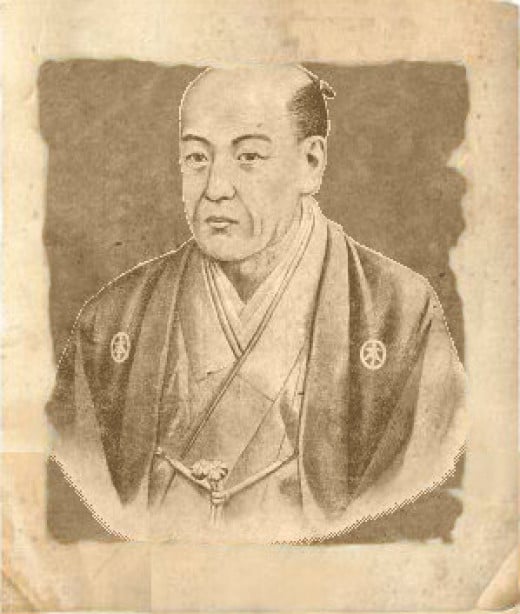
Six of ten if you stretch the definition a bit and add Singapore (just south of peninsular Malaysia). In total it is a coalition of some 600 million people and is as much sending a message to Emperor Xi as Japan's Prince Kanenaga  did to the Hongwu Emperor when the Emperor demanded obeisance:

"Heaven and earth are vast, they are not monopolized by one ruler. 
The universe is great and wide, and the various countries are created each to have a share in its rule. 
Now the world is the world's world; it does not belong to a single person...."

—1382 Letter from the Prince to the Emperor via Oxford Journals' Chinese Journal of International Politics, Summer 2012 as previously seen here in 2014 and 2018.

"Brace For Impact: The Trouble With The Non Profit Newsroom"

The question that Michael Lewis has not answered re: FTX and Alameda is: At what point did he know it was a multi-billion dollar scam?

Did he know while he, Caroline and Bankman-Fried were hanging out, but decided to turn a blind eye to the fraud for the sake of his book and the inevitable movie?

Or did he find out what was going on literally under his nose (if some of the drug stories are to be believed) only along with everyone else in November 2022, which rather diminishes his street cred as a financial insider? Talk about having to thread the needle in your narrative.

Still a good wordsmith though.

From The Point Magazine, April 12, 2023:

After Sam Bankman-Fried’s epic fall from grace last year, news started circulating that he had been shadowed by Michael Lewis, the writer famous for his exposés of financial greed and impunity like Liar’s Poker and The Big Short, for several months prior to the FTX crash. In the weeks after his indictment, Lewis was reported to have visited Bankman-Fried while under house arrest in Palo Alto to continue gathering material for a book, sure to be a best-seller, on the rise and fall of the crypto boy-king. But what’s striking is, aside from Lewis, how few serious journalists gave his business practices a passing glance before they blew up in spectacular fashion. Despite the many gushing profiles that appeared in the years before the FTX crash, not a single reporter had bothered to look closely into his too-good-to-be-true scam—an oversight that might be more than a coincidence. The former billionaire and doyen of the “effective altruism” movement, it turned out, had been quietly funneling millions of dollars through his family foundation to journalism outlets like ProPublica, the Intercept, Semafor and Vox. In 2022 ProPublica had been awarded five million dollars for its work on “biothreats” and pandemic preparedness (it had only received a third of the money). Vox, for its part, had bagged $200,000 for a change-the-world section called Future Perfect that was, according to its initial explainer, “deeply inspired” by effective altruism. Amid the mea culpas and half-hearted apologies which followed Bankman-Fried’s arrest, most offered to put their grants on hold, and some have announced their intent to send the money back.

Chancers and nonprofit entrepreneurs like Bankman-Fried are only the tip of a very expensive iceberg. A cool quarter of a billion dollars, according to a study published in Columbia Journalism Review, flowed from the Bill and Melinda Gates Foundation into journalism-related activities in the first half of 2020 alone. Recipients included everyone from the New York Times to NBC, the BBC, Al Jazeera and the Guardian. (Reporting for the CJR study, in turn, was paid for by another foundation, the Alicia Patterson Foundation.)

Meanwhile, the numbers of employed journalists continue to fall precipitously almost everywhere in the Western world, leaving many areas without a local paper at all. Newsroom employment in the United States, according to Pew Research Center, dropped 23 percent between 2008 and 2019—and at newspapers specifically, it dropped by a full 51 percent. In the news industry, almost all the conversation still turns on how to make ends meet: how to make up for the shortfall in classified advertising and cut costs, often by sacking journalists. Lost in all this is a much more troublesome and uncomfortable question: Who picks up the tab of paying for journalism when the audience won’t, and how does that change the truths that we journalists want to tell?

One emerging answer to the first question is big philanthropy. The equation behind this arrangement is simple. Even as journalism has become a good deal poorer in the last few decades, nongovernmental organizations and foundations have become vastly richer and more numerous. In an era of shrinking budgets, the collapse of newsroom expertise and the hollowing out of local news journalism, activist NGOs and foundations of all kinds have more resources to do research and to fund other people doing it. Many of them are now picking up the slack of doing serious investigative reporting. Welcome to the era of the “nonprofit newsroom.”

According to data from Media Impact Funders, newsrooms around the world raised a record $619.5 million from donors in 2020. In the U.K., where philanthropic giving has traditionally been meagre compared to the United States, research by the industry website Press Gazette estimates that newsrooms received an unprecedented 77 million pounds in the years between 2019 and 2022.

Some of these nonprofits are paid for by public donations and are, at least in principle, answerable to those who give them the money. But public support has been cut too, and compassion fatigue has set in. Filling in the gap, along with the governments who often work closely alongside them, are rich philanthropists. Some are libertarian billionaires, like the Kochs. But most of the money currently flowing into journalism comes from a handful of liberal humanitarians—people like Bill and Melinda Gates, George Soros, Michael Bloomberg and Pierre Omidyar. These philanthropists may be well-meaning enough, but the truth is that most “activist” NGOs and big foundations aren’t really in the truth-telling business at all, and most have zero interest in journalism and its values per se. Instead, they want to use it to advance their objectives. One of those objectives, lavishly bankrolled by big liberal foundations as well as Google and Facebook, is to address the lack of trust in media by cracking down on “fake news” and “misinformation.” Thus far, it’s mainly meant giving liberal and mainstream media a free pass while turning their “fact-checking” programs on everyone else....

....MUCH MORE

Carbon Credits: Bill Gates And The Plan To Thin Forests In An Area The Size Of Nevada

As has been pointed out for years by ourselves and others, contra the physical or chemical approaches where the capture is the bottleneck, the carbon capture is easy, the  sequestration bit is the hard part of any plant-based carbon removal effort.

First up, from MIT's Technology Review, December 15, 2022:

A stealth effort to bury wood for carbon removal has just raised millions
Kodama has raised more than $6 million from Bill Gates’ climate fund and other investors, as it pursues new ways to reduce wildfire risks and lock away carbon in harvested trees.

A California startup is pursuing a novel, if simple, plan for ensuring that dead trees keep carbon dioxide out of the atmosphere for thousands of years: burying their remains underground.

Kodama Systems, a forest management company based in the Sierra Nevada foothills town of Sonora, has been operating in stealth mode since it was founded last summer. But MIT Technology Review can now report the company has raised around $6.6 million from Bill Gates’s climate fund Breakthrough Energy Ventures, as well as Congruent Ventures and other investors.

In addition, the payments company Stripe will reveal on Thursday that it’s provided a $250,000 research grant to the company and its research partner, the Yale Carbon Containment Lab, as part of a broader carbon removal announcement. That grant will support a pilot effort to bury waste biomass harvested from California forests in the Nevada desert and study how well it prevents the release of greenhouse gases that drive climate change. 

It also agreed to purchase about 415 tons of carbon dioxide eventually sequestered by the company for another $250,000, if that proof-of-concept project achieves certain benchmarks.

“Biomass burial has the potential to become a low-cost, high-scale approach for carbon removal, though there is a need for further investigation into its long-term durability,” said Joanna Klitzke, procurement and ecosystem strategy lead for Stripe.

For the last several years, Stripe has pre-purchased tons of carbon dioxide that startups aim to eventually draw out of the air and permanently sequester, in an effort to help build up a carbon removal industry. It has also helped establish a different model for counteracting corporate climate emissions that goes beyond simply purchasing carbon credits from popular offsets projects, such as those that involve planting trees, which have come under growing scrutiny.

A handful of research groups and startups have begun exploring the potential to lock up the carbon in wood, by burying or otherwise storing tree remains in ways that slow down decomposition.

Trees are naturally efficient at sucking down vast amounts of carbon dioxide from the air, but they release the carbon again when they die and rot on the ground. Sequestering trees underground could prevent this. If biomass burial works as well as hoped, it may provide a relatively cheap and easy way to pull down some share of the billions of tons of greenhouse gas that studies find may need to be removed to keep global temperatures in check in the coming decades. 

But until it’s been done on large scales and studied closely, it remains to be seen how much it will cost, how much carbon it could store, and how long and reliably it may keep greenhouse gases out of the atmosphere.

Dead wood
Forest experts have long warned that decades of overly aggressive fire suppression policies in the US have produced dense, overgrown forests that significantly increase the risk of major conflagrations when wildfires inevitably occur. Climate change has exacerbated those dangers by creating hotter and drier conditions....

....MUCH MORE

And from Forbes, July 28:

Chop Down Forests To Save The Planet? Maybe Not As Crazy As It Sounds
Bill Gates and other investors are betting Kodama Systems can reduce carbon dioxide in the air by chopping down and burying trees. Now if only Uncle Sam would get on board with tax credits, too.

A year ago, Merritt Jenkins moved from Boston to Twain Harte, California, a speck of 2,500 souls in the foothills of the Sierra Nevadas. On his morning commute, he stops at Alicia’s Sugar Shack for a breakfast sandwich (scrambled eggs on rye with avocado), then heads to a 10-acre patch of woods in the Stanislaus National Forest. There, his startup, Kodama Systems, is testing and perfecting its 25-foot-long, 17-ton semiautonomous timber harvesting machine.

Loggers use such machines, known as skidders, to grab tons of cut trees and debris and drag them out of the woods. Kodama’s version is designed to do the job even at night, with fewer workers, using satellite connectivity and advanced lidar (light detection and ranging) cameras, the same type that are used on self-driving cars, to monitor the work remotely. It isn’t easy. “There’s a lot of texture to the trees. Every 10 feet of skid trail is slightly different,” says Jenkins, 35.

But logging in the dark isn’t the most intriguing part of the plans at Kodama, which has raised $6.6 million in seed funding from Bill Gates’ Breakthrough Energy and others. After cutting down the trees, Jenkins plans to bury them—to help slow climate change and to reap salable carbon offsets (and maybe, someday, tax credits too).

Yes, the conventional idea is to plant trees to soak up carbon dioxide from the air and to then sell credits to corporations, private jet owners and others who need or want to offset their emissions. But scientists say burying trees can reduce global warming as well—particularly if those trees would otherwise end up burning or decaying, spewing their stored carbon into the air.

California’s enormous 2020 wildfires drove home the risks to air, property and life posed by overgrown forests. “The orange skies in San Francisco were an inflection point. Now the story resonates,” says Jimmy Voorhis, head of biomass utilization and policy at Kodama. The alarm bells are sounding even louder this year as Canadian wildfires have spread dangerous air conditions to New York, Washington, D.C., and Chicago.

To help address the problem, the U.S. Forest Service aims to thin out 70 million acres of western forests, mostly in California, over the next decade, extracting more than 1 billion tons of bone-dry biomass. It is customary, after such forest thinning, for logs of marketable size to go to sawmills, with most of the rest piled up and later burned under controlled conditions. Kodama wants to bury the leftovers instead—in earthen vaults designed to maintain dry and anoxic (oxygen-free) conditions and protect the wood from rotting or burning.

Along with the VC seed money, Kodama has already received $1.1 million in grants from California’s forest fire agency and others, as well as purchase commitments for the carbon credits tied to the first 400 tons of trees it buries. On the open market, those credits should fetch $200 a ton. Eventually Kodama wants to cut down and bury more than 5,000 tons of trees a year.

A Dartmouth grad with degrees in both engineering and environmental studies, Jenkins started selling used robotic equipment while earning a master’s in robotics at Carnegie Mellon. Then he cofounded a company that uses machine learning to help farmers analyze soil. But in 2019, while earning an MBA at MIT, he concluded there was more opportunity in fores­try than in the crowded ag-tech field. He backed away from the AI company and spent months with loggers to understand how they use equipment, and by 2021 had settled on forestry robotics, convinced that labor shortages would drive demand. “There’s not enough workforce,” he says. “We’ll need new training and new technologies” to meet the Forest Service’s clearing goals.

He also saw another “big gap” in the industry: what to do with all that biomass. He had heard about biomass vaults from Yale’s Carbon Containment Lab. Then mutual friends introduced him to Voorhis, a 33-year-old mountaineer, geologist and earth sciences engineer (with an M.S. from Dartmouth), who had become obsessed with the idea of reclaiming old mines as biomass burial sites. They joined forces.

The notion of burying trees sounds simple and low-tech, particularly when compared with the convoluted “carbon capture” technology now being developed to pull CO2 from the air. Thanks to the Inflation Reduction Act Democrats passed in 2022, companies like Occidental Petroleum and ExxonMobil could qualify for tax credits of $85 per ton of CO2 sequestered if they can perfect systems to suck the gas directly from the air and transport it by pipeline before injecting it permanently underground. The IRA further incentivizes some of these projects with tax credits equal to 30% or more of upfront capital invested.

If you want to cut down trees and pelletize them to burn in place of coal, there are tax credits for that too. But not, as of now, for burying them....

"the size of Nevada" in the headline is based on the highlighted "70 million acres", approximately 110,000 square miles vs Nevada's area 110,567 square miles.

If interested see also the somewhat related "Thinking outside the box on climate change: "Can mass deforestation cool the environment?"" and the very related:

April 2023
A Serious Suggestion For Making Carbon Credits/Carbon Offsets Less Of A Scam

We've been railing against considering carbon offsets as anything other than a scam for a long time. Here's a snip from a 2007 post that cuts to the heart of the matter (emphasis in long-ago original):

...Even Vinod Khosla, a very, very smart guy, putting his money into cellulosic and Brazilian cane ethanol, said on the Charlie Rose Show that he flies around carbon neutral.

C'mon Mr. K., in the first place it's not the same as changing your lifestyle! Secondly and more importantly, it either takes a whole bunch of tree's one year to suck up the carbon from one Heathrow-LAX or it takes ten trees 40-50 years. And then you have to guarantee that they never burn or rot, or you've accomplished nothing but a temporary salving of the conscience.

And that's the problem. After sucking up the CO2 and turning it into plant material, the plant dies. And it either burns or rots and either way, the CO2 that you sequestered is un-sequestered and nothing was accomplished in the real world.....
 
And 2021's "Global Warming: Credit Suisse On You Being Responsible For CO2 Emissions (plus carbon sequestration)":
They're big into trees which is fine. I mean you like trees, I like trees, everybody likes trees.

But as a long term answer to the CO2 issue, trees don't work. Trees die, and when they die they release the stored carbon which gloms on to atmospheric oxygen and turns into CO2. Or the trees get burned, again releasing the carbon which combines with oxygen to make CO2.

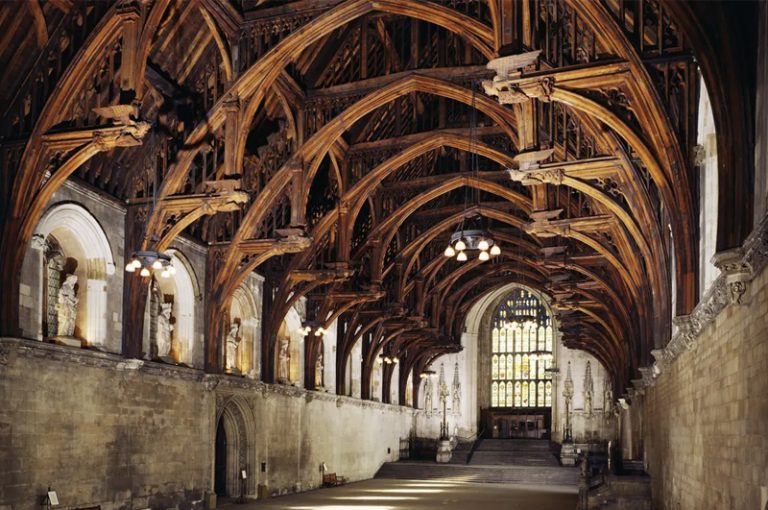
The British have been working on this problem for centuries and have come up with a very clever solution: cut the trees down and then store them so they don't decay. Here's an example:

https://carpenteroak.com/wp-content/uploads/2018/12/westminster_timber_framed_roof-768x510.jpg

That's Westminster Great Hall. Here's a close-up of the hammer-beam roof:

https://medievallondon.ace.fordham.edu/files/original/83848e14252cbbeea7aef492f8ec17a5.jpg

Samantha Tan, “Westminster Hall's (detail of hammer-beam roof),” Medieval London, accessed November 19, 2021, https://medievallondon.ace.fordham.edu/items/show/222.

According to Samantha Tan at Fordham University's Medieval London exhibit the timbers weigh 660 tons and have sequestered the carbon in this form for over 700 years.

The British use this type of storage throughout the land and people visit from around the world to marvel at the secrets of carbon sequestration 

We'll be back to the Credit Suisse report tomorrow or you can see it here, 29 page PDF

The Norwegian town where anyone might be a spy

Skullduggery in the North.

From The Economist's 1843 Magazine, August 29:

For residents of Kirkenes, on the border of Norway and Russia, espionage is an everyday fact of life

Frode Berg was a border inspector on the brink of retirement when, in 2014, he was first recruited by the Norwegian Intelligence Service (nis). Berg was based in Kirkenes, a town of 3,500 nestled amid the pine forests and rocky fjords in the north of Norway, five miles from the Russian border. Kirkenes is known for two things: its king crab and its spies. Accordingly, Berg was no stranger to the nis and their work – his job frequently took him to Russia, and he had got to know a handful of nis officials over the years, including the case officer who was asking for his co-operation. But he had never before been asked to take any risks on behalf of the Norwegian government. Now the case officer was asking him to transport an envelope containing €3,000 ($3,250) in cash across the border and post it to a Moscow address. A brief excursion into Russia wouldn’t seem out of the ordinary, so Berg agreed to do it. “I say yes to everything,” he told me.

In the ensuing months, Berg would travel to Russia six times with cash-stuffed envelopes, which he’d post as instructed. Included in each envelope would be a note describing the money as poker winnings. Over time, Berg was given a new handler, and the requests grew more involved – not just transporting and mailing money, but also, in one instance, a memory card. Berg grew increasingly uncomfortable with the arrangement. He tried to quit on several occasions, but his new handler was persistent. Finally, he acquiesced to one last assignment.

On his last run, just before Christmas of 2017, Berg’s worst fears were realised: he was rolled up outside his Moscow hotel by the fsb, Russia’s domestic security service. The fsb officers spirited him away to the notorious Lefortovo prison.

On his last run, just before Christmas of 2017, Berg’s worst fears were realised: he was rolled up outside his Moscow hotel by the FSB, Russia’s domestic security service

At the trial, the Russians filled in what his handlers had neglected to explain. The contents of the memory card turned out to be questions about submarine weapons systems. And the supposed recipient of the money Berg posted – a worker at a state shipyard – turned out to be a double agent. In 2019, Berg was found guilty of espionage. Seven months later, he was sent home in a prisoner exchange. When he landed in Oslo, the first words he recalls hearing were from a defence-ministry official. “Welcome home,” the official said. “We are offering you 4m kroner [about $375,000].”

Berg’s embroilment in the local spy scene, I would learn when I visited Kirkenes in May, is an experience shared – if to a less extreme degree – by many locals. “Everyone in Kirkenes has had a neighbour, a friend, someone in the sports club, or a fellow parent in the kindergarten who works in military intelligence,” said Thomas Nilsen, editor of the Independent Barents Observer, a newspaper that covers the region. For decades, Kirkenes and the surrounding region have been of strategic value for nato. Its listening posts dot the craggy landscape to monitor the goings-on next door. Russia maintains several military bases in the area, including the headquarters of its Northern Fleet. The war in Ukraine has rendered this electronic snooping more urgent and, for Russia, more intolerable. The mood in the town has also shifted since the invasion. Spying, said Lena Bergeng, the mayor, has “been more of a daily theme in the community. Before we didn’t think about it, but now everybody is very aware of it.”

Locals who regularly traverse the border have, for a long time, often been approached by Norwegian intelligence officers (though since the war began there have been fewer people making such crossings). A debrief – a meeting to elicit information about Russia from a recent visitor – is the most common request. For many locals, this is an unwelcome proposition. The best prospective sources are also the people most imperilled by co-operation – those with business interests or personal connections in Russia. Rune Rafaelsen, Bergeng’s predecessor as mayor, told me that Kirkenes residents who worked in Russia used to come to his office distraught after contact from Norwegian intelligence officers. The requests could be intrusive and high risk. In one case, Rafaelsen recalled, officers from the nis, which declined to comment on this story, asked the owner of a business with offices in Murmansk to hire one of their own, so he could use the job as cover.

At times, to their perplexity and irritation, Kirkenes residents are approached by both the nis and pst – Norway’s domestic security service. Officers from one agency will turn up, ask some questions, then leave, only for officers from the other to arrive soon after and repeat the process. “They get bored answering the same questions,” said the journalist BÃ¥rd Wormdal, whose new book “Spionkrigen” (“The Spy War”), chronicles espionage in Arctic Norway....

....MUCH MORE

Winton: "A history of technical analysis, from 18th century Imperial Japan to Bitcoin price movements today"

First up, Winton's Longer View:

Reading Between the Lines
A history of technical analysis, from 18th century Imperial Japan to Bitcoin price movements today – informed by material from Winton’s archive.
5 January 2018 - 5 minute read
Cryptocurrency mania has brought technical analysis to a new wave of speculators, but traders have been trying to profit from price patterns for centuries.
Technical analysis involves using historical price and volume data to predict market movements. It can be applied in markets ranging from wheat to the latest speculative craze, cryptocurrencies. One Bitcoin pundit, for example, recently discussed the appearance of an "inverse head and shoulder breakout" after the digital currency surged 10% within 24 hours, claiming that “...BTC is trading well above the neckline hurdle of $15,550... prices could rise to $18,600 (target as per the measured height method) over the weekend”. Others have enthusiastically cited the prospect of Fibonacci retracement as a trading signal.
As futuristic as divining the future of digital currencies may seem, attempts to do something similar in other financial markets have a storied past. Primarily relying on intuition and hand-drawn graphical representations of data, early “technicians” were at worst con artists. At best, their approach was crude and lacked the rigour or science of modern systematic investment managers, which use the latest technological and statistical techniques to scour petabytes of data.

Technical analysis pioneers had the foresight, however, to appreciate the opportunities for profit created by crowd psychology. They also instigated the use of charts to navigate peaks and troughs. The series displayed in the GIF below, which has been taken from Winton’s archive, exhibits some of the more common – and more unusual – price patterns identified in financial markets, from "head and shoulders" and "double bottoms" to "rising scallops" and the "reverse horn".
Tech An4
18th Century Crowd Surfing “Night and morning attacks”; “advancing three soldiers”; “counter attack lines” ‒ candlestick chart patterns with such names hint that technical trading first started at a time when the military held sway. And in Edo-period Japan, traders applied technical analysis as they sought to profit from Osaka’s rice futures market.

Munehisa Homma, a speculator and effectively an early behavioural economist, produced some of the earliest descriptions of technical patterns in writings such as The Fountain of Gold—The Three Monkey Record of Money. He attributed trends and reversals to the human emotions exhibited in market behaviour. In Japan, candlestick charts used by technical traders are known as Sakata charts, a fitting reference to Homma’s hometown.
Illuminating Candlestock Charts 
A staple of technical analysis today, candlestick charts are thought to have been developed by traders in19th century Japan, but were not widely used outside the country until the 1990s. Technical analyst Steve Nison is credited with popularising the graphs in the United States early in the decade with a series of articles and books.
The crude oil futures chart, taken from Nison’s 1991 book Japanese Candlestick Charting Techniques, provides an example. White (black) boxes indicate daily market gains (losses). The tops and bottoms of the boxes indicate the market’s opening or closing prices, while the lines capture the daily highs and lows.

The candlestick format has its own set of technical patterns, including the hanging man, dark-cloud cover (depicted here), shooting star, dumpling tops, and some of a military theme mentioned above.
Across the East China Sea, Confucian manuals published rules of thumb to help forecast price movements in the bustling markets of Imperial China. Essential Business, one such manual, explained how “no item will remain expensive for over one hundred days and no item will remain cheap for one hundred days”. The same guides purported to show merchants how to identify market manipulation, understand relationships between price and volume, and handily how to develop a honed Confucian disposition.
These are just two of the many precursors of modern technical analysis that academics and practitioners have traced; other examples date back to ancient Babylon....
....MUCH MORE

And an Oldie-but-Goldie:

The Greatest Hedge Fund Manager of All Time: A Japanese Gent Named Munehisa Homma
We used to post this piece around Cherry Blossom time (April 1 in Osaka) but are late this year.

Akin to Newton inventing the Calculus so he can get on to bigger and better questions, Our Hero had to invent something so he could get on to larger issues.


https://usercontent2.hubstatic.com/8425279_f520.jpg
Our Hero

First posted April 15, 2008:

The Best Hedge Fund Manager of All Time
by John Needham, The Daniel Code Report | January 20, 2008
Samurai Trader!
Homage to Homma
Munehisa Homma is an unsung Japanese hero. We know little of Homma’s life. In some reports his name is spelt Honma, and the activities that were to make him a hero are ascribed to any time from 1650 to 1750. This is his story.
Homma ran the family rice trading business and rice was the lifeblood of Japan. More than a food, rice was a culture, Rice growing villages lived their whole lives around the rice planting, growing and harvesting cycle. Various parts of this cycle were celebrated with festivals and formal ceremonies. Rice was a precious commodity. Rice was more than a commodity; rice was a culture central to Japanese life. From rice came Sake the famous Japanese rice wine, rice cakes, rice flour, rice vinegar and much more. The rice plant produced not only its precious grains but a large amount of lush green foliage which when dry became straw. Rice straw too was an essential part of Japanese life. From straw, traditional villagers in the north made hats, clothes, utensils and the exquisitely fine rice paper. They made important religious figures, masks, decorations and a hundred other everyday items
Rice was the Japanese economy. Feudal rulers, Daimyos collected grain from the farmers as land tax and sold it from their storehouses. Rice trading was the Japanese way of life for farmers and the merchant class. Soon rice would replace currency as the value of worth in the Feudal land of Japan.
Today would be the most important day of Homma’s life, the day he would launch himself on the great adventure that would see him reach dizzying heights of fame and fortune; the day that would eventually see a humble rice trader of the merchant class achieve the greatest honour his country could bestow.
This Monday morning Homma sat cross legged on his precious straw mats at his family rice warehouse and forced himself to concentrate on the lists of deliveries and inventory that required his attention every morning. He looked longingly at a pile of large, fine, rice paper parchment beside his small desk. These parchments were unusually large and ordered for Homma by his good friend Nomura San who made the best Tofu in all of Japan and had access to the oversized parchment which was made in Kyoto. Strangely rice paper is usually not made from rice at all. What most people mean by rice paper was more typically made with any of the three traditional materials of kozo (mulberry), gampi or mitsumata. But this was a special paper for a very special purpose.
These papers were Homma's most precious possession. More precious than the familys land and warehouses; more precious than the inventory of rice bales stored in the six separate warehouses. It was covered with strange symbols all of them painstakingly drawn by Homma. These symbols ran up and down the sheets in strange whirls and patterns. Numbers ran across the bottom and along the sides of the parchment. Some of the indecipherable symbols were colored in red; others were not. The work to produce these magical symbols had been long and arduous. For 15 years Homma had researched ancient records, thinking about what he saw and what he learned and always striving to perfect his understanding of the strange language contained in the symbols. It was a frustrating task.
At times Homma despaired of making the intellectual breakthrough he knew was required. On those days he would retire to his tiny garden where there was a single strategically placed, large, moss covered stone amidst a small stream and two ancient Cherry trees. Homma would gaze at the stone in silent contemplation. Eventually balance or Wa returned to his mind. Something deep inside him forced him to return to his research every day. Instinctively he knew that if he could read just a small part of this mysterious and secret language the rest would unravel, but the search seemed never ending. Homma gave names to each of the symbols and looked for their sequence to repeat. With so many symbols this was indeed an arduous task. As the years passed Homma gradually gained some of the insight he sought. It came not as a bolt from the blue but as a gradual dawning of comprehension. This indeed was insight. This indeed was rare knowledge! 
At last Homma put aside the workaday chores of his family business and pulled the large rice paper parchments to his side. He gazed with fascination and reverent awe at the sheets, then inking his writing tool made from fine hairs, he consulted his notes and carefully inscribed a small square to precise points, then drew a small line from the top of the square upwards. In due course he drew another line of a different but exact length downwards from the square. With unhurried but long practiced precision he finally inked in the box with red ink and sat back. He repeated this procedure on several more of the fine parchments being careful to place each sheet apart for the ink to dry. 
Homma called for a pot of Sencha tea and contemplated his drawing for an hour. He had reached the stage where he could read a number of the secret symbols. In time he would master them all. Of those he did understand he noticed they had consequences. One symbol indicated a certain probability; another symbol had a different meaning. From his limited understanding he had isolated a small group of these magical beasts and watched what happened when a specific sequence occurred. He had tested these sequences in his research hundreds of times and he had seen their specificity repeat again and again. His research covered over 1500 years of records. No one had ever observed a reoccurring event over such a long time span. Now at last he was ready. 
Tomorrow he would rise and leave for the rice market where he would undertake his true calling and unknowingly launch himself into the pages of history. His preparations were made and his mind was serene in the knowledge that he possessed insight unknown to others. At the end of the day Homma took a pot of Gyokuro "the dew of jewels and most precious of Japanese teas to celebrate today's events. Homma was about to take the greatest gamble of his life. It would not be a gamble based on certainties but a gamble based on probabilities. From his endless research Homma could calculate the probabilities better than any man alive. 
Homma felt blessed to live in Osaka and doubly blessed to know about rice. Homma knew a great deal about rice. This was the first day.
On Tuesday, Homma arrived at the rice market, just as a group of growers trundled their carts laden with the new season rice bails into the town square. Here, merchants would inspect and haggle with the growers and their representatives to set today's prices on the bales arriving from local growers and from inland. The growers and their agents were in a gregarious mood. The early harvest was good and the new rice bright and shiny. But business was lethargic. Tea was drunk and pleasantries exchanged. There was no urgency for the merchants to buy. 
The big rice merchants of Osaka adopted their usual pose of indifference. Just sit quietly and show no interest. This tactic always wore down the growers. The biggest rice buyers operated an informal cartel which controlled local prices. They could afford to wait. Growers had more rice on their farms and the main harvest was still to come from the large rice growing regions to the North and inland. Yes they said to the local growers, it is a very nice rice crop; the gods have smiled and you are indeed fortunate; so sorry, our warehouses are full and nobody is buying rice, we are not really buying new bales today. 
Quietly Homma went about his business, greeting the growers, enquiring about their health and their families and buying their offerings. As the day wore on, other merchants noticed Homma still quietly greeting the new arrivals at the market and still buying, buying, buying. What was he doing? Why was he buying? Didn't he know that this was just the start of the harvest and prices were sure to fall as more rice came to market? Silly boy; too impatient; what an embarrassment to his family! This was not the way of the Osaka rice merchants. This was the second day.
Wednesday saw the process repeated. Homma buying, the others pointedly ignoring the new growers as their carts bought in the new bales. Today there were noticeably fewer bales arriving. The cartel, now openly scornful of Homma watched him again operating in his quiet way and still buying. Homma was not perturbed, he knew things that others didn't know because Homma had that most important of all market jewels.....Homma had an edge! His edge was that he knew things about the market that other traders and merchants did not know. In modern terms he had a huge competitive advantage. 
At midday an exhausted horse and its disheveled rider clattered into the town square. The rider rushed to the leader of the Osaka merchants, crouched beside him and whispered fervently. The merchants' news service was catching up with reality. The rider from the north was the last leg of a relay to bring the awful news to the cartel of merchants. Late and unseasonal rains in the major growing areas were ruining the annual rice harvest! There would be no abundant crop this year and rice prices were going up and up as the commodity grew scarce...MORE
note: the original link (above) to Financial Sense Online has rotted and a quick search of the site turned up...zip.
Here's the rest of the story at Forex Alchemy with links to the original author's site, The Daniel Code.

Techniques of Government Control: Michel Foucault’s "Discipline and Punish"

From Stay in Touch:

1975–1978
Leprosy, Plague, and Smallpox. Three Paradigms of Modern Governmental Techniques
Michel Foucault’s »Discipline and Punish« and the »Lectures on Governmentality« revisited

–> DE

There are key points in Michel Foucault’s oeuvre concerning a typology of modern governmental techniques, where he repeatedly refers back to epidemics. Already in Madness & Civilization (Fr. orig. 1961), he described the measures for the sequestration of lepers from medieval society as a model for later social and institutional practices of exclusion (Chapter 1. Stultifera Navis [= »Ship of Fools«], 7f.). And later on, he analyzed how combating epidemics, such as the plague or smallpox, led to the evolution and implementation of new modern governmental techniques.

For example, in the likely most-cited section of Discipline and Punish, the chapter about panopticism, Foucault surprisingly does not begin his analysis of Bentham’s Panopticon with Bentham, but with an account of how the plague was contained in the seventeenth century. He presents the measures taken by the government against the plague and those against leprosy as two exemplary paradigms: on the one hand, »exclusion«, banning the complete group of people from the community and declaring them »lepers«; on the other, in the case of the plague, »confinement«, which facilitates an individualizing disciplinary control over space and the people. For the plague is »the trial in the course of which one may define ideally the exercise of disciplinary power«. (Foucault 1995, 198) The two models of leprosy and the plague, which differ at the core, are however not irreconcilable, as Foucault stresses, quite the contrary:

It is the peculiarity of the nineteenth century that it applied to the space of exclusion of which the leper was the symbolic inhabitant (beggars, vagabonds, madmen and the disorderly formed the real population) the technique of power proper to disciplinary partitioning. (Foucault 1995, 199)

In this way, Foucault traces Bentham’s Panopticon as well as the general surveillance principle of panopticism back to the political-administrative techniques developed to combat leprosy and the plague:

The constant division between the normal and the abnormal, to which every individual is subjected, brings us back to our own time, by applying the binary branding and exile of the leper to quite different objects; the existence of a whole set of techniques and institutions for measuring, supervising and correcting the abnormal brings into play the disciplinary mechanisms to which the fear of the plague gave rise. All the mechanisms of power which, even today, are disposed around the abnormal individual, to brand him and to alter him, are composed of those two forms from which they distantly derive. Bentham’s Panopticon is the architectural figure of this composition. (Foucault 1995, 199–200)

But these are not Foucault’s last words on the role of epidemics....

....MUCH MORE

"Do the seeds of long-term progress sprout from the embers of collapse?"

From Peter Nimitz's Nemets substack:

Across the last 11,700 years there have been a number of civilizational collapses. In them, both socioeconomic complexity and human population decline dramatically. The earlier civilizational collapses are inferred from archaeology and palynology. While a collapse around 2200 BC may possibly be referenced in the Bible, the last two collapses are certainly known historically - the Bronze Age Collapse of the 12th century BC and the Fall of Rome in the 5th century AD.

In those two known cases, the scale of the collapse was considerably vaster than historical records suggest. At least the Celts, Germans, Iranians, Semites, and Finno-Ugrians launched series of wars that ended with substantial population replacement during the Bronze Age Collapse. Places such as the Don River Basin in what is now southern Russia and Eastern Ukraine lost access to metal, and reverted to working with stone and bone. The Fall of Rome saw the die offs of civilized urban populations as well as the rise of the Germans, the Slavs, the Berbers, and the Arabs. Even places as far from Rome as the Congo were deeply affected by the collapse.

Did those collapses delay human progress? Or were they necessary to allow the development of new and more progressive socioeconomic systems? Walter Scheidel’s Escape from Rome suggests the latter.

The latter part of the Bronze Age (roughly 1800-1200 BC) involved, as can be expected from the name, armies armed and armored with bronze. Bronze is made from copper (of which there are many easily accessible deposits) and tin (a metal with only a limited number of sources). While iron ores are far more accessible than tin, the temperatures required to make iron were higher than what was attainable in most areas in the Bronze Age. Bronze, with its considerably lower (by about 600 C) melting point, could be forged into useful tools by many of the peoples of Eurasia in the Bronze Age, while iron could not.

The result was that weaponry in the Bronze Age was more expensive than it became later, and warfare was more of an elite affair. Chariot riders and chosen warriors dominated the battlefields of the time. It was an age of kings and priests. They needed to win the loyalty of their elite warriors, not the masses of the people. Thus the ideologies that allowed for the state to mobilize the masses for war or infrastructure to the degree of later ages never developed. The pyramids and the megaliths stood out in the sky as lone peaks of developments rather than parts of entire mountain ranges erected in the course of civilizational progress. The “hydraulic despotisms” had yet to form - irrigation and water storage was organized from the bottom up rather than top down. Instead, the ideologies glorified tiny numbers of elite warriors - like the men of the Iliad or King David’s thirty-seven mighty warriors.

The spread of iron metallurgy from the south Caucasus in the early 1st millennium BC ushered in the Iron (or Classical) Age. With the ability to turn plentiful iron ores into weapons and armor, equipping armies became considerably cheaper than it had been in the Bronze Age. Societies that could mobilize large numbers of men and equip them with iron survived and conquered, those which could not died. That process involved a great deal of social, economic, and political evolution.

One path of evolution was that of the polis - the Greek city-state. People had their identity and citizenship tied to a specific city, which in turn represented their interests. That city could join a league of other cities, contributing its wealth and men to a common defense. If it tired of the burdens of membership in that league, or found its unifying ideology repugnant, then it could leave and join another league - often starting a war in the process.

Another path of evolution was empire - such as Persia under the Achaemenids. An emperor or king of kings would demand tribute, obeisance, and men from his subjects. In return, they would receive his protection, aid in domestic struggles, economic integration, and broad domestic autonomy. There was no pretension of cooperative governance, although the subjects - who had states of their own, sometimes with considerable resources - could lobby the court, ally with other claimants to the throne, or revolt.

There were also the slave-oligarchies such as those of Sicily and Carthage. Huge numbers of battle captives or enslaved locals would be forced to labor in agriculture and industry to provide for an urban oligarchy which hired armies of foreign mercenaries to fight its wars. Such societies were capable of tremendous mobilization of labor and men, but were vulnerable to shocks dislocating the entire social structure....

....MUCH MORE

"The Early History of Counting"

From Lapham's Quarterly, August 23:

How ancient peoples learned to keep a tally.  

Figuring out when humans began to count systematically, with purpose, is not easy. Our first real clues are a handful of curious, carved bones dating from the final few millennia of the three-​million-​year expanse of the Old Stone Age, or Paleolithic era. Those bones are humanity’s first pocket calculators: For the prehistoric humans who carved them, they were mathematical notebooks and counting aids rolled into one. For the anthropologists who unearthed them thousands of years later, they were proof that our ability to count had manifested itself no later than 40,000 years ago.

In 1973, while excavating a cave in the Lebombo Mountains, near South Africa’s border with Swaziland, Peter Beaumont found a small, broken bone with twenty-​nine notches carved across it. The so-​called Border Cave had been known to archaeologists since 1934, but the discovery during World War II of skeletal remains dating to the Middle Stone Age heralded a site of rare importance. It was not until Beaumont’s dig in the 1970s, however, that the cave gave up its most significant treasure: the earliest known tally stick, in the form of a notched, three-​inch long baboon fibula.

On the face of it, the numerical instrument known as the tally stick is exceedingly mundane. Used since before recorded history—​still used, in fact, by some cultures—​to mark the passing days, or to account for goods or monies given or received, most tally sticks are no more than wooden rods incised with notches along their length. They help their users to count, to remember, and to transfer ownership. All of which is reminiscent of writing, except that writing did not arrive until a scant 5,000 years ago—​and so, when the Lebombo bone was determined to be some 42,000 years old, it instantly became one of the most intriguing archaeological artifacts ever found. Not only does it put a date on when Homo sapiens started counting, it also marks the point at which we began to delegate our memories to external devices, thereby unburdening our minds so that they might be used for something else instead. Writing in 1776, the German historian Justus Möser knew nothing of the Lebombo bone, but his musings on tally sticks in general are strikingly apposite:

The notched tally stick itself testifies to the intelligence of our ancestors. No invention is simpler and yet more significant than this.

It is not clear what quantity the twenty-​nine notches carved into the Border Cave’s baboon fibula represents. It is a number, that much is known: had the bone been purely decorative, the notches would have been added all at once, but four different tools were used over time to add to the count. As such, the Lebombo bone is likely to be the earliest mathematical device ever found. (Sadly, it is too great a leap to call it the earliest known pocket calculator. Humans started wearing clothes around 170,000 years ago, but pockets themselves are probably no more than a few thousand years old.)

If the Lebombo bone answers the question, at least partly, of when humans learned to count, it leaves another one unanswered: How did they learn to do so?....

....MUCH MORE

If interested see also one of the primate backlinks in yesterday's "Extreme gene therapy treatment for alcoholism slashes drinking by 90% in monkeys":
Following Up On "Commodity traders superior to chimpanzees": The Importance of Pockets

Friday, September 1, 2023

Web3 Is Going Just Great

Some of the recent stories:


Web3 Is Going Just Great  homepage

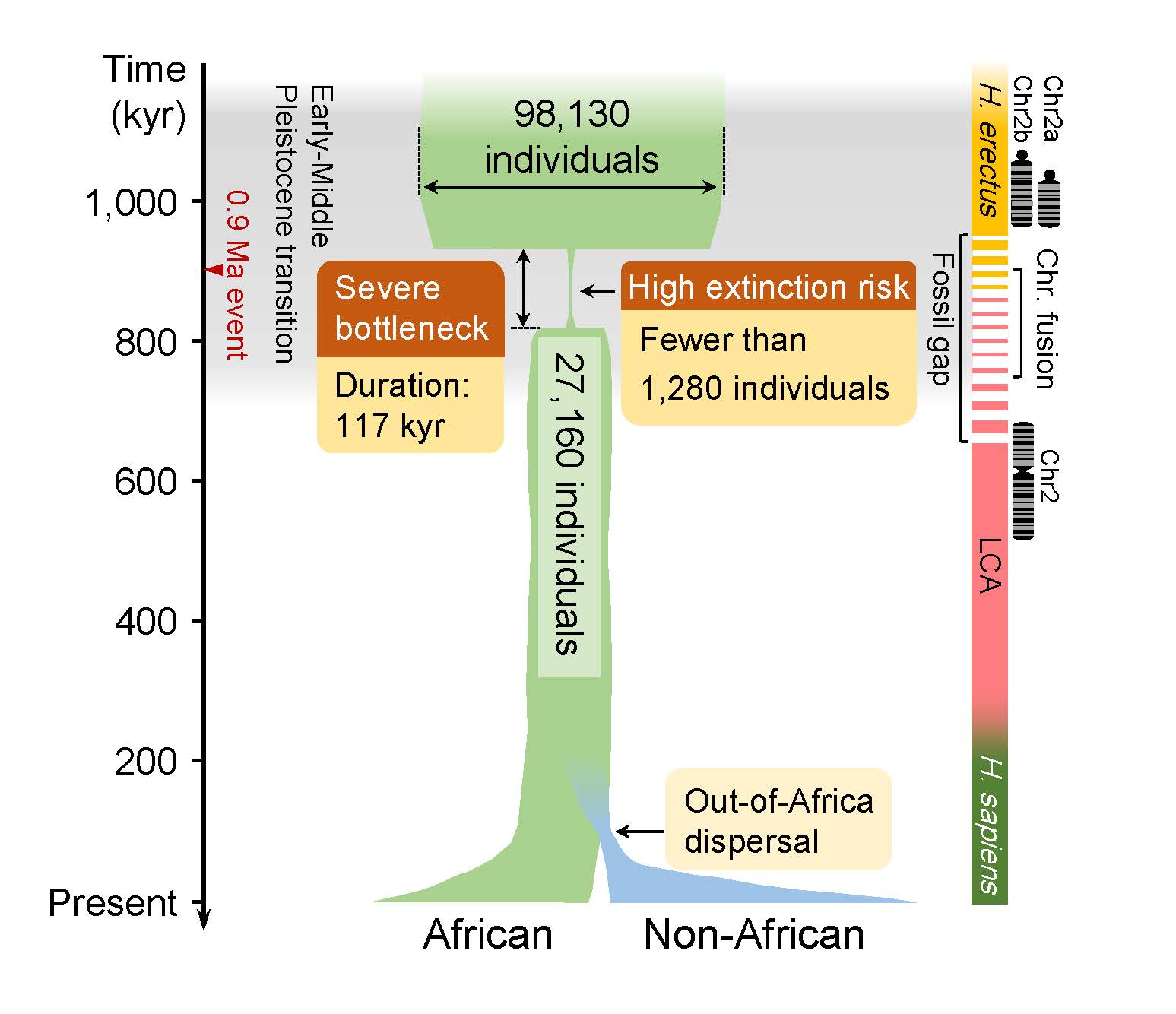
"An ‘ancestral bottleneck’ took out nearly 99 percent of the human population 800,000 years ago"

From Popular Science, August 31:

Only 1,280 breeding individuals may have existed at this dramatic era of human history.  

A team of scientists from the United States, Italy, and China may have finally explained a large gap in the African and Eurasian fossil record. According to a model in a study published August 31 in the journal Science, the population of human ancestors crashed between 800,000 and 900,000 years ago. They estimate that there were only 1,280 breeding individuals alive during this transition between the early and middle Pleistocene. About 98.7 percent of the ancestral population was lost at the beginning of this ancestral bottleneck that lasted for roughly 117,000 years, according to the study.

During the Late Pleistocene, modern humans spread outside of the African continents and other human species like Neanderthals began to go extinct. The Australian continent and the Americas also saw humans for the first time and the climate was generally cold. This era is best known for its massive ice sheets and glaciers that shifted around the planet and shaped many of the landforms we see on Earth today.. 

In this study, the team used a new method called fast infinitesimal time coalescent process (FitCoal), as a way to determine ancient demographic inferences with modern-day human genomic sequences from 3,154 people. 

“The fact that FitCoal can detect the ancient severe bottleneck with even a few sequences represents a breakthrough,” study co-author and University of Texas Health Science Center at Houston theoretical population geneticist Yun-Xin FU said in a statement.   

FitCoal helped the team calculate what this ancient loss of life and genetic diversity looked like utilizing present-day genome sequences from 10 African and 40 non-African populations.

“The gap in the African and Eurasian fossil records can be explained by this bottleneck in the Early Stone Age chronologically,” study co-author and Sapienza University anthropologist Giorgio Manzi said in a statement.  “It coincides with this proposed time period of significant loss of fossil evidence.”

Archaeology photo

The African hominin fossil gap and the estimated time period of chromosome fusion is shown on the right. CREDIT: Science.

....MUCH MORE

Extreme gene therapy treatment for alcoholism slashes drinking by 90% in monkeys

It's about time.*

From BigThink, August 26:

  • Chronic alcohol use causes the brain to produce and process less dopamine, and this persistent dopamine deficit has been linked to relapse.
  • A team of U.S. researchers suspected that an in-development gene therapy for Parkinson’s disease might work as a dopamine-replenishing treatment for alcoholism, too.
  • To find out, they tested it in heavy-drinking monkeys — and the animals’ alcohol consumption dropped by 90% over the course of a year.  

A single shot — a gene therapy injected into the brain — dramatically reduced alcohol consumption in monkeys that previously drank heavily. If the therapy is safe and effective in people, it might one day be a permanent treatment for alcoholism for people with no other options.

The challenge: Alcohol use disorder (AUD) means a person has trouble controlling their alcohol consumption, even when it is negatively affecting their life, job, or health.

Chronic alcohol use causes the brain to produce, and process, less dopamine.

In the U.S., more than 10% of people over the age of 12 are estimated to have AUD, and while medications, counseling, or sheer willpower can help some stop drinking, staying sober can be a huge struggle — an estimated 40-60% of people relapse at least once.

According to the CDC, more than 140,000 Americans are dying each year from alcohol-related causes, and the rate of deaths has been rising for years, especially during the pandemic.

The idea: For occasional drinkers, alcohol causes the brain to release more dopamine, a chemical that makes you feel good. Chronic alcohol use, however, causes the brain to produce, and process, less dopamine, and this persistent dopamine deficit has been linked to alcohol relapse....

*I, for one, was already growing increasingly concerned about the primates.

And then you add in primate potables:

That last link in particular, like some demented para-scuba aquatic version of the flying monkeys of Oz should really hammer home the point, do not flush your meth into the sewer every time you hear a knock at the door you paranoid Florida idiots. 

"Saudi Crude Oil Exports Plummet as OPEC Giant Slashes Production"

From Bloomberg via Yahoo Finance, September 1:

Saudi Arabia’s crude exports fell sharply in August as the kingdom leads an effort by the OPEC+ alliance to curb production and bolster oil prices.

https://s.yimg.com/ny/api/res/1.2/.dOT83VsMQZwUyJKHaw3eQ--/YXBwaWQ9aGlnaGxhbmRlcjt3PTk2MDtoPTU0MDtjZj13ZWJw/https://media.zenfs.com/en/bloomberg_markets_842/90eacc6402ad46511ee5c6044383adfe

Observed flows from the kingdom slumped to about 5.6 million barrels a day, the lowest since March 2021, data compiled by Bloomberg show. That compares with a revised 6.3 million barrels a day in July. Shipments to most major destinations, including China and the US, plummeted to multiyear lows.

The Organization of Petroleum Exporting Countries and allies including Russia are restricting supply in order to buttress the market, particularly amid signs of lackluster demand in major oil consumer China. Since July, Saudi Arabia has pledged to implement a unilateral production cut of 1 million barrels a day on top of existing curbs.

Saudi officials didn’t immediately respond to a request for comment on August’s oil exports. Friday is the start of the weekend in the country. The figures compiled by Bloomberg, which are preliminary, are broadly in line with those from analytics firms Vortexa Ltd. and Kpler.

Flows to China, the kingdom’s primary market, slumped to about 1.3 million barrels a day. That’s the lowest observed since June 2020, in the early months of the pandemic, when oil demand plummeted globally. Saudi exports to Japan and South Korea in August fell to the lowest levels since Bloomberg began tracking them in 2017....

....MUCH MORE

Futures WTI $84.63 up $1.00 Brent $87.68 up $0.85 

"China's Measures Begin to Find Traction, US Employment Report on Tap"

He may be right, I may be crazy but it still looks as if China's efforts are a piecemeal approach to three intractable problems. 

1) There is no way to change the demographic problem in anything less than a multi-decadal time frame. 

2) It is an economic fact of life that potential growth for middle-income societies is slower than the potential rates for low or very-low-income societies.

3) The economic deadweight of debt at the central government, regional government and local government levels precludes any systemic solution to the indebtedness of the property-related sectors. That is: anything short of a Jubilee does nothing to halt the inexorable slide into steady-state entropy, the proverbial whimper rather than the bang.

And the problem with a debt-repudiation Jubilee is two-fold: a) it would reveal that China is dramatically poorer than the Chinese people currently believe; Ma and Pa Liu would be confronted with the fact their little apartment in Guangzhou, bought as a retirement asset, is only worth the discounted cash flow of what someone would be willing to pay in rent rather than the price the Liu's paid which is the value being carried on their mental balance sheet which b) massively shifts the reality and thus the perception of the winners and losers in the society.

China can maintain, or even boost near-term GDP-growth but only at the cost of pulling future growth forward. And the problem that you face is that someday the future arrives.

In the West this economic fact is not seen as a problem by the powers-that-be because by the time the future arrives the politicians who instituted the policies will have moved on to their consulting or lobbying or boards of directors jobs. In China however the Communist party expects to still be in power when the bill comes due.

From Marc Chandler at Bannockburn Global Forex:

Overview: Beijing's seemingly steady stream of measures to support the economy and steady the yuan are beginning to produce the desired effect. The yuan is snapping a four-week decline and the CSI 300 halted a three-week drop. Some economists estimate that the bevy of measures may be worth as much as 1% for GDP. The dollar is narrowly mixed ahead of the US employment data, which is expected to see the pace of job growth slow to around 170k. Of note, the Mexican peso extended yesterday's losses following news that the central bank was winding down its forward hedge program. After the peso dropped 1.75% yesterday, it is off another 0.7% today.

The MSCI Asia Pacific Index rose for the fifth consecutive session today and the Stoxx 600 gain (~0.4%) is recouping the losses of the past two sessions. US index futures are posting small gains. European benchmark 10-year yields are up 2-3 bp to trim this week's decline to 7-8 bp. The 10-year US Treasury yield is little changed near 4.11%. It is off about nine basis points this week. Gold is trading quietly and remains within Wednesday's range (~$1935-$1949). It is up around $29 this week or 1.5%. Oil is extending its rally after OPEC+ indicated plans to extend export cuts through October. October WTI is trading at new highs for the year near $84.55. It is up about 5.9% this week, making it the biggest weekly gain since March.

Asia Pacific
After hinting as much in recent days, Beijing announced that as of September 25, existing mortgage rates for first homes will be reduced.
Officials also announced that the minimum down payment for first-time home buyers of 20% and a 30% for second-time buyers. The moves are designed to lend support to the residential real estate market and boost consumption....

....MUCH MORE

OCCRP: "...Fresh Insight Into Allegations of Stock Manipulation That Rocked India’s Powerful Adani Group"

 From the Organized Crime and Corruption Reporting Project, August 31:

Two men who secretly invested in the massive conglomerate turn out to have close ties to its majority owners, the Adani family, raising questions about violations of Indian law. 

Key Findings
  • Neither India’s stock market regulator nor a high-level expert committee has been able to prove what many suspect: that some foreign owners of publicly listed Adani Group stock are, in fact, fronts for its majority owners.
  • Fresh allegations aired this January by American short sellers rocked the conglomerate, but offshore secrecy has made tracing the transactions difficult. Official investigators “hit a wall,” in the words of one report.
  • Now, new documents obtained by reporters reveal two men who spent years trading hundreds of millions of dollars’ worth of Adani Group stock: Nasser Ali Shaban Ahli and Chang Chung-Ling.
  • Both have close ties to the Adani family, including appearing as directors and shareholders in affiliated companies.
  • Records show that the investment funds they used to trade in Adani Group stock received instructions from a company controlled by a senior member of the Adani family.

It became one of the largest economic scandals in the history of modern India: The Adani Group, a massive conglomerate with interests in everything from airports to television stations, was accused of brazen stock manipulation.

The allegation, leveled this January by a New York-based short seller, caused Adani stock to plummet, triggered protests, and prompted an investigation by India’s Supreme Court.

But the expert committee convened by the court was unable to get to the bottom of the scandal, which has serious political implications because of the group’s widely perceived closeness to Prime Minister Narendra Modi and its central role in his plan for developing the country.

The essence of the allegations was that some of the Adani Group’s key “public” investors were in fact Adani insiders, a possible violation of Indian securities law. But none of the agencies contacted by the committee were able to identify those investors, since they were hidden behind secretive offshore structures.

Now, exclusive documents obtained by OCCRP and shared with The Guardian and Financial Times — including files from multiple tax havens, bank records, and internal Adani Group emails — shed light on that very matter.

These documents, which have been corroborated by people with direct knowledge of the Adani Group’s business and public records from multiple countries, show how hundreds of millions of dollars were invested in publicly traded Adani stock through opaque investment funds based in the island nation of Mauritius.

In at least two cases — representing Adani stock holdings that at one point reached $430 million — the mysterious investors turn out to have widely reported ties to the group’s majority shareholders, the Adani family....

....MUCH MORE

"Shell quietly retires its radical plans to shrink its carbon footprint "

From Bloomberg via the Financial Post, August 30: 

A faltering offsets program points to new problems with the corporate world’s favourite 'climate solution' 

Six months after becoming the chief executive officer at Shell PLC, Wael Sawan quietly ended the world’s biggest corporate plan to develop carbon offsets, the environmental projects designed to counteract the warming effects of CO2 emissions.

In an all-day investor event in June, Sawan laid out an updated strategy for the European oil major that included cutting costs and doubling down on profit drivers like oil and gas. As important was what he omitted: any mention of the company’s prior commitment to spend up to US$100 million a year to build a pipeline of carbon credits, part of the firm’s promise to zero out its emissions by 2050.

Those goals for the offsets program have been retired, the company confirmed, along with the plan to harvest a whopping 120 million carbon credits annually by the end of the decade from projects that sequester carbon with trees, grasses or other natural resources, many of which Shell would develop itself. That would have accounted for about 10 per cent of the company’s emissions. It hasn’t made public any new targets for developing offsets or specified how it now plans to deliver on its future climate commitments.

The pullback reflects both Sawan’s renewed commitment to the oil-and-gas business that generates most of Shell’s profits, and an admission that the prior goals were simply unattainable. Over the past two years, Shell barely made a dent. It spent US$95 million, less than half of its initial budget, to build or invest in a portfolio of carbon projects from Western Africa to the Brazilian Amazon to Australian farmlands. They’ve generated few if any offsets, and Shell has struggled to find projects that meet its standards for quality.

It’s a newly damning indictment of offsets, which have become an important if controversial “climate solution” for most big companies: Bloomberg New Energy Finance estimates the voluntary carbon market, which today totals around US$2 billion, could grow as high as US$950 billion by 2037....

....MUCH MORE

At that scale, almost a trillion dollars per year, carbon credits are nothing more than a wealth transfer mechanism gussied up in green. There is no way the project packagers could maintain any type of control of the quality of actual carbon removal with that sort of cash-flood.

On the other hand, have I mentioned my Sahara Forest project?