From the Wall Street Journal via MSN, November 26:
When two Nordic leaders called Russian President Vladimir Putin last month, their official order of business was to discuss ending the war in Ukraine.
But Finnish President Alexander Stubb and Norwegian Prime Minister Jonas Gahr Støre had another urgent mission: preventing a clash with Russia in their own backyard, said people familiar with the matter.
The Baltic Sea had become one of the world’s most dangerous potential flashpoints between Moscow and the West, and the two leaders wanted to ease tensions by reassuring Putin they had no intention of cutting off a vital shipping route for Moscow.
Russia ships more than 60% of its seaborne oil through the Baltic Sea, providing a lifeline for its wartime economy. But the sea is surrounded by North Atlantic Treaty Organization members. The potential for conflict was highlighted in recent days by a Ukrainian drone attack on a Russian cargo ship near Finland. Coordination between Finnish and Russian authorities to rescue and recover the ship helped prevent the situation from escalating.
But in recent months, Western officials say, Moscow took an alarming series of steps that signaled deepening fears in Moscow about a potential blockade.
Russian warships carrying nuclear-capable missiles had been ordered to escort its oil tankers through the Baltic and prevent Western navies and coast guards from boarding them, according to Western officials and statements by Russian officials. In just over a year, the German coast guard registered 260 such escorts in the Baltic and the North Sea.
In May, Russia passed new legislation allowing for military force to be used to protect commercial vessels. Moscow had reinforced its exclave on the sea, Kaliningrad, with drones, powerful radars and electronic-warfare equipment, according to Western intelligence officials.
In August, Putin called European efforts to confront tankers “piracy and banditry” and vowed a military response. A month later, the Kremlin delivered an extraordinary written warning to NATO: Russia was prepared to launch pre-emptive nuclear strikes to defend its interests in the Baltic—even without an attack on Russian territory. The warning was earlier reported by Reuters.
“We have no intention of blockading the Baltic in peacetime, you can rely on that, we will act in accordance with the law,” Stubb told Putin in the Oct. 27 phone call, according to two people present for the conversation.
The Kremlin didn’t respond to a request for comment.
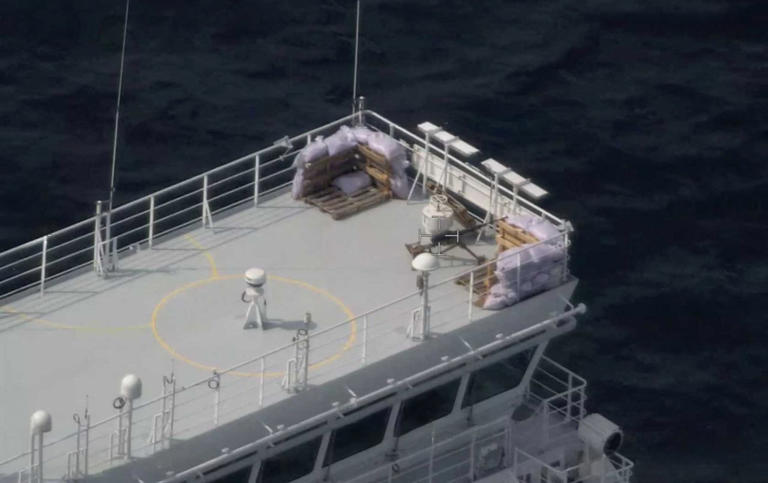
© Estonian Police And Borderguard/Handout/Reuters
One of the things contributing to rising tensions in the Baltic was interceptions of Russia’s shadow-fleet tankers, which Moscow uses to evade Western sanctions on its oil exports. Suspected Russian shadow-fleet tankers have been seized or boarded at least 14 times since late 2024, including 10 early this year, according to a tally of publicly reported incidents. But interdictions in the Baltic largely stopped earlier this year after Russia’s navy began confronting Western ships that were attempting to stop the tankers....
....MUCH MORE